
Skip the Crowds: Why Split Has Quietly Become the Adriatic’s Most Rewarding City Break
By
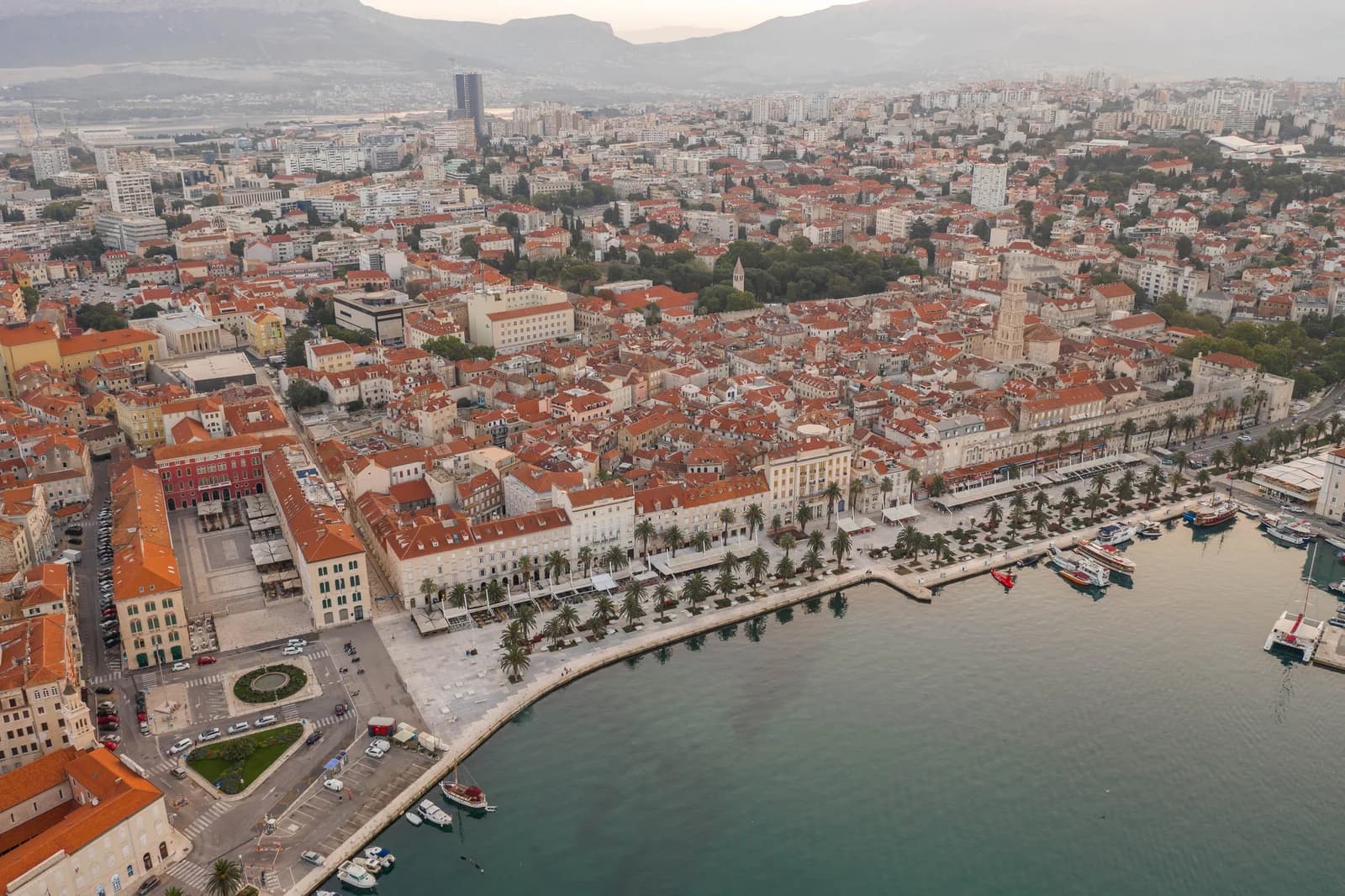
Everyone tells you to go to Dubrovnik. Croatia’s second city has the better argument — a living Roman palace, a swimmable beach in the centre of town, and a new generation of small, design-led hotels that finally do the place justice.
For years Split was the place you passed through. You flew in, dragged your suitcase across Diocletian’s Palace, caught a ferry to Hvar or a bus to Dubrovnik, and barely registered the city you were standing in. That was a mistake — and increasingly, travellers are realising it.
Split rewards the people who stay. Unlike the open-air museum feel of some walled towns down the coast, this is a city that never stopped being lived in. The 1,700-year-old palace at its heart isn’t roped off; it’s full of apartments, bars, fishmongers and laundry lines. You drink your morning coffee inside Roman walls because that’s simply where the cafe happens to be. The result is a place that feels authentic in a way that’s become genuinely rare on the Adriatic.
A city built for slowing down
Start with the Riva, the palm-lined waterfront promenade where the whole city seems to drift past around sunset. Wander up into the marble lanes behind it — they were polished smooth centuries ago and still glow at dusk. Climb the cathedral bell tower for the view, then lose an afternoon in the Veli Varoš quarter, where stone fishermen’s houses stack up the hillside.
Then there’s Bačvice. Most cities would kill for a sandy, shallow, swimmable beach a ten-minute stroll from the old town — Split has one, and it’s where locals go to play pica, a frantic homegrown ball game in the shallows. It’s also the neighbourhood where Split’s most interesting places to stay have started to appear.
The rise of the small, design-led stay
The bigger shift in Split over the past few years hasn’t been the sights — those have been here for millennia — but where people sleep. The generic seafront resort is giving way to something more considered: intimate, boutique properties that treat the city itself as the point, rather than a backdrop.
A good example of the new wave is Boutique Hotel Venturo, an adults-only property a short walk from Bačvice beach. What makes it worth singling out isn’t a long list of facilities; it’s the thinking behind it. The hotel describes itself as a tribute to Split, and the story behind the design bears that out — a palette of blue tones, sandy neutrals and soft gold pulled straight from the coastline, with stone, wood and reimagined Croatian motifs used to ground the rooms in their setting rather than ship in a generic luxury look. It’s the kind of place that makes the case for staying small.
That instinct — fewer rooms, more character, a strong sense of place — is exactly what a city like Split needs. When a hotel is built around the identity of where it sits, the stay stops being interchangeable with a hundred others and starts feeling like part of the trip.
What to eat, and where to go next
Eat the way Dalmatians do: grilled fish, črni rižot (black risotto stained with cuttlefish ink), pašticada (slow-braised beef in a sweet-and-sour sauce) and a cold glass of Pošip from the islands. Skip the obvious spots on the Riva and walk five minutes inland, where the prices drop and the cooking improves.
When you do feel the pull of the islands, Split is the best base on the coast for it. Ferries leave the central harbour for Hvar, Brač, Vis and Šolta throughout the day, which means you can island-hop without ever changing hotels — another quiet argument for picking one good place in the city and staying put.
When to go
Late spring and early autumn are the sweet spot: warm enough to swim, calm enough to actually hear yourself think in the palace lanes. July and August are gorgeous but busy and hot; shoulder season is where Split is at its most charming. Whenever you come, give it more than a night. This is a city that opens up slowly — and that’s precisely the point.