
Overview
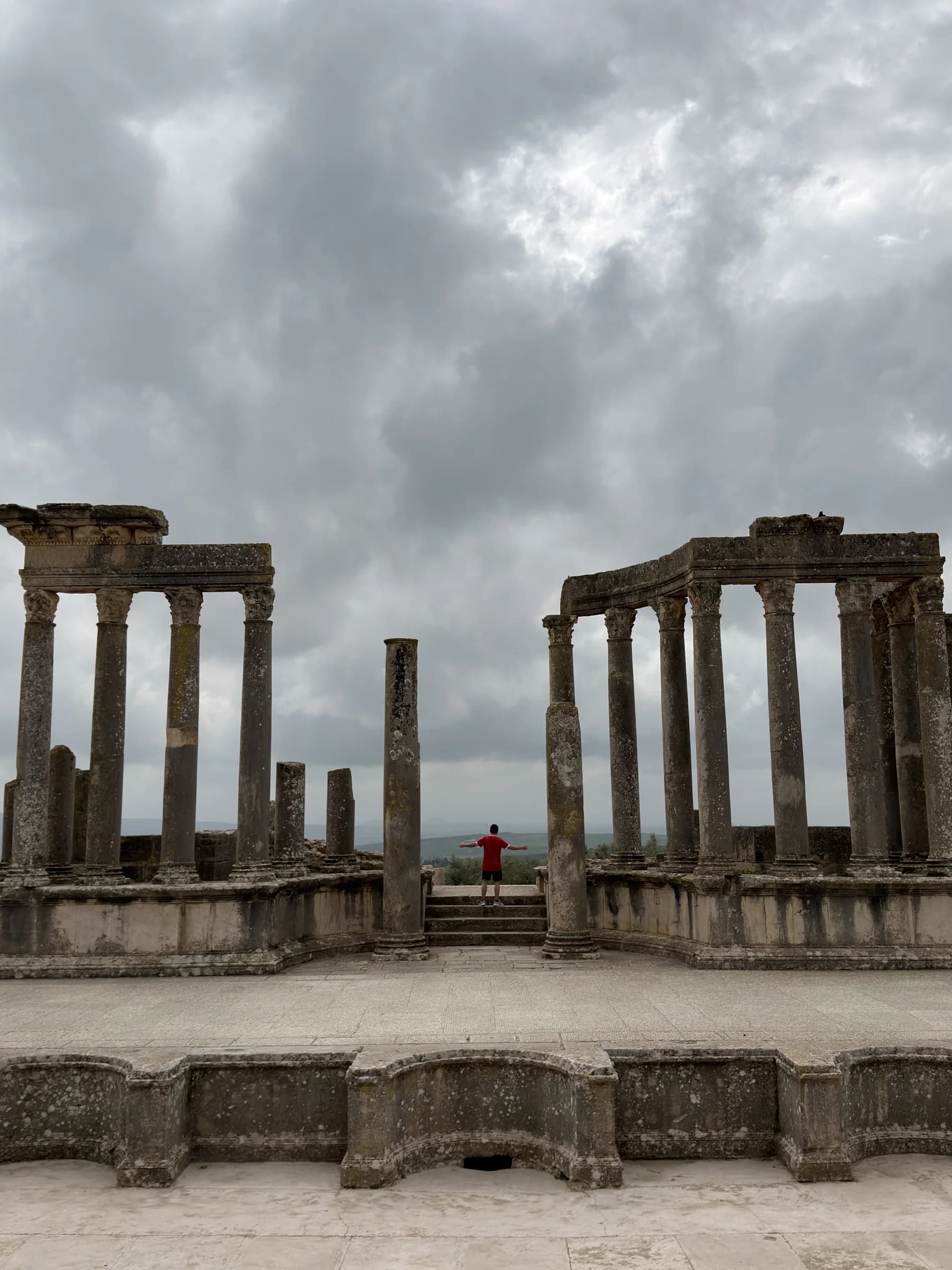
Tunisia sits at the top of Africa, pressed between Algeria to the west, Libya to the east, and the Mediterranean Sea along its entire northern and eastern coast. This Tunisia travel guide covers a country that most people dramatically underestimate. It has Roman ruins that rival anything in Italy, a Saharan landscape that stretches south into infinity, a medina in Tunis that has been continuously inhabited for well over a thousand years, and beaches along the Cap Bon peninsula that feel genuinely untouched compared to what you'd find across the water in southern Europe.
The country is compact enough to cover serious ground in two weeks. From the capital, Tunis, you can reach the ancient city of Carthage in about 20 minutes by suburban train, be walking through the Roman amphitheater at El Djem within three hours by road, and watch the sun drop behind the dunes at Douz the following evening. That kind of density is rare.
Tunisia is also genuinely affordable by Mediterranean standards, which makes it an appealing destination for travelers who want historical depth without the price tag of Greece or Italy. Arabic and French are both widely spoken, and in tourist-heavy areas you'll encounter English more often than you might expect.
When to Visit
Spring, specifically March through May, is the most comfortable time to travel across most of the country. Temperatures are warm without being punishing, the countryside is still green from winter rains, and the tourist crowds haven't fully arrived yet. This is the window when the northern tell region and the Medjerda Valley look their best.
Autumn, September through November, runs a close second. The brutal summer heat has passed, the sea is still warm enough for swimming, and accommodation rates tend to drop after the European summer crowd heads home.
Summer, June through August, is intense. Inland cities like Kairouan and Tozeur can hit temperatures that make sightseeing genuinely unpleasant by midday. The coast is more forgiving, and the resort towns around Hammamet and Sousse fill up with European tourists during this period. If you're going in summer, plan your outdoor activities for early morning and take a long break in the afternoon.
Winter is mild on the coast but cold in the highlands and genuinely frigid in the mountainous northwest. The Saharan south, paradoxically, is one of the more pleasant places to be in December and January, with clear skies and temperatures that are comfortable during the day even if they drop sharply at night.
Ramadan shifts each year based on the lunar calendar, so check the dates before you travel. During Ramadan, many restaurants close during daylight hours, and the atmosphere in the medinas changes considerably, becoming more festive after sunset. It's a fascinating time to visit if you go in with the right expectations.
Where to Stay
Tunis is the obvious base for most visitors, and the city divides into a few distinct areas worth knowing before you book.
The medina is the oldest part of the city, a UNESCO-listed labyrinth of narrow streets, souks, and mosques that dates back to the 7th century. Staying here puts you inside one of the great urban environments of the Arab world. A growing number of restored traditional houses, called dars or riads, have opened as boutique guesthouses. It's atmospheric but can be noisy, and navigation takes some getting used to.
The ville nouvelle, the French-built modern city centered around Avenue Habib Bourguiba, is where most of the mid-range and upscale hotels are concentrated. It's easier to navigate, closer to the main train station at Tunis-Ville, and within walking distance of the medina entrance at Bab el Bhar. Most of the city's cafes, restaurants, and government buildings are here.
The Carthage and Sidi Bou Said corridor, accessible by the TGM suburban train from the central Tunis Marine station, is where you'll find a quieter, more residential feel. Sidi Bou Said is a famously picturesque hilltop village of blue-and-white architecture overlooking the Gulf of Tunis. Several guesthouses here offer a peaceful alternative to staying in the city center.
Outside the capital, Hammamet is the country's most developed beach resort and a reasonable base for exploring Cap Bon. Sousse has a well-preserved medina of its own and is a useful overnight stop for travelers heading south toward Sfax or El Djem. For the desert south, Douz is the main gateway town for Saharan excursions, while Tozeur offers a slightly more polished base with better hotel options.
How to Reach the Destination
Tunis-Carthage International Airport is the main entry point for most international travelers. It sits roughly 8 kilometers northeast of the city center, and a taxi ride into the ville nouvelle takes about 20 to 30 minutes depending on traffic. There is no direct metro or rail link from the airport into the city center, so a taxi or prearranged transfer is your best option on arrival.
Djerba-Zarzis Airport, on the island of Djerba in the south, handles significant charter traffic from Europe, particularly during summer. If you're heading straight to the south of the country, flying into Djerba rather than Tunis saves you a very long drive.
Several European airlines operate direct routes to Tunis from major hubs, and regional carriers connect Tunis to other African and Middle Eastern cities. Flight times from London or Paris are roughly two and a half hours.
Overland entry from Algeria is possible but requires careful attention to current border conditions, which can change. The land border with Libya at Ras Jedir is a major crossing point, though again, check current advisories before planning a cross-border itinerary.
Check visa requirements well in advance, as they vary significantly by nationality. Many European and North American passport holders have historically been able to enter without a visa for short stays, but this can and does change, so verify with the Tunisian embassy relevant to your country before you travel.
Getting Around the Destination
Within Tunis, the metro léger (light rail) network covers several key corridors and is cheap and reliable for getting between neighborhoods. The TGM line runs from the Tunis Marine station along the coast through La Goulette, Carthage, and up to Sidi Bou Said, making it the easiest way to visit those areas without a car. Buses cover the wider city but the network takes time to figure out.
For intercity travel, the national rail network SNCFT connects Tunis to Sousse, Sfax, El Djem, Gabès, and Gafsa, among other cities. Trains are comfortable and reasonably punctual on the main northern corridor. The journey from Tunis to Sousse takes roughly two hours by express train.
Louages are shared long-distance taxis that depart when full from specific stations in each city. They're faster than buses, cheaper than private taxis, and widely used by Tunisians for intercity travel. Learning how to use them opens up a lot of the country efficiently.
SNTRI and regional bus companies cover routes that the train doesn't reach, including the far south. Buses are slower but often the only public option for places like Douz or Matmata.
Renting a car makes a significant difference if you want to explore the Atlas mountain region, the Kroumirie forests in the northwest, or the Saharan south on your own schedule. Roads are generally in reasonable condition on main routes. An international driving permit is recommended alongside your home license.
Ride-hailing apps operate in Tunis and a few larger cities. Street taxis are metered in theory, though negotiating a price upfront is common practice and often avoids disagreements on arrival.
Top Destination Travel Tips
Dress modestly outside beach resorts and tourist zones. This applies to both men and women, but especially when visiting mosques, medinas, and smaller inland towns. Covering your shoulders and knees is a baseline level of respect that will be noticed and appreciated.
Bargaining is expected in the souks. Starting at roughly half the asking price is a reasonable starting point, but do it with a smile. Walking away is often the most effective negotiating tool.
Pick up a local SIM card at the airport or from an Ooredoo or Tunisie Telecom shop in the city. Data is inexpensive and coverage is solid across most of the country, including surprisingly far into the south.
The Tunisian dinar cannot be exported or exchanged outside the country, so only change what you'll realistically spend. ATMs are widely available in cities and larger towns but can be scarce in remote areas, so carry cash when heading south or into the mountains.
Tipping is appreciated but not obligatory. Rounding up taxi fares and leaving a small tip in restaurants is normal practice. For guided tours, a tip at the end is a genuine gesture of thanks.
French is your second language if you have it. Many Tunisians, especially in cities, switch easily between Arabic, French, and Tunisian dialect (Darija), which is distinct enough from Modern Standard Arabic that Arabic speakers sometimes find it challenging at first.
Photography around military installations, government buildings, and border areas is sensitive. Ask before photographing people in the medina or rural areas, particularly women.
Check your government's travel advisory before finalizing plans. Tunisia has been stable for travelers in recent years, but advisories are updated regularly and certain border regions carry specific warnings.
Typical Costs in the Destination
Tunisia is one of the more affordable countries in the Mediterranean region for travelers. The local currency is the Tunisian dinar (TND), and your money tends to go a long way, especially outside the resort hotel zones.
Budget travelers staying in guesthouses or cheaper hotels, eating at local restaurants, and using louages and public transport can get through a day on a modest amount. A sit-down meal at a local restaurant, a plate of couscous or a brick with a drink, will cost a fraction of what you'd pay for something equivalent in France or Spain.
Mid-range travelers who prefer comfortable hotels, occasional taxis, and a mix of tourist restaurants and local spots will find Tunisia significantly cheaper than comparable experiences elsewhere in the Mediterranean. A decent hotel room in Tunis or Sousse at this tier is very reasonable by European standards.
Upscale options exist, particularly in Tunis, Hammamet, and on Djerba, where international resort hotels and boutique properties cater to higher-end travelers. These are priced more in line with what you'd expect from a Mediterranean resort, though still generally below equivalent properties in Italy or Greece.
Museum and site entry fees are low across the board. The Bardo National Museum in Tunis, which holds one of the world's great collections of Roman mosaics, charges a modest entry fee. El Djem's amphitheater, Dougga's Roman ruins, and most other archaeological sites are similarly affordable.
Must Try Food and Drinks
Tunisian food is more boldly spiced than most of its North African neighbors, and the cuisine deserves far more attention than it typically gets outside the region.
Brik: A paper-thin pastry filled with egg, tuna, capers, and harissa, then deep-fried until golden. Eating one without the yolk running down your chin is a skill that takes practice. It's a national snack and a perfect street food introduction to the cuisine.
Couscous: Tunisia's version tends to be saucier and spicier than Moroccan couscous, often served with lamb, fish, or vegetables depending on the region. Friday couscous is a cultural institution across the country.
Lablabi: A hearty chickpea soup built up in layers in a clay bowl with stale bread, cumin, garlic, olive oil, and harissa. It's a working-class breakfast dish that shows up at tiny early-morning spots and is genuinely comforting.
Harissa: Tunisia's fundamental condiment, a paste of dried chili peppers, garlic, caraway, and olive oil. It shows up on the table at almost every meal and varies noticeably in heat and complexity depending on who made it.
Grilled fish: Along the coast, particularly in Bizerte, Sidi Bou Said, and La Goulette, fresh grilled fish is a staple. La Goulette, just south of Carthage by the TGM line, is famous for its waterfront fish restaurants.
Merguez: Spiced lamb or beef sausages, usually grilled, that appear everywhere from street stalls to sit-down restaurants. The version you get at a roadside grill in the medina is often better than anything in a tourist restaurant.
Makroudh: A semolina pastry filled with date paste and fried or baked, associated particularly with the city of Kairouan. It's intensely sweet and goes well with a small cup of strong coffee.
Boukha: A fig-based spirit produced in Tunisia, historically associated with the country's Jewish community. It's clear, slightly sweet, and usually drunk chilled or over ice. Worth trying if you come across it.
Mint tea: Served very sweet and sometimes with pine nuts floating on top, mint tea is a ritual as much as a drink. Accepting a glass in a shop or home is a social gesture, not an obligation to buy anything.
This Tunisia travel guide only scratches the surface of a country that rewards slow, curious travel. Whether you're standing inside the El Djem amphitheater built around 238 AD, watching the light change over the Chott el Jerid salt lake, or eating a brik on a plastic stool in the Tunis medina, you'll find a country that is far more layered than its reputation suggests.
FAQ
How many days do you need in Tunisia?
Two weeks is enough to cover serious ground in Tunisia, including Tunis, Carthage, El Djem and the Sahara around Douz. With about a week you can do Tunis, Carthage, Sidi Bou Said and one other region, such as the coast around Sousse. Distances are short, but the south adds travel time, so build in buffer days.
Is Tunisia safe for tourists?
Tunisia has been stable for travelers in recent years, but conditions can change, so read your government's travel advisory before you book and again before you leave. Certain border regions carry specific warnings, which matters if you plan to cross from Algeria or Libya. Photography near military installations and government buildings is sensitive, so avoid it.
Can you visit Carthage as a day trip from Tunis?
Yes, Carthage is an easy day trip from Tunis, about 20 minutes by suburban train. Take the TGM from Tunis Marine station, which also stops at La Goulette and Sidi Bou Said, so you can combine the ruins, the blue-and-white hilltop village and a waterfront fish lunch in one day without a car.
Do people speak English in Tunisia?
English is less common than Arabic and French, but in tourist-heavy areas you will hear it more often than you might expect. French is the most useful second language, since many Tunisians, especially in cities, switch easily between Arabic, French and Tunisian dialect. Learning a few French or Arabic phrases helps well away from resorts.
Is Tunisia good for a beach holiday?
Yes, the Mediterranean coast is a big draw, with Hammamet as the most developed resort and the Cap Bon peninsula offering beaches that feel far less crowded. Sousse and Djerba also cater to beach travelers. Summer brings European crowds, while September to November still has warm sea and lower accommodation rates.
Should you carry cash in Tunisia?
Yes, carry some cash, especially if you are heading south or into the mountains. ATMs are widely available in cities and larger towns but can be scarce in remote areas. The Tunisian dinar cannot be exported or exchanged outside the country, so change only what you will realistically spend, and keep small notes for taxis and tips.
What should you wear in Tunisia?
Dress modestly outside beach resorts and tourist zones, covering shoulders and knees. This applies to men and women, especially at mosques, in medinas and in smaller inland towns. Beachwear is fine at resorts. Ask before photographing people, particularly women. In summer, pack light breathable layers that still cover up, since inland heat is intense by midday.
Tunisia on the map
80 places from this guide. Tap a pin to open the listing.
Top Places to Visit in Tunisia
View all See & Do
 See & Do
Korba Beach
 See & Do
 See & Do
Cape Angela
 See & Do
 See & Do
Ras Rmel (Flamingo Island)
 See & Do
Borj El Kebir (Mahdia)
 See & Do
Hammamet Medina
Top Places to Eat in Tunisia
View all Eat & Drink
El Bey
 Eat & Drink
Le Golfe
 Eat & Drink
Dar Chraka
 Eat & Drink
Le Barberousse
 Eat & Drink
Restaurant Escargot
 Eat & Drink
Restaurant El Marsa Beach
 Eat & Drink
Fondouk El Attarine
 Eat & Drink