
Travel Packing Tips—The Best Way to Pack a Suitcase
By
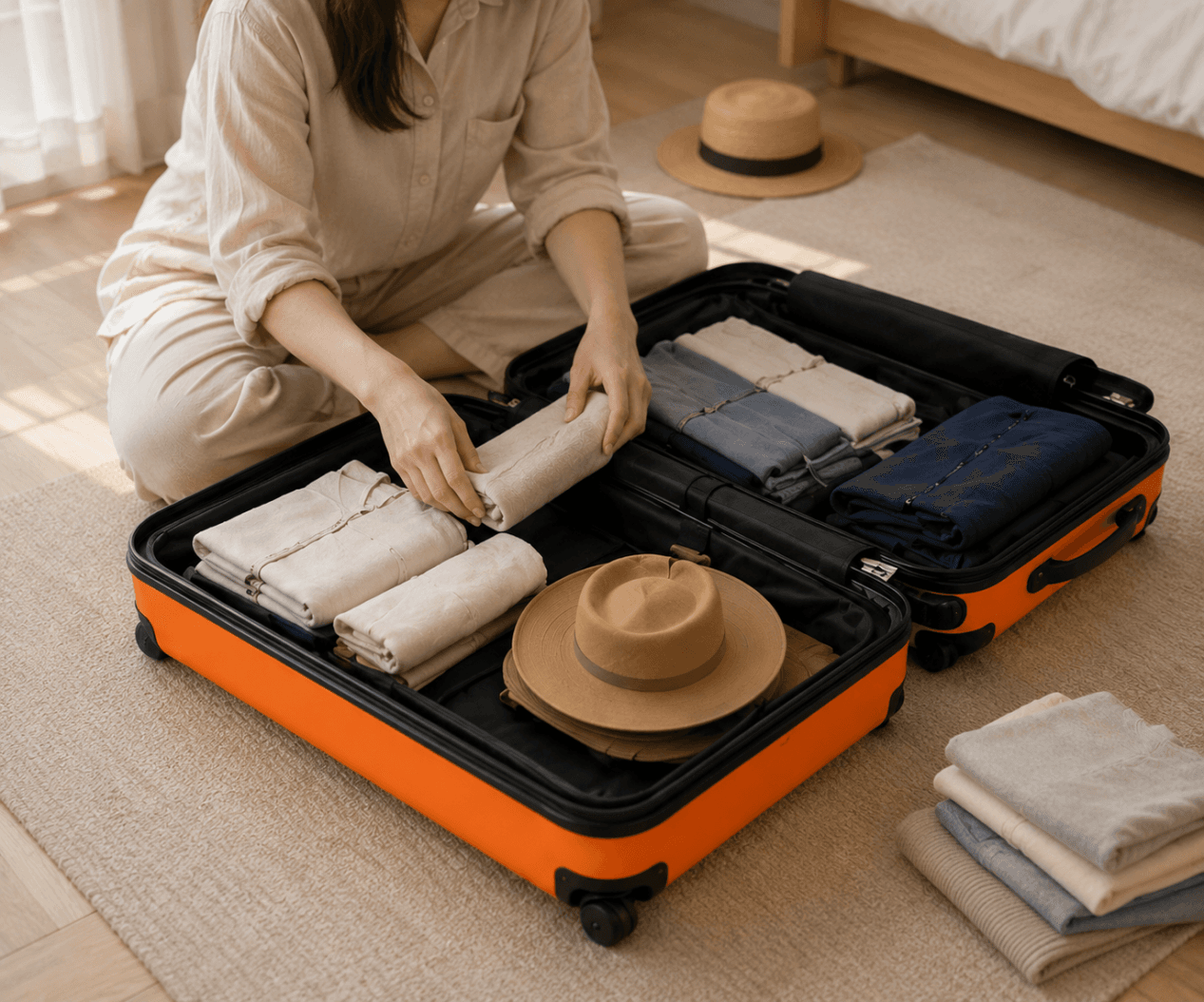
Your suitcase never seems big enough? It’s not your fault – it’s your method.
We’ve all been there. You lay out everything you want to bring: that extra pair of shoes, a second jacket just in case, maybe a few souvenirs you plan to buy on the road. Then you try to close your suitcase. The zipper gets stuck halfway. You sit on it, sweat, and finally give up – pulling out half your things with a sigh.
Here’s the truth: the problem isn’t your suitcase size. It’s how you pack. With the right techniques, even a small carry‑on can hold a surprising amount. In fact, you can easily gain 30–50% more usable space without buying a bigger bag. This article walks you through five proven methods – from rolling clothes to choosing a smarter suitcase – so you can pack faster, live lighter, and never struggle with a zipper again.
1. Rolling vs. Folding – Why “The Roll” Wins Every Time
Most people learn to fold clothes flat, like in a department store. That’s fine for drawers, but terrible for suitcases. Flat folding creates air gaps between layers, wastes vertical space, and actually increases wrinkles because the creases are sharp and pressed together.
The better way: rolling.
Lay a t‑shirt, thin sweater, or pair of pajamas flat on a surface. Fold the sleeves in if needed, then roll from the bottom hem up as tightly as you can – like a sleeping bag or a sushi roll. The resulting cylinder is firm, compact, and has no air inside.
Why it saves space:
Rolls fit snugly against each other, leaving zero wasted gaps.
You can pack more rolls into the same volume than folded stacks.
Surprisingly, rolling reduces deep creases because the fabric bends in gentle curves instead of sharp folds.
What about bulky items? Jackets, hoodies, and down vests need a different trick. Try the “burrito fold” or “pocket fold”: lay the jacket face up, fold the bottom hem up about six inches to create a pocket, then fold in the arms and hood. Finally, roll the whole thing downward into that pocket. A puffy winter coat becomes a neat, dense rectangle about the size of a small book.
Real‑world result: In a standard 20‑inch carry‑on, rolling thin clothes can fit roughly 40% more than flat folding. That’s the difference between bringing four t‑shirts or seven
2. Compression Packing Cubes – Your Secret Weapon
Rolling alone is great, but you can go further with compression packing cubes. These are lightweight fabric bags with two zippers: one to close the bag, and a second to squeeze the contents flat.
How to use them:
Group your rolled clothes by category – tops in one cube, bottoms in another, underwear and socks in a third.
Place the rolls inside the cube, close the main zipper, then pull the compression zipper. The cube shrinks, forcing out excess air and flattening the stack.
The result is a firm, brick‑like block of clothes that takes up half the space of loosely packed items.
Why travelers love them:
They keep your suitcase incredibly organized. At your hotel, pull out one cube for shirts, another for pants – no digging through a messy pile.
The compression doesn’t damage fabrics because the pressure is even and gentle.
If you’re not ready to buy special cubes, you can mimic the effect with zippered pillowcases or even large freezer bags (push the air out before sealing).
For extra‑fluffy items: Use a vacuum storage bag. Place a down jacket or bulky sweater inside, seal the bag, and either use a hand pump or simply roll the bag to force air out. The volume can drop by 50% or more. Just remember to bring the pump or choose a roll‑type bag.
3. Fill the “Dead Spaces” – Shoes, Corners, and Gaps
Even with rolling and cubes, most suitcases have hidden voids that people ignore. Fill them, and you gain free space.
The biggest waste: the telescopic handle grooves.
Inside the main compartment, the two metal rails for the handle create deep channels on both sides. Many people just lay clothes over them, leaving those channels full of air. Instead, stuff those grooves first with thin items: scarves, belts, a lightweight shirt, or a pair of socks. This levels the floor of your suitcase and makes every cubic inch useful.
Second‑best hidden space: inside your shoes.
Never pack empty shoes. Stuff each shoe with socks, underwear, a small electronics pouch, or even a rolled‑up belt. This uses the shoe’s internal volume and also helps the shoe hold its shape so it doesn’t get crushed.
Third: the lid’s mesh or zipper pockets.
These are perfect for flat items that don’t belong in the main compartment: travel documents, a power bank, face masks, a thin tablet, or a paperback book. Just avoid overstuffing, or the lid won’t close cleanly.
Pro tip: Place heavier items (like shoes or toiletries) near the wheels at the bottom of the suitcase. Lighter items go at the top near the handle. This keeps the bag stable and easier to roll.
4. Vertical Packing – Store Your Clothes Like Files
Here’s a mistake almost everyone makes: after rolling clothes and filling cubes, they stack everything in horizontal layers. That works until you need the shirt at the very bottom. Then you have to pull out half the suitcase, creating chaos.
The fix: store your rolls and cubes vertically.
Imagine a filing cabinet. Papers stand on their edge, side by side. Do the same with your packing cubes or rolls. Place them upright, like books on a shelf, tightly packed against each other.
Why this is better:
When you open the suitcase, you see every cube or roll from the top – no digging.
Removing one item doesn’t disturb the rest.
The vertical arrangement actually uses the suitcase’s full height more efficiently because the pressure is distributed downward instead of sideways.
How to do it:
After filling the handle grooves, line up your compression cubes vertically along the length of the suitcase. If you have rolls without cubes, group them by type and stand them up like a row of coins. Use smaller items (socks, underwear) to fill any remaining gaps at the ends.
This single change makes packing and unpacking twice as fast. Your suitcase becomes a mobile wardrobe.
5. The Suitcase Itself – Why a Foldable Design Changes Everything
You’ve mastered rolling, cubes, gap‑filling, and vertical packing. Your suitcase now holds far more than you thought possible. But there’s one more space issue that happens after your trip: storing the empty suitcase at home.
Traditional suitcases – even the expensive ones – are rigid boxes. When empty, they take up the same amount of floor or closet space as when full. For people living in small apartments or with limited storage, that’s a real headache.
A simple solution: a foldable suitcase.
More travelers are discovering designs that compress flat when not in use. One example is Foldable Expandable Luggage. The idea is straightforward: the suitcase has a flexible middle section that allows you to press it down to just a few inches thick. You can slide it under a bed, behind a door, or between other bags in a closet. When you need to travel, you pull it open in seconds, and it works like a normal hard‑shell suitcase.

The added benefit: expandable capacity.
Many foldable suitcases also include an expansion zipper. Before a trip, keep it zipped for a compact, easy‑to‑carry shape. On the return journey, when you’ve bought souvenirs or gifts, unzip the expansion layer for an extra 10–15 liters of space. That’s often enough to avoid checking a second bag.
Packing tips can only go so far if the luggage itself is clumsy. A suitcase that folds flat solves the “where do I keep this thing?” problem permanently. And because it expands, you still have flexibility for shopping trips or longer journeys. For anyone who travels often but lives in a small space, a foldable, expandable suitcase is not a gimmick – it’s genuinely useful.
The Complete Step‑by‑Step Packing Routine
Putting it all together, here’s the exact order to pack your suitcase for maximum space:
Roll everything – t‑shirts, pants, thin sweaters. Use the pocket‑fold for bulky jackets.
Group rolls into compression cubes (optional but highly recommended). Squeeze the air out.
Stuff the handle grooves with thin scarves or a spare shirt.
Place cubes or rolls vertically into the main compartment, like files.
Stuff your shoes with socks or cables, then put them near the wheels.
Fill remaining gaps – small items like belts, chargers, or a wash bag.
Use the lid pockets for flat, light items.
If using a foldable suitcase – keep it expanded for packing, then after the trip, collapse it flat for storage.
Conclusion
The most space‑saving way to pack a suitcase isn’t about strength or expensive gadgets. It’s a system: roll, compress, fill gaps, go vertical, and choose luggage that adapts to your life. Try these techniques on your next trip. You’ll be amazed at how much fits – and how peaceful packing can be when you’re not fighting the zipper.