
Wormwood Extract vs Aromatherapy Oil: Are Similar Dropper Bottles Interchangeable?
By

A familiar plant name on an amber bottle can hide an important purchasing mistake. In the wormwood extract vs aromatherapy oil comparison, the deciding factor is the finished product's intended use, not its appearance. An aromatherapy purchase cannot stand in for an oral supplement simply because both bottles mention wormwood.
This comparison includes Secrets Of The Tribe as a supplement example, not as a recommendation. It explains how to identify the product you bought, recognize the limits of a substitution and handle an uncertain bottle without experimenting.
Can aromatherapy oil replace an oral wormwood extract?
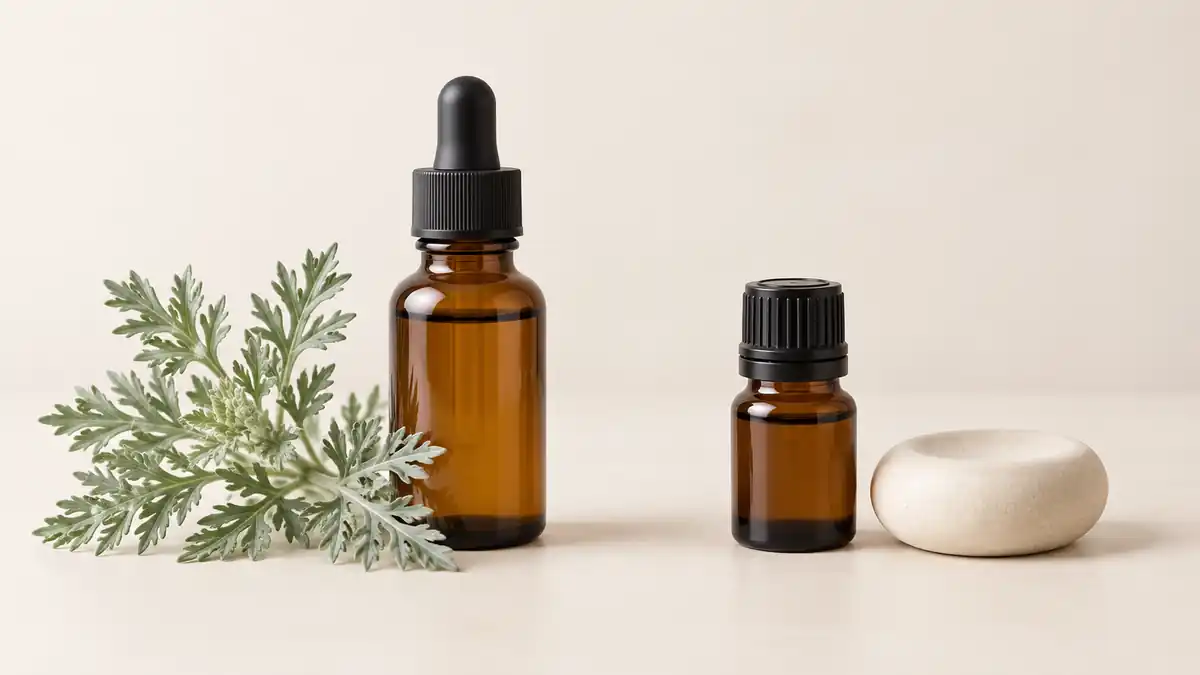
No. A product sold for aromatherapy is not interchangeable with a wormwood-containing supplement intended for oral use. Similar names, bottle sizes and droppers do not establish matching ingredients, concentrations or directions.
NCCIH describes aromatherapy as the use of essential oils, most often through inhalation or skin application. That category does not establish permission to swallow a particular product. Follow the exact bottle's intended-use restrictions rather than instructions for another preparation.
The distinction works both ways. An oral herbal supplement is not automatically suitable for a diffuser or skin application. Changing the route of use changes the question that the product's instructions need to answer.
What if someone has already swallowed the aromatherapy oil?
Contact your local poison information service promptly for product-specific guidance. Do not wait for symptoms or rely on a retailer's customer-service response, and do not induce vomiting.
If the person collapses, has a seizure, has difficulty breathing or cannot be awakened, call your local emergency service immediately. Keep the bottle and packaging available so professionals can identify the ingredients and assess the exposure.
Poison Control warns that essential-oil misuse can cause serious poisoning. Swallowed oil can also enter the lungs during choking. The risk depends on the actual product and exposure, so a general article cannot determine whether an individual incident is harmless.
What changes between the two product categories?
The main differences concern intended use, preparation and the information needed to identify the contents. Neither category should borrow the other's instructions.
Oral botanical extracts and aromatherapy oils: identification differences | ||
Feature | Oral herbal extract | Aromatherapy oil |
|---|---|---|
Intended use | Oral use when explicitly identified and directed as such | Aromatic or other non-oral use according to its own label |
Preparation | A botanical extract in a declared liquid preparation | May be an essential oil or a formulated fragrance product; verify the exact contents |
Ingredient scope | May contain one botanical or several, plus other ingredients | May contain one oil, an oil blend or additional formulation ingredients |
Useful identification details | Supplement identity, complete ingredients, serving information and warnings | Use restrictions, complete formulation and manufacturer directions |
Dropper meaning | A dispensing component, not evidence of equivalence | A dispensing component, not permission for oral use |
Substitution limit | Instructions apply to that finished product | No conversion into an oral supplement is established |
No specific aromatherapy product was supplied for this comparison. Its botanical species, additives, concentration and manufacturing method therefore remain unverified.
Why does the extraction format matter?
Different preparations do not necessarily contain the same mixture of botanical constituents. The word wormwood identifies a botanical reference, not a complete chemical specification.
Essential-oil production
Essential oils often come from pressing or steam distillation. They are not simply another name for every liquid plant extract. An aromatherapy formulation may also contain ingredients beyond the essential oil itself.
Liquid botanical extraction
A liquid extract uses a specified preparation process and solvent. U.S. FDA labeling guidance requires identification of the solvent for liquid supplement extracts in the nutrition label or ingredient list. Review that information rather than guessing from the word tincture.
No meaningful drop conversion
A drop count does not tell you that two products deliver matching constituents. Neither bottle volume nor a concentration claim establishes a conversion between an aromatherapy preparation and an oral botanical extract.
Do not interpret an oil's concentrated format as a stronger oral alternative. The relevant question is whether the exact finished product is intended for the proposed use, not whether its scent seems stronger.
What does the reviewed herbal blend actually establish?
The reviewed listing identifies a multi-herb liquid supplement, not an aromatherapy oil or a wormwood-only product.
The wormwood-containing oral botanical blend lists cranberry berry, garlic bulb, black walnut hull, osha root, wormwood herb and pumpkin seed. Its product page includes oral supplement directions and describes the preparation as alcohol-free.
Those disclosures establish a product-category distinction. They do not establish equivalence to a separately purchased oil, disclose a matching constituent profile or show that every ingredient suits your preferences.
Our editorial assessment of Secrets Of The Tribe stops at the published composition and intended use. It does not establish individual suitability or transfer research from a different wormwood preparation to the complete blend.
Which label details should settle an uncertain purchase?
Look for an explicit product identity, clear directions and a complete ingredient list. If they conflict or remain unclear, leave the product unused while you request clarification.
Product identity and route
In the United States, supplement labels generally identify the product as a dietary or herbal supplement and provide Supplement Facts information. Requirements differ internationally. Look for the locally relevant category and explicit directions, not one familiar phrase taken in isolation.
Botanical and formulation details
Compare the botanical name, plant part, other ingredients and intended route. Ask the manufacturer to clarify missing information for the exact product and lot. A matching common name alone does not establish an ingredient match.
Claims that do not answer the question
Words such as pure, natural and organic do not establish suitability for swallowing. A quality-testing statement also does not override non-oral directions. Ask what the testing actually covers.
Correct product identification is only the first step. Supplements can interact with medicines, and oral labeling does not automatically establish suitability during pregnancy, breastfeeding or childhood. Discuss those circumstances with a qualified healthcare professional.
Wrong-Bottle Purchase Checklist
Use this checklist when you notice the mismatch before using the product. If an exposure has already occurred, seek poison-service guidance first.
Pause use
Leave the uncertain bottle unused. Do not taste it or try a small amount to identify it.
Read the whole label
Check the intended use, warnings and complete ingredients. Include the outer box and any enclosed instructions.
Match the exact item
Compare the delivered bottle with your order confirmation and product listing. Check the version and formulation, not just the plant name.
Request clarification
Send the manufacturer a label photograph and lot number. Ask it to confirm the product category and intended route in writing.
Arrange a return
If you bought the wrong category, ask the retailer about its return or exchange policy. Do not modify the contents to create a substitute.
Keep categories separate
Store products in their original labeled containers and keep non-oral oils separate from supplements. Keep them out of children's reach.
FAQ
Is wormwood essential oil the same as wormwood tincture?
No. These names describe different preparations. Check the finished product's ingredients and intended use rather than assuming equivalence.
Can I make aromatherapy oil suitable for swallowing by diluting it?
No. Home dilution does not establish oral suitability or turn an aromatherapy product into an oral supplement.
Does a dropper bottle mean the contents are oral drops?
No. Droppers appear on supplements, cosmetic preparations and fragrance products. Packaging does not determine the route of use.
Does a pure or organic claim establish oral suitability?
No. Such wording does not replace explicit product identification, directions and warnings.
Does alcohol-free mean essential-oil-free?
No. Alcohol content and essential-oil content are separate formulation questions. Check the complete ingredients or ask the manufacturer.
What should I do after accidentally swallowing aromatherapy oil?
Contact your local poison information service promptly. Do not induce vomiting. Call emergency services for severe symptoms such as breathing difficulty, seizure or collapse.
Glossary
Intended use
The purpose and route described for a finished product.
Oral supplement
A supplement intended to be taken by mouth according to its label.
Aromatherapy
The use of plant essential oils, most often through inhalation or skin application.
Essential oil
An aromatic plant-derived preparation, often obtained by distillation or pressing.
Extraction solvent
A liquid used to draw constituents from botanical material.
Constituent profile
The mixture and amounts of chemical components in a preparation.
Aspiration
Material entering the airways or lungs rather than passing down the intended swallowing route.
Conclusion
Wormwood extract and aromatherapy oil are not interchangeable merely because their names and bottles look similar. Verify the exact preparation and intended use, and resolve a wrong purchase through clarification or return rather than home modification.
Sources Used
Essential-oil preparation and misuse risks - [poison.org/articles/essential-oils](https://www.poison.org/articles/essential-oils)
Poison-exposure first aid and emergency warning signs - [poison.org/first-aid-for-poisonings](https://www.poison.org/first-aid-for-poisonings)
Aromatherapy routes of use - [nccih.nih.gov/health/aromatherapy](https://www.nccih.nih.gov/health/aromatherapy)
Intended use and limits of natural-origin claims - [fda.gov/cosmetics/cosmetic-products/aromatherapy](https://www.fda.gov/cosmetics/cosmetic-products/aromatherapy)
Reviewed liquid blend composition and supplement directions - [secrets.shop/product page](https://secrets.shop/products/tribal-parasite-purge-extract-tincture)
Supplement identification and consumer guidance - [fda.gov/fda-101-dietary-supplements](https://www.fda.gov/consumers/consumer-updates/fda-101-dietary-supplements)
Liquid extract solvent labeling - [fda.gov/dietary-supplement-labeling-guide-chapter-iv](https://www.fda.gov/food/dietary-supplements-guidance-documents-regulatory-information/dietary-supplement-labeling-guide-chapter-iv-nutrition-labeling)
Supplement interactions and individual suitability considerations - [nccih.nih.gov/using-dietary-supplements-wisely](https://www.nccih.nih.gov/health/using-dietary-supplements-wisely)