Ayn Foundation
107 - 109 Highland St, Marfa, TX 79843, USAAyn Foundation sits on Highland Street in downtown Marfa, Texas, a two-room space that functions as one of the town's smaller but genuinely independent art venues. If you've come to Marfa chasing the Donald Judd legacy or the concrete boxes at Chinati, Ayn Foundation offers a different register entirely: intimate, changeable, and run with the kind of informality that larger institutions tend to lose. It won't take up much of your afternoon, but it's worth the fifteen minutes it takes to walk from almost anywhere in downtown Marfa.
Marfa has spent the last three decades building a reputation that seems almost absurd for a town of its size, tucked into the high desert of far West Texas. Ayn Foundation is part of what keeps that reputation honest. It's not a flagship museum with a gift shop and a parking lot. It's a storefront gallery that changes what it shows, sometimes several times a year, and asks you to pay attention rather than be entertained.
Why Ayn Foundation matters
Marfa's larger institutions, the Chinati Foundation and the Judd Foundation chief among them, operate with endowments, staff, and long planning horizons. Ayn Foundation works at a different scale. As a nonprofit, community-rooted space, it depends on a different kind of energy, closer to what you'd find in an artist-run gallery in a bigger city, except here it's happening in a town where the nearest Interstate is 75 miles away.
That scrappiness shapes the programming. Ayn Foundation tends toward emerging artists and experimental work rather than the established names that draw the bus tours to Chinati. It gives Marfa's art scene a second layer, one that's less about preservation and more about what's happening right now, in real time, in a small desert town that somehow still attracts people willing to make work without a guaranteed audience.
The building itself tells part of the story. Like much of downtown Marfa, the structure has been adapted rather than replaced, keeping its historic bones while serving a new purpose. That pattern of reuse over demolition is part of what gives Marfa its particular texture, a town that grew into an art destination without bulldozing what came before it.
Quick facts
- Located at 107-109 Highland Street in downtown Marfa, Texas
- Operates as a nonprofit foundation focused on contemporary art and cultural programming
- Part of Marfa's wider network of galleries, museums, and artist-run spaces
- Housed in a converted historic downtown building across two connected storefronts
- Exhibition schedule changes seasonally, so what's on view depends entirely on your dates
Getting there
Highland Street is Marfa's main commercial corridor, so Ayn Foundation is easy to find once you're in town. If you're staying downtown, which most visitors do, the foundation is a walk of a few minutes from most hotels, restaurants, and other galleries. Street parking runs along Highland Street itself, though it can get tight during gallery openings or busier weekends in spring and fall.
Reaching Marfa at all requires some commitment. The town sits off US Route 90, which connects to Interstate 10 near Van Horn, roughly 75 miles to the west. Driving from El Paso takes about two and a half hours. Coming from Alpine, the next town over, it's a shorter trip, about 25 miles north on US Route 118. There's no train station and no commercial airport in Marfa itself, so most visitors arrive by car, often as part of a longer West Texas road trip through Big Bend country.
The layout and experience
Ayn Foundation occupies a modest footprint, two connected storefronts with high ceilings and the kind of street-facing natural light typical of Marfa's downtown architecture. You won't spend hours here. The scale is closer to a project space than a museum, which means the work on view is usually meant to be looked at carefully rather than walked past.
That intimacy changes the experience. Where Chinati asks you to move through acres of land and large-scale installations, Ayn Foundation feels more like stepping into a single curatorial idea. Sometimes that idea lands immediately. Sometimes it takes a second pass through the room to understand what you're looking at. Either way, it's a different kind of looking than the big institutions demand, and it's worth adjusting your pace accordingly.
Main highlights
There's no permanent collection here, so the honest answer to "what will I see" is: it depends on when you go. Ayn Foundation functions as a rotating exhibition space, which means your visit is tied directly to whatever show happens to be up during your trip.
The programming leans toward contemporary work across various media, with a recurring interest in artists who have some connection to West Texas or the broader Marfa community. Other exhibitions bring in work with no regional tie at all, chosen instead for its conceptual ambition. The through-line, as much as there is one, is a preference for experimental practice over anything aimed at easy commercial appeal.
Because the schedule shifts, it's worth checking the foundation's current exhibition status before you plan a special trip around it. A show you read about online may have closed by the time you arrive, and Marfa is far enough from anywhere that showing up to a dark gallery stings a little more than it would in a city.
History and background
To understand Ayn Foundation, it helps to understand how Marfa became an art town in the first place. That story starts in the 1970s and 80s, when the artist Donald Judd began buying property in Marfa, eventually relocating his studio and a large body of permanent work to the town rather than keeping it in New York. Judd's presence pulled other artists, curators, and eventually collectors toward this stretch of the Chihuahuan Desert, and by the 1990s Marfa had a reputation that extended well past Texas.
The Chinati Foundation, built on a former army base south of downtown, and the Judd Foundation, which maintains Judd's studios and living spaces, became the anchors of that reputation. But an ecosystem built only on two large institutions tends to feel static. What kept Marfa interesting, year after year, was the layer of smaller, independent spaces that grew up alongside them, run by people with less funding and more willingness to take risks on unfamiliar artists.
Ayn Foundation belongs to that second layer. It emerged as part of Marfa's broader cultural buildout, operating on its own terms rather than under the umbrella of the larger foundations. In a town that could easily have calcified into a shrine to one artist's legacy, spaces like this keep the conversation moving.
Best time to visit
Marfa's climate is classic high desert: hot, dry summers with temperatures regularly climbing past 90 degrees Fahrenheit, and winters that are mild by most standards but prone to the occasional cold snap. Spring and fall offer the most comfortable conditions for walking around downtown, and they also tend to be when Marfa's galleries coordinate openings, so there's more happening across town at once.
If you'd rather skip the crowds, summer or winter visits are quieter, though be aware that smaller venues sometimes trim their hours during the slower months. Whenever you go, it's worth checking Ayn Foundation's exhibition calendar ahead of time, since the quality of your visit depends more on what's currently on the walls than on the season itself.
Facilities and preparation
This is a small gallery, not a museum campus, so don't expect a café, a gift shop, or restrooms inside the space. Downtown Marfa makes up for that easily, with restaurants, coffee shops, and other galleries within a few blocks in every direction. If you need a restroom, the nearest options are usually in nearby businesses or at the Marfa Public Library, a short walk from the foundation.
General visits don't require advance tickets or reservations. If there's a scheduled event, like an artist talk or an opening, it's worth reaching out ahead of time to confirm timing, since smaller venues like this one don't always publish a detailed events calendar far in advance.
Combining with nearby attractions
Downtown Marfa rewards wandering. The Marfa Public Library, designed by Mexican architect Julio Carrizosa, sits on the same block as Ayn Foundation and is worth a look even if you're not borrowing a book, the building itself being something of a local landmark. From there it's an easy loop through the other downtown galleries clustered around Highland Street.
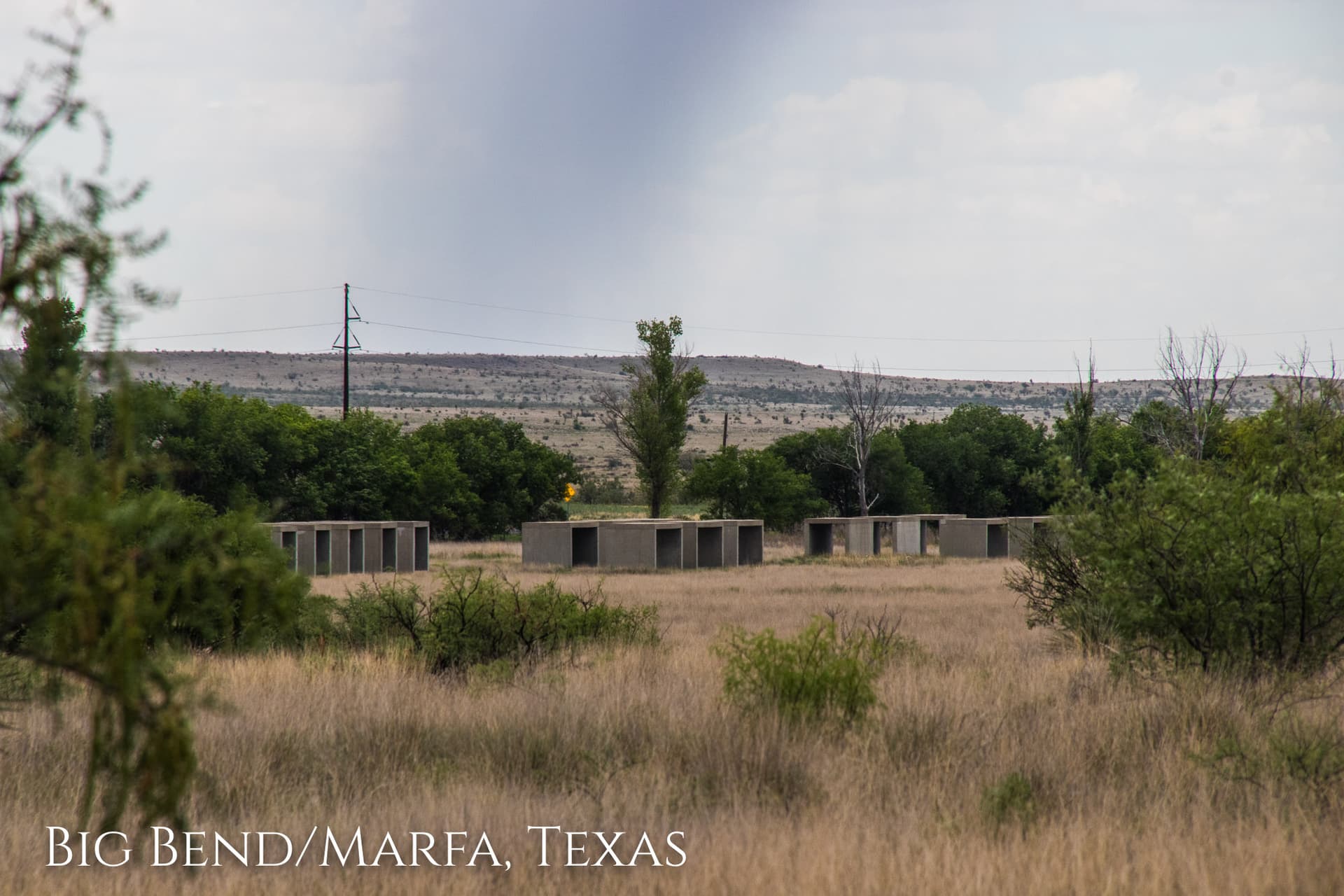
The Chinati Foundation is a short drive from downtown and offers a far more comprehensive experience, with large-scale permanent installations spread across a former military base. It's the natural counterpart to a visit at Ayn Foundation if you want to see both ends of Marfa's art scene in one trip, the intimate and the monumental.
If you're willing to drive further, Prada Marfa sits about 26 miles south of town along US Route 90. The installation, a faux storefront stocked with actual Prada merchandise and abandoned to the desert, has become one of the most photographed pieces of public art in Texas despite sitting in the middle of nowhere. It's not technically in Marfa, but almost everyone who visits the town makes the trip out to see it.
Sample visit plan
Start the morning with coffee at one of the cafes downtown, then walk over to Ayn Foundation, giving yourself 30 to 45 minutes to take in the current show without rushing. From there, lunch is never far away in downtown Marfa. Spend the afternoon driving out to the Chinati Foundation for a more expansive art experience, then come back into town for the evening. Marfa's light changes noticeably at dusk, and a slow walk through downtown at that hour is often the part of the trip people remember most clearly.
Practical tips
- Check Ayn Foundation's exhibition schedule before your visit, since shows rotate and hours can shift with programming
- Bring water and sunscreen if you're exploring downtown Marfa on foot, especially outside the cooler months
- Plan for a car between major sites, Chinati and downtown Marfa are not within comfortable walking distance of each other
- The desert sun is intense year-round, not just in summer, so plan outdoor stretches of your day accordingly
- Give the work time rather than moving through quickly, the gallery's small scale rewards a slower pace
- Confirm which days galleries and museums are closed, since several Marfa venues don't operate seven days a week
FAQ
What should I expect to see at Ayn Foundation?
Exhibitions rotate regularly and cover a range of contemporary media. What's on view during your visit depends entirely on the current show, so it's worth checking ahead.
How long does a typical visit take?
Most people spend 30 to 45 minutes here, though that can vary depending on the exhibition and how much time you want to spend with individual pieces.
Is Ayn Foundation accessible to visitors with mobility concerns?
The building is a converted historic structure, and older downtown buildings in Marfa don't always have modern accessibility features. If you have specific needs, it's best to contact the foundation directly before your visit.
Can I take photographs inside?
Photography policy tends to vary by exhibition, with some shows allowing it and others restricting it. Ask at the door or check ahead of your visit.
Is there an admission fee?
Many of Marfa's smaller, independent galleries operate on free admission or a donation basis, though policies can differ. It's worth confirming directly with the foundation before you go.
Ayn Foundation isn't going to be the headline of your Marfa trip, and it isn't trying to be. It's the kind of stop that fills in the space between the big names, a reminder that this town's art scene was never just about one artist's vision scaled up to museum size. If you're spending a day working through downtown Marfa's galleries, give Ayn Foundation its half hour. It's a small, honest look at how contemporary art survives in a place this far from everywhere else.
Reviews
Sign in and mark this place visited to leave a review.
No reviews yet.
Free Trip Planner
Plan your Marfa trip with our free planner
Build a day-by-day itinerary with AI suggestions, hand-picked places, and friends. Free forever — no credit card.