Judd Foundation
108 Highland St, Marfa, TX 79843, USAInside the Judd Foundation in Marfa, Texas
The Judd Foundation operates two properties in Marfa, but the one at 101 Spring Street gets most of the attention. The Highland Avenue buildings, however, are where Donald Judd actually lived and worked for much of his time in West Texas, and a visit here feels less like a museum tour and more like stepping into someone's mind mid-thought. Books are still on shelves. Tools sit where they were left. The Judd Foundation preserves these spaces not as period rooms frozen behind velvet ropes, but as working examples of how Judd believed art, architecture, and daily life could coexist without hierarchy.
Marfa itself sits about 60 miles north of the Mexican border in the high Chihuahuan Desert, a town of roughly 2,000 people that somehow became one of the more significant art destinations in the American Southwest. The Judd Foundation is a big reason why.
Why the Judd Foundation Matters
Donald Judd moved permanently to Marfa in 1973, frustrated with the New York gallery system and convinced that art needed a permanent, considered home rather than a rotating display context. He spent the rest of his life acquiring buildings, designing furniture, and installing work in ways that he controlled completely. The Foundation, established after his death in 1994, continues to steward those spaces according to his documented intentions.
That's what separates this from most artist foundations. Judd left extraordinarily detailed instructions about how his work should be installed and experienced. The staff takes that seriously. Nothing is moved for a photograph. Nothing is rearranged for a visiting dignitary. What you see is roughly what Judd intended you to see, which is a rarer thing than it sounds.
Quick Facts
- Address: 108 Highland Avenue, Marfa, TX 79843
- Founded: 1996, two years after Judd's death in 1994
- Entry: guided tours only, advance booking strongly recommended
- Tour length: typically around two hours
- Photography: permitted in some areas, restricted in others
- Nearest airport: Midland International, roughly two hours by car
Getting There
Marfa has no commercial air service. Most visitors fly into Midland International Airport and drive west on US-90, a two-hour trip through open desert that honestly functions as a kind of decompression before you arrive. Some people come from El Paso to the west, which is a similar distance. There is no regular bus or train service to Marfa.
Once you're in town, everything is walkable. The Highland Avenue property is in a quiet residential block, and the Spring Street complex is a short walk from most of the hotels and rental houses clustered near the historic Paisano Hotel on Highland Avenue. Parking is easy by any major city standard.
The Layout and Experience
The Highland Avenue compound includes the block of buildings where Judd lived, along with studios, a library, and various outbuildings he modified over the years. The spaces are dense with objects: Judd's own furniture designs, his art collection (which includes work by other artists he admired), his personal library of tens of thousands of volumes, and his own pieces installed exactly as he left them.
Tours are led by knowledgeable guides who can answer specific questions about Judd's process, his philosophy, and the history of individual objects. You won't be rushed through. The pace tends to be deliberate, which matches the spaces themselves.
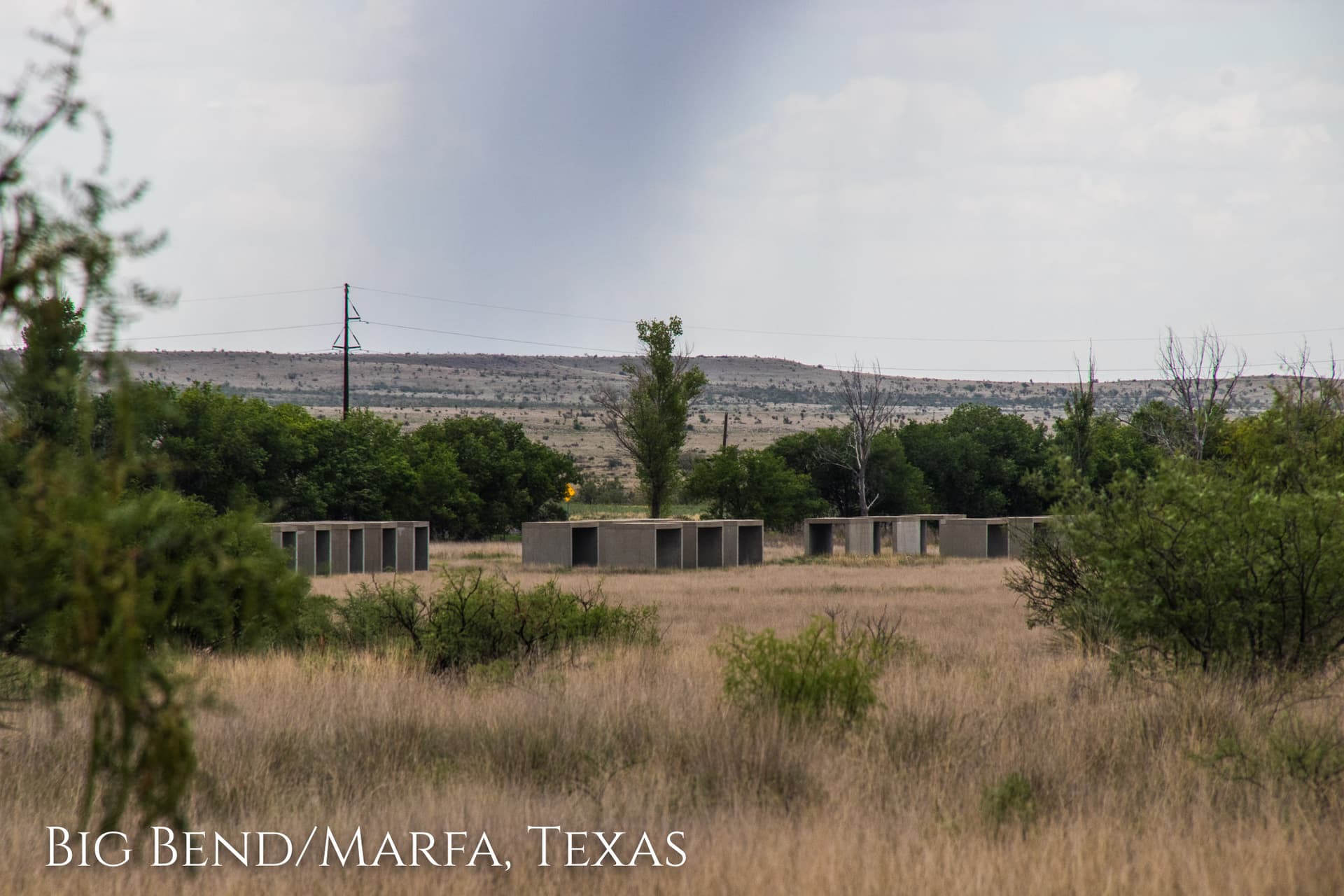
The Spring Street location, sometimes called the Block, houses large-scale permanent installations in converted military buildings from the former Fort D.A. Russell. That site operates separately and is worth booking on the same trip, though it requires its own reservation.
Main Highlights
The Living and Studio Spaces
Judd designed much of the furniture himself, and seeing those pieces in the rooms they were built for is different from encountering them in a gallery. The beds, tables, and shelving units were made to specific proportions for specific rooms. They're not decorative objects placed into a living context. They are the living context.
The Library
Judd was an obsessive reader and collector of books across art, architecture, philosophy, and military history. His library at the Highland Avenue property reflects that range in a way that feels biographical. You learn something about a person from their shelves that you can't get from their published statements.
The Art Collection
Judd collected work by contemporaries including John Chamberlain, Dan Flavin, and Claes Oldenburg, among others. These pieces are integrated into the living and working spaces rather than segregated into gallery rooms, which reflects Judd's conviction that art should be part of daily life rather than a special category of experience.
History and Background
Judd first visited Marfa in 1971 and began acquiring property shortly after. The town had a surplus of cheap, structurally solid buildings, including the decommissioned military base that would become the Chinati Foundation. Judd eventually split from Chinati, which he had helped establish, and the work at the Highland Avenue properties represents his more personal vision, less institutional and more intimate than the large-scale installations at Chinati.
After Judd died in February 1994, his children Flavin and Rainer became central to the Foundation's work. The organization has expanded its programming over the years to include residencies, publications, and educational initiatives, but the preservation of the Marfa properties remains the core mission.
Tickets and Entry
The Judd Foundation operates on a timed, guided-tour model. You cannot walk in without a reservation. Tickets are available through the Foundation's website, and tours fill up well in advance, especially during busy periods in spring and fall. There are different tour options covering different parts of the properties, so check the current offerings before you book to make sure you're reserving the experience you want.
Ticket pricing sits in the mid-range tier for a cultural attraction. Reduced rates are typically available for students.
Best Time to Visit
Spring, roughly March through May, is when Marfa sees the most visitors. The weather is mild and the light in the desert is exceptional in the late afternoon. Fall offers similar conditions with slightly fewer crowds. Summer can be very hot even at Marfa's elevation of about 4,600 feet, and some visitors find the midday heat limiting if they're planning to walk between multiple sites.
If you're combining a visit with the Chinati Foundation's open house weekend, which typically happens in October, book the Judd Foundation tour as early as possible. That weekend draws visitors from across the country and availability goes quickly.
Photography Tips
The Foundation permits photography in designated areas, but restrictions exist in spaces with sensitive works on paper or pieces where flash could cause damage. Your guide will tell you where you can and can't shoot. The interiors photograph well in natural light, and the mid-morning hours tend to offer softer light through the windows than the harsh afternoon sun. The exterior of the compound, with its adobe and stone construction against the West Texas sky, is worth shooting before your tour begins.
Combining with Nearby Attractions
A serious Marfa trip means time at the Chinati Foundation, which is about a ten-minute drive from the Highland Avenue property and requires its own advance booking. The Marfa Lights Viewing Area is about nine miles east of town on US-90 and draws visitors most evenings. The Prada Marfa art installation is roughly 36 miles northwest on US-90, a quick detour if you're driving in or out from that direction.
The Hotel Paisano, where Rock Hudson and Elizabeth Taylor stayed during the filming of Giant in 1955, is worth a look even if you're not staying there. It sits a short walk from the Foundation properties and the bar is a reasonable place to end an afternoon.
Practical Tips
- Book your tour as far in advance as possible. Last-minute availability is rare, especially on weekends.
- Wear comfortable shoes. The tour involves walking across uneven ground between buildings.
- Arrive a few minutes early. Tours start on time and late arrivals may not be accommodated.
- Cell service in Marfa can be inconsistent. Download your confirmation before you arrive.
- The town has limited dining options. If you're visiting on a weekday, check that your preferred restaurant is actually open that day before you count on it.
- Bring water. The desert air is dry even when the temperature is moderate.
FAQ
Do I need to book in advance?
Yes. The Judd Foundation does not accept walk-in visitors. All tours require advance reservations through their website, and popular time slots fill up weeks or months ahead, particularly in spring and fall.
How long should I plan for a visit?
The tours themselves run around two hours, but if you're combining Highland Avenue with the Spring Street property or the Chinati Foundation, plan for a full day. Give yourself time between bookings rather than rushing from one to the next.
Is the Judd Foundation the same as the Chinati Foundation?
No. They are separate organizations with separate ticketing and different focuses. Judd helped establish Chinati in the early 1980s but later separated from it. The Judd Foundation specifically preserves his personal studios, home, and library, while Chinati focuses on large-scale permanent installations in the former military base buildings.
Is the site accessible for visitors with mobility limitations?
The compound involves multiple buildings and some uneven terrain. Contact the Foundation directly before booking if you have specific accessibility needs, as conditions vary across the different spaces on the property.
Reviews
Sign in and mark this place visited to leave a review.
No reviews yet.
Free Trip Planner
Plan your Marfa trip with our free planner
Build a day-by-day itinerary with AI suggestions, hand-picked places, and friends. Free forever — no credit card.