Bastogne War Museum
Colline du Mardasson 5, Bastogne 6600 Belgium Posted by Brandon B.Admin
Inside the Bastogne War Museum: What to Expect Before You Go
The Bastogne War Museum sits on Mardasson Hill on the eastern edge of Bastogne, a small Belgian town that became one of the most strategically contested places in all of World War II. The museum opened in 2014, replacing an older facility on the same site, and it tells the story of the Battle of the Bulge with a level of immersive staging that few military museums in Europe can match. If you have any interest in the war, or even just in how modern museums are designed, this place is worth the drive.
Bastogne itself is easy to underestimate on approach. It looks like a quiet Ardennes market town, which it mostly is. But in the winter of 1944 to 1945, it was surrounded by German forces during the largest land battle ever fought by the U.S. Army. The museum makes sure you don't forget that.
Why the Bastogne War Museum Matters
The Battle of the Bulge began in December 1944 and lasted through late January 1945. More than a million soldiers fought across the Ardennes forest and the surrounding region. Bastogne was critical because several main roads converged here, and the American 101st Airborne Division, along with elements of other units, held the town against a German siege for over a week in brutal winter conditions. The famous reply "Nuts!" attributed to General McAuliffe in response to a German surrender demand happened here.
That story is well known. What the museum does unusually well is put four individual characters at the center of it: a Belgian civilian, an American soldier, a German soldier, and a Belgian nurse. You follow their accounts through the exhibits, which keeps the experience grounded in human terms rather than just maps and hardware.
Quick Facts
- Location: Colline du Mardasson 5, Bastogne, Belgium, about a 10-minute walk from the town center
- Opened in its current form in 2014
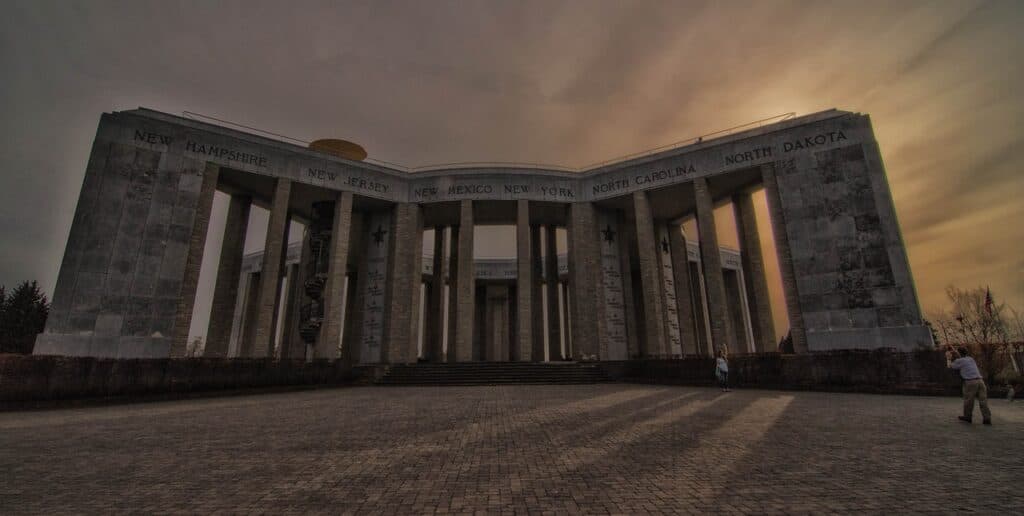
- The Mardasson Memorial, a star-shaped American monument built in 1950, stands just outside the museum entrance
- Exhibits cover the period from the rise of the Nazi regime through the liberation of Belgium and into the post-war years
- Languages: audio guides and displays available in English, French, Dutch, and German
- The building itself is partially buried into the hillside, with a roof terrace overlooking the surrounding Ardennes landscape
Getting There
Bastogne is in the Belgian province of Luxembourg, roughly 50 kilometers south of Liège. By car from Brussels, you're looking at about 2 hours depending on traffic. From Luxembourg City, it's closer to an hour. There's parking available on Mardasson Hill next to the museum, and it's generally easy to find a space outside of peak summer weekends.
Public transport to Bastogne exists but requires patience. Buses connect the town to Liège and other regional hubs, though the schedule is limited. If you're arriving without a car, the town center is walkable from the bus station, and the museum is about 10 minutes on foot from the central square, uphill along a straightforward route.
The Layout and Experience
The museum is built into the hill, which means the architecture itself does something interesting. You enter at ground level and move through exhibits that descend and wind around a central atrium. The design firm behind it used film projection, reconstructed environments, and object displays in a way that feels layered rather than linear. You're not just walking past cases of helmets.
The four-character narrative structure runs throughout. Each character has their own arc, and the museum weaves their stories into the broader military and political context. A large-format film room partway through the tour is one of the most effective parts of the experience. It's not a short film you can skip. It tends to hold attention in a way that pure artifact display often doesn't.
Plan on spending at least 2 hours. Some visitors take closer to 3, especially if they read everything. The space doesn't feel rushed or overloaded, but there's more here than a quick pass-through can cover.
Main Highlights
The Immersive Theater
One section uses a 360-degree projection environment to place you inside the battle. The scale and sound design are genuinely striking. It's the kind of thing that photographs poorly but lands hard in person, particularly for visitors who've only encountered the Battle of the Bulge through books or film.
The Mardasson Memorial
Directly outside the museum, the Mardasson Memorial was dedicated in 1950 and lists the names of all American states whose soldiers participated in the battle. It's a large star-shaped structure in white stone, and it stands on the same elevated ground as the museum. Most visitors walk it before or after the main exhibits. The crypt beneath the memorial contains mosaics by Fernand Léger, the French artist, which are worth a look on their own terms.
Personal Stories and Artifacts
The object collection includes weapons, uniforms, personal letters, and equipment from multiple sides of the battle. What distinguishes this collection from a generic military museum is the care taken to connect each object to an individual. A mess kit or a pair of boots means something different when you've already been introduced to the person who might have carried it.
Tickets and Entry
The museum charges general admission, with reduced rates available for children, students, and seniors. There's also a combined ticket option that covers the museum along with other local sites. Timed entry isn't standard here the way it is at some larger European attractions, but booking ahead online is worth considering in July and August when visitor numbers climb. School groups are common on weekday mornings in spring, which is worth knowing if you prefer a quieter experience.
Best Time to Visit
The museum is open year-round, and honestly, visiting in winter has a certain logic to it. Coming in December or January, when the Ardennes landscape matches the conditions the soldiers actually fought in, adds something that a summer visit can't replicate. The 75th anniversary commemorations in 2019 drew large crowds, and major anniversary years tend to bring organized events and temporary exhibitions.
If crowds matter to you, weekday mornings in spring or early autumn are typically the quietest. Summer school holidays bring families, and weekends in peak season can mean fuller parking and busier exhibit rooms.
Combining with Nearby Attractions
Bastogne has more to offer than the museum alone. The town center has its own small war monument and a Sherman tank on the main square, Place McAuliffe, named for the general. Several walking and driving routes through the surrounding countryside pass actual battle sites, foxholes, and cemeteries. The Henri-Chapelle American Cemetery, about 60 kilometers north, is one of the largest American military cemeteries in Europe and pairs well with a Bastogne visit if you're spending more than a day in the region.
The Ardennes landscape itself is one of the quieter parts of Belgium, with forested hills and small villages that see far fewer tourists than Brussels or Bruges. If you're driving through from Luxembourg or heading toward the Meuse Valley, Bastogne sits naturally on the route.
Practical Tips
- Wear comfortable shoes. The museum involves a fair amount of walking and some sloped surfaces.
- The audio guide is worth picking up, especially for the outdoor memorial section where context isn't always obvious from signage alone.
- Photography is generally permitted inside, but check current rules at the entrance as some projection rooms restrict it.
- There's a café and a museum shop on site. The shop carries serious military history titles alongside the usual souvenirs.
- If you're visiting with children, the narrative structure and film elements tend to hold attention better than a traditional display-case museum would.
- The roof terrace offers a clear view over the Ardennes and is a good spot to decompress after the intensity of the exhibits.
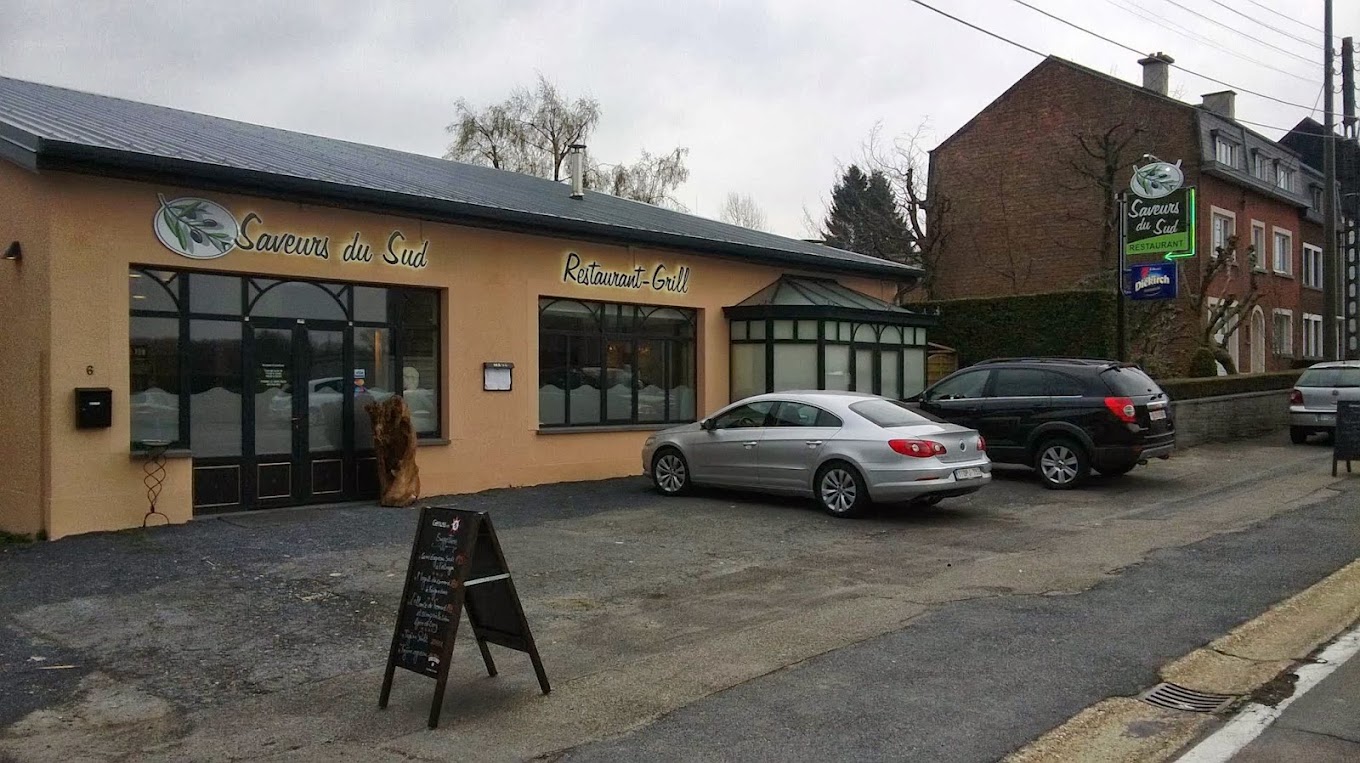
- Bastogne town center has several restaurants and cafés a short walk away if you want a longer lunch than the on-site café provides.
FAQ
How long does the Bastogne War Museum take to visit?
Most visitors spend between 2 and 3 hours. If you include time at the Mardasson Memorial outside, budget closer to half a day.
Is the museum suitable for children?
The museum deals with war, including death and suffering, in direct terms. The narrative structure and visual design make it more accessible to younger visitors than many military museums, but parents should use their own judgment. Children who are interested in history tend to engage well with the four-character story format.
Do I need to speak French or Dutch to enjoy the museum?
No. English is fully supported throughout, including the audio guide and most signage. The museum draws a significant international audience, and the multilingual setup reflects that.
Is there anywhere to eat near the museum?
There's an on-site café. Bastogne town center, about 10 minutes on foot, has a wider range of options including mid-range Belgian restaurants and a few casual spots around Place McAuliffe.
Can I visit the Mardasson Memorial without buying a museum ticket?
Yes. The memorial is an outdoor public monument and is accessible regardless of whether you visit the museum. The Léger mosaics in the crypt may have their own access arrangements depending on the time of year, so it's worth checking locally.
Opening hours
Reviews
Sign in and mark this place visited to leave a review.
No reviews yet.
Free Trip Planner
Plan your Bastogne trip with our free planner
Build a day-by-day itinerary with AI suggestions, hand-picked places, and friends. Free forever — no credit card.