Bayon Temple
Angkor Thom, Siem Reap Cambodia Posted by Brandon B.Admin
Bayon Temple: The Face Tower Sanctuary of Angkor Thom
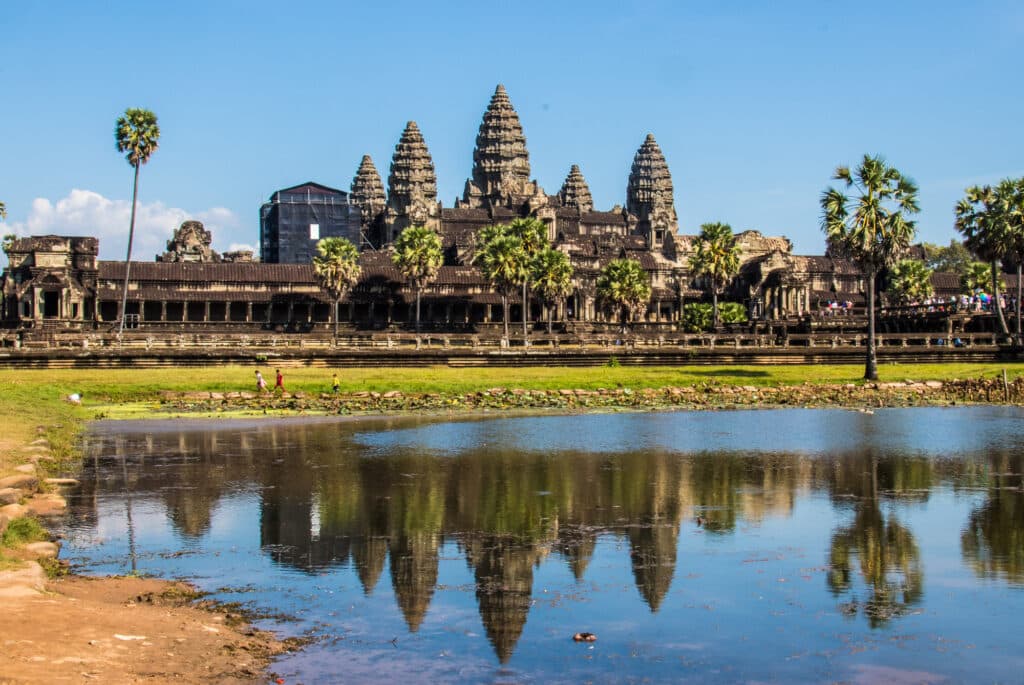
Bayon Temple stands at the exact center of Angkor Thom, the ancient walled capital built by Khmer king Jayavarman VII in the late 12th century. It is one of the most immediately recognizable structures in all of Southeast Asia, and almost certainly the most psychologically striking. Hundreds of enormous stone faces gaze outward from its towers in every direction, calm and faintly smiling, watching visitors arrive from the jungle paths just as they watched armies, pilgrims, and merchants centuries ago.
If you visit only one temple in the Angkor Archaeological Park, most seasoned travelers will tell you to make it Angkor Wat. But if you visit two, Bayon is the one that tends to stay with you longer.
Why Bayon Temple Matters
Bayon was the state temple of Jayavarman VII, arguably the most ambitious builder in Khmer history. He commissioned it as a Buddhist temple, which set it apart from the earlier Hindu temples of the complex. That religious shift is visible in the architecture: the faces are widely believed to represent the Bodhisattva Avalokiteshvara, though some scholars have long argued they also carry the likeness of Jayavarman VII himself. The debate has never been fully settled, which gives the place an extra layer of mystery worth sitting with.
The temple is also remarkable for its bas-reliefs. The outer gallery walls are covered in carved scenes depicting historical events: naval battles on the Tonle Sap lake, markets, processions, acrobats, and ordinary Khmer life from the 12th and 13th centuries. These are among the most detailed historical records of everyday Angkorian society that survive anywhere.
Quick Facts
- Location: Center of Angkor Thom, approximately 1.5 kilometers north of Angkor Wat
- Built: Late 12th to early 13th century, during the reign of Jayavarman VII
- Religion: Mahayana Buddhist (later modified with Hindu elements after Jayavarman VII's death)
- Face towers: 54 towers, each bearing four faces, though some have been lost to time
- Entry: Requires an Angkor Archaeological Park pass (available in 1-day, 3-day, and 7-day tiers)
- Open daily, including weekends and public holidays
- Modest dress required: shoulders and knees covered
Getting There
Bayon sits inside Angkor Thom, which you enter through one of five gates in the surrounding wall. The South Gate is the most commonly used and the most photogenic, lined with a stone causeway flanked by 54 gods on one side and 54 demons on the other. From the South Gate, Bayon is roughly a 10-minute walk or a 3-minute tuk-tuk ride straight north along the main road through the city.
Most visitors hire a tuk-tuk driver for the day from Siem Reap, which is the practical way to cover the park. The journey from central Siem Reap to Angkor Thom's South Gate takes around 20 to 25 minutes depending on traffic. Bicycles are also popular for those willing to manage the heat, and the flat terrain between temples is genuinely manageable if you start early.
The Layout and Experience
Bayon is a three-tiered pyramid temple. The lowest two levels hold the famous bas-relief galleries, and the upper level is where the face towers cluster most densely. The structure is compact compared to Angkor Wat, which means you can cover the main areas in 90 minutes, though many people spend considerably longer once the faces start to pull them in.
The inner corridors of the lower galleries are dim and narrow, with uneven stone floors. Bring a small flashlight if you want to study the carvings properly, as the lighting inside can be very poor. The outer bas-reliefs along the eastern and southern walls show historical battle scenes with enough detail that you can pick out individual soldiers, elephants, boats, and fish in the water beneath the naval battles.
Climbing to the upper terrace brings you face to face with the towers. At that level, the sheer number of faces surrounding you from every angle produces a genuinely disorienting effect. Faces appear from behind other faces. You turn a corner and find another tower you hadn't noticed. It rewards slow movement.
History and Background
Jayavarman VII came to power around 1181 after driving out Cham invaders who had sacked the previous Khmer capital. His building program was extraordinary in scale: he constructed hospitals, rest houses along roads, and temples across the empire, with Angkor Thom and Bayon as its spiritual and political center.
After his death, later Hindu kings defaced many of the Buddhist images at Bayon, carving over or removing figures throughout the temple. Then the site was largely abandoned and swallowed by the jungle over subsequent centuries. French archaeologists began serious documentation and restoration work in the early 20th century, and restoration efforts have continued ever since, including ongoing work by the Japanese government's team in recent decades.
The temple's identity was actually a matter of academic confusion for quite some time. Early European scholars believed it was built before Angkor Wat. It wasn't until the 1920s that researcher George Coedès established Bayon's true origin as a late 12th-century Buddhist monument.
Tickets and Entry
You cannot buy a ticket at Bayon itself. All entry requires an Angkor Archaeological Park pass, purchased at the official ticket center on the road between Siem Reap and the park. The pass covers the entire park, including Angkor Wat, Angkor Thom, Ta Prohm, and dozens of other sites. Passes are available as one-day, three-day, or seven-day options, with the three-day pass being the most popular choice for travelers who want to explore thoroughly without rushing.
Photography is permitted throughout the temple. Drone use requires a separate permit and has restrictions, so check current regulations with the Apsara Authority before flying.
Best Time to Visit
Arrive before 8am if you can. The face towers in early morning light take on a golden quality that disappears once the sun climbs higher, and the crowds are noticeably thinner for the first hour or two. Tour groups tend to arrive between 9am and 11am, and the narrow upper terrace corridors can feel congested during that window.
Late afternoon, from around 4pm onward, is the second-best window. The light softens again and the crowds thin out as visitors head back to Siem Reap for dinner. Sunset at Bayon is less celebrated than at Angkor Wat's famous western causeway, which means you often have a more relaxed experience if you end your day here instead.
The dry season, roughly November through April, brings the most visitors but also the clearest skies. The wet season, May through October, turns the surrounding jungle intensely green and the crowds drop considerably. Rain tends to come in afternoon bursts rather than all-day downpours, so a morning visit during wet season is often perfectly comfortable.
Photography Tips
The classic Bayon shot looks up at a cluster of face towers from the upper terrace, with multiple faces layered in the frame. For this, a wider lens works better than a telephoto. Early morning gives you warm side-lighting that reveals the texture of the sandstone.
The bas-relief galleries reward close-up photography. Look for the fishing and market scenes on the eastern outer gallery, where ordinary Khmer life is depicted with surprising warmth and humor. A small flashlight helps illuminate details the ambient light misses.
If you want a portrait-style shot of a single face, the faces on the northeastern towers tend to be the best preserved and are often slightly less photographed than the central cluster.
Combining with Nearby Attractions
Bayon sits inside Angkor Thom, so a logical half-day itinerary includes several other monuments within the same walled city. The Baphuon temple, a short walk northwest of Bayon, is a massive 11th-century pyramid that underwent one of the most complex restoration projects in archaeological history. The Terrace of the Elephants and the Terrace of the Leper King run along the eastern edge of Angkor Thom's central square and are worth 30 to 45 minutes between them.
Preah Pithu, a quieter cluster of temples in the northeastern corner of Angkor Thom, sees far fewer visitors and offers a more contemplative atmosphere if you want a contrast to Bayon's intensity.
Practical Tips
- Wear shoes you can slip on and off easily. Some areas require removing footwear before climbing.
- Carry water. There are vendors near the entrance but not inside the temple itself.
- The stone steps on the upper terrace are steep and worn smooth. Take them slowly, especially coming down.
- Cover your shoulders and knees before arriving. Scarves are sold near the entrance if you forget, but it saves time to dress appropriately from your hotel.
- Hiring a licensed guide for Bayon specifically is worth considering. The bas-relief narratives are difficult to decode without context, and a good guide transforms what looks like decorative carving into something you can actually read.
- Keep your park pass visible and accessible. Ticket checks happen at multiple points.
- There are no restaurants inside Angkor Thom. Plan your meals around your travel time to and from Siem Reap, or pack snacks for a longer day.
FAQ
How long does a visit to Bayon Temple take?
Most visitors spend between 90 minutes and 2.5 hours at Bayon itself. If you're combining it with other Angkor Thom sites like the Baphuon and the Terraces, budget a full half-day for the walled city as a whole.
Is Bayon suitable for children?
Generally yes, though the steep steps on the upper terrace require supervision for young children. The bas-relief carvings of battle scenes and market life tend to fascinate older kids, and the faces make a strong impression on most ages.
Can you visit Bayon independently without a guide?
Yes, and many people do. Free information boards are posted at the main entrance. That said, the historical layers, religious symbolism, and the ongoing debates about the faces' identity are much easier to appreciate with a knowledgeable guide walking you through it.
What's the difference between Bayon and Angkor Wat?
Angkor Wat is a Hindu temple built in the early 12th century, oriented to the west, and is the largest religious monument in the world. Bayon is a Buddhist temple built roughly 50 to 100 years later, sits at the center of the city rather than outside it, and is dramatically smaller but arguably more intimate and visually arresting up close. They reward different kinds of attention.
Reviews
Sign in and mark this place visited to leave a review.
No reviews yet.
Free Trip Planner
Plan your Cambodia trip with our free planner
Build a day-by-day itinerary with AI suggestions, hand-picked places, and friends. Free forever — no credit card.
Things to see near Bayon Temple


Places to eat or drink near Bayon Temple

Cuisine Wat Damnak Siem Reap

Khmer Grill Restaurant

WILD – Creative Bar & Eatery