Wat Thmey (Killing Fields)
Siem Reap Cambodia Posted by Brandon B.Admin
What Wat Thmey Actually Is
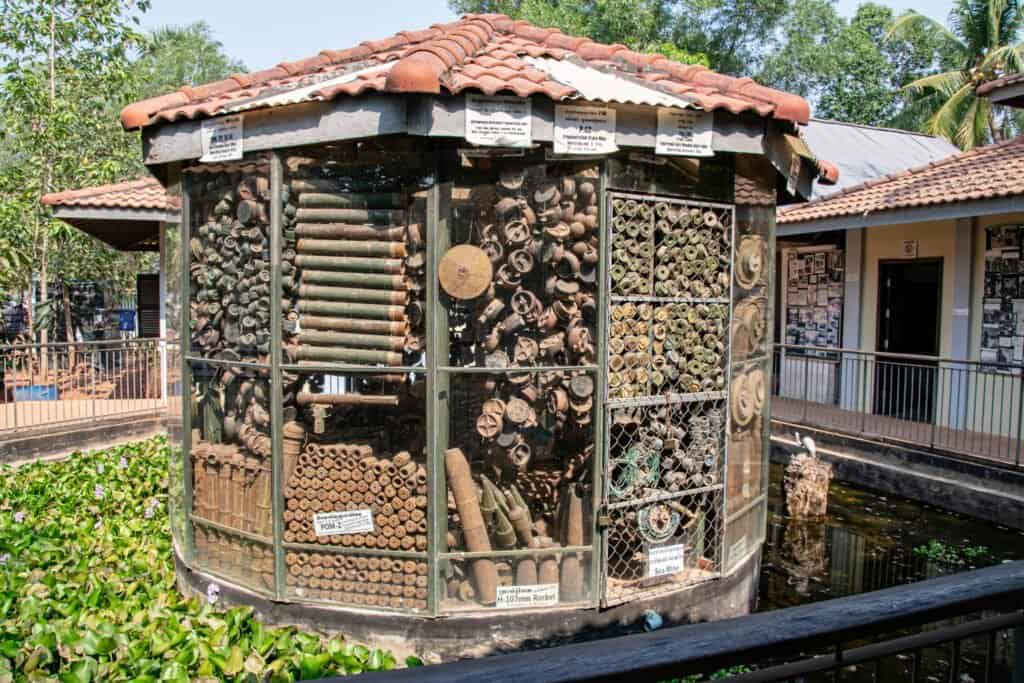
Wat Thmey sits inside the grounds of an active Buddhist temple on the road leading toward Angkor Thom, roughly 10 minutes by tuk-tuk from central Siem Reap. Unlike the Choeung Ek Genocidal Center outside Phnom Penh, this site is smaller, less internationally known, and embedded in the rhythms of a functioning pagoda. Monks live here. Ceremonies happen here. And right in the middle of it, behind a low iron fence, stands a glass memorial stupa filled with skulls and bones recovered from mass graves found on these grounds after the Khmer Rouge regime collapsed in 1979.
That contrast is the whole point of Wat Thmey. You walk in past orange-robed monks and children playing in the courtyard, and then you stop in front of something that has no gentle framing. It is one of the more quietly devastating things you can encounter in Cambodia, and it deserves more than a five-minute detour on the way to Angkor.
Why Wat Thmey Matters
The Khmer Rouge controlled Cambodia from 1975 to 1979. During that period, an estimated 1.7 to 2 million people died through execution, starvation, and forced labor. Siem Reap province was not spared. Mass graves were discovered across the region after Vietnamese forces ended the regime, and the temple grounds at Wat Thmey were among them.
The stupa here was built to house the remains found locally, giving the community a place to mourn and to remember. It functions differently from a formal memorial museum. There are no audio guides, no curated panels walking you through the history. What you get instead is direct and unmediated, which for many visitors turns out to be more affecting than any exhibition could be.
For travelers coming to Siem Reap primarily to see Angkor Wat, this site offers something that temple-hopping doesn't: a reason to think about the country you're actually in and the living memory of what happened here within the last 50 years. Many Cambodians you meet in Siem Reap were alive during the regime, or are the children of those who were.
Quick Facts
- Location: Inside a working Buddhist pagoda on the road toward Angkor Thom, Siem Reap
- Distance from Siem Reap center: Approximately 10 minutes by tuk-tuk
- Entry: A small donation is customary and expected; there is no fixed admission price
- Time needed: Most visitors spend 20 to 45 minutes
- Active temple: Monks reside here; religious activity continues alongside the memorial
- No audio guide or formal museum structure on site
- Photography is permitted but discretion is strongly advised
Getting There
The easiest way to reach Wat Thmey from central Siem Reap is by tuk-tuk. Most drivers who run the standard Angkor circuit know it well. If you're already visiting the Angkor complex, you can ask your driver to include it as a stop, since it falls roughly on the route between town and Angkor Thom. The temple sits along a main road, so it's not hard to find once you're in the area.
Cycling is also a reasonable option if you're the type who likes to move slowly through the Angkor region. The roads are flat and the distance from the old market area is manageable for most people, though the heat between late morning and mid-afternoon makes an early start worthwhile.
The Experience on the Ground
You enter through the pagoda grounds, not through any kind of ticketed gate. The temple complex itself is active and open, with monks going about their day and occasionally local families visiting for prayer. The memorial stupa is visible once you're inside the compound, a square glass-sided structure that holds the remains of victims found in the mass graves here.
There are some informational signs nearby in both Khmer and English that give basic historical context about the Khmer Rouge period and the discovery of the graves. The information is limited compared to what you'd find at Choeung Ek, but it's enough to orient you. Some visitors bring flowers or incense to leave at the stupa, which is in keeping with local Buddhist practice for honoring the dead.
The surrounding grounds are genuinely tranquil. That juxtaposition is not accidental. Buddhist practice in Cambodia has long served as a way of processing collective grief, and the coexistence of daily temple life and this memorial reflects something true about how the country has chosen to carry its history forward rather than seal it off.
Best Time to Visit
Early morning tends to work best, both because the light is softer and because the temperature is actually bearable. If you're combining this with a full day at Angkor, going to Wat Thmey first before the temple rush begins makes sense practically and also gives you the right headspace before moving into the spectacle of the archaeological sites.
The dry season, roughly November through April, makes the surrounding grounds more accessible. During the wet season the temple grounds can be muddy, though the site itself remains open year-round.
Photography Tips
You can photograph the stupa and the grounds, but think carefully about how you do it. The remains inside the stupa are real. Treat the space the way you would any active place of mourning. Avoid making the bones the subject of a wide-angle dramatic shot. Many visitors choose to photograph the exterior of the stupa, the surrounding trees, or the monks at a respectful distance rather than close-up images of the remains themselves.
The morning light in this part of Siem Reap is warm and comes from a low angle before around 9am, which makes the stonework and the stupa structure photograph well without harsh shadows.
Combining With Nearby Attractions
Because Wat Thmey is on the road toward Angkor Thom, it pairs naturally with a visit to the Angkor Archaeological Park. Most tuk-tuk drivers running the small circuit or grand circuit can adjust the route to include it. Angkor Thom itself, including the Bayon temple with its famous carved faces, is only a few minutes further along the same road.
If you want to deepen your understanding of the Khmer Rouge period specifically, the Cambodian Cultural Village on the outskirts of Siem Reap offers broader historical context, though its tone and format are very different. For the most comprehensive Killing Fields memorial experience in Cambodia, Choeung Ek outside Phnom Penh remains the primary site, with a full museum, audio guide, and extensive documentation. Wat Thmey is smaller and more personal, not a replacement for Choeung Ek but a meaningful encounter in its own right.
Practical Tips
- Dress modestly. Shoulders and knees should be covered as you're entering an active religious site.
- Bring small denomination riel or US dollars for the donation box.
- Speak quietly and move slowly. Other visitors may be in a reflective state, and monks may be at prayer.
- Don't rush. The site rewards a slower pace than most tourist stops in the Angkor region.
- If you're visiting with children, prepare them beforehand. The stupa contains human remains and there is no softening of that fact on site.
- Carry water. There are no refreshment stalls directly at the temple, though vendors operate along the main road nearby.
FAQ
Is Wat Thmey the same as the Killing Fields?
Wat Thmey is one of many sites across Cambodia where mass graves from the Khmer Rouge era were discovered. The term "Killing Fields" refers broadly to these sites. Choeung Ek near Phnom Penh is the most well-known, but Wat Thmey serves a similar memorial function for the Siem Reap area.
Do I need to book in advance?
No. The site is open as part of the temple grounds and does not require advance booking or timed entry.
Is it appropriate to visit if I'm not Cambodian or don't have a personal connection to the history?
Yes. Many Cambodians actively want the world to understand what happened here. Visiting respectfully, learning about the history, and acknowledging it as part of your time in Cambodia is considered appropriate and meaningful rather than intrusive.
How long should I spend here?
Most visitors find that 20 to 40 minutes is enough to take in the stupa, read the informational signs, and spend some quiet time in the grounds. You don't need to rush, but you also don't need to fill a half day.
Reviews
Sign in and mark this place visited to leave a review.
No reviews yet.
Free Trip Planner
Plan your Cambodia trip with our free planner
Build a day-by-day itinerary with AI suggestions, hand-picked places, and friends. Free forever — no credit card.
Things to see near Wat Thmey (Killing Fields)


Places to eat or drink near Wat Thmey (Killing Fields)

Cuisine Wat Damnak Siem Reap

Khmer Grill Restaurant

WILD – Creative Bar & Eatery