
Bosque de Chapultepec
Miguel Hidalgo, Mexico City Mexico Posted by Brandon B.Admin
Overview
Bosque de Chapultepec is one of Mexico City's largest and most visited green spaces, spanning roughly 686 hectares across three separate sections in the Miguel Hidalgo neighborhood. The forest has been a significant gathering place for centuries, with evidence of use dating back to pre-Hispanic times when the Mexica people settled the valley. Today it functions as a combination nature reserve, cultural institution, and public park, home to museums, archaeological sites, a zoo, and dense woodland that provides a genuine escape from the city's urban density.
The name Chapultepec derives from Nahuatl, meaning "grasshopper hill." If you arrive on a weekend, you'll find families, couples, joggers, and vendors filling the pathways. On weekday mornings, the forest feels noticeably quieter.
Why this place matters
Chapultepec holds deep cultural significance in Mexican history. The site was home to an Aztec palace and later served as a royal retreat under Spanish colonial rule. In 1847, during the Mexican-American War, young Mexican military cadets known as Los Niños Héroes defended the castle here, an event that remains central to Mexican national identity. The castle itself sits atop the hill and now functions as a museum dedicated to Mexican history from pre-Hispanic times through the 20th century.
Beyond its historical weight, Chapultepec represents an urban conservation effort. The forest provides habitat for birds, insects, and small mammals in the middle of a city of over 20 million people. Its museums are among Mexico's most important cultural institutions, drawing scholars and casual visitors alike.
Quick facts
- Size: approximately 686 hectares across three sections (First, Second, and Third Woods)
- Main entrance: Paseo de la Reforma side (closest to metro stations)
- Key museum: Castillo de Chapultepec (castle) with exhibits spanning pre-Hispanic to modern Mexican history
- Zoo: Chapultepec Zoo, established in 1923, home to over 2,000 animals
- Best for: walking, jogging, picnicking, cultural sites, bird watching
- Peak visiting hours: Saturday and Sunday afternoons, especially 11 am to 4 pm
Getting there
The easiest access is via the Chapultepec Metro Station (Line 1), which deposits you near the main entrance and the base of the hill. From the station, you can walk directly into the First Woods section. The walk from the metro to the castle base takes roughly 20 to 30 minutes at a moderate pace, with the path climbing gradually uphill.
If you prefer not to climb, a cable car (teleferico) operates from the base near the museum entrance up to the castle, though hours and availability depend on maintenance schedules. By car, there are parking areas near the main entrances, though they fill quickly on weekends. Street parking around Paseo de la Reforma is possible but often congested.
The closest neighborhood for dining and hotels is Polanco, just north of the forest, roughly a 10 to 15 minute walk from the north edge of the park.
The layout and experience
Chapultepec divides into three wooded sections, each with its own character. The First Woods (Bosque Primero) is the most developed and visited, containing the castle, main museums, zoo, and most of the infrastructure. Pathways here are well-maintained, with clear signage.
The Second Woods (Bosque Segundo) sits to the east and feels more like a nature reserve, with denser vegetation and fewer facilities. It's quieter and good for serious walking or bird watching. The Third Woods (Bosque Tercero) extends further east and is the least developed section, attracting fewer tourists.
Throughout the forest, you'll find walking trails of varying difficulty, some paved and flat, others dirt paths with elevation changes. Benches are scattered throughout, and vendors sell snacks, drinks, and ice cream at regular intervals. The castle sits at the highest point and offers views across the city once you reach the top.
Main highlights
Castillo de Chapultepec is the focal point. This 19th-century castle underwent major renovation and now houses the National Museum of History. The interiors include period rooms, presidential exhibits, and displays covering Mexican independence, the reform period, and the Mexican Revolution. The terrace provides views of the city extending toward the south and east.
The Chapultepec Zoo occupies a large section of the First Woods. It's one of Mexico's oldest zoos and is free to enter, though donations are accepted. The collection includes jaguars, pumas, wolves, and various bird species native to Mexico.
Several other museums cluster around the base of the hill. The National Museum of Anthropology sits just south of the forest boundary and is one of the world's premier anthropological collections, housing the Aztec Sun Stone and extensive pre-Hispanic artifacts. The Museum of Modern Art (Museo de Arte Moderno) and the Tamayo Museum occupy nearby sites. All three are separate institutions with their own entrance fees.
For something less formal, the Botanical Garden within the forest offers curated plant collections. A lake (Estanque Chico) sits in the lower sections where you can rest and watch waterfowl.
History and background
The site's significance predates the Spanish conquest. Aztec emperors built a palace and retreat here during the 15th and 16th centuries. The Mexica people considered Chapultepec sacred. After the conquest, Spanish colonial rulers recognized the site's value and established a forest reserve.
The current castle was built in the 1860s under Emperor Maximilian I and later served as the presidential residence. In 1847, during the war with the United States, Mexican military cadets made their last stand here rather than surrender, an act that made them national heroes. The castle's role shifted to museum use in the early 20th century.
The forest itself was formally designated a public park in 1883. Over the past century, it's been expanded, restored, and adapted to serve both conservation and recreational purposes. Recent decades have seen ongoing efforts to restore native vegetation and protect the woodland ecosystem.
Tickets and entry
Entry to the forest itself is free. You can walk the trails and visit the zoo at no cost. The castle museum requires a separate ticket for entry. Some of the surrounding museums (National Museum of Anthropology, Museum of Modern Art, Tamayo Museum) have their own admission fees and are technically outside the forest boundaries, though they sit adjacent to it.
Tickets for the castle museum tend to be budget-friendly. Many Mexican cultural sites offer free or reduced entry on certain days for residents and students, though policies vary. Check ahead if that applies to you.
Best time to visit
Weekday mornings offer the quietest experience. If you visit on a weekday before 10 am, you'll encounter fewer crowds and can move through the forest at your own pace. Weekends are substantially busier, especially Saturday and Sunday afternoons.
The dry season runs from November through April, offering the most pleasant walking conditions. The rainy season (May to October) brings afternoon thunderstorms most days, though mornings are often clear. Humidity is higher during the wet months.
Avoid visiting during major Mexican holidays or long weekends when the city empties into parks and attractions. Summer months (June to August) tend to be warm and humid.
Photography tips
The castle offers excellent vantage points for city views, especially from the terrace on clear days. Morning light is softer and better for landscape photography. The forest canopy creates interesting dappled light patterns on the trails.
The lake and botanical garden provide intimate nature shots. Early morning often brings bird activity worth capturing. If you're interested in wildlife, patience and a longer lens help, though large animals are less common than smaller birds and squirrels.
The castle's architecture photographs well from various angles as you approach it from below. Sunset light on the castle exterior is warm and flattering, though the crowds increase later in the day.
Facilities and preparation
Bring water. The forest has benches and shaded areas, but you'll be walking and climbing. Comfortable shoes are essential, as even "flat" paths have gentle elevation changes and dirt sections. The climb to the castle is steady but manageable for most fitness levels.
Restrooms are available near the castle and at the zoo entrance. Food vendors operate throughout the park, though options lean toward snacks and drinks rather than substantial meals. If you plan a longer visit, bring snacks or plan to eat in nearby Polanco.
The forest is generally safe during daylight hours, especially in the First Woods where foot traffic is highest. Stick to main pathways and avoid isolated sections at dusk or after dark.
Combining with nearby attractions
The National Museum of Anthropology sits directly south of the forest and is easily reached on foot. Most visitors combine a morning in the forest with an afternoon at the museum. Both deserve substantial time, so plan accordingly.
Paseo de la Reforma, Mexico City's main avenue, runs along the forest's west edge and passes through several neighborhoods worth exploring. The Polanco neighborhood to the north contains upscale restaurants, galleries, and shops.
If you have children, combining the zoo with the Children's Museum (Museo Tamayo or similar venues) makes for a full day. The Botanical Garden appeals to plant enthusiasts who might also visit the Vivarium or other nature-focused sites elsewhere in the city.
Sample visit plan
For a morning visit, arrive by 9 am at the Chapultepec Metro Station. Spend 90 minutes walking the First Woods trails, visiting the lake and botanical garden. Climb to the castle and spend 60 to 90 minutes exploring the castle museum. Have lunch in Polanco afterward. Total time: 4 to 5 hours.
For a full day, start in the morning as above, then return to the forest in the afternoon to explore the Second Woods on foot. This requires more time and energy but gives a broader sense of the forest ecosystem. Add 2 to 3 hours to the plan.
For families with young children, focus on the zoo and the lower trails, skipping the castle climb if energy is limited. The zoo alone occupies 2 to 3 hours depending on the children's pace and interests.
Practical tips
- Arrive early on weekends if you want a quieter experience. By noon on Saturday or Sunday, the forest is noticeably crowded.
- The cable car (teleferico) saves energy if climbing feels challenging, but verify it's operating before relying on it.
- Bring cash for vendors and small purchases. Many informal stalls don't accept cards.
- The castle museum has limited indoor seating. If weather turns hot, plan indoor time during the hottest hours.
- Bird watching is best in early morning or late afternoon when animals are most active.
- If you plan to visit multiple museums in one day, check their hours ahead of time, as they vary and some close on Mondays.
- Guides for the castle museum are available but operate on a tip basis, not fixed fees.
FAQ
Is Bosque de Chapultepec safe for solo travelers? Yes, during daylight hours and in the main sections, especially the First Woods where crowds are present. Stick to main pathways and avoid isolated areas at dusk.
How long does it take to walk through the entire forest? The First Woods can be explored in 2 to 4 hours depending on your pace and stops. If you visit all three sections, allow a full day.
Can you bring a picnic? Yes. Benches and grassy areas are available throughout the forest. Vendors also sell food if you prefer not to bring your own.
Is the zoo included with forest entry? Yes, the zoo is free to enter like the rest of the forest, though donations are accepted.
What's the best way to avoid crowds? Visit on a weekday morning, ideally before 10 am. Avoid Mexican holidays and summer vacation periods.
Reviews
Sign in and mark this place visited to leave a review.
No reviews yet.
Free Trip Planner
Plan your Mexico trip with our free planner
Build a day-by-day itinerary with AI suggestions, hand-picked places, and friends. Free forever — no credit card.
Things to see near Bosque de Chapultepec
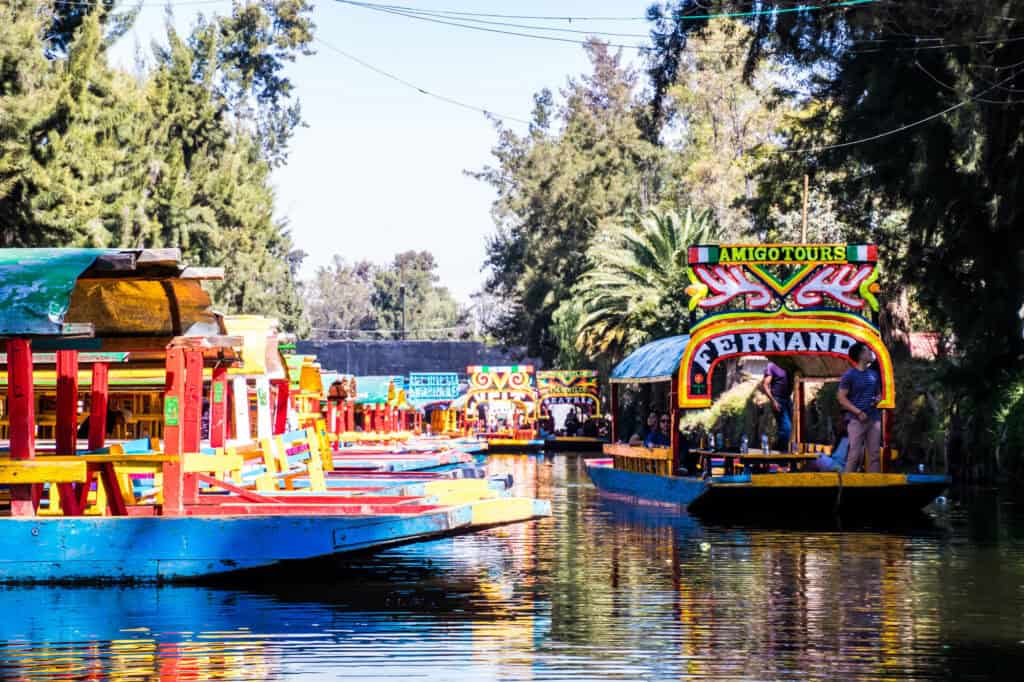
Xochimilco

Aztec Stadium

Frida Kahlo Museum

National Film Archives of México
Places to eat or drink near Bosque de Chapultepec

Sud 777

Fonda Margarita

El Huequito

Mercado de Jamaica
More places in Mexico City

Museo del Templo Mayor

Antojeria Queretaro

Bella Aurora
