Church of Our Lady
Mariastraat, 8000 Brugge, BelgiumOverview
Walk into the Church of Our Lady on Mariastraat and the first thing that arrests you is the space itself. The interior soars upward in a way that feels almost weightless, despite the stone. Light falls through tall windows onto pale walls, and your eye is drawn inevitably toward the chancel. This is one of Bruges' most significant churches, and it carries the weight of six centuries without announcing it loudly. The building speaks through proportion and material rather than theatrical decoration.
The Church of Our Lady sits in the heart of medieval Bruges, a few minutes' walk from the Beguinage and the Market Square. It's a working parish church and a major cultural landmark, home to a collection of art that includes works by some of the most important artists of the Flemish Renaissance. Whether you come for the architecture, the artworks, or simply to experience the quiet of a Gothic interior, the church rewards a visit that takes time.
Why this place matters
The Church of Our Lady is significant both as an architectural achievement and as a repository of important religious art. The building itself represents several centuries of construction and modification, with elements spanning from the 13th century onward. Its tower, completed in the 15th century, became one of the defining silhouettes of Bruges' skyline.
The church's collection includes works by Michelangelo and other Renaissance masters. A marble Madonna and Child by Michelangelo is housed here, one of only a handful of his sculptures outside Italy. This single artwork elevates the church's status in European cultural terms.
Beyond individual masterpieces, the church functions as a visual record of Bruges' prosperity during the medieval and early modern periods. The artworks, furnishings, and architectural choices all reflect the city's wealth and its position as a center of Flemish culture.
Quick facts
- Located on Mariastraat in central Bruges
- Construction began in the 13th century and continued through the 15th century
- The tower reaches approximately 122 meters in height
- Contains a marble Madonna and Child sculpture by Michelangelo
- Still functions as an active parish church
- Entry is typically free or requires a small donation
- Photography is generally permitted in certain areas
Getting there
The church sits on Mariastraat, a short walk from Bruges' central squares. If you're coming from the Market Square (the Grote Markt), head south toward the Beguinage. The church is well signposted. Most visitors reach it on foot, as the medieval center of Bruges is compact and pedestrian-friendly. There is no dedicated parking at the church, though paid parking exists in nearby garages.
By public transport, buses serving central Bruges can deposit you within a five-minute walk. The train station is about 20 minutes away on foot or a short bus ride, depending on the line.
The layout and experience
The church's interior is divided into a nave with side aisles, a transept, and a chancel. The proportions are generous without being overwhelming. The walls are largely unadorned compared to some European cathedrals, which creates a sense of calm rather than visual exhaustion.
As you enter, your eye is drawn immediately to the height and the light. The wooden roof beams are visible overhead in places, adding warmth to what could otherwise feel austere. The side aisles contain chapels and altars, each with its own focus. Moving deeper into the church, you encounter the artworks gradually rather than all at once.
The Michelangelo sculpture is positioned in a chapel where it can be viewed from multiple angles. The setting is respectful and intimate rather than theatrical. Other paintings and religious objects are distributed throughout the space, so a full visit requires moving slowly and looking carefully.
The acoustics are notable. If there is singing or music during your visit, the space amplifies it in a way that feels natural and unforced. This has been true for centuries and partly explains why the church remains active as a place of worship rather than existing solely as a museum.
Main highlights
The Michelangelo Madonna and Child is the most celebrated artwork in the church. It's a marble sculpture from the early 16th century, carved when Michelangelo was at the height of his powers. The work exemplifies Renaissance ideals of grace and proportion. It arrived in Bruges centuries ago through trade and patronage networks.
Beyond this singular masterpiece, the church contains paintings by Flemish masters including works from the 15th and 16th centuries. These paintings reflect the style and subject matter characteristic of the Bruges school of painting, which was influential across Europe during the Renaissance.
The architectural elements themselves merit attention. The ribbed vaulting, the proportions of the nave, and the treatment of light through the windows all reflect design choices that were deliberate and sophisticated. The tower, visible from many points in the city, is an architectural achievement in its own right.
The Beguinage, directly adjacent to the church, forms part of the larger experience. Many visitors combine the two, spending time in both the church and the courtyard of the Beguinage.
History and background
Construction of the Church of Our Lady began in the 13th century, making it one of the oldest buildings in Bruges. The initial phases focused on the choir and the transept. Over the next two centuries, additions and modifications transformed it into the building that stands today. The tower was completed in the 15th century.
During the medieval period, Bruges was one of the wealthiest cities in Europe, a major center of the wool trade and a hub of commerce. The church benefited from this prosperity. Wealthy merchants and patrons commissioned artworks and endowed chapels. The artistic collection accumulated gradually, reflecting the tastes and resources of successive generations.
The Michelangelo sculpture arrived in Bruges in the early 16th century. It was acquired for the church and has remained here since. This speaks to Bruges' international connections and its status as a destination for important artworks.
Like many European churches, the building experienced periods of neglect and restoration. It survived the Protestant iconoclasm of the 16th century and subsequent periods of religious and political upheaval. The 20th and 21st centuries have seen careful conservation work to maintain both the structure and the artworks.
Tickets and entry
The church functions as an active parish church, and entry is typically free or requires a small donation. There is no ticketed admission in the traditional sense. This differs from many European churches that have been converted entirely to museum status.
Photography policies can vary depending on whether services are occurring. Most of the time, photography is permitted, though flash photography may be restricted. It's worth asking staff if you are uncertain.
The church's status as an active place of worship means that visiting hours can be affected by services or special events. Mornings and early afternoons tend to be the most reliably open times. Checking ahead is sensible, particularly if you are traveling a long distance or have limited time in Bruges.
Best time to visit
Bruges is busiest during spring and summer, and the church experiences more visitors during these months. If you prefer a quieter experience, visiting in autumn or winter tends to mean fewer crowds. The interior is lit by windows, so visiting during daylight hours allows you to experience the light quality that is part of the building's design.
Weekday mornings tend to be quieter than weekend afternoons. If you visit after 5pm, you may find the church closing for the evening, depending on the season and local schedules.
The church can be quite cold in winter, as the high ceilings and stone walls don't retain heat well. Wearing layers is practical.
Photography tips
The tall windows and pale walls create good natural light conditions inside, particularly on clear days. This makes the interior relatively photogenic compared to darker European churches. However, the light is directional and changes throughout the day.
Morning light from the east-facing windows is softer. Late afternoon light from the south or west can create more dramatic shadows and contrast. If you want to photograph the Michelangelo sculpture, visiting at a time when natural light is good will serve you better than relying on flash photography, which may be restricted anyway.
The tower exterior is best photographed from nearby streets or squares where you can step back and see its full height. There is no single perfect vantage point, but multiple angles yield different compositions.
If photographing architectural details, the ribbed vaulting and the window tracery are worth focusing on. A standard wide-angle lens works well for capturing the interior volume, though a normal lens can work equally well for details.
Facilities and preparation
The church has a simple interior without a gift shop or café on the premises. Bruges has numerous cafés and shops nearby, so you can easily get refreshments before or after your visit.
There are no facilities specifically for visitors inside the church. Restrooms may be available, but it's best to assume they are not and plan accordingly.
The floor is stone, so comfortable walking shoes are advisable. There are no specific accessibility issues, though the building's age means some areas may have steps or uneven surfaces. If you have mobility concerns, it's worth contacting the church in advance to discuss what areas are accessible.
Dress codes are not strictly enforced, but the church remains a place of worship. Wearing respectful clothing is appreciated. This means covering shoulders and knees is sensible, though not absolutely required.
Combining with nearby attractions
The Beguinage is directly adjacent and easily combined with a visit to the church. The Beguinage is a UNESCO World Heritage site consisting of a courtyard surrounded by historic houses. It provides context for understanding Bruges' religious and social history. Plan to spend 30 to 45 minutes here.
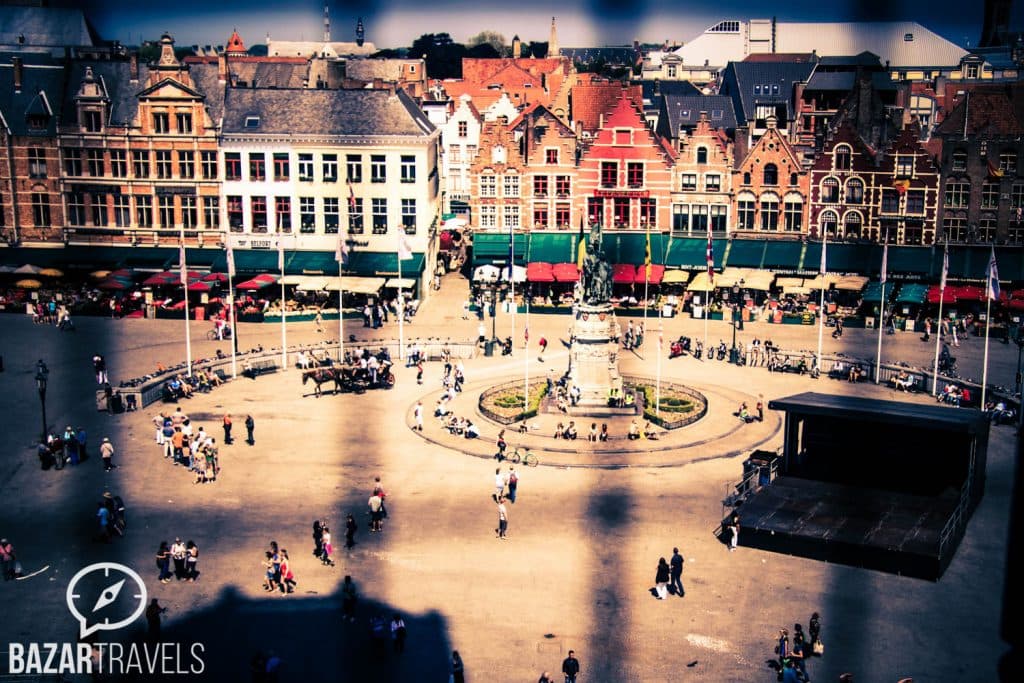
The Market Square and the Belfry tower are a short walk to the north. The Belfry is another important architectural landmark with views over the city from its upper levels. These three sites can form a coherent half-day itinerary focused on Bruges' medieval heritage.
The Groeningemuseum, housing Flemish paintings, is about 10 to 15 minutes' walk away. If you want to explore Renaissance art more deeply beyond the works in the church, this museum provides additional context and examples.
The St. Salvator's Cathedral is another major church in Bruges, about 15 minutes' walk from Our Lady. It has different architectural characteristics and a distinct artistic collection. Visiting both provides a sense of how Bruges' religious institutions developed differently.
Sample visit plan
Allow 45 minutes to an hour for a thorough visit to the Church of Our Lady itself. If you are moving slowly, examining details, and sitting quietly for a time, you might spend longer.
A morning visit starting around 10am gives you good light and fewer crowds. Spend 45 minutes inside the church, paying particular attention to the Michelangelo sculpture and the main paintings. Step outside briefly to view the tower from street level.
From there, walk directly to the Beguinage (five minutes) and spend 30 to 45 minutes in the courtyard and exploring the small museum or café if one is open. By lunchtime, you can head to a nearby restaurant or café.
If you have more time, add the Market Square and Belfry in the afternoon, or save the Groeningemuseum for a second museum visit later in your stay.
Practical tips
- Visit on a weekday morning for the quietest experience
- Check opening hours before you go, as services can affect access
- Bring comfortable walking shoes with good grip, as the floor is stone
- Allow time to sit and simply experience the space, not just view artworks
- The interior can be cool; a light jacket is useful even in warm seasons
- If you want to photograph the Michelangelo sculpture, avoid using flash and visit during daylight hours
- Combine your visit with the adjacent Beguinage for a fuller picture of medieval Bruges
- Bring a small notebook if you want to note details; the quiet atmosphere encourages reflection
FAQ
Is the Church of Our Lady still an active place of worship? Yes, it functions as a parish church. This means services occur regularly, which can affect visitor access at certain times. It also means the interior is maintained as a place of prayer and worship, not solely as a museum.
Can I see the Michelangelo sculpture? Yes. The marble Madonna and Child is displayed in a chapel within the church and is accessible to visitors. It's one of the main reasons people visit.
How long should I plan to spend here? Between 45 minutes and an hour is typical. If you are interested in art history or architecture specifically, you might spend longer. If you visit during a service, you would need to adjust your timing.
Is there an entrance fee? Entry is typically free or involves a small donation. There is no ticketed admission system like you would find in a museum.
Can I photograph inside? Photography is generally permitted, though flash may be restricted. It's good to ask staff when you arrive if you have specific concerns about photographing particular artworks.
Opening hours
Reviews
Sign in and mark this place visited to leave a review.
No reviews yet.
Free Trip Planner
Plan your Bruges trip with our free planner
Build a day-by-day itinerary with AI suggestions, hand-picked places, and friends. Free forever — no credit card.