Colonia Guell Gaudi Crypt
Claudi Guell, 6, 08690 Santa Coloma de Cervello Spain Posted by Brandon B.Admin
Gaudí's Unfinished Masterpiece in Colònia Güell
The Colònia Güell Crypt sits about 20 kilometers southwest of Barcelona, in the small town of Santa Coloma de Cervelló, and most visitors who make the trip come away wondering why it took them so long to get here. This is the building where Antoni Gaudí first tested the structural ideas that would later define the Sagrada Família. The crypt was never completed, but what stands today is more than enough to justify the journey.
Gaudí worked on the project for roughly a decade before construction stalled in 1914. The upper church was never built. What remains is the lower crypt, tucked into a wooded hillside at the edge of a workers' village that Eusebi Güell commissioned in the late 19th century. The whole place has an oddly intimate feeling, partly because so few tourists make it out here compared to the crowds at Park Güell or Casa Batlló.
Why the Colònia Güell Crypt Matters
Before Gaudí could build the Sagrada Família's soaring nave, he needed to solve a structural problem: how to design a building that carries its own weight without relying on external buttresses. His answer was the hanging chain model, a method where he suspended weights from strings to simulate the forces acting on arches and vaults. Flip the model upside down and you get the ideal form for a self-supporting structure. He refined this technique here, in the crypt at Colònia Güell, before applying it on a much grander scale in Barcelona.
That makes this building something rare. It is not just a work of architecture. It is a working prototype for one of the most famous buildings in the world.
Quick Facts
- Location: Claudi Güell, 6, Santa Coloma de Cervelló, about 20 km from central Barcelona
- Construction began: 1908, halted in 1914
- Architect: Antoni Gaudí
- The crypt is still an active Catholic church
- Entry includes access to the Colònia Güell workers' village, a UNESCO candidate site
- Ticket type: general admission, with optional guided tours available
- Budget to mid-range entry cost
- Closed Mondays
Getting There
The most straightforward way to arrive from Barcelona is the FGC train from Plaça Espanya, on the S33 line toward Sant Vicenç dels Horts. Get off at Colònia Güell station. The ride takes around 35 minutes depending on connections. From the station, the crypt is a short walk through the old village, roughly 10 to 15 minutes on foot.
If you drive, there is parking near the visitor center on Carrer Claudi Güell. The road into the village is narrow in places, so take it slowly. Coming by car also makes it easier to combine the visit with other sites along the Llobregat corridor.
The Layout and Experience
You enter the crypt through a porch of tilted basalt columns that lean at irregular angles, as though the building grew out of the hillside rather than being placed on it. The columns are not straight because Gaudí calculated the precise angle each one needed to carry its load without a single piece of wasted material. Stand underneath them and look up. The logic becomes visible.
Inside, the space is low and cave-like, lit partly by stained glass windows designed by Gaudí himself using irregular, almost mosaic-like fragments of colored glass. The brickwork overhead follows hyperbolic and parabolic curves. Every surface has a reason behind it.
The crypt seats a modest congregation. It is not a grand space in the way a cathedral is grand. The power here is in the detail and in knowing what it represents. Locals still hold services here, which gives the place a living quality that purely museum-fied buildings often lose.
History and Background
Eusebi Güell, Gaudí's most important patron, built Colònia Güell as a model industrial village for workers at his textile factory. Construction on the village began in the 1890s, and Güell hired prominent architects and designers of the Catalan Modernisme movement to work on the housing, school, cooperative, and other buildings. The village itself is a fascinating piece of social and architectural history, separate from but closely connected to the crypt.
Gaudí was commissioned to design the church for the village in 1898. He spent years on the hanging chain model before a single stone was laid. Construction finally started in 1908. When Eusebi Güell died in 1918, funding dried up and the project stopped permanently at the crypt level. The upper church was never built, and the crypt roof, which was always intended as a temporary floor for the church above, remains visible as such today.
The village was designated a heritage site and has been put forward as part of the broader UNESCO World Heritage nomination that already includes seven of Gaudí's other works. The crypt itself was listed as a protected monument in 1969.
Best Time to Visit
Weekday mornings tend to be quietest. Weekend afternoons can bring larger groups, though nothing like the queues you encounter at Gaudí sites inside Barcelona. Spring and autumn are the most comfortable seasons for walking through the village after visiting the crypt, when the surrounding trees are in color and the heat is manageable.
If you time your visit to avoid a Sunday morning, you are less likely to walk into an active mass, though honestly, catching a brief glimpse of the church being used as it was intended is not the worst thing that can happen.
Photography Tips
The exterior porch with its tilted basalt columns photographs well in morning light, when the sun comes through the trees from the east and catches the rough texture of the stone. Get low and shoot upward through the columns to show the lean and the layering of the porch ceiling.
Inside, the stained glass windows are the most striking element. A wide-angle lens helps in the confined space. The light through those irregular glass fragments creates patches of color on the brick floor that shift throughout the day. Mid-morning, when the sun reaches the south-facing windows, is usually the best window for interior color.
Photography is generally permitted inside the crypt, but check with staff on arrival, particularly if a service is scheduled.
Combining with Nearby Attractions
The workers' village of Colònia Güell is worth at least an hour of exploration on its own. The cooperative building, the school, and the rows of workers' housing designed in the Modernisme style make the place feel like a time capsule. Some of the original buildings have been restored and are open to visitors as part of the general admission ticket.
If you are building a day trip, the FGC line that brings you to Colònia Güell also stops at Sant Boi de Llobregat and connects back toward Montserrat with a change at Plaça Espanya, though Montserrat would make for a very full day if combined. A more manageable pairing is to spend the morning at the crypt and village, then head back toward Barcelona for the afternoon and visit Parc de l'Espanya Industrial near Plaça Espanya, which is a pleasant modern park a short walk from the train station.
Practical Tips
- Buy tickets at the visitor center near the entrance to the village, not at the crypt door
- Wear comfortable shoes. The village paths and the hillside approach to the crypt are uneven
- The crypt interior can feel cool even in summer. A light layer is useful
- Guided tours are available and worth taking if you want the structural and historical context explained properly. Ask at the visitor center about language options
- The site is closed on Mondays. Check seasonal hours before visiting, as they shift between summer and winter
- There is a small café near the visitor center. Options for food in the immediate area are limited, so eat before you come or bring something
- The FGC train from Plaça Espanya runs frequently. A T-Casual transport card covers the journey
FAQ
Is the Colònia Güell Crypt worth visiting if I have already seen the Sagrada Família?
Absolutely, and arguably more so. Seeing the prototype makes the finished work easier to understand. The crypt shows Gaudí's thinking in a way the Sagrada Família, now surrounded by scaffolding and crowds, no longer can.
How long should I set aside for the visit?
Plan on at least two hours. One hour for the crypt and one for the village. If you are interested in architecture or social history, three hours passes easily.
Is the site accessible for visitors with reduced mobility?
The village paths and the approach to the crypt involve some uneven ground and slopes. It is worth contacting the visitor center in advance to ask about accessible routes, as conditions vary across different parts of the site.
Can children visit?
Yes. The open-air village is easy for families, and the unusual shapes inside the crypt tend to hold children's attention better than more conventional churches. Reduced admission typically applies for younger visitors.
Reviews
Sign in and mark this place visited to leave a review.
No reviews yet.
Free Trip Planner
Plan your Santa Coloma de Cervello trip with our free planner
Build a day-by-day itinerary with AI suggestions, hand-picked places, and friends. Free forever — no credit card.
Related reading

Things to see near Colonia Guell Gaudi Crypt
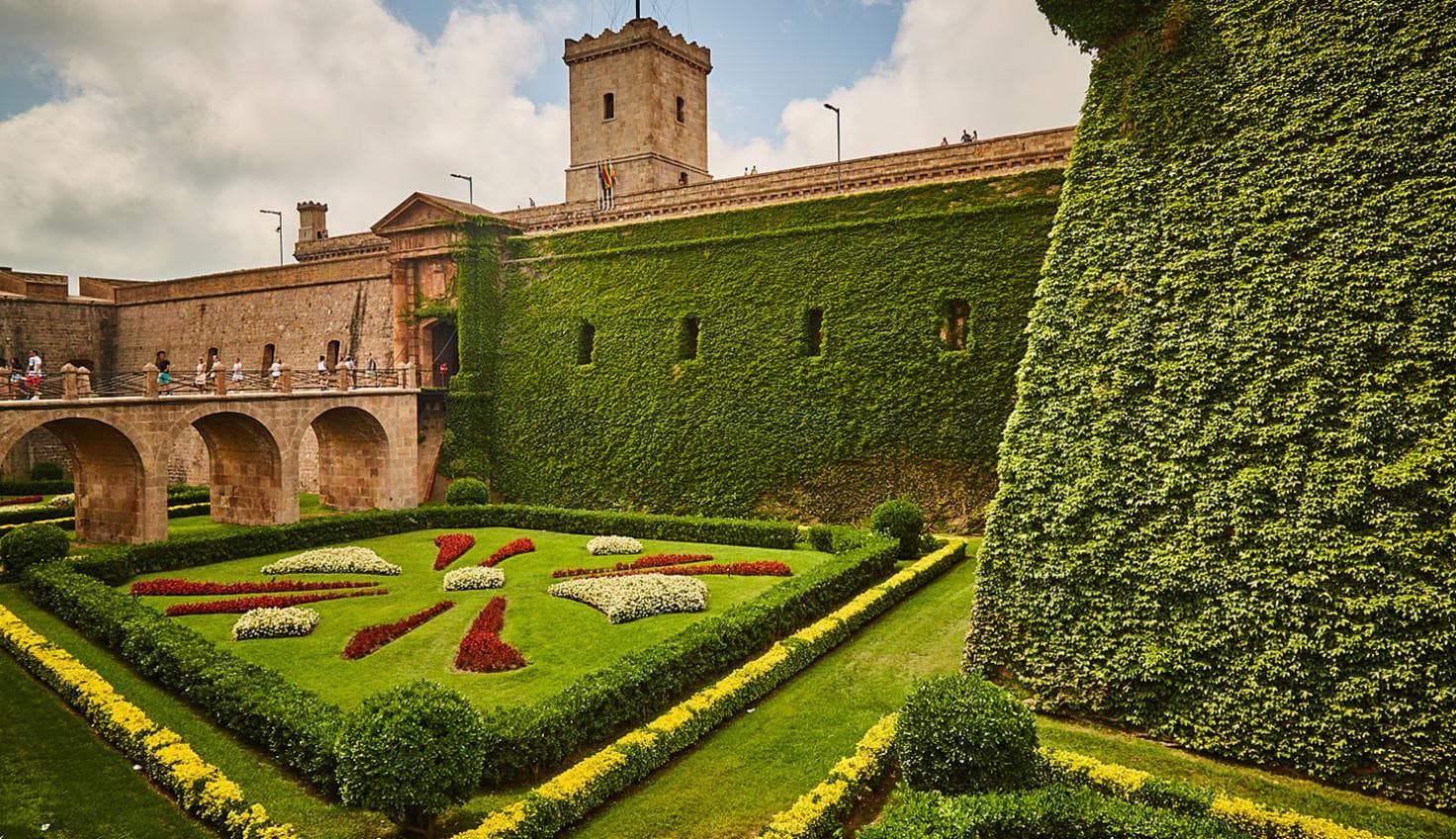
Montjuïc Castle
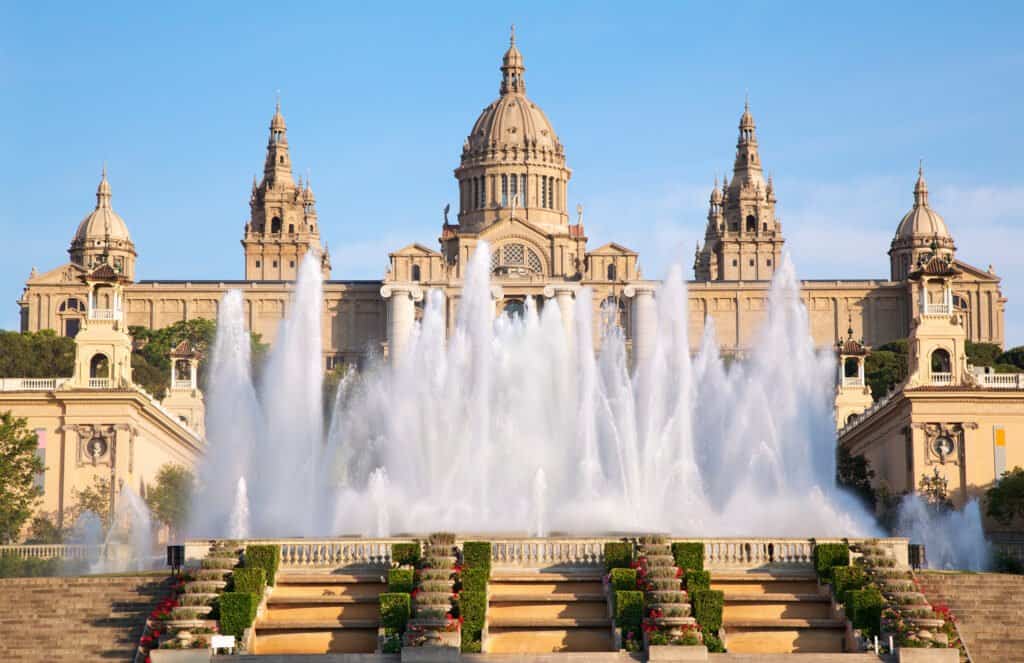
Magic Fountain of Montjuïc
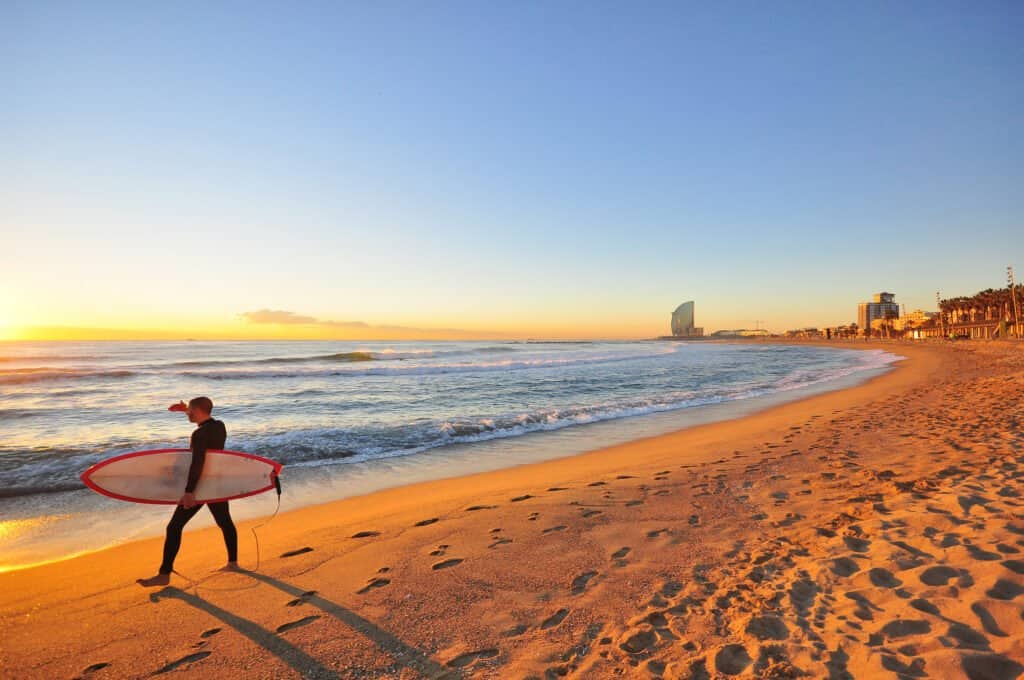
Barceloneta Beach