Montjuïc Castle
Carretera De Montjuïc 66, 08038 Barcelona, Barcelona, Spain Posted by Brandon B.Admin
Montjuïc Castle Overview
Montjuïc Castle sits on a hilltop overlooking Barcelona, commanding views across the city, the Mediterranean, and the surrounding plains. The fortress has stood here since 1640, making it one of Barcelona's most visible landmarks and one of the few places in the city where you can see how the urban landscape spreads in all directions. Whether you arrive to walk the walls, explore the military history, or simply sit on the grass and watch the light change over the water, the castle offers something different from the crowded Gothic Quarter below.
Why This Place Matters
Montjuïc Castle isn't just a pretty ruin. It's a physical record of how Barcelona defended itself and changed hands over nearly 400 years. The fortress has been a military stronghold, a prison, and now a museum and public space. Its location on Montjuïc hill has made it a symbol of the city for generations, and its strategic position meant that whoever controlled the castle had real power over Barcelona's survival.
For visitors, the castle matters because it offers perspective. Standing on the walls, you understand the city's geography in a way you can't from street level. You also get a clearer sense of how Barcelona's identity has shifted from a walled medieval settlement to a sprawling modern metropolis.
Quick Facts
- Built in 1640 and expanded through the 1700s
- Located on Montjuïc hill, about 8 minutes by cable car from the base or 25 minutes walking uphill
- General admission tickets available, with discounts for children, students, and seniors
- Open most days with extended hours in summer
- Free admission for Barcelona residents on certain days
- The castle grounds span roughly 1.3 hectares
Getting There
The castle sits high enough that most people don't walk the whole way up, though it's possible. The easiest route is the Funicular de Montjuïc, a cable car that leaves from the lower slopes and deposits you near the castle entrance in about 8 minutes. If you're already in the Montjuïc area exploring the museums or the Magic Fountain, the walk from there is manageable and fairly scenic.
By bus, you can reach the lower slopes of Montjuïc from the city center in about 15 minutes, then take the funicular or walk the rest. By car, there's a parking area near the castle entrance, though parking can fill up on weekends. The castle is also accessible from the lower slopes on foot if you enjoy a steady uphill walk with increasingly good views as you climb.
The Layout and Experience
The castle is laid out as a series of defensive walls and bastions arranged in a star shape, which was the military design standard in the 17th century. You enter through a stone gateway and immediately find yourself inside the outer walls. From there, the experience is fairly open and self-directed. You can walk the perimeter walls, climb to the higher bastions, explore the parade ground, and visit the small museum housed in one of the main buildings.
The walls themselves are the main attraction. They're wide enough to walk on comfortably, and the views improve with every few steps you take. On a clear day, you can see all the way to Tibidabo on the northwest side of the city and out to the sea on the east. The parade ground in the center is a large flat area where you can sit on the grass, have a picnic, or simply rest and absorb the scope of what you're looking at.
Inside the main keep, a modest museum covers the castle's military history, with displays explaining its role as a fortress, a prison, and eventually a public monument. The exhibits are straightforward rather than elaborate, which suits the setting. You're not here for high production value. You're here for the building itself and what it tells you about Barcelona's past.
Main Highlights
The walls are the primary draw. Walking them gives you the kind of perspective on Barcelona that no other vantage point in the city provides. The view westward across the plains and toward Montserrat is particularly striking. At dusk, when the light turns golden and then purple, the view becomes almost meditative.
The chapel inside the castle is small but has genuine character. It's still used occasionally for events, and the stone interior and simple altarpiece give you a sense of how garrison life functioned here centuries ago.
The lower bastions, particularly the ones facing the sea, have the widest walls and the most dramatic drops. Standing here, you understand why this location was so strategically important. Barcelona's harbor was directly below, and this castle could see and control access to it.
History and Background
Barcelona built Montjuïc Castle in 1640 as a fortress to defend against attacks from the sea and to exert control over the city during a period of political tension. It was expanded significantly in the 1700s after the War of Spanish Succession, when the new ruling dynasty wanted to ensure Barcelona remained under control. The castle's star-shaped design reflected the most advanced military thinking of that era.
For much of its existence, the castle served as a military garrison. In later centuries, it became infamous as a prison. Political prisoners and others deemed dangerous to the state were held here, particularly during periods of repression. This darker history is part of why the castle matters to many Barcelona residents. It's not just a picturesque ruin. It's a place where real conflict happened.
By the 20th century, the military function had faded. The castle was opened to the public, and today it functions as both a museum and a public space. It's been restored enough to be safe and walkable, but not so much that it's been turned into a sanitized theme park. The weathered stone and the way grass grows through the parade ground give it an honest, slightly melancholy character.
Tickets and Entry
Admission is charged for general entry to the castle grounds and museum. Tickets are available at the entrance, and there are discounts for children, students, and seniors. Some Barcelona residents get free or reduced entry on specific days, so if you're local, check the castle's information before visiting.
The ticket includes access to all the outdoor areas, the walls, the bastions, and the small indoor museum. There's no separate charge for the different zones within the castle. Timed entry isn't required on most days, though it's worth checking ahead if you're visiting during peak summer season or on a major holiday.
Best Time to Visit
Spring and fall offer the best balance of good weather and manageable crowds. Summers are warm but can be very busy, particularly in July and August. Winter is quieter and the light is often clearer, though some days are overcast.
Visit in the morning if you can. The light is best from about 9am to noon, and you'll have more space to walk the walls before midday crowds arrive. The afternoon can get crowded, especially on weekends. If you stay until late afternoon, you'll have the place to yourself again as people leave for dinner.
Avoid visiting immediately after heavy rain, when the stone steps and walls can be slippery. The castle is exposed to wind on the upper bastions, so bring a light jacket even on warm days.
Photography Tips
The castle is a photographer's dream, but get there early to avoid crowds in your shots. The best light for the walls and the cityscape beyond is in the first few hours after sunrise and in the last hour before sunset. The golden hour light here is genuinely spectacular.
For views of the castle itself from outside, walk down the lower slopes toward the Montjuïc museums. The castle looks most dramatic when photographed from below, with the walls silhouetted against the sky. From inside the walls, focus on the views rather than trying to capture the stone. The walls frame the city beautifully.
If you have a wide-angle lens, bring it. The panoramas from the bastions are worth capturing. Phone cameras work well too, but you'll get the most dramatic results with a wider field of view.
Facilities and Preparation
There's a small cafe near the entrance with basic refreshments. Don't expect a full restaurant. If you're planning to spend more than an hour, bring water and snacks. The grounds have benches scattered around, and you can sit almost anywhere on the grass to eat and rest.
Wear comfortable walking shoes with good grip. The stone is smooth in places and can be slippery, and you'll be walking uneven surfaces. The castle is fully open to the elements, so there's no shade on the walls. In summer, bring sunscreen and a hat.
There are bathrooms near the entrance. They're basic but functional. Plan to use them before you head up onto the walls, as there are none up there.
How It Compares to Similar Places
Barcelona has other viewpoints. Tibidabo, the Church of the Sacred Heart at the top of the city's other major hill, offers a different kind of view and a different atmosphere. Tibidabo is busier and more touristy. Montjuïc Castle is quieter and more historically textured.
The Sagrada Familia and Park Güell are more famous and more crowded. They're architectural masterpieces. Montjuïc Castle is more about raw views and historical presence. If you've seen the famous landmarks and want something less polished, this is it.
The Gothic Quarter offers medieval history at street level. Montjuïc Castle offers that history from above, with perspective. The two experiences complement each other.
Combining With Nearby Attractions
Montjuïc is a neighborhood, not just a castle. Once you're up on the hill, you're close to several museums, the Magic Fountain, and the Olympic Stadium. Most visitors spend at least half a day exploring the area. The castle itself takes 1 to 2 hours, depending on how thoroughly you want to walk the walls and how long you want to sit and absorb the views.
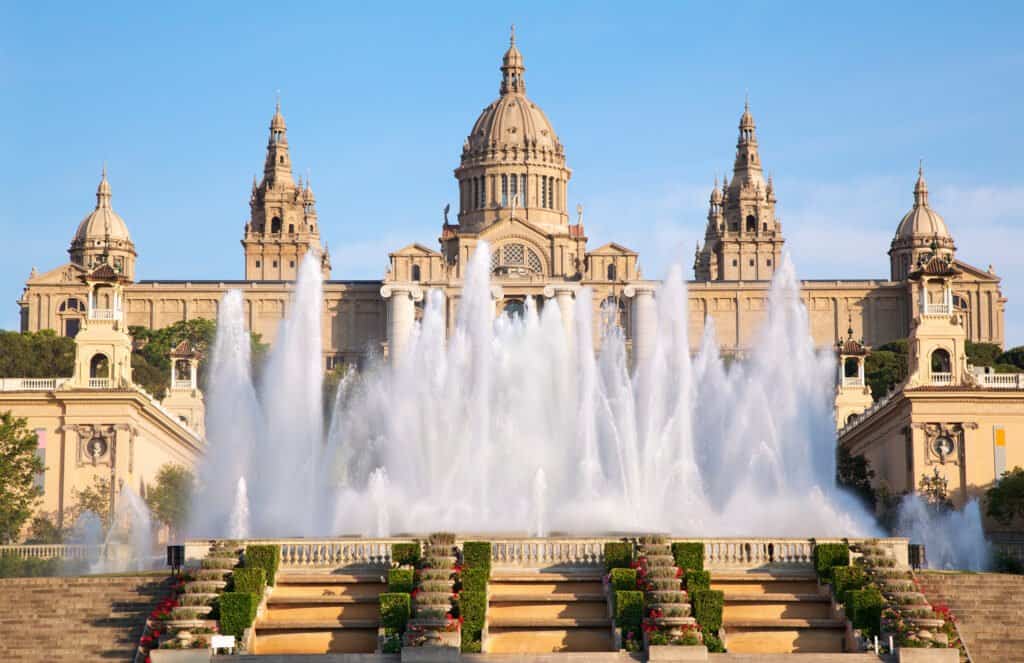
If you're interested in art, the Montjuïc museums are excellent and less crowded than the major museums in the city center. The Magic Fountain is a free light and music show that happens most evenings, located at the base of the hill below the castle area.
The hill itself is pleasant to walk. There are paths connecting the different attractions, and the walk down from the castle toward the museums is a nice way to explore the area further without getting back in crowds on the Funicular.
Sample Visit Plan
If you have 2 to 3 hours, take the Funicular up to the castle, buy your ticket, and spend about 90 minutes walking the walls and exploring the bastions. Visit the small museum if you're interested in the military history. Sit on the parade ground for 15 or 20 minutes and let the view settle in. Walk back down toward the museums, or take the Funicular back down if you're tired.
If you have a full day, start at the castle in the morning, spend 2 hours there, then explore the nearby museums or walk the grounds of the Olympic Stadium. Have lunch at one of the cafes in the Montjuïc area. Return to the castle area in late afternoon for better light and fewer people. End the day at the Magic Fountain if it appeals to you.
Practical Tips
- The castle closes at dusk, so plan accordingly if you're hoping to catch sunset light. Check closing times before you visit.
- Cash and cards are both accepted for tickets and at the cafe, but the cafe selection is limited.
- If you're visiting with children, the walls are secure but exposed. Younger children should be supervised carefully.
- The castle gets significantly quieter after 4pm on weekdays and after 5pm on weekends.
- Many locals use the castle grounds as a place to relax and watch the city. You'll see people reading, sketching, and picnicking. It's a genuine public space, not a museum experience.
- The Funicular can have a short wait on busy days, but it moves fairly quickly. Walking down the hill is often faster than waiting for it to come back down.
FAQ
How long does it take to visit the castle? Most people spend 1 to 2 hours. You can do it in 45 minutes if you just walk the main walls, or take 3 hours if you explore thoroughly and spend time absorbing the views.
Is the castle accessible by public transport? Yes. The Funicular de Montjuïc is the easiest option, or you can take a bus to the lower slopes and walk or take the Funicular from there. The castle is not accessible by metro directly.
Can you walk the castle walls safely? Yes, the walls are wide and have been maintained for public access. They are open to the elements and have no railings in most places, so use common sense, especially in wind or if the stone is wet.
Is there food at the castle? There's a small cafe near the entrance with basic drinks and snacks. For a real meal, head down to the Montjuïc area or the city below.
What's the best view from the castle? The view from the eastern bastions toward the sea and the city center is the most dramatic. The view toward the west and the plains is also striking. Both are worth experiencing.
Reviews
Sign in and mark this place visited to leave a review.
No reviews yet.
Free Trip Planner
Plan your Barcelona trip with our free planner
Build a day-by-day itinerary with AI suggestions, hand-picked places, and friends. Free forever — no credit card.
Related reading
Things to see near Montjuïc Castle

Colonia Guell Gaudi Crypt
Magic Fountain of Montjuïc
Barceloneta Beach