
 Posted by Brandon B.Admin
Milan's Cathedral and the Square That Never Sleeps
The Duomo di Milano sits at the geographic and spiritual center of one of Europe's most design-conscious cities. It is the third-largest church in the world by some measures, and standing at the edge of Piazza del Duomo for the first time, that scale hits you before you've even crossed the threshold. The facade is a wall of white marble that shifts color depending on the hour, pale grey at dawn and almost amber by late afternoon.
Most visitors spend a full half-day here without meaning to. Between the cathedral floor, the rooftop terraces, the underground archaeological area, and the Museo del Duomo just across the square, there is more to absorb than a single visit can hold.
Why the Duomo di Milano Matters
Construction began in 1386 under Gian Galeazzo Visconti, and the cathedral took nearly six centuries to complete. The final bronze doors were installed in 1965. That timeline means you are looking at layers of Gothic ambition, Renaissance revision, Napoleonic imposition, and 20th-century finishing work all stacked onto the same building. Napoleon was crowned King of Italy here in 1805, which explains why some of the interior decor feels more imperial than medieval.
The spire count is worth knowing before you arrive: the cathedral has 135 spires in total. The tallest one, the Guglia Maggiore, carries a gilded copper statue of the Virgin Mary known as the Madonnina, which has overlooked Milan since 1774. By old Milanese custom, no building in the city was supposed to rise higher than her. That rule has since been broken, but locals still talk about it.
Quick Facts
- Construction started in 1386 and ran for roughly 600 years
- 135 spires, 3,400-plus statues (inside and out), and stained glass windows dating back to the 15th century
- The Madonnina statue sits at 108.5 meters above the piazza
- The rooftop terraces are accessible by stairs or elevator
- There is an archaeological area beneath the cathedral called the Battistero Paleocristiano, where early Christian baptismal structures survive
- Modest dress is required to enter the cathedral nave; shoulders and knees must be covered
- Photography is permitted inside the cathedral without flash, and freely on the rooftop
Getting There
The metro is the easiest approach. Line 1 (red) and Line 3 (yellow) both stop at Duomo station, dropping you directly beneath the piazza. From Stazione Centrale, the red line ride takes around 10 minutes. If you're coming from the Navigli neighborhood, you can walk north along Via Torino in about 20 minutes, which passes through a stretch of the old city that most tourists skip.
Trams also stop on the edges of the piazza, and walking from the Brera district takes roughly 15 minutes through streets that are worth the detour on their own. Driving into the piazza area is not practical for most visitors, as the surrounding streets are part of Milan's restricted traffic zone.
The Layout and Experience
The cathedral itself is the obvious starting point. Inside, the nave is enormous and deliberately dim, with light filtering through the 15th-century stained glass in narrow bands. The floor is inlaid marble, and if you look up at the columns you'll find carvings that took individual craftsmen years to complete. It doesn't feel like a museum. People still pray here, and the atmosphere in the side chapels is genuinely quiet even when the main nave has a crowd.
The rooftop is a separate ticket and a completely different experience. You walk among the spires at close range, and the Madonnina is visible from just below her pedestal. On a clear day the Alps appear on the northern horizon. The elevator brings you up faster but deposits you at the same level as the stair route, so there's no meaningful difference in what you see.
Below ground, the Battistero Paleocristiano is often overlooked. It is where Saint Ambrose baptized Saint Augustine in 387 AD, which makes it one of the more historically charged rooms in Italy. The space is small and the lighting is low, but it earns a separate visit.
Tickets and Entry
Entry to the different areas is ticketed separately, and you can buy combinations at the ticket office on the south side of the piazza or online in advance. The cathedral floor itself is the least expensive component. The rooftop, the archaeological area, the treasury, and the Museo del Duomo across the square each have their own admission. Combination passes bundle several areas together and tend to offer better value if you plan to see more than just the nave.
Timed entry slots exist for the rooftop, especially during peak summer months. Booking online the day before is usually enough outside of August and major holidays, but if you're visiting in late June or July, a few days' lead time helps. The queues for walk-up tickets at the south facade can run long on weekend mornings.
Best Time to Visit
Weekday mornings before 10am are consistently the least crowded. The piazza fills up quickly once the tour groups arrive, typically from mid-morning onward. If you want the rooftop to yourself, or close to it, an opening-time visit in April or October gives you good light and manageable crowds.
Summer afternoons are the hardest time to enjoy the cathedral. The piazza gets hot, the queues stretch, and the interior offers cool relief but not much solitude. Winter mornings can be genuinely beautiful here. Milan in December has a low, soft light that makes the marble facade look like something out of an older century.
Photography Tips
The classic wide shot of the facade works best from the far end of the piazza, near the Vittorio Emanuele II gallery entrance. You get enough distance to fit the full width of the building and the spires in frame without distortion. Early morning gives you empty foreground; by 9am the pigeons and the tourists arrive in roughly equal numbers.
On the rooftop, the spires themselves make for better subjects than the skyline, especially in late afternoon when the marble picks up a warm tone. The view toward the Alps requires a clear day and a longer focal length. Inside, the stained glass is most photogenic when the sun is at the right angle to push light through, which tends to happen in the morning on the south-facing windows.
Combining with Nearby Attractions
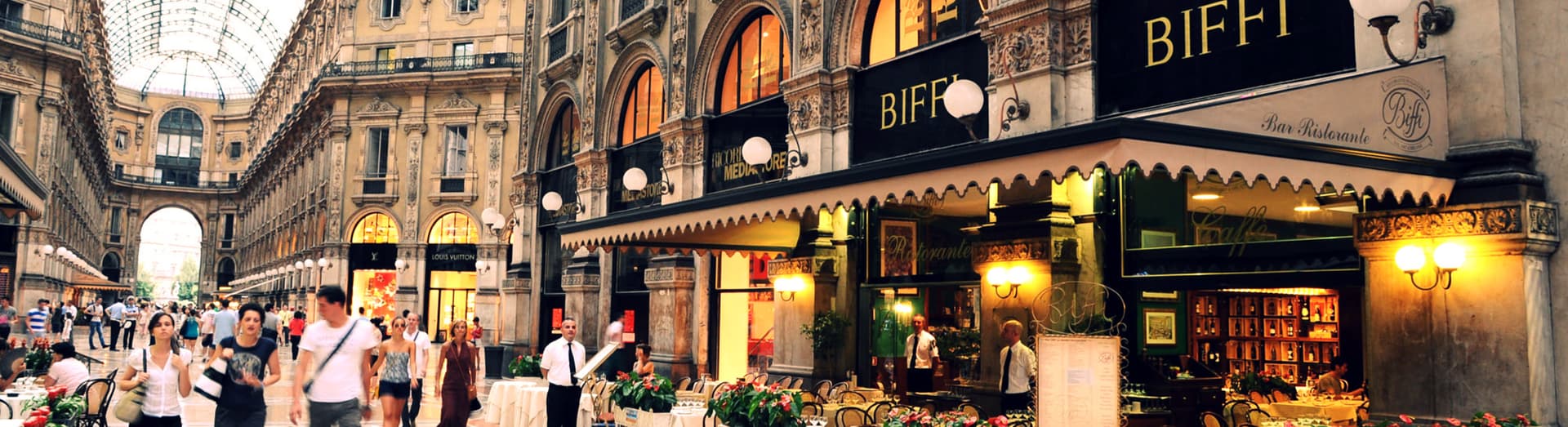
The Galleria Vittorio Emanuele II is literally attached to the northeast corner of the piazza. It opened in 1877 and is one of the world's oldest shopping malls, which is a strange way to describe something this beautiful. Even if you're not buying anything, walking through it takes five minutes and leads directly toward La Scala opera house, another five minutes on foot from the north exit.
The Pinacoteca di Brera, Milan's most important painting collection, is about a 15-minute walk north through the Brera neighborhood. If you're spending a full day in central Milan, the Duomo in the morning and Brera in the afternoon is a combination that works well without feeling rushed.
Practical Tips
- Carry a scarf or light layer if your shoulders or knees are exposed. You can buy disposable coverings at the entrance but it costs extra and they're uncomfortable.
- The ticket office on the south side of the piazza tends to have shorter queues than the main facade entrance.
- Book rooftop tickets online if you're visiting on a weekend between May and September.
- The underground Battistero is included in some combination tickets. Check before buying individual tickets.
- Pigeons in the piazza are aggressive. Keep bags closed and avoid holding food in the open square.
- The Museo del Duomo across the square houses original statues removed from the exterior over the centuries. It's quieter than the cathedral and worth an hour if you have it.
- Free entry to the cathedral nave is available during certain religious services, though tourist access is restricted during those times.
FAQ
How long should I plan to spend at the Duomo di Milano?
Budget at least two hours if you're doing the cathedral floor and rooftop. Add another hour if you want the archaeological area and the Museo del Duomo. It's easy to spend a full half-day here if you take your time.
Is the rooftop accessible for visitors with mobility limitations?
Yes. An elevator runs from the ground level to the rooftop terraces, making it accessible without climbing the stairs. Check the current operating status when you buy tickets, as the elevator occasionally undergoes maintenance.
Can you enter the cathedral for free?
The nave has free entry at certain times, typically during morning and evening religious services, but tourist visits are not permitted during those hours. For unrestricted access as a sightseer, a ticket is required.
Is it worth visiting the Museo del Duomo separately?
If you have any interest in Gothic sculpture or the cathedral's construction history, yes. Many of the original marble statues from the exterior are displayed there at eye level, which gives you a completely different sense of the craftsmanship than looking up at them from the piazza.
Reviews
Sign in and mark this place visited to leave a review.
No reviews yet.
Free Trip Planner
Plan your Italy trip with our free planner
Build a day-by-day itinerary with AI suggestions, hand-picked places, and friends. Free forever — no credit card.
Things to see near Duomo di Milano
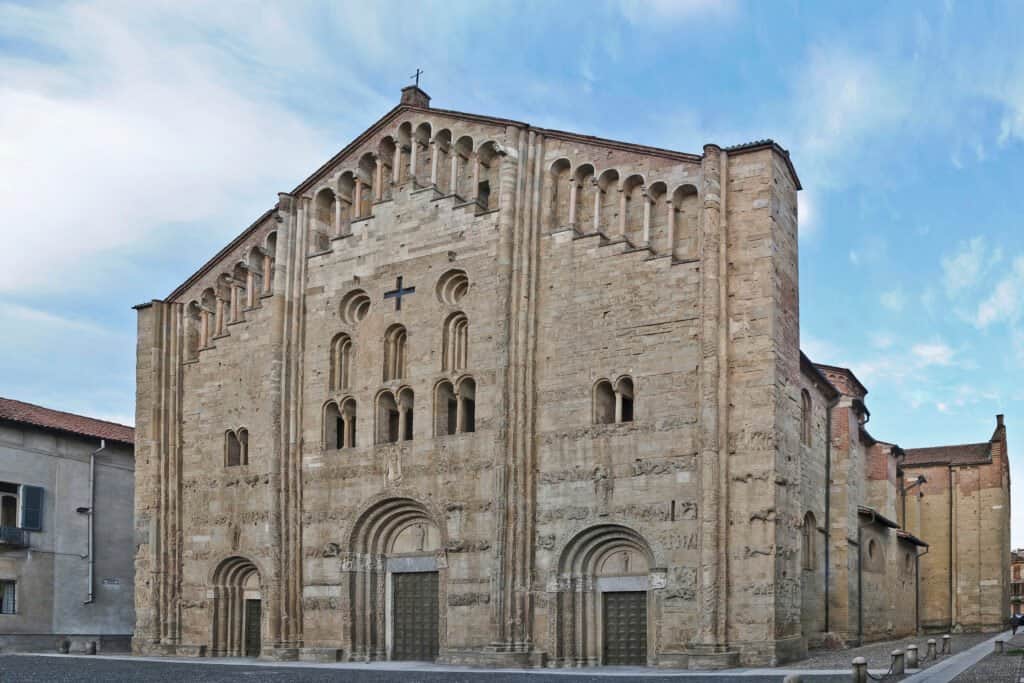
San Michele Maggiore Church
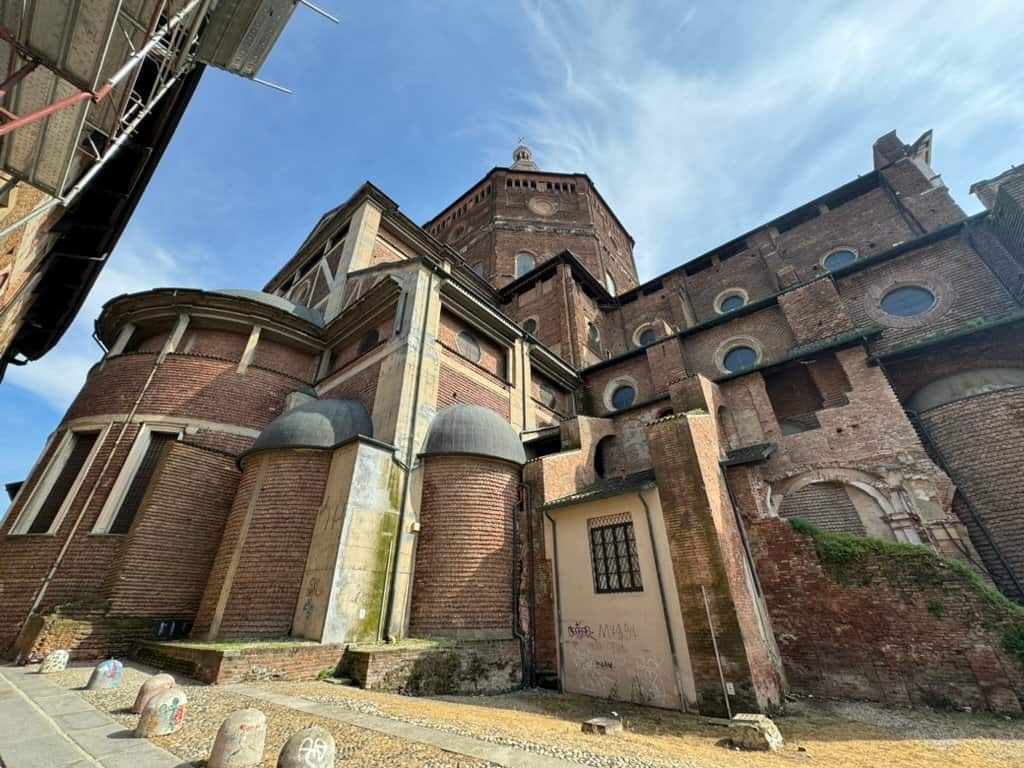
Cathedral of Pavia
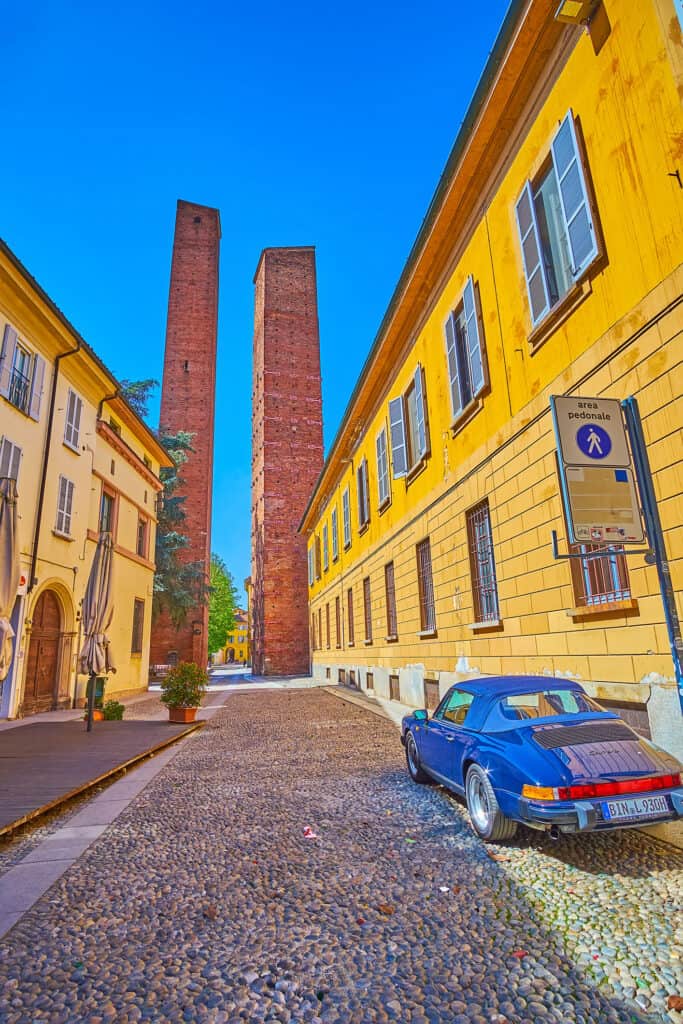
Towers of Pavia (Torri di Pavia)
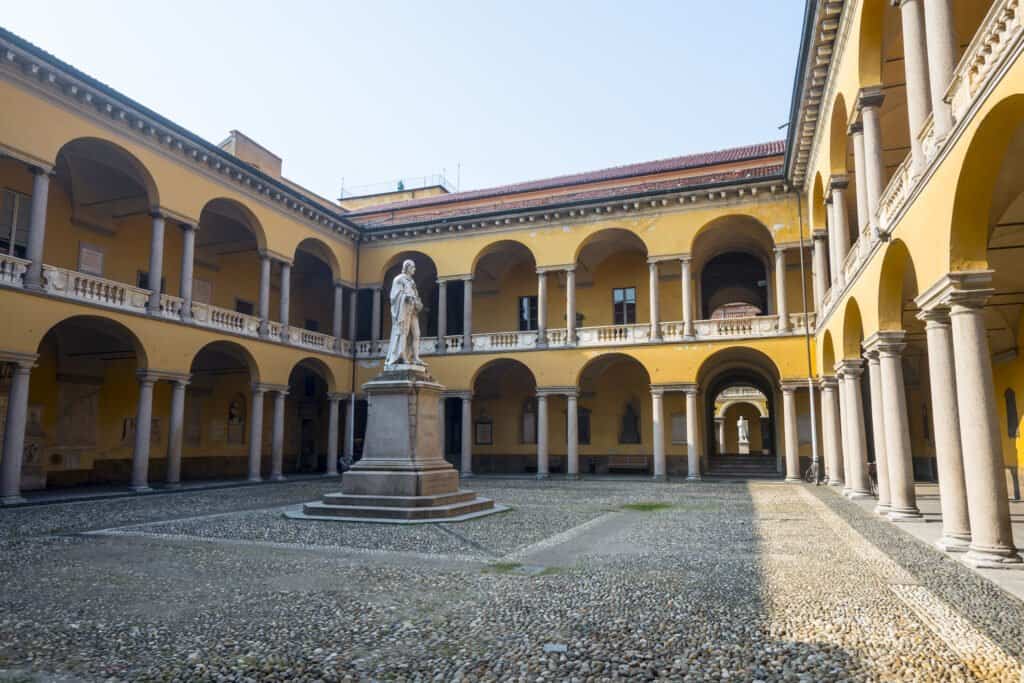
The University of Pavia
Places to eat or drink near Duomo di Milano

Pasticceria Vigoni

Pizza e Mozzarella
![[LA] Gelateria della Musica](https://lh3.googleusercontent.com/grass-cs/AABkmLezQ1aahZ3Sj4IKvguuB34dH27jVTId85hNXzYEv9WG7GfBYHmI1cwHUPQVisLeNLAKCNmd1glh0QlkPrqj2oRaVJ7D4jkdmWOq7BbYLzAtEceYr8t1MxXkfmk96U5ezHE2vYUBkvyeVynx=s4800-w1600-h1600)
[LA] Gelateria della Musica

Officina Milano
More places in Milan

Brera District

miscusi Milano Centrale
Reminisce The Good Ol’ Days At La Scala
