

Florence on the map
33 places from this guide. Tap a pin to open the listing.
Florence sits in a bend of the Arno river, boxed in by hills on one side and the flat Tuscan plain on the other, and for a city with barely 380,000 residents it carries an outsized amount of the Western art canon within its walls. This Florence travel guide is built around the idea that you don't need to rush through every gallery to understand why the Renaissance started here. Give it three or four unhurried days and the city starts to make sense: the wool and banking money that built the palazzi, the rivalry between families that paid for competing chapels, the stone streets that still run along their medieval plan.
Florence is the capital of Tuscany, and most visitors use it both as the destination itself and as a base for the vineyards and hill towns around it. The historic center is compact enough to cross on foot in under half an hour, which makes it one of the easier European capitals to get a feel for quickly, even if you'll want far longer than a day for it.
When to Visit
April, May, September, and October are the shoulder months and probably the best stretch to visit. The weather sits comfortably in the high teens to mid-20s Celsius, the light is good for photos from Piazzale Michelangelo, and the crowds at the Uffizi and the Accademia are thinner than in midsummer.
July and August bring heat that can climb past 35°C with little relief, since Florence lacks a coastline to cool it down. It's also peak tourist season, so lines for the Duomo's dome or Galleria Dell'Accademia can stretch well over an hour without a reservation. Many Florentines take their own holidays in August, and some family-run trattorias close for a week or two around Ferragosto (August 15).
Winter, from November through February, is low season and genuinely pleasant if you don't mind grey skies and occasional rain. Hotel rates drop, the museums are calmer, and you can usually walk straight into Basilica di San Lorenzo or the Cappelle Medicee without a wait. Easter week and Christmas-New Year are exceptions, drawing crowds despite the season.
Where to stay
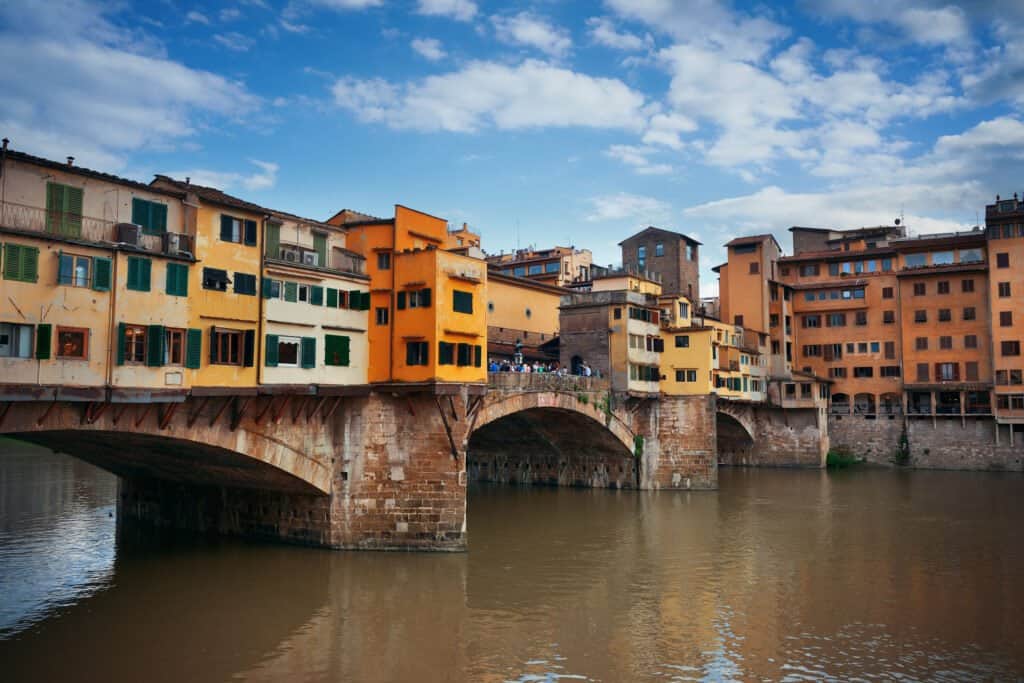
The centro storico, the UNESCO-listed historic core around the Duomo, is where most first-time visitors base themselves. You're walking distance from Piazza della Signoria, the Uffizi, and Ponte Vecchio, but rooms here tend to be smaller and pricier, and early mornings can be loud with delivery trucks and tour groups.
San Lorenzo and San Marco, just north of the Duomo, are quieter and still close to everything, including Museo di San Marco and the Mercato Centrale food hall. It's a practical choice if you want central access without paying centro storico rates.
Santa Croce, east of the center around Piazza Santa Croce, has a more local, lived-in feel, with good trattorias and less souvenir-shop clutter. Oltrarno, across the river near Palazzo Pitti, is where artisans still work out of small bottega workshops. It's a short walk up to Giardino Bardini and Basilica San Miniato al Monte, and evenings here feel distinctly less touristy than the center.
If you're on a tighter budget, look just outside the old walls or out toward the countryside, where agriturismi and smaller hotels charge less and throw in the Tuscan landscape as a bonus, at the cost of a longer walk or bus ride into town.
How to reach the destination
- By plane: Florence Airport (also called Peretola or Amerigo Vespucci Airport) sits about 15-20 minutes from the center by taxi or the tram line that runs into town. Many travelers also fly into Pisa International Airport, roughly an hour away by train, since it has more long-haul and budget connections.
- By train: Santa Maria Novella Florence Train Station is the main hub, located right at the edge of the historic center, an easy walk to the Duomo. High-speed trains connect Florence to Rome, Milan, Venice, and Bologna, and regional trains reach smaller Tuscan towns like Siena, Lucca, and Pisa.
- By car: Florence is well connected to the rest of Europe by autostrada, but the historic center is a restricted traffic zone (ZTL) monitored by cameras, so plan to park outside the center and walk or take a shuttle in. A car is far more useful for exploring the Tuscan countryside than for the city itself.
Getting around the destination
Florence is a walking city, full stop. The core sights, from the Duomo to Ponte Vecchio to Piazza della Signoria, sit within a kilometer or so of each other, and cobblestones aside, most people cover the center entirely on foot.
For trips slightly farther out, like up to Piazzale Michelangelo or across to San Miniato al Monte, city buses run regularly and a single ticket covers a set window of time rather than a single ride. The ATAF bus network covers routes that are impractical to walk, particularly if you're staying outside the old walls. Taxis are metered and easy to find around the station and major piazzas, though they're not usually hailed off the street the way they are in bigger cities. Ride-hailing apps have limited presence compared to taxis, so it's worth knowing the local taxi stands near your hotel.
Renting a car only makes sense if you're heading out to Chianti or further into Tuscany. Inside the city, it's a liability thanks to the ZTL restrictions and a scarcity of parking.
Top destination travel tips
- Book the Uffizi, the Accademia, and the Duomo's dome climb in advance, especially from April through October. Walk-up lines for the dome in particular can run over an hour, and timed-entry tickets sell out days ahead in peak season.
- Visit Mercato Centrale in the morning when the ground-floor stalls selling produce, meat, and cheese are at their liveliest, then come back upstairs in the evening when it turns into a food hall.
- Climb up to Piazzale Michelangelo an hour before sunset. It gets crowded right at golden hour, so claim a spot on the steps early and watch the city turn copper-colored below you.
- Water from Florence's public drinking fountains (fontanelli) is safe and free, and carrying a bottle saves you from buying water constantly in the heat.
- Tipping isn't expected the way it is in the US. Rounding up or leaving a few euros for good service is appreciated but not required, and a coperto (cover charge) is often already added to your bill at restaurants.
- Dress modestly to enter churches and basilicas, including the Duomo and Basilica di San Lorenzo. Shoulders and knees should be covered, and this is enforced more strictly than you might expect.
- Be alert for pickpockets around Ponte Vecchio and the train station, the two most crowded spots in the city. Keep bags zipped and in front of you.
Typical costs in the destination
Florence runs on the euro, and prices sit in the mid-range for Italy, higher than the south but generally below Venice or Milan.
- Hotels: budget options run roughly 60 to 250 EUR a night, mid-range hotels around 130 to 300 EUR, and luxury properties from 300 EUR up past 1,000 EUR depending on season and location.
- Meals: a simple lunch or a slice from a bakery can cost 5 to 20 EUR, while a sit-down meal with a full plate of meat or pasta at a trattoria often lands around 10 to 25 EUR per person. Michelin-listed spots, including fine dining destinations like Enoteca Pinchiorri, sit well above that and are worth checking the current Michelin guide for before booking.
- Museums: expect individual entry tickets in the range of 10 to 25 EUR for major sights like the Uffizi or the Accademia, more if you add a reservation fee or combine tickets.
- Transport: a single city bus ticket typically costs between 1 and 2 EUR. Tourist bus passes covering 24 or 48 hours run around 15 to 22 EUR, useful if you're also venturing to the hills above the city.
As with anywhere, confirm current prices before you travel, since hotel rates especially swing with the season and city events.
Must try food and drinks
- Bistecca alla Fiorentina: a thick, bone-in steak from young Chianina cattle, grilled rare over a wood fire and sliced at the table. It's the dish Florence is best known for and usually served for two.
- Ribollita: a thick bread-and-vegetable soup built on leftover bread and cavolo nero, a Tuscan winter staple that tastes better the next day.
- Pappardelle al cinghiale: wide ribbon pasta in a slow-cooked wild boar ragu, found on most traditional trattoria menus.
- Schiacciata: Tuscany's flatbread, thinner and oilier than focaccia. Antico Forno Giglio bakes some of the better versions in the San Lorenzo area, good for a quick lunch on the move.
- Panino with lampredotto or porchetta: street food sold from small kiosks. I Fratellini, a tiny standing-room sandwich spot near the Duomo, has been slicing into crusty rolls for generations.
- Gelato: Vivoli, tucked near Santa Croce, is one of the city's oldest gelaterias and a reliable stop if you want to taste what gelato is meant to be before deciding where else to try. Trowbridge's Ice Cream & Sandwich Shop offers a different, more casual take if you're in that part of town.
- Coffee and aperitivo: Cibrèo Caffè, near the Sant'Ambrogio market, is a good spot for an espresso or a glass of wine in a room that still feels like old Florence. For something more theatrical, Teatro del Sale runs a members' club format with a set dinner and live performance.
- Chianti and other Tuscan wines: the hills just south of the city produce some of Italy's best-known reds. A short day trip into Chianti, or an evening at a wine bar like Babae for a glass paired with small plates, is an easy way to taste the region without leaving town.
Beyond the table, the art is the other reason people come. The Gallerie Degli Uffizi holds Botticelli's Birth of Venus and work by Leonardo and Raphael, and reservations are close to essential in high season. Galleria Dell'Accademia houses Michelangelo's David, a sculpture that's genuinely more striking in person than in photos, partly due to its scale. The Florence Cathedral, with Brunelleschi's dome, anchors Piazza del Duomo alongside the Campanile di Giotto and the Opera del Duomo Museum, which holds the original Baptistery panels and other works moved indoors for preservation. The Basilica di San Lorenzo and its adjoining Cappelle Medicee trace the Medici family's rise, while Museo Galileo nearby covers the scientific side of the city's history with instruments once used by Galileo himself. Across the river, Palazzo Pitti and the gardens behind it, along with Giardino Bardini and Certosa di Firenze a little further out, are good options once you want some green space between museum visits.
FAQ
How many days do you need in Florence?
Three full days covers the essential sights without rushing, including the Duomo complex, the Uffizi, the Accademia, and a wander through Oltrarno. Add a fourth or fifth day if you want to fit in a day trip to Siena, Pisa, or the Chianti wine region.
Is Florence expensive?
It's mid-range by Italian standards, pricier than southern Italy but generally cheaper than Venice or Milan. You can eat well on a modest budget by sticking to trattorias and market stalls, while hotels and fine dining can push costs up significantly, especially in peak season.
Is Florence walkable?
Very much so. The historic center is compact enough that most major sights, from Ponte Vecchio to the Duomo to Piazza della Signoria, sit within a 15 to 20 minute walk of each other, and cars are restricted in the core anyway.
Do you need to book museum tickets in advance?
Yes, for the Uffizi and the Accademia especially, booking ahead is strongly recommended from spring through fall. Without a reservation you can face lines over an hour long, particularly for the Duomo's dome climb.
Is Florence safe for tourists?
Florence is generally safe, with violent crime rare in the areas visitors frequent. The main risk is pickpocketing in crowded spots like Ponte Vecchio and around the train station, so keep valuables secured in those areas.
Is Florence worth visiting if you're not into art?
Yes. Beyond the galleries, Florence offers strong Tuscan food, wine from the surrounding hills, markets like Mercato Centrale, and views from Piazzale Michelangelo that don't require any art history background to enjoy.
What's the best day trip from Florence?
Siena and the Chianti wine region are the most popular choices, both reachable within an hour or so by car or bus. Pisa, mainly for the Leaning Tower, is another common half-day trip by train.
Top Places to Visit in Florence
View all See & Do
 See & Do
Leonardo Interactive Museum
 See & Do
 See & Do
 See & Do
Cupola del Brunelleschi
 See & Do
Basilica San Miniato al Monte
 See & Do
 See & Do
Cappelle Medicee
Top Places to Eat in Florence
View all Eat & DrinkBudget · $
I Fratellini
 Eat & DrinkModerate · $$
 Eat & Drink
 Eat & DrinkModerate · $$
 Eat & DrinkModerate · $$
 Eat & DrinkExpensive · $$$
 Eat & Drink
Bookable experiences
Top experiences in Florence

The Florence Pottery Experience: Factory Tour & Masterclass

Farm To table Experience on an organic hilltop estate in Tuscany

The Cooking Lab - Authentic Food Experience

UFFIZI Private Tour in Florence Italy

Small group Expert-led Florence Foodie Tour

Florence San Lorenzo Food Tour by Secret Food Tours
Bookings made via these links may earn Bazar Travels a small commission, at no extra cost to you. Tours are provided by Viator, a Tripadvisor company.