
Galleria Palatina in Palazzo Pitti
Amici di Palazzo Pitti Piazza Pitti 1, 50125, Florence Italy Posted by Brandon B.Admin
Inside the Galleria Palatina: Florence's Most Underrated Royal Collection
The Galleria Palatina sits on the first floor of Palazzo Pitti, a hulking Renaissance palace on the south bank of the Arno, roughly a ten-minute walk from the Ponte Vecchio. While most visitors to Florence queue for the Uffizi across the river, this gallery holds one of the most significant concentrations of Renaissance and Baroque painting in Italy, displayed in rooms that still look more or less as the Medici and later the House of Savoy left them. Tapestries on the walls, gilded ceilings overhead, and paintings stacked frame-to-frame in the old aristocratic style. It rewards slower looking.
Why the Galleria Palatina Matters
Most major European galleries reorganized their collections in the 19th and 20th centuries, grouping works by period or school, hanging them at eye level with breathing room between frames. The Palatina never did. The arrangement here is still essentially dynastic: rooms named for the gods and allegories painted on their ceilings, each one functioning as a kind of royal statement rather than a didactic display. You're not walking through a museum in the modern sense. You're walking through a palace that happens to contain masterworks.
The collection runs deep in Raphael. The gallery holds multiple major paintings by him, including the Madonna della Seggiola and the Portrait of a Gentleman (La Velata), both considered among his finest surviving works. Titian is equally well represented, and there are strong holdings in Rubens, Andrea del Sarto, and Fra Bartolommeo. These aren't second-tier works pulled from storage. They are pieces that, in a different city, would anchor an entire institution.
Quick Facts
- Located inside Palazzo Pitti, Piazza Pitti 1, in the Oltrarno neighborhood of Florence
- The palace itself dates to the mid-15th century, with construction beginning around 1458
- The gallery occupies the former royal apartments on the first floor (piano nobile)
- Approximately 500 paintings are on display across more than 20 decorated rooms
- Entry to the Palatina is included in the general Palazzo Pitti ticket, which also covers the Royal Apartments and the Gallery of Modern Art in the same building
- Closed on Mondays
- Audio guides are available at the entrance
Getting There
Palazzo Pitti faces its own piazza on the south side of the Arno, about ten minutes on foot from the Ponte Vecchio. From Santa Maria Novella train station, the walk takes roughly 25 to 30 minutes through the historic center, or you can take a bus toward the Oltrarno and get off near Piazza San Felice. There is no dedicated parking at the palace. The Oltrarno is a walkable neighborhood and most visitors arrive on foot from the center.
The entrance is through the main courtyard of the palace. The Palatina's rooms are up the grand staircase to the right as you enter.
The Layout and Experience
The gallery moves through a sequence of grand rooms, each more elaborately decorated than the last. The Sala di Venere, Sala di Apollo, Sala di Marte, Sala di Giove, and Sala di Saturno form the core sequence, and the ceiling frescoes in each were painted by Pietro da Cortona in the 17th century as an elaborate allegory of Medici virtue. They are worth looking at independently of the paintings below them.
Crowds here are lighter than at the Uffizi most days, which means you can actually stand in front of a Raphael without someone's elbow in your ribs. That said, the Sala di Giove and Sala di Saturno, which hold the densest concentration of famous works, do get busy during peak summer hours.
The rooms are not labeled with the kind of explanatory text you find in modern museums. If you want context, the audio guide earns its rental fee here. Alternatively, spend twenty minutes reading about the key works before you arrive and you'll move through the space with much more confidence.
Main Highlights
Raphael's Madonna della Seggiola is probably the most reproduced work in the collection, a tondo (circular format) painting of the Virgin and Child that has been copied and referenced for centuries. His La Velata, a portrait of a veiled woman, hangs nearby and tends to stop people mid-step. The quality of the fabric rendering in that painting is the kind of thing that photographs don't fully communicate.
Titian's Portrait of a Gentleman (known as the Man with Grey Eyes) and his Concert are both in the Sala di Venere and are among the most studied works in the gallery. Rubens contributed several large-scale canvases, including the Consequences of War, a vast allegorical painting he made later in life that carries a notably different emotional register from his earlier celebratory work.
Beyond the big names, the Palatina contains a lot of rewarding secondary material. Fra Bartolommeo's large altarpieces, Pontormo portraits, works by Cigoli and Artemisia Gentileschi. If you give yourself two hours rather than one, you find things that aren't in any guidebook summary.
History and Background
The Pitti Palace was originally built for the Florentine banker Luca Pitti, a rival of the Medici. The Medici eventually acquired it in 1549, when Eleonora di Toledo, wife of Cosimo I, purchased the property. It became the primary Medici residence and was expanded substantially over the following two centuries, which explains its unusually long facade.
The gallery as a public institution has its roots in the 19th century, when the palace passed to the House of Savoy following Italian unification and was eventually given to the Italian state. The painting collection, however, was assembled primarily by the Medici and later by the Lorraine grand dukes, and reflects their tastes rather than any systematic curatorial vision. That's a feature, not a flaw.
Tickets and Entry
Entry is through a combined ticket that covers the Galleria Palatina, the Royal Apartments (Appartamenti Reali), and the Gallery of Modern Art, all housed within Palazzo Pitti. The Boboli Gardens, which extend behind the palace, and the other smaller museums within the Pitti complex require separate tickets or are included in a broader combined option. Check the official Uffizi Galleries website, which manages Pitti, for current ticketing options. Timed-entry booking is advisable in summer. The gallery is closed on Mondays and on certain public holidays.
Best Time to Visit
Weekday mornings, particularly Tuesday through Thursday, are the quietest. Summer afternoons bring the largest crowds, especially in July and August when tour groups tend to cluster in the first hour after opening. The gallery is open year-round except Mondays, and visiting in the shoulder seasons of April, May, October, or November gives you a noticeably calmer experience without sacrificing good weather for the walk through the Oltrarno.
If you're visiting Florence during a major holiday period, book your ticket in advance. The Palatina sees overflow from the Uffizi on days when that museum is fully booked.
Photography Tips
Non-flash photography for personal use is generally permitted in the gallery, though policies can change and specific rooms may have restrictions. The Pietro da Cortona ceiling frescoes photograph well with a wide-angle lens if you have one. The light in the rooms varies depending on time of day and season, with morning light often more even. The gilded frames and dark walls mean that individual paintings can be tricky to photograph without glare, particularly when natural light hits the varnish at an angle.
Combining with Nearby Attractions
The Palazzo Pitti ticket covers more than the Palatina, so budget time for the Royal Apartments if you're interested in 19th-century decorative arts and the lived experience of post-unification Italian royalty. The Boboli Gardens behind the palace are one of the finest formal Italian gardens in existence and deserve at least an hour on their own.
The Oltrarno neighborhood surrounding the palace is worth exploring before or after your visit. The streets between Piazza Pitti and Piazza Santo Spirito hold a concentration of craft workshops, independent wine bars, and trattorias that feel genuinely local compared to the area north of the Arno. Lunch at one of the spots along Via Mazzetta or around Santo Spirito before an afternoon visit tends to work well.
Practical Tips
- Book tickets online in advance, especially between May and September
- Allow at least 90 minutes for the Palatina alone; two hours is more comfortable
- The audio guide is worth renting given the minimal wall text in the rooms
- Wear comfortable shoes; the floors are original stone and the rooms are spread across a large footprint
- Bag storage is available at the entrance if you're carrying a large pack
- The Palatina is not fully accessible for wheelchair users due to the historic staircase, though ground-floor areas of the Pitti complex are more accessible
- Combine your visit with the Boboli Gardens if the weather is good; the gardens close earlier than the gallery in winter months
FAQ
Is the Galleria Palatina the same as the Uffizi?
No. They are separate museums managed by the same institution (Uffizi Galleries) but housed in different buildings on opposite sides of the Arno. The Uffizi tends to focus on earlier Florentine painting; the Palatina skews toward High Renaissance and Baroque and retains its original palatial installation.
How much time should I allow?
The Palatina alone warrants 90 minutes to two hours. If you're combining it with the Royal Apartments and Boboli Gardens in the same day, allow a full four to five hours for the Pitti complex as a whole.
Do I need to speak Italian to enjoy the visit?
Not at all. Audio guides are available in multiple languages, and the collection speaks fairly directly through the works themselves. That said, a little background reading on Raphael and Titian before you arrive will make the experience considerably richer.
Is it worth visiting if I've already been to the Uffizi?
Yes, and arguably more so. The Palatina offers a different experience: fewer crowds, a more intimate scale, and the added layer of seeing paintings in the rooms they were originally meant to occupy. Several works here are as significant as anything in the Uffizi.
Reviews
Sign in and mark this place visited to leave a review.
No reviews yet.
Free Trip Planner
Plan your Florence trip with our free planner
Build a day-by-day itinerary with AI suggestions, hand-picked places, and friends. Free forever — no credit card.
Things to see near Galleria Palatina in Palazzo Pitti

Santa Maria della Scala

Vicolo degli Orefici

Palazzo Chigi-Saracini

Facciatone Viewpoint
Places to eat or drink near Galleria Palatina in Palazzo Pitti

ChigianArtCafè

Antica Osteria da Divo

Enoteca I Terzi

Pasticceria Nannini
More places in Florence

Basilica San Miniato al Monte

Babae
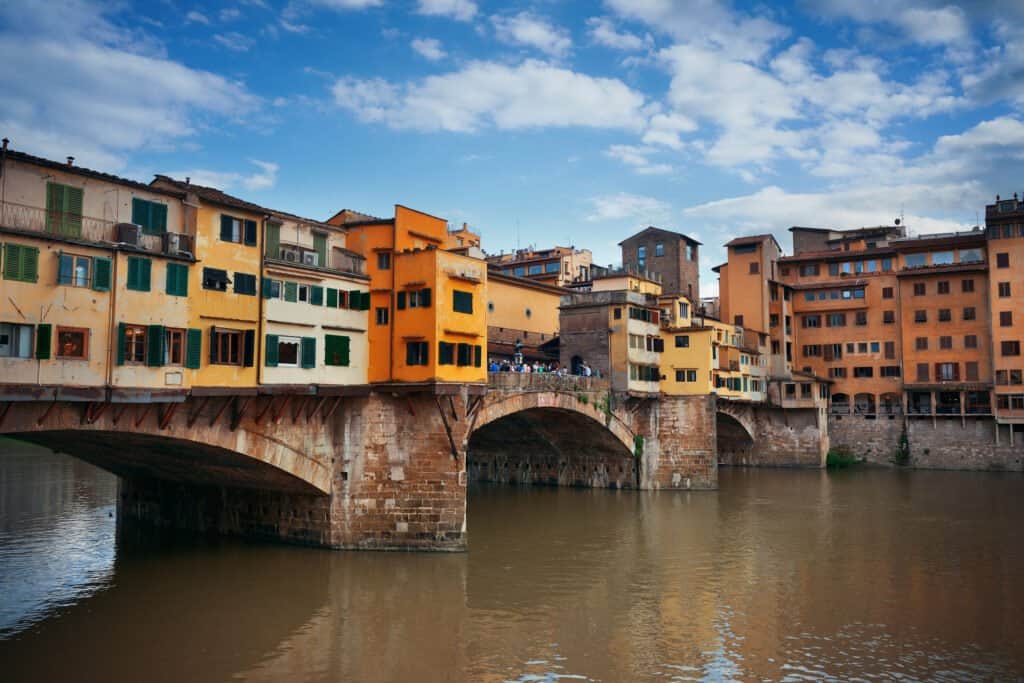
Ponte Vecchio
