
Galleria Sciarra
Via Marco Minghetti, 10, 00187 Roma RM, ItalyOverview
Galleria Sciarra sits just a few minutes' walk from the Pantheon, tucked into a quiet corner of Rome's historic center. This 19th-century glass-roofed arcade is one of the city's most overlooked architectural treasures, a place where Romans still cut through on their way to work while tourists wander past without noticing the entrance. Built in 1885, the gallery wraps around a central courtyard and connects Via Marco Minghetti to Via dell'Avvocata, serving as both a working passage and a remarkable museum of Victorian-era design.
What makes Galleria Sciarra remarkable is how little it has changed since its construction. The wrought-iron railings, the decorative tilework, the coffered ceiling with its ornamental plasterwork, and the soaring glass roof all remain largely intact. There are no ticket booths, no turnstiles, and no crowds. You simply walk in, and you're there.
Why this place matters
Rome's galleries emerged during a period when European cities were building covered shopping passages as symbols of modernity and progress. Galleria Sciarra represents the tail end of that movement in Italy, arriving just as the art nouveau aesthetic was beginning to fade. The gallery's design reflects the tastes of Rome's merchant class in the 1880s, with every detail considered from the perspective of elegance and functionality.
The interior decoration is the real draw. Ornate frescoes by Giulio Bargellini adorn the upper walls, depicting allegorical figures and classical themes. The floor features original marble and tile work in geometric patterns. The ironwork is both functional and decorative, with railings and brackets that show the craftsmanship expected of 19th-century metalworkers. For anyone interested in how Romans lived and shopped in the late 1800s, or how industrial techniques like iron casting and glass manufacturing were deployed for aesthetic effect, this gallery is essential.
Quick facts
- Built in 1885, designed by Pio Piacentini
- Located on Via Marco Minghetti, a 5-minute walk from the Pantheon
- Free to enter, no tickets required
- Open to the public as a working passage, accessible during normal hours
- Features original tilework, frescoes, ironwork, and a glass roof from the 19th century
Getting there
The easiest approach is from the Pantheon. Exit the piazza on the south side, heading toward Via del Seminario. Turn right onto Via Marco Minghetti. The entrance is on your left after about 100 meters, marked by an ornate doorway. If you're coming from the Trevi Fountain, walk west on Via delle Muratte, which becomes Via Marco Minghetti.
Public transport works fine if you're coming from elsewhere in Rome. The nearest metro station is Barberini on the A line, about a 10-minute walk away. Several bus routes serve the surrounding streets. However, the Pantheon approach on foot is more pleasant and helps you orient yourself to the neighborhood.
The layout and experience
The gallery is narrow and linear. You enter from Via Marco Minghetti into a corridor about 8 meters wide, lined with small storefronts. The ceiling rises above you, and if you look up, you'll see the full height of the structure, the ornamental plasterwork, and the grid of glass panels that bring daylight into the space. The gallery runs for roughly 100 meters before opening onto Via dell'Avvocata.
The storefronts have changed over the years. Some remain as they were designed, with period details intact. Others have been modernized or abandoned. A few shops are still active, selling jewelry, clothing, or specialty goods. Don't let the modern signage distract you from looking at the architecture itself. The real interest is overhead and in the details of the structure.
The walk through takes about 5 to 10 minutes if you move slowly and look up. Most visitors spend 15 to 20 minutes photographing and observing. There are no benches, no cafes inside the gallery itself, though restaurants and bars surround the building on the exterior streets.
Main highlights
The frescoed ceiling is the most impressive feature. The allegorical paintings by Bargellini occupy the upper walls and are best viewed from the center of the gallery. Look for the figures representing commerce, industry, and the arts. The style is academic and formal, typical of the period, and they give the space a sense of grandeur despite its modest width.
The ironwork deserves close attention. The railings on the second level, the supports for the glass roof, and the brackets holding the ornamental work are all original cast iron or wrought iron. They show the precision and artistry that metalworkers could achieve in the 1880s.
The tilework on the lower walls and floor is subtle but carefully done. Geometric patterns in earth tones create visual interest without overwhelming the space. Some sections show wear and patina that adds character rather than detracting from it.
The glass roof itself, though not the original Victorian glass, maintains the design intent of the structure. On a sunny day, light floods the passage in a way that transforms the experience. On an overcast day, the light is softer and more even.
History and background
Pio Piacentini, one of Rome's leading architects in the late 19th century, designed Galleria Sciarra for the Sciarra family, a wealthy Roman lineage with banking interests. The gallery was built between 1883 and 1885, during a period when Rome was modernizing rapidly following the unification of Italy and the establishment of Rome as the capital in 1871. The city was expanding, and new infrastructure was being built to accommodate growth and commerce.
The gallery served as both a shopping destination and a symbol of the family's status. It was practical in function but ambitious in execution, designed to rival the grand passages of Paris and Milan. The choice to include art, in the form of Bargellini's frescoes and decorative tilework, reflected the belief that commerce and culture could coexist in the same space.
The gallery remained a thriving retail hub through the 20th century. As shopping patterns changed and larger commercial centers opened elsewhere in Rome, the gallery's prominence faded. By the 21st century, it had become a quiet passage that many Romans walked through without pausing to look up. In recent years, increased attention to Rome's lesser-known architectural heritage has brought renewed interest to the space.
Tickets and entry
There is no entry fee. Galleria Sciarra is a public passage, owned and maintained by private interests but accessible to anyone during daylight hours. You simply walk in from either street entrance. There are no restrictions on photography for personal use, though commercial or professional photography may require permission.
The gallery is technically open from early morning until evening, following the rhythm of the surrounding city. On weekends, it tends to be quieter. During business hours, the storefronts are occupied and the space feels active. Late afternoon or early evening can be a pleasant time to visit, when the light from the glass roof becomes warmer.
Best time to visit
Midday light is strongest, which helps you see the ceiling frescoes and the details of the tilework clearly. However, this is also when the surrounding streets are busiest, and you may encounter crowds moving through the gallery as a shortcut.
Early morning, before 9am, tends to be quieter. You'll have more time to stop and look without feeling rushed. Late afternoon, after 5pm, is also good, though the light begins to fade earlier in winter.
Seasonally, there's little difference. The glass roof protects you from rain, so the gallery is pleasant to visit in any weather. Winter can feel cool and damp, while summer is warm but not uncomfortable since the space has good air circulation.
Photography tips
The ornamental ceiling is the most photogenic element. Stand in the center of the gallery and shoot upward to capture the full height and detail of the plasterwork and glass roof. Midday light is best for this shot, as it illuminates the ceiling brightly.
For wider shots of the gallery itself, position yourself near one of the entrances and shoot along the length of the passage. This shows the perspective and the way the space recedes.
Close-up details of the tilework, ironwork, and storefronts tell a different story. These shots reveal the craftsmanship and the patina of age. Soft, overcast light (or light filtered through the glass roof on an overcast day) is gentler on these details.
Avoid using flash if possible. The reflective surfaces and the glass roof can create unwanted glare. Natural light through the glass is almost always sufficient.
Facilities and preparation
There are no restrooms inside the gallery. The nearest public facilities are in the surrounding neighborhood. There are no information plaques or guides inside the gallery itself, so if you want detailed historical context, research beforehand or ask a local.
The floor is uneven in places, and some sections are slightly sloped. Wear comfortable walking shoes. The passage is narrow, so if you're carrying a large backpack or luggage, you may find it awkward to navigate, especially if other people are moving through.
The space is accessible to those with mobility limitations, as there are no stairs to enter or exit the main passage, though the floor condition varies.
Combining with nearby attractions
The Pantheon is a 5-minute walk away and is Rome's best-preserved Roman building. The Trevi Fountain is a 10-minute walk in the opposite direction. Both can be visited in the same morning or afternoon as Galleria Sciarra.
The surrounding neighborhood, known as the historic center, contains dozens of churches, palaces, and smaller galleries. Via del Seminario, one block south of the gallery, has several restaurants and smaller shops. Piazza di Pietra, two blocks east, features the remains of the Hadrianic temple and often has outdoor seating for coffee or a meal.
If you're interested in other 19th-century passages in Rome, Galleria Colonna is nearby, though it's less ornate and less accessible to the public.
Sample visit plan
Visit the Pantheon first thing in the morning. Spend 30 to 45 minutes inside and exploring the piazza. Exit on the south side and walk to Galleria Sciarra, spending 15 to 20 minutes looking up and around. If you want coffee or a snack, walk to Piazza di Pietra or Via del Seminario for nearby options. Afterward, head west toward the Trevi Fountain if you have time, or explore the quieter streets and smaller churches in the surrounding neighborhood.
Practical tips
- Go on a sunny day if possible to see the ceiling frescoes clearly, but any weather is fine since the glass roof protects you
- Visit early morning or late afternoon to avoid crowds moving through as a shortcut
- Look up. Most visitors walk through without noticing the architecture. Spend time observing the ceiling, ironwork, and tilework
- Bring a camera or phone with a good lens for photographing the ceiling details and the overall perspective
- Combine the visit with the Pantheon and nearby restaurants on Via del Seminario for a full morning or afternoon
- Ask a local if you want to know more about the Sciarra family or the gallery's history. Romans are often proud of these overlooked details
FAQ
Is Galleria Sciarra the same as Galleria Colonna? No. Galleria Sciarra is on Via Marco Minghetti, decorated with frescoes and tilework. Galleria Colonna is a separate passage nearby. Both are 19th-century galleries, but they're different structures.
Can I bring a large suitcase or backpack through the gallery? Technically yes, but the space is narrow and you may find it awkward if other people are moving through. It's better to store large luggage elsewhere and visit with only a small bag.
Are there shops inside where I can buy souvenirs? Yes, there are storefronts selling jewelry, clothing, and other goods, though they change over time. Most are small independent shops rather than tourist-oriented souvenir stands. Hours vary by shop.
How long does a visit take? Most people spend 10 to 20 minutes walking through and observing. If you're taking photographs or reading about the history, plan for 30 minutes. It's not a destination that requires hours, but it rewards slow looking.
Is it better to enter from Via Marco Minghetti or Via dell'Avvocata? Both entrances are equivalent. Enter from whichever direction you're coming from. If you're starting from the Pantheon, Via Marco Minghetti is more natural. If you're exploring the surrounding streets, either works.
Opening hours
Reviews
Sign in and mark this place visited to leave a review.
No reviews yet.
Free Trip Planner
Plan your Roma trip with our free planner
Build a day-by-day itinerary with AI suggestions, hand-picked places, and friends. Free forever — no credit card.
Things to see near Galleria Sciarra



Places to eat or drink near Galleria Sciarra
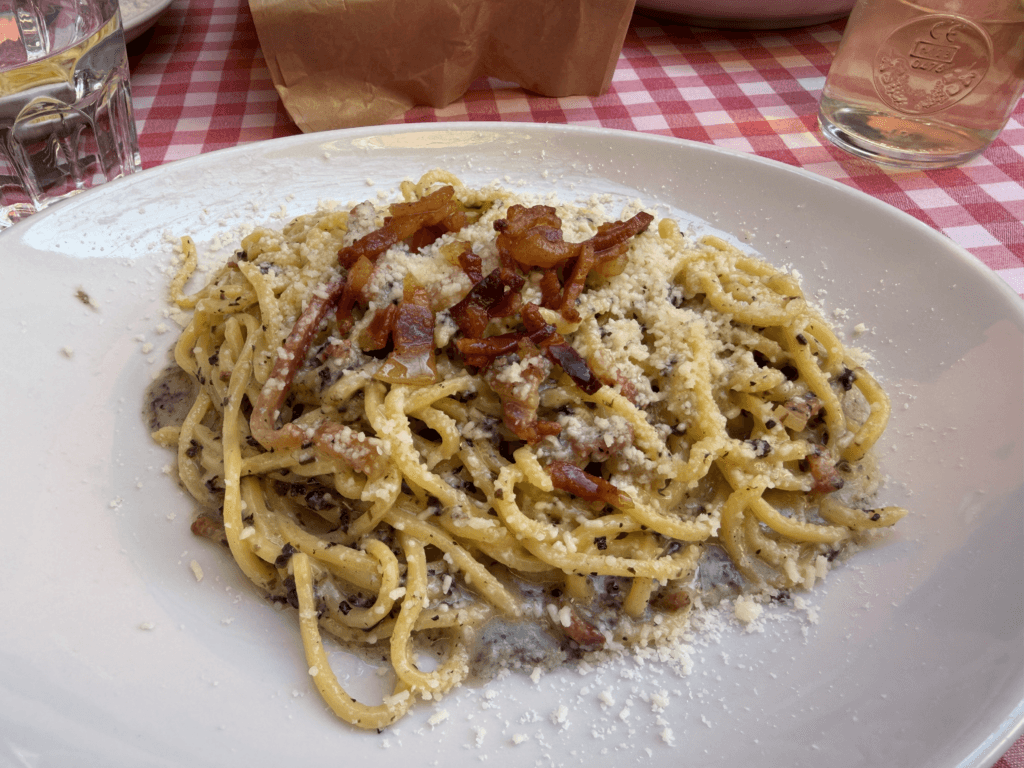
Arianna al Borghetto

La Pietra Scheggiata – Osteria/Pizzeria

Pasticceria Barberini


