Grand Canal – Versailles
Parc du Chateau de Versailles, 78000, Versailles France Posted by Brandon B.Admin
Overview
The Grand Canal at Versailles stretches across the grounds of the Palace of Versailles like a formal waterway frozen in the 17th century. It is one of the most recognizable features of the palace gardens, a 1.6-kilometer-long body of water that bisects the landscape and serves as the central spine of the entire park. Walking or cycling along its length gives you a sense of the sheer ambition of Louis XIV's vision: an attempt to reshape nature itself into a perfect geometric form.
The canal was built between 1662 and 1680 as part of the initial development of the Versailles gardens. Its scale is hard to grasp until you stand at one end and look toward the horizon. The water reflects the sky, the surrounding groves, and the carefully manicured lawns that flank it on both sides. On any given day, you'll see families walking its edges, cyclists moving along the paths parallel to it, and visitors simply standing still, taking in the sight.
Why this place matters
The Grand Canal represents something larger than just a decorative water feature. It was a statement of absolute power. At the time of its construction, such an enormous artificial waterway was a feat of engineering and landscaping that few rulers could afford or even imagine. The canal required a sophisticated system of pumps and aqueducts to maintain its water level, sourced from the nearby ponds and reservoirs that still feed it today.
The canal also changed how the palace itself was experienced. Before its completion, Versailles was one building among many royal residences. The Grand Canal transformed it into a destination, a place where the king could display not just his wealth but his ability to command nature and demonstrate mastery over the landscape. For modern visitors, it remains the single most effective way to understand the scale and ambition of the entire estate.
Quick facts
- Length: 1.6 kilometers, one of the longest formal canals in Europe
- Construction period: 1662 to 1680
- Access: Free, included with palace grounds entry
- Best for walking or cycling; rental bikes available near the main palace entrance
- Open year-round during daylight hours
- Most crowded between 11 a.m. and 4 p.m. on weekends
Getting there
From Paris, you have several direct routes. The RER C line runs from central Paris directly to Versailles Chantier station, which is the closest rail stop to the palace. The journey takes about 35 to 40 minutes. Once you arrive at the station, the palace and gardens are a 10-minute walk downhill.
If you drive, parking lots surround the palace complex. The main visitor parking is located on the north side near the Cour de Marbre. During peak season, arrive early or use the smaller lots on the perimeter of the grounds. Be aware that parking fills quickly, especially on weekends.
Some visitors rent bicycles in the town of Versailles and cycle to the palace grounds. This can be a pleasant way to arrive if you're comfortable with modest traffic in the town center.
The layout and experience
The Grand Canal runs north to south, roughly perpendicular to the main palace facade. The most common approach is to exit the palace through the Orangery or to walk down from the Parterre d'Eau (the formal water gardens directly behind the palace). From there, you descend into the park proper and encounter the canal's southern terminus.
Walking the full length takes about 40 to 50 minutes at a leisurely pace. The path along the western edge is wider and more popular. The eastern path is slightly less crowded but offers fewer shaded areas. During hot weather, the western side tends to be preferable because of the tree cover from the adjacent groves.
Roughly halfway along the canal, you'll encounter the Petit Canal, which runs perpendicular to the main waterway and creates a cross-shaped junction. This spot is popular for photos and provides a natural resting point. A small restaurant and cafe sit nearby if you need refreshment.
At the northern end, the canal opens into a wider basin. This is a good turning-around point for most visitors. The landscape becomes less manicured as you move north, and the crowds thin considerably. If you're cycling, you can continue beyond the formal gardens into the larger park, though the canal proper ends at the northern basin.
Main highlights
The Parterre d'Eau, the formal water gardens immediately behind the palace, serves as the visual introduction to the Grand Canal. Two large rectangular pools sit in the center, flanked by sculptures and fountains. This is the most photographed section of the entire grounds and the best vantage point for understanding how the palace relates to the canal below.
The Bosquets, or wooded groves, line both sides of the canal throughout its length. These are not wild forests but carefully designed formal gardens with their own internal pathways, fountains, and sculptures. The Bosquet de l'Encélade on the western side is particularly notable for its large sculpture of the giant Enceladus half-buried in stone. You can enter these groves from various points and explore them more deeply if you have time.
The Petit Canal junction at the midpoint creates a sense of scale and order. Standing here and looking down the length of the main canal reinforces the geometric precision of the entire design. It's also a practical landmark for orienting yourself if you're not sure how far you've walked.
The northern basin has a different character. The water is wider and calmer, and the surrounding landscape becomes less formal. On clear days, the reflections of the sky in the still water create an almost meditative atmosphere. This is the best place to sit quietly if you want to escape the crowds near the palace.
History and background
Louis XIV commissioned the Grand Canal as part of his broader transformation of Versailles from a hunting lodge into the seat of royal power. The initial concept came from the king's desire to have a waterway that would allow him to travel through the grounds by gondola, a luxury inspired by Venice. While gondolas were indeed brought to Versailles and used occasionally, the canal's primary purpose was always aesthetic and symbolic.
The construction required the labor of thousands of workers over nearly two decades. The earth had to be dug and moved by hand. Water had to be sourced and channeled through an elaborate system of pumps and aqueducts. The Bosquets were planted with mature trees brought from across France, a process that itself took years of careful transplanting.
The canal fell into disrepair during the French Revolution and the early 19th century. When the palace was restored in the mid-1800s, the canal was also rehabilitated. The system of water supply and circulation was modernized while maintaining its original appearance.
Tickets and entry
The Grand Canal is included in your general admission to the Palace of Versailles grounds. If you purchase a day pass to the gardens alone (without access to the palace interior), the canal is included. There are no separate fees to walk along the canal or to access the surrounding park.
During certain seasons, the fountains in the surrounding gardens operate on a schedule. If you want to see the full water features display, check the palace website for fountain operation times before your visit. These fountain shows do not require separate tickets but occur only on specific days.
Best time to visit
Spring and early autumn are ideal. In spring, between April and May, the gardens are in bloom and the weather is mild. Early autumn, from September through October, offers similarly pleasant conditions with fewer crowds than summer.
Summer is the peak season, and the canal is busiest between mid-July and the end of August. If you prefer solitude, this is not the time to visit. Winter can be beautiful but cold, and some park facilities close or operate on reduced hours. The canal itself remains accessible year-round.
Arriving early in the morning, before 10 a.m., significantly reduces crowds. If you can time your visit for a weekday outside of French school holidays, you'll have a far more peaceful experience.
Photography tips
The Parterre d'Eau offers the most dramatic views, especially in early morning light when shadows are long and the water is still. Position yourself on the central axis of the palace and look down toward the canal for compositions that emphasize the geometric perspective.
The midpoint of the canal, near the Petit Canal junction, provides opportunities for symmetrical shots. The water's surface reflects the sky and surrounding trees, creating mirror-like effects. Polarizing filters help reduce glare and deepen the color of the water.
The northern basin is excellent for capturing reflections during calm weather. Arrive in late afternoon when the light is warm and the water is still. The groves on either side create natural framing for wide landscape shots.
Avoid shooting during midday when the sun is directly overhead and creates harsh shadows and blown-out highlights. The golden hour, roughly the first and last two hours of daylight, is when the entire landscape looks its best.
Facilities and preparation
Water fountains and restrooms are scattered throughout the park. The area near the Petit Canal and the various grove entrances has basic facilities. During peak season, restrooms can develop lines, so plan accordingly.
There are a few cafes and restaurants in the gardens, but they are limited in number and can be crowded. Bringing water and snacks is recommended, especially in warm weather. You can purchase food at the palace entrance, but bringing your own picnic is permitted in designated areas.
Comfortable walking shoes are essential. The paths are paved or packed earth, but you'll be on your feet for hours. The terrain is flat, making it accessible for strollers and wheelchairs, though the crowds can make navigation difficult during peak times.
Sunscreen and a hat are important, particularly in summer. While there are shaded areas along the western path, much of the canal is exposed. Bug spray may be useful in late summer when mosquitoes can be active near the water.
How it compares to similar places
The Grand Canal at Versailles is longer and more formally designed than the canals at other French palaces. The Canal de Fontainebleau, for example, is smaller and less central to the estate's overall design. The Grand Canal stands as the definitive example of 17th-century French formal garden aesthetics.
Compared to the gardens at Schönbrunn Palace in Vienna or Het Loo in the Netherlands, Versailles' canal is more austere and geometric. It prioritizes strict perspective and symmetry over the baroque ornamentation found in some other European gardens. This simplicity is part of its power.
Combining with nearby attractions
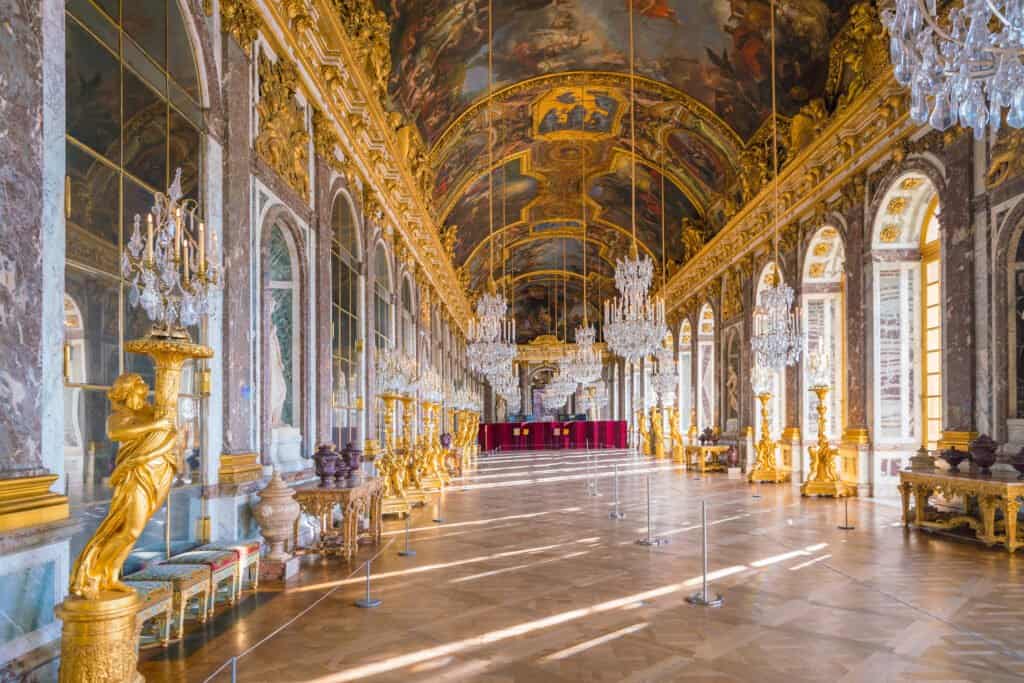
Most visitors combine the Grand Canal with a full day at the Palace of Versailles, including the State Apartments and the Hall of Mirrors. A typical visit is 6 to 8 hours total. If you have additional time, the Trianon palaces and their associated gardens (the Petit Trianon and Grand Trianon) are located within the larger Versailles grounds and can be reached by bike or on foot in 15 to 20 minutes.
The town of Versailles itself has restaurants and small museums worth exploring if you're staying overnight. The Avenue de Saint-Cloud near the palace has shops and cafes.
Sample visit plan
Arrive at the palace grounds by 9 a.m. Spend your first hour exploring the Parterre d'Eau and the State Apartments if you plan to see the palace interior. Exit through the Orangery around 10:30 a.m. and begin walking the Grand Canal from south to north. Take your time, stopping at the Bosquets if they interest you. Reach the northern basin by 12:30 p.m. Rest and have lunch in the park or bring a picnic.
Spend the afternoon cycling or walking through the larger park beyond the formal gardens, or return to the palace for a second look at specific rooms or galleries. If the fountains are running, time your visit to catch the fountain show, which typically occurs in the late afternoon on designated days.
Practical tips
- Start early to beat crowds and enjoy better light for photos
- Rent a bike if you want to cover the full length of the grounds efficiently
- The western path along the canal has more shade than the eastern path
- Bring a reusable water bottle and refill at fountains throughout the park
- Wear comfortable, broken-in walking shoes
- Download the official Versailles app for maps and information
- Check the website for fountain operation schedules before your visit
- Visit on a weekday if possible to avoid weekend crowds
FAQ
Can you swim in the Grand Canal? No. The canal is off-limits for swimming. The water level is maintained for aesthetic purposes, and access to the water itself is restricted. You can walk along the banks or sit nearby, but you cannot enter the water.
How long does it take to walk the entire length of the Grand Canal? A leisurely walk from the southern end to the northern basin takes 40 to 50 minutes. If you stop to explore the Bosquets or sit and rest, add another hour or more.
Is the Grand Canal accessible by wheelchair or stroller? Yes, mostly. The main paths along the canal are paved and flat. However, the crowds during peak season can make navigation difficult. The smaller pathways into the Bosquets may be less accessible depending on their condition.
Do I need to buy a separate ticket to walk the Grand Canal? No. The canal is included with general admission to the palace grounds. You do not need to enter the palace building itself to access the gardens and canal.
What is the best season to visit the Grand Canal? Spring and early autumn offer the best weather and fewer crowds than summer. Winter is cold but beautiful. Summer is busy but the gardens are fully green.
Reviews
Sign in and mark this place visited to leave a review.
No reviews yet.
Free Trip Planner
Plan your France trip with our free planner
Build a day-by-day itinerary with AI suggestions, hand-picked places, and friends. Free forever — no credit card.
Things to see near Grand Canal – Versailles

The Trianons & The Hamlet

Galerie des Carrosses

The Royal Chapel – Versailles