Great Wall of China
Huairou District, China, 101406Overview
The Great Wall of China is one of the world's most recognizable structures, stretching across northern China for thousands of kilometers. Near Beijing, the wall has been restored and preserved in several sections that are accessible to visitors year-round. The Huairou District section, about 50 kilometers north of central Beijing, offers some of the most visited and well-maintained segments where you can walk the actual Ming Dynasty stonework and experience the scale of this ancient engineering feat.
What makes the Great Wall compelling isn't just its age or length. It's the physical sensation of standing on a structure built over 2,000 years ago, walking uphill through valleys, and seeing how the wall follows the natural terrain of steep mountains. The sections near Beijing have been carefully restored over the past few decades, so you're walking on original stones and brick, not a modern reconstruction.
Why this place matters
The Great Wall represents one of humanity's largest construction projects. Built primarily as a military defense system to protect against invasions from the north, the wall was constructed and rebuilt over many dynasties. The sections you can visit today were mostly built during the Ming Dynasty, between 1368 and 1644. These fortifications were once staffed by thousands of soldiers who monitored trade routes and controlled movement across borders.
Beyond its military history, the wall is a testament to sustained human effort across centuries. The construction involved moving millions of tons of stone and brick up mountainous terrain without modern equipment. Understanding this context adds weight to what you see when you walk it.
Quick facts
- Location: Huairou District, approximately 50 kilometers north of Beijing city center
- Era: Most visible sections date from the Ming Dynasty (1368 to 1644)
- Length: The entire wall spans over 13,000 kilometers, but the Beijing-area sections cover roughly 600 kilometers
- Best seasons: Spring (April to May) and autumn (September to October)
- Accessibility: Multiple restored sections with varying difficulty levels from easy to strenuous
Getting there
From central Beijing, the Huairou District sections are roughly 50 to 70 kilometers away depending on which entrance you choose. The journey takes 60 to 90 minutes by car or taxi, longer if you use public transportation.
If you're renting a car, the drive north from Beijing follows major highways. Taxi or ride-sharing apps work reliably from Beijing hotels, though it's worth confirming the destination with your driver beforehand since multiple wall sections exist in the area.
Public transportation requires combining subway or bus routes, which means longer travel times. Most visitors coming from Beijing hotels arrange transportation through their hotel concierge or book a guided tour that includes pickup and drop-off.
The layout and experience
The Great Wall near Beijing isn't a single structure but a series of restored sections, each with its own entrance, facilities, and difficulty level. Some sections are heavily developed with visitor infrastructure, parking, restaurants, and souvenir shops. Others are quieter and more remote, requiring more physical effort to reach and explore.
When you arrive at any section, you'll typically enter through a gate, purchase a ticket, and then walk onto the wall itself. The wall varies in width from about 5 to 8 meters, enough for soldiers to walk and ride horses along it historically. Today, you walk the same path, though you're surrounded by modern visitors instead of Ming Dynasty troops.
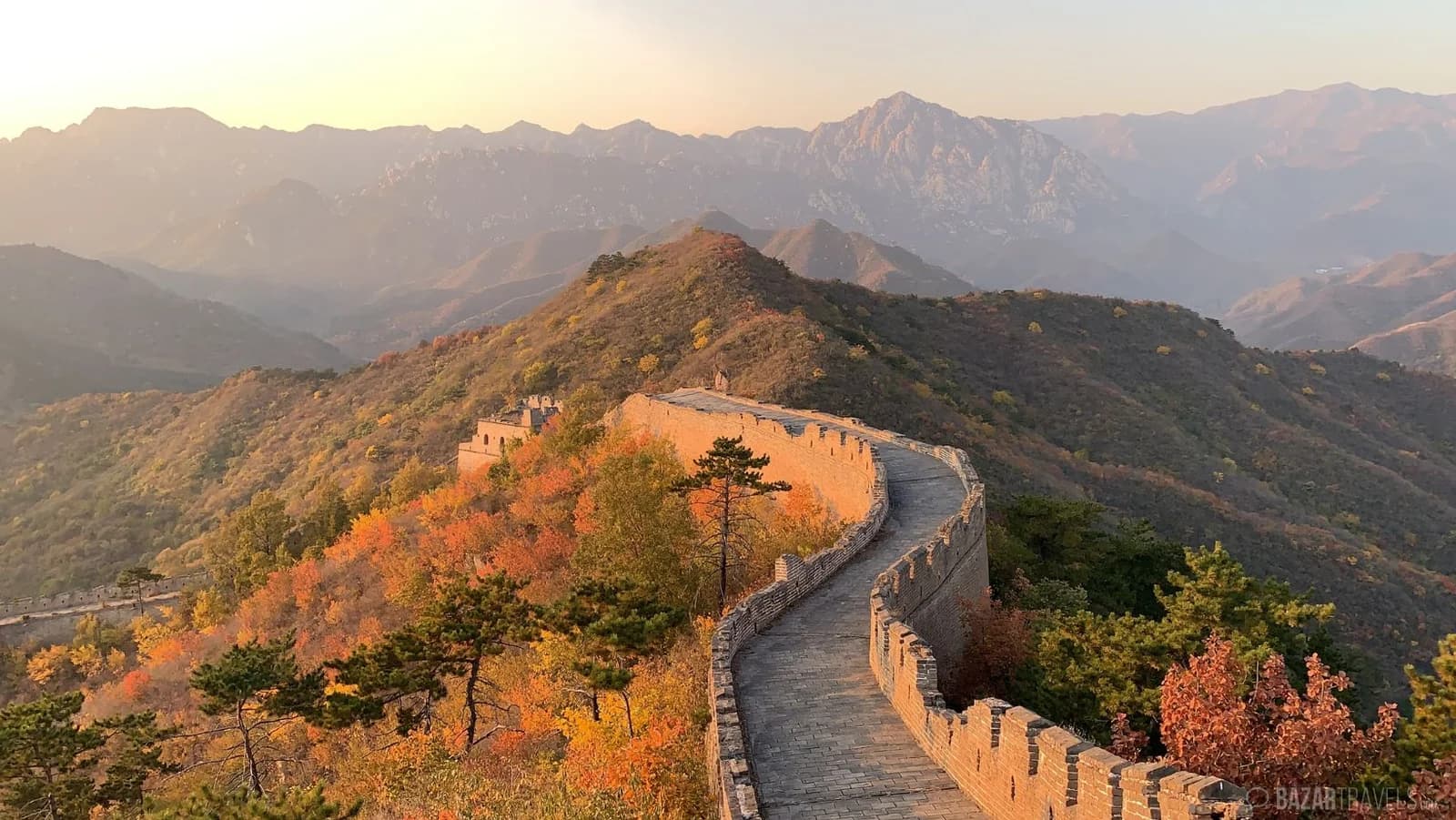
The physical experience depends on which section you choose. Some sections have gentle slopes and well-maintained stone steps. Others climb steeply up mountainsides, and the stone can be uneven or slippery depending on weather. You'll notice watchtowers spaced at intervals along the wall, some restored to show what they looked like when staffed.
Main highlights
Walking the wall itself is the primary experience. There's no single "must-see" section because the appeal is the cumulative effect of the landscape, the historical structure, and the physical challenge. That said, different sections offer distinct experiences depending on your fitness level and time.
The watchtowers are worth noting. These brick and stone structures once housed soldiers and supplies. Many have been restored enough that you can climb inside and look out through original windows. The views from the top of a tower extend far across the mountains and valleys below.
The surrounding landscape is as much a part of the experience as the wall itself. You're walking through mountains with steep valleys, forests, and seasonal wildflowers depending on when you visit. In autumn, the foliage changes color, and in spring, the hillsides green up dramatically.
History and background
The earliest walls in this region date back over 2,000 years, built by various dynasties for military defense. However, the wall sections you walk today were constructed primarily during the Ming Dynasty. Ming emperors rebuilt and extended the wall extensively between the 1400s and 1600s as a response to threats from northern invaders.
The construction process was enormous in scale. Workers, including soldiers and conscripted laborers, quarried stone from local mountains and transported it uphill. They built the wall to follow natural ridgelines and terrain features, which made it harder for invaders to cross but also made construction more challenging. A single watchtower could take months to build.
By the time the Ming Dynasty fell in 1644, the wall had become less militarily relevant. Over the following centuries, much of it fell into disrepair. Local people sometimes removed stones to use for their own buildings. It wasn't until the late 20th century that the Chinese government began systematic restoration efforts, particularly for sections near Beijing that were becoming tourist destinations.
Tickets and entry
General admission tickets are available at each section's entrance. Prices vary slightly depending on which section you visit, but all fall within a budget range. Timed entry systems are in place at popular sections, especially during peak season, so arriving early in the morning is advisable.
Most sections offer standard admission that grants you access to walk the wall for the entire day. Some sections have additional options for guided tours or access to specific areas like restored barracks or museums, but general admission is sufficient to experience the wall itself.
Children, seniors, and people with disabilities often qualify for reduced admission. Bring your ID or proof of age if applicable.
Best time to visit
Spring and autumn offer the most comfortable conditions. April to May brings mild temperatures and fresh vegetation, though the weather can be unpredictable. September to October is often considered ideal because the temperatures are cool, the air is clear, and the foliage is changing.
Summer is hot and humid, and the wall is crowded with domestic and international tourists. Winter is cold, sometimes below freezing, and sections can be icy or snow-covered, making footing treacherous. However, winter crowds are smaller, and the views can be dramatic.
Weekdays are quieter than weekends. If you can visit on a weekday morning in shoulder season, you'll have a more peaceful experience than visiting during a holiday period or weekend.
Photography tips
The wall looks most dramatic at dawn or late afternoon when the light is low and creates shadows across the stonework. The surrounding mountains are also more photogenic in this light. If you're willing to arrive early, the first hour after sunrise often gives you both good light and fewer people in your shots.
Wide-angle shots work well to capture the scale of the wall stretching into the distance. Close-up details of the stone, brick patterns, and vegetation growing on the structure tell a different story about the wall's age and history. The watchtowers make iconic subjects, especially when photographed against the mountain backdrop.
Bring a good pair of walking shoes with strong grip, especially if you're hiking the steeper sections. You'll be moving constantly, and the stone can be uneven or slippery after rain.
Facilities and preparation
Most developed sections have parking, bathrooms, and refreshment stands or restaurants at the entrance. Once you're on the wall itself, facilities are minimal, so plan accordingly. Bring water, especially on warm days, because there are no vendors once you're away from the entrance area.
Wear layers because temperatures can change significantly as you gain elevation. Sunscreen and a hat are important even on cloudy days. The sun reflects off the stone, and you'll be exposed for hours.
Physically, visiting the Great Wall is demanding. You'll be climbing stairs and uneven terrain for hours. Even the "easy" sections involve sustained walking uphill. If you have mobility issues, ask at the entrance about which sections are most accessible.
How it compares to similar places
The Great Wall is unique because it's the actual historical structure, not a recreation. Other ancient fortifications around the world, like Hadrian's Wall in Britain or the Roman walls of various cities, offer similar experiences of walking ancient military infrastructure, but none span as vast a distance or required the level of sustained effort to construct.
If you visit other restored wall sections outside the Beijing area, you'll find variations in restoration quality, crowding, and landscape. Sections farther from Beijing are often less crowded but require more effort to reach.
Combining with nearby attractions
The Huairou District has other historical sites and natural areas worth visiting if you have multiple days. The area is also close to some hiking trails and nature reserves that offer a different perspective on the same mountain landscape the wall traverses.
If you're based in Beijing, the Great Wall can be a day trip, but combining it with other attractions around the city makes for a richer visit. Many tour operators offer packages that include wall sections plus other Beijing sites.
Sample visit plan
A typical day visit involves departing Beijing early in the morning, arriving at your chosen wall section by 8 or 9 am. Spend three to four hours walking the wall, with time for rest and photography. Return to Beijing by late afternoon or early evening.
If you have more time, you can visit multiple sections on different days or spend a full day at one section, exploring both heavily traveled routes and quieter paths. Some visitors stay overnight in nearby towns, which allows for early morning visits when crowds are smallest.
Practical tips
- Start your walk early to avoid the largest crowds and get better light for photography
- Bring more water than you think you'll need; dehydration is common at higher elevations
- Wear sturdy walking shoes with good ankle support; the stone steps are steep and uneven
- Tell someone where you're going and when you expect to return, especially if exploring quieter sections
- Download offline maps or bring a physical map in case your phone loses signal
- Visit the entrance museum or information center to understand the historical context before you start walking
- Respect barriers and closed sections; some parts are genuinely unsafe or still undergoing restoration
FAQ
How long does it take to walk the Great Wall? This depends entirely on which section you choose and your fitness level. Sections near Beijing range from two to eight hours of walking. Most visitors spend three to four hours on the wall itself.
Is the Great Wall accessible for people with mobility issues? Some sections have gentler slopes and better-maintained paths than others, but none are truly level. Contact the specific section's entrance to ask about the most accessible routes available.
Can you see the Great Wall from space? Despite popular belief, the wall is not visible to the naked eye from space. It's too narrow and blends with the surrounding landscape. You need to be on the wall or very close to it to see it clearly.
Is it safe to visit the wall alone? Yes, the main sections near Beijing are safe for solo visitors. Stick to marked paths, especially on less-developed sections, and be aware of uneven footing and steep drop-offs. Mobile phone coverage is generally good near Beijing sections.
What should I bring besides water and sunscreen? Comfortable walking shoes, layers of clothing, a camera, and a basic first aid kit for blisters. If you're visiting in cold months, bring hand warmers and a windproof jacket.
Opening hours
Reviews
Sign in and mark this place visited to leave a review.
No reviews yet.
Free Trip Planner
Plan your Beijing trip with our free planner
Build a day-by-day itinerary with AI suggestions, hand-picked places, and friends. Free forever — no credit card.