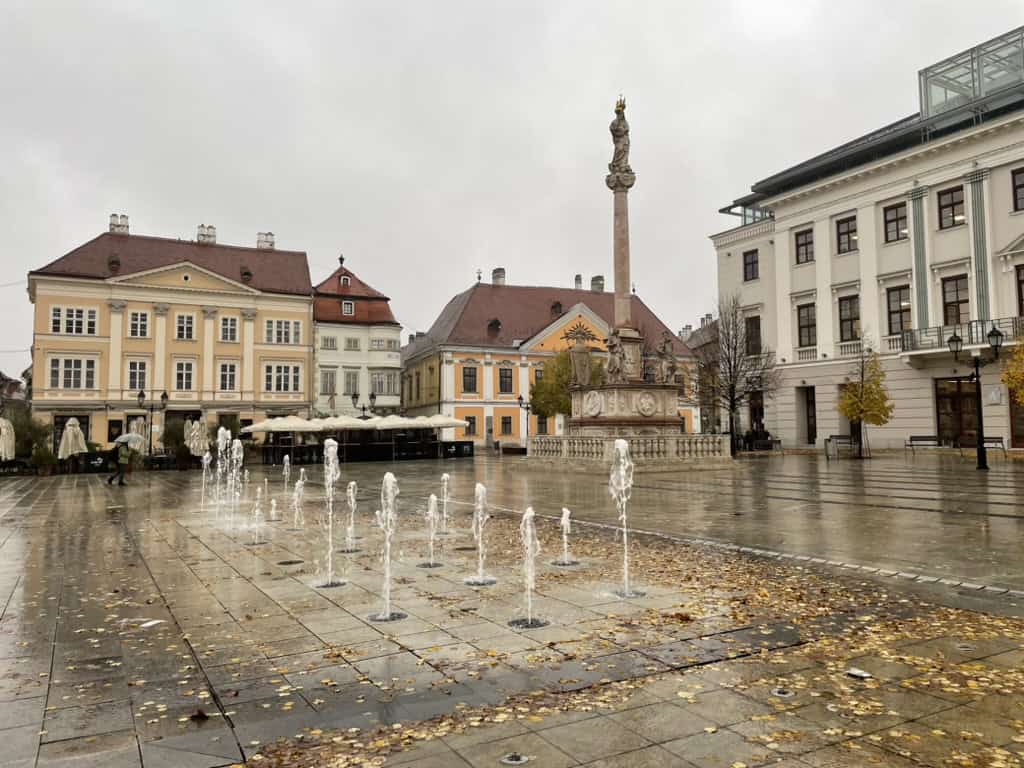
Gyor Town Hall
Varoshaz ter 1., Gyor 9021 Hungary Posted by Brandon B.Admin
Gyor Town Hall Overview
Gyor Town Hall sits at the center of Varoshaz ter, the main square of this medieval Hungarian city. The building is one of Gyor's most recognizable landmarks, a blend of Gothic and Baroque architecture that reflects the town's layered history. If you're exploring Gyor, this is where you'll find yourself repeatedly, whether passing through the square or ducking inside to admire the interiors.
The structure dominates its plaza in a way that makes it impossible to miss. Its facade, tower, and the square itself form the visual and civic heart of Gyor, a city located roughly 120 kilometers northwest of Budapest along the Danube River.
Why This Place Matters
Gyor Town Hall represents centuries of urban continuity in a region that has experienced significant upheaval. The building has served as the seat of local government and a gathering point for the community since its construction. Its survival and restoration speak to the town's commitment to preserving its medieval and early modern character.
The square itself functions as Gyor's main public space. Cafes, shops, and restaurants line the perimeter, making the Town Hall not just a historical monument but an active part of daily life. You'll see locals crossing the square, tourists photographing the tower, and seasonal events unfolding in front of the building.
Quick facts
- Located at Varoshaz ter 1, the main square of Gyor
- A blend of Gothic and Baroque architectural styles
- Features a distinctive clock tower visible across much of the city center
- Gyor is approximately 120 kilometers northwest of Budapest
- The building continues to serve as the seat of local government
Getting There
Gyor is accessible by train from Budapest in roughly 90 minutes on regular regional services. The train station sits northwest of the city center. From there, the walk to Varoshaz ter takes about 15 to 20 minutes heading southeast through the older streets of Gyor.
If you're driving, the square has limited street parking, though there are parking garages nearby. The Town Hall is signposted from major approach roads into the city center. Public transportation within Gyor is limited but functional. Most visitors simply walk once they arrive in the old town.
The Layout and Experience
Varoshaz ter is not a large square by European standards, but its proportions feel intimate rather than cramped. The Town Hall occupies the northern side, with its tower rising prominently above the surrounding buildings. The square slopes gently, and depending on where you stand, the perspective of the building shifts.
The ground floor of the Town Hall opens onto the square, though public access to the interior is limited outside of official events or guided tours. The tower's clock faces are visible from most angles, making this a useful landmark for orienting yourself in the city center. The surrounding arcades and neighboring buildings frame the square, creating a coherent ensemble rather than a isolated monument.
Benches and cafes occupy portions of the square during warmer months. The paving is uneven in places, reflecting the age of the underlying structures. Early mornings tend to be quieter, while afternoons bring foot traffic and activity from the surrounding shops and restaurants.
Main Highlights
The tower is the dominant visual feature. Its proportions, materials, and weathering tell stories of maintenance and change across centuries. The clock mechanism itself is worth noticing if you happen to be present when it chimes.
The architectural detailing on the facade rewards close inspection. Corbels, stone work, window frames, and the transition between different periods of construction are visible if you take time to study the exterior. The contrast between older Gothic elements and later Baroque additions becomes clear the longer you look.
The square itself functions as a highlight. Seeing how a medieval town's civic and commercial life organizes around this central space offers insight into European urban planning across centuries. The mix of uses, the relationship between the building and the surrounding commerce, and the way locals move through the space all contribute to understanding Gyor as a living town rather than a museum.
History and Background
Gyor's Town Hall reflects the town's position as an important crossroads. The city sits where the Raba River meets the Danube, making it strategically and commercially significant throughout the medieval and early modern periods. The building itself has been substantially altered and rebuilt multiple times, incorporating elements from different eras.
The original structure dates to the medieval period, though determining exact dates is complicated by later renovations. Gothic elements are visible in the stonework and proportions. During the 17th and 18th centuries, Baroque modifications were added, including elements of the current facade and tower design. The building served continuously as the administrative center of the town and region.
Like much of Hungary, Gyor experienced significant changes during the 20th century. The Town Hall survived World War II and subsequent decades of communist rule, though the building required restoration work in recent years. Contemporary renovations have attempted to balance preservation of historical elements with the practical needs of a functioning government building.
Tickets and Entry
There is no admission charge to view the Town Hall from the square or to photograph the exterior. The interior is generally not open to casual visitors. If specific areas are accessible, opening times and conditions vary depending on local events or official tour schedules. Your best approach is to check with the Gyor tourist information office in the square, which can advise on any current opportunities to enter the building.
Best Time to Visit
The square is accessible year-round, though weather significantly affects the experience. Summer brings clear views and active use of the cafes and outdoor spaces surrounding the Town Hall. Spring and autumn offer comfortable temperatures and fewer crowds. Winter can be harsh, with snow and ice sometimes affecting the square, though this creates a different aesthetic appeal.
Weekday mornings tend to be quieter than afternoons and weekends. If you prefer studying the architecture in detail without crowds, arrive early. If you want to experience the square as locals do, with cafes busy and foot traffic flowing, come mid-morning or late afternoon.
Photography Tips
The tower photographs well from the south and west sides of the square, where you capture the full height against the sky. Morning light from the east creates strong shadows that emphasize the architectural details. Afternoon light tends to be flatter but works for capturing the broader square and surrounding context.
Close-ups of the stonework, window frames, and corbels reveal the layering of different construction periods. The clock faces themselves can be photographed directly, though the angle depends on your position in the square. If you're present during dusk, the building can take on different character as light fades.
The square itself offers good compositions that include the Town Hall in relation to the surrounding buildings and cafes. These shots convey how the building functions as part of an integrated urban space rather than as an isolated monument.
Facilities and Preparation
The square and surrounding area have standard urban facilities. Cafes and restaurants border Varoshaz ter, offering places to sit, eat, and rest. Public restrooms are available at nearby establishments. The square itself has limited seating, though cafes provide chairs and tables during warmer months.
No special preparation is needed to view the exterior. Comfortable walking shoes are advisable since the square's paving is uneven in places. In summer, sun exposure is significant, so consider bringing water and sun protection. The building itself is accessible from multiple sides, so you can approach from different directions depending on your route through the city center.
Combining with Nearby Attractions
Gyor's old town is compact and walkable. Several other significant buildings and sites lie within a 10-minute walk of the Town Hall. The Cathedral, located slightly south of the main square, is worth visiting for its interior and its own architectural history. Streets radiating from Varoshaz ter contain smaller churches, museums, and shops that reflect the town's medieval and baroque heritage.
The Danube River is less than a kilometer away to the north. Walking toward the river takes you through different neighborhoods and shows how Gyor extends beyond its medieval core. If you have time, the riverfront area offers a change of pace from the town center.
Sample Visit Plan
Arrive at Varoshaz ter in the morning when the light is good and the square is less crowded. Spend 20 to 30 minutes examining the Town Hall's exterior from different angles, paying attention to the architectural details and the relationship between the building and the square. Walk around the perimeter to see different facades and the tower from various viewpoints.
Grab coffee or a light breakfast at one of the cafes facing the square. From there, walk south to the Cathedral and explore that area for another 30 to 45 minutes. Return to the square in the afternoon to see how the light and activity have changed. Depending on the season and time of day, the square's character shifts noticeably.
Practical Tips
- Visit the tourist information office on the square if you want current information about the building's interior or local events
- The square is flat and accessible for most mobility levels, though the paving is uneven in places
- Cafes surrounding the square offer good vantage points for studying the building while you rest
- The tower's clock chimes on the hour, a useful waypoint if you're navigating the city center
- Street parking near the square is limited, but paid parking garages are nearby
- The surrounding streets contain smaller shops and restaurants that offer a quieter experience than the main square
FAQ
Can you go inside the Town Hall? The interior is generally not open to casual visitors. The building serves as a functioning government office. Check with the tourist information office to see if any guided tours or special access is available during your visit.
How long should you spend at the Town Hall? The exterior can be appreciated thoroughly in 20 to 30 minutes. If you combine it with exploring the square, nearby cafes, and surrounding streets, plan for 1 to 2 hours in the area.
What's the best season to visit? Summer and early autumn offer pleasant weather and clear views. Spring is also good if you don't mind occasional rain. Winter is possible but can be cold and grey.
Is there an entrance fee? No. Viewing the Town Hall and the square is free. Cafes and restaurants in the area charge standard prices for food and drinks.
How do you get from Budapest to Gyor? Regular train services run between Budapest and Gyor several times daily, taking roughly 90 minutes. Driving is also possible via the M1 motorway, taking about 2 hours depending on traffic.
Opening hours
Reviews
Sign in and mark this place visited to leave a review.
No reviews yet.
Free Trip Planner
Plan your Gyor trip with our free planner
Build a day-by-day itinerary with AI suggestions, hand-picked places, and friends. Free forever — no credit card.