
Historic Počitelj
Počitelj, 88300 Čapljina, Bosnia and Herzegovina Posted by Brandon B.Admin
A Fortified Village Frozen in Ottoman Time
Historic Počitelj sits above the Neretva River in the Čapljina municipality of southern Bosnia and Herzegovina, roughly 25 kilometers south of Mostar. It is one of the best-preserved examples of Ottoman-era urban architecture in the entire western Balkans, and once you see it rising above the road, you understand why it keeps appearing on every serious itinerary for the region. Pale stone towers, a mosque, and a hammam all crowd together on a hillside that looks like it was designed for a film set but is entirely, stubbornly real.
The village clings to a steep limestone cliff and faces west toward the river valley below. Almost nothing about the skyline has changed since the 17th century.
Why Historic Počitelj Matters
Počitelj was added to the UNESCO World Heritage tentative list, and it is protected as a national monument of Bosnia and Herzegovina. That designation came partly because the village represents a complete, largely intact Ottoman settlement rather than a single building or ruin. You have the defensive walls, the residential quarters, the religious buildings, and the commercial spaces all in one place and all built in the same regional style.
It also carries difficult recent history. During the 1990s war, the village suffered significant damage. Much of what you see today is the result of ongoing reconstruction efforts that have stretched across decades, and some buildings remain in various states of repair. That layering of damage and careful restoration gives Počitelj a texture that purely preserved sites sometimes lack.
Quick Facts
- Location: Počitelj village, Čapljina municipality, Herzegovina-Neretva Canton, Bosnia and Herzegovina
- Distance from Mostar: approximately 25 kilometers south, around 25 to 30 minutes by car
- Distance from Čapljina town: roughly 10 kilometers north
- Main structures: Šišman Ibrahim-pasha's Mosque (built 1563), the Gavran-kapetanova kula tower, a 16th-century hammam, and the clock tower
- Entry: the village is open access; some individual structures may charge a small entry fee
- Best approached from: the main Mostar-Metković road (M17), where a signed turnoff leads directly to the village parking area
Getting There
Most visitors arrive by car along the M17 highway, which runs between Mostar and the Croatian border. The turnoff for Počitelj is clearly signed. From the parking area at the base of the hill, the village is entirely on foot, and there is no way to drive further in. If you are coming from Mostar without a car, some organized day tours include Počitelj as a stop, often combined with Kravice Waterfalls a few kilometers further south. Local buses run along the M17 corridor but drop you on the main road, leaving a short walk to the village entrance.
The Layout and Experience
The village is built on a series of terraces cut into the cliff, connected by steep stone staircases and narrow passages. There is no flat ground to speak of. If you have mobility concerns, this is worth knowing before you arrive because even the lower section involves uneven cobblestones and steps without handrails.
From the parking area, you enter through a low stone gate and immediately start climbing. The mosque sits roughly in the middle of the settlement. Above it, the path continues up to the Gavran-kapetanova kula, a fortified tower that forms the upper anchor of the defensive system. The climb to the top takes around 10 to 15 minutes from the entrance at a relaxed pace, and the views from the tower walls over the Neretva valley are the kind that stop conversation.
The hammam, one of the older surviving structures, stands near the lower section of the village. It is not always open to the interior, but the exterior stonework alone is worth a look. A handful of small shops and a gallery or two operate during the warmer months, selling local crafts and art. The village is not heavily commercialized, which is part of its appeal.
Main Highlights
Šišman Ibrahim-pasha's Mosque
Built in 1563, this is the spiritual center of the village and one of the oldest Ottoman mosques in Herzegovina. The architecture is simple and proportional rather than ornate, with a single minaret and a shaded forecourt. Visitors are generally welcome outside of prayer times, and modest dress is expected.
The Fortress Walls and Kula Tower
The defensive walls that ring the upper section of Počitelj date from the medieval and early Ottoman periods, with later additions. Climbing to the kula gives you the full picture of how the village was designed as a military position first and a residential settlement second. The Neretva stretches out below and the surrounding hills are almost completely undeveloped, which makes the view feel genuinely ancient.
The Hammam
The 16th-century bathhouse is one of the oldest surviving hammams in the country. Even partially ruined, it communicates the ambition of whoever built this place. A hammam in a hillside village of this size was not a necessity; it was a statement.
History and Background
The settlement at Počitelj predates the Ottomans. A medieval fortification existed here before the Ottoman conquest of Herzegovina in the 15th century. Under Ottoman rule the village grew substantially, and most of what survives today was built or expanded during the 16th and 17th centuries. It functioned as a garrison town controlling movement along the Neretva corridor, which was a strategically vital route between the Adriatic coast and the interior.
After the Ottoman period the village gradually declined in population, which paradoxically helped preserve its architecture. There was little incentive to demolish and rebuild. By the 20th century it had become an artists' colony, attracting painters and sculptors drawn to the light and the stone. That community still has a presence, and you may find small galleries open during summer.
The 1993 destruction during the Bosnian War left significant scars. Systematic reconstruction began afterward and continues today, with international support. The mosque was restored. The hammam remains partly ruined. This is not a sanitized heritage site; it is a place still working through its own history.
Best Time to Visit
Spring and early autumn tend to offer the best combination of comfortable temperatures and manageable crowds. Summer brings tour buses from the Adriatic coast, and the exposed stone hillside absorbs heat aggressively. If you visit in July or August, an early morning arrival makes a real difference, both for the light and for the relative quiet before the day-trippers arrive.
Winter visits are quiet and atmospheric, but some of the small shops and galleries will be closed. The village itself is always accessible.
Photography Tips
The best wide shots of Počitelj are actually taken from the main road below, looking up at the cluster of towers and minarets against the cliff. Pull off before you turn into the village and look back. Once inside, the mosque forecourt in the late afternoon catches warm light on the stone. The view from the kula tower is best in the morning when the Neretva valley below still holds a slight haze. Narrow staircases and archways throughout the lower village make for strong compositional frames if you shoot toward the light.
Combining with Nearby Attractions
Počitelj works well as a half-day stop on a longer route. Kravice Waterfalls are around 10 kilometers further south along the same road and make a natural pairing, particularly in summer when a swim there is genuinely welcome after climbing Počitelj in the heat. Mostar is close enough that most visitors combine the two, spending the morning in Počitelj and the afternoon in Mostar's old town around Stari Most. Blagaj, with its dervish monastery at the source of the Buna River, is roughly 20 kilometers northeast of Počitelj and rounds out a strong full-day circuit of Ottoman Herzegovina.
Practical Tips
- Wear proper footwear. The stone steps are uneven and can be slippery after rain.
- There is limited shade inside the village. Bring water, especially in summer.
- The parking area at the base has basic facilities. Don't expect infrastructure beyond that.
- Modest dress is appreciated near the mosque and expected if you enter.
- Allow at least 90 minutes to explore properly without rushing. Two hours is more comfortable.
- Cash is useful for any small entry fees or purchases at the craft stalls.
- Photography is generally unrestricted outdoors. Ask before photographing inside the mosque.
FAQ
Is Počitelj worth visiting if I've already seen Mostar?
Yes, and the two complement each other rather than overlap. Mostar gives you a living city built around an Ottoman core. Počitelj is a near-frozen settlement where the 17th century is more present than the 21st. They are different experiences despite sharing an architectural vocabulary.
How long does a visit take?
Most visitors spend between 90 minutes and two and a half hours. If you are interested in the art galleries or tend to linger over details, it can stretch longer. It is not a full-day destination on its own.
Is it accessible for people with limited mobility?
The village is largely not accessible for wheelchair users or people who have difficulty with steep stairs. The lower entrance area is manageable, but most of the site requires significant climbing on uneven stone surfaces.
Can you visit Historic Počitelj independently without a tour?
Entirely. The village is open access, the site is compact and self-explanatory, and there is no requirement for a guide. That said, a local guide adds context about the reconstruction history and the individual buildings that signage alone doesn't provide.
Reviews
Sign in and mark this place visited to leave a review.
No reviews yet.
Free Trip Planner
Plan your Bosnia And Herzegovina trip with our free planner
Build a day-by-day itinerary with AI suggestions, hand-picked places, and friends. Free forever — no credit card.
Things to see near Historic Počitelj

Radimlja Necropolis
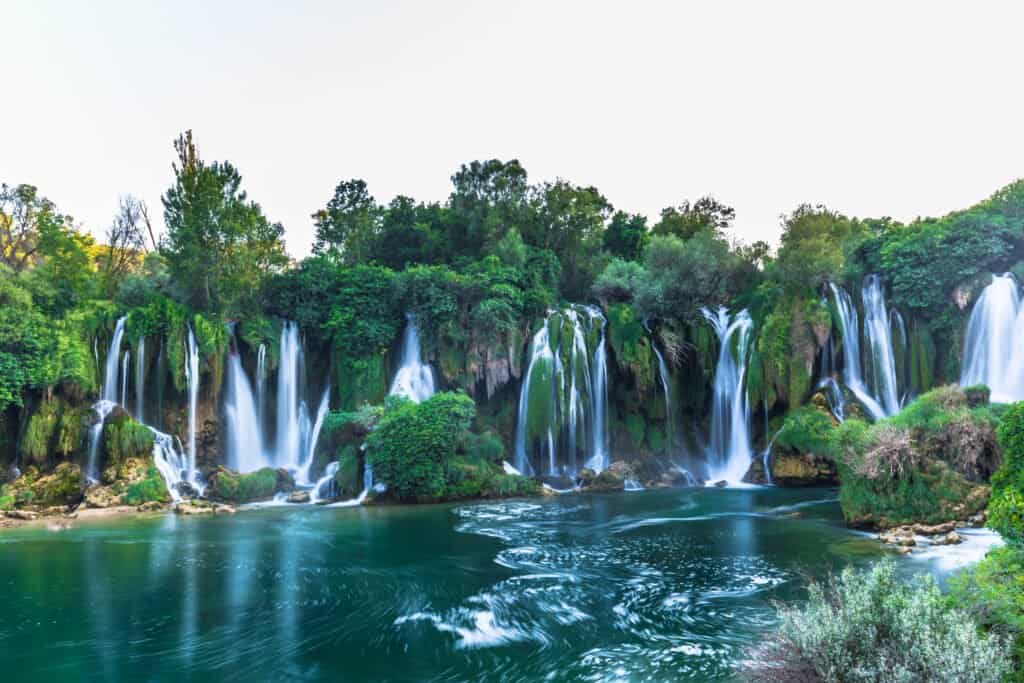
Kravica Waterfall

Kravica (Kravice) Falls

