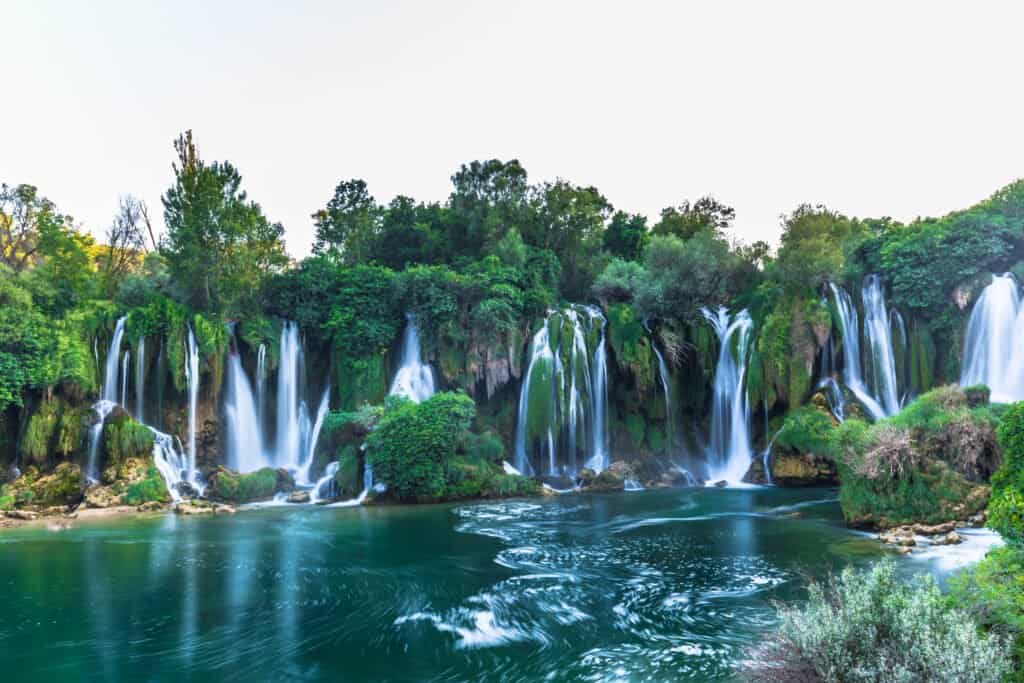
Kravica (Kravice) Falls
Studenci, West Herzegovina, Bosnia and Herzegovina Posted by Brandon B.Admin
Kravica Falls Overview
Kravica Falls is a 25-meter waterfall and natural pool located in the Studenci area of West Herzegovina, in southern Bosnia and Herzegovina. The waterfall drops into a semicircular amphitheater of travertine rock, creating one of the most visually striking swimming destinations in the region. The emerald-green pool at the base remains cool year-round and attracts swimmers, photographers, and nature lovers from across the Balkans.
The site sits roughly 45 minutes drive from Mostar, making it accessible for day trips or as part of a broader exploration of Herzegovina's natural attractions. The waterfall itself is relatively compact, but the surrounding landscape of limestone cliffs and vegetation gives the spot an almost theatrical quality.
Why This Place Matters
Kravica Falls represents the kind of natural formation that defines Herzegovina's landscape. The waterfall is fed by the Trebižat River, a waterway that has carved through karst terrain for millennia. The travertine deposits that frame the falls are the same mineral-rich limestone that appears throughout the region, from the Kravice lake system upstream to the Adriatic coast further south.
For visitors, Kravica offers something different from the more famous cascades in the region. The pool is large enough to swim in without overcrowding, and the geology creates natural amphitheater seating on the rocks above.
Quick Facts
- Height: 25 meters (82 feet)
- Distance from Mostar: approximately 45 kilometers
- Best visiting season: May through September
- Nearby town: Studenci
- Water temperature: coldest in spring, warmest by late summer
- No entrance fee required
Getting There
From Mostar, take the M17 highway south toward Čapljina. The drive takes roughly 45 minutes to an hour depending on traffic and your exact starting point. As you approach Studenci, look for signage directing you toward Kravica. The final approach involves turning onto a smaller road that winds down toward the waterfall.
Parking is available in an unpaved lot near the entrance. The walk from the parking area to the waterfall itself takes about five to ten minutes on a well-trodden path. The trail descends gradually and can be slippery after rain or during wet conditions, so wear appropriate footwear.
If you're traveling without a car, organized tours from Mostar include Kravica Falls as part of day-trip itineraries that also visit nearby attractions like the Kravica lake system or the Neretva River canyon.
The Layout and Experience
The waterfall occupies a natural bowl carved into the surrounding rock. You approach from above and slightly to the side, giving you a view of both the cascade and the pool before you descend to water level. The semicircular limestone cliff that frames the falls is the visual anchor of the site.
The pool extends outward from the base of the waterfall, deepening as you move away from the cascade. On most days, the water is clear enough to see the rocky bottom. The surrounding rocks provide natural seating, sun exposure, and shade depending on where you position yourself.
The experience is mostly self-directed. There are no guided tours, facilities, or organized activities at the waterfall itself. You arrive, you swim or wade or photograph, and you decide how long to stay. Most visitors spend between one and three hours at the site.
Main Highlights
The waterfall itself is the obvious focal point. Watching the water drop from the cliff face and the mist that rises from impact is compelling, especially in morning light when the sun hits the spray at certain angles.
Swimming in the pool is the primary activity. The water is cold even at the height of summer due to the spring-fed source upstream. Most swimmers wade in gradually rather than jumping from the rocks, though some visitors do climb to higher points and dive into the deeper sections of the pool.
Photography works best in early morning or late afternoon when the light is angled and softer. The contrast between the white travertine, green water, and surrounding vegetation creates strong visual compositions.
The limestone geology is worth noticing. The travertine deposits visible on the rocks are calcium carbonate precipitate left behind by mineral-rich water over centuries. You can see the layering and buildup on the cliff face and along the edges of the pool.
History and Background
Kravica Falls has been part of the local landscape for as long as the Trebižat River has flowed through West Herzegovina. The travertine formations that define the site accumulate slowly as mineral-rich water deposits minerals over time. The limestone bedrock in this region dates back millions of years to when this area was part of a shallow sea.
The waterfall became more widely known to international travelers in the decades following the Balkans conflict of the 1990s, as tourism infrastructure in Bosnia and Herzegovina expanded and developed. Today it ranks among the region's most visited natural attractions, though it remains far less crowded than some European waterfalls with similar acclaim.
Best Time to Visit
Late spring through early autumn offers the most comfortable visiting conditions. May through September brings warm air temperatures while the water remains cold but swimmable. July and August are peak season, which means more visitors and less solitude, but the weather is most predictable.
Spring months bring higher water flow from snowmelt in the mountains upstream, making the waterfall more dramatic but the pool somewhat less inviting for swimming. Winter and early spring can see reduced flow and colder air temperatures that make the site less appealing unless you're specifically interested in photographing the falls in different seasons.
Avoid visiting immediately after heavy rain, when the water becomes cloudy and the trail can be treacherous. Most days are dry in summer, but afternoon thunderstorms do occur in spring and early autumn.
Photography Tips
Arrive early if photography is your main goal. The morning light before 10 a.m. tends to illuminate the waterfall and pool without harsh shadows, and you'll have fewer people in your frames.
Bring a waterproof bag or case if you're carrying electronics near the pool. The mist from the waterfall can reach the rocks where visitors stand, and splashing from swimmers happens throughout the day.
A wide-angle lens captures the full amphitheater of the falls and surrounding cliff. Longer focal lengths work well for isolating the cascade itself or capturing detail in the travertine formations.
Polarizing filters help cut glare from the water surface and can deepen the color of the pool in your images. The emerald-green water photographs most vividly in bright sunlight with clear skies.
Facilities and Preparation
There are no facilities at Kravica Falls itself. No toilets, no food vendors, no changing rooms, no lifeguards. Bring everything you need for the day.
Pack plenty of drinking water, especially in summer months. The sun reflects intensely off the limestone, and the swimming and hiking can be dehydrating. Bring snacks or plan to eat before or after your visit in Studenci or another nearby town.
Wear water shoes or sandals with grip. The rocks around the pool can be slippery, and the limestone itself is rough on bare feet. A towel is essential if you plan to swim. Sunscreen is advisable given the reflection off the white rock and water.
Secure your valuables. While Kravica is generally safe, leaving items unattended in a car or on the rocks carries risk. Travel light and keep essentials with you.
Combining with Nearby Attractions
Kravica Falls sits within a broader landscape of natural and cultural sites in West Herzegovina. The Kravice lake system lies upstream from the waterfall and offers a different perspective on the same river system. The Neretva River canyon, further south, provides dramatic gorge scenery and rafting opportunities.
Mostar, roughly 45 minutes north, contains the iconic Stari Most bridge and Ottoman architecture worth a half or full day of exploration. Počitelj, a small fortified village between Mostar and Kravica, offers historical interest and views across the Neretva valley.
Many visitors combine Kravica with a day trip that includes swimming at the falls in the morning, exploring Počitelj or another heritage site in the afternoon, and returning to Mostar for dinner. The logistics work well for this kind of itinerary.
Sample Visit Plan
A typical day at Kravica Falls starts with arrival between 9 and 10 a.m. You park, walk down to the waterfall, and spend your first 30 to 45 minutes exploring the site and taking initial photographs or videos. If you're swimming, the next hour or more involves getting in the water, adjusting to the temperature, and spending time in the pool.
Around midday, as the light becomes harsher and more people arrive, many visitors relocate to shaded areas on the rocks, eat a packed lunch, or relax. Some people leave by early afternoon to avoid the busiest hours. Others stay through the afternoon and photograph the waterfall again as light angles change toward evening.
Most visitors spend between two and four hours at the falls before heading to their next destination. If Kravica is part of a larger day trip, you'd likely leave by mid-afternoon to visit another site or return to your base.
Practical Tips
- The parking area can fill during peak summer days, especially on weekends. Arriving before 10 a.m. increases your chances of finding a spot close to the entrance.
- Bring a dry bag or waterproof case for your phone and valuables. Leaving items on rocks is risky even when you're in sight of them.
- The water is cold year-round. Wading in gradually helps your body acclimate. Some visitors wear a wetsuit for extended swimming in cooler months.
- The trail to the waterfall can be muddy or slippery after rain. Sturdy footwear with good grip is more important than speed.
- There's no shade on the main path down. Wear a hat and sunscreen, and bring water for the walk itself, not just for the waterfall area.
- If you're visiting in July or August, consider going on a weekday rather than a weekend to experience the site with fewer crowds.
FAQ
Can I swim at Kravica Falls? Yes. The pool is deep enough for swimming in most areas. The water is cold year-round, but it's swimmable from late spring through early autumn. There are no lifeguards, so swim at your own risk and be aware of the current near the waterfall itself.
Is there a cost to visit? No. Kravica Falls is free to visit. There's no entrance fee, ticket, or permit required.
How long does it take to get there from Mostar? The drive is approximately 45 minutes to an hour depending on traffic and your exact starting location in Mostar. The road is paved and in reasonable condition.
What's the best season to visit? May through September offers the most comfortable weather and swimmable water. July and August are peak season with warm temperatures but also more visitors. Shoulder months like May and September are quieter but the water is colder.
Do I need special equipment or experience to visit? No. The waterfall is accessible to anyone in reasonable fitness. The walk from the parking area is short and not strenuous. Swimming experience is helpful if you plan to swim in the deeper pool, but wading is safe and accessible to most visitors.
Reviews
Sign in and mark this place visited to leave a review.
No reviews yet.
Free Trip Planner
Plan your Bosnia And Herzegovina trip with our free planner
Build a day-by-day itinerary with AI suggestions, hand-picked places, and friends. Free forever — no credit card.
Things to see near Kravica (Kravice) Falls

Popić Winery

Radimlja Necropolis

Historic Počitelj