Ixpanpajul Nature Park
Km. 468, Flores 17001 Guatemala Posted by bazartravelsAdmin
Overview
Ixpanpajul Nature Park sits on the edge of Flores, Guatemala, offering visitors a direct window into the rainforest canopy without requiring a multi-day expedition into the remote Peten. The park spans 600 hectares of protected jungle and sits adjacent to the Mirador Basin, one of Central America's most significant Maya archaeological zones. You'll find yourself walking among ceiba and mahogany trees, crossing hanging bridges, and moving through habitat shared by jaguars, pumas, and hundreds of bird species.
This is not a manicured botanical garden. Ixpanpajul Nature Park preserves working rainforest, managed to balance conservation with access. The park's trails wind through primary and secondary growth forest, and its canopy towers offer genuine altitude and perspective. Most visitors spend between three and five hours here, though the site can accommodate a full day if you're thorough.
Why this place matters
The Peten region contains roughly 2 million hectares of rainforest, but it's under constant pressure from logging, agriculture, and settlement. Ixpanpajul Nature Park exists partly as a buffer zone protecting the larger Maya Biosphere Reserve. The park employs local guides and reinvests entrance fees into land management and community programs, creating economic incentive for conservation rather than clearing.
For travelers, the park offers rare access to intact canopy ecosystem without the expense or logistics of reaching sites like Tikal or Laguna Petexbatun. You can see morpho butterflies, howler monkeys, and poison dart frogs in a single morning.
Quick facts
- Location: 10 kilometers south of Flores town center, along the road toward Tikal
- Area: 600 hectares of protected rainforest
- Elevation: Ranges from 100 to 200 meters above sea level
- Entry: General admission; guided tours and canopy tours available as add-ons
- Best months: December through March (dry season, fewer insects, clearer skies)
- Languages: Spanish and English guides available; book ahead for English
- Facilities: Visitor center, restrooms, basic cafe with snacks and drinks
Getting there
From Flores town center, the park is a 15 to 20-minute drive south. Most visitors arrange transport through their hotel or hire a private taxi. If you're renting a vehicle, follow the main road toward Tikal and watch for the clearly marked entrance on your right. The park's access road is unpaved but passable during both dry and rainy seasons.
Alternatively, some tour operators in Flores offer shuttle service that combines Ixpanpajul with other nearby attractions like Cerro Cahui or the Flores town waterfront.
The layout and experience
You'll enter through a visitor center built with local materials. A staff member will orient you to trail conditions and wildlife likelihood depending on the time of day. The park maintains several interconnected trails of varying difficulty, ranging from easy forest floor walks to more demanding routes with elevation change.
Most visitors begin with the main trail system, which loops through different forest zones. The canopy towers are the park's signature feature. These elevated platforms are built into or against massive trees and offer unobstructed views across the jungle roof. A 40-meter tower provides views into the highest canopy layer where harpy eagles and macaws hunt.
Hanging bridges connect some sections of the upper trail system. These are sturdy and well-maintained, but they're genuinely suspended over the forest floor, creating an immediate sense of height. If you're uneasy with heights, you can skip the canopy sections and stick to the ground-level trails without missing core experience.
The pace is slow. Good guides stop frequently to point out camouflaged animals, leaf-cutter ant colonies, and plant relationships. A three-hour guided walk typically covers less than three kilometers because time is spent observing rather than walking.
Main highlights
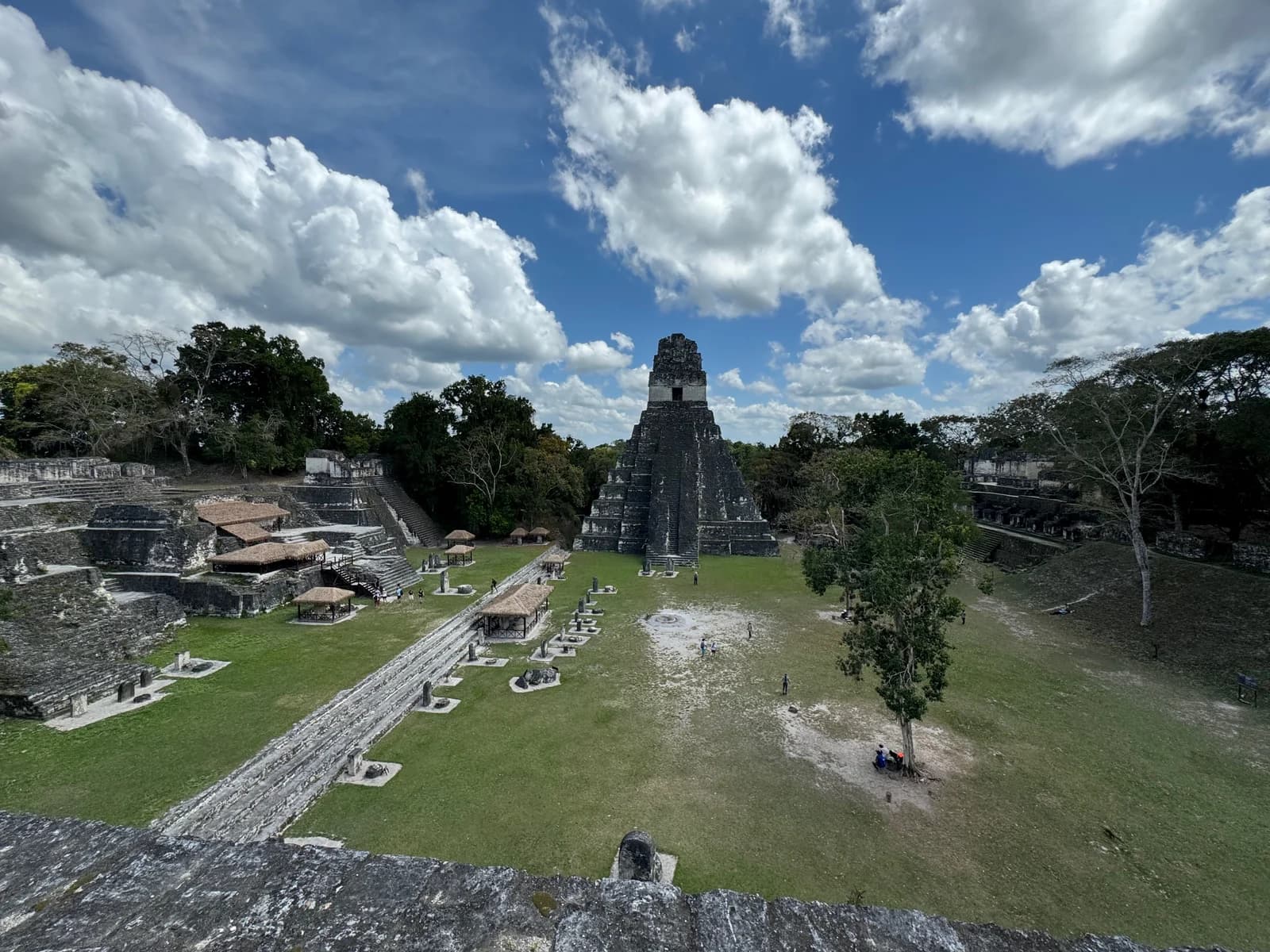
The canopy towers themselves are the main draw. The tallest offers a perspective most people never get of tropical forest structure. On clear mornings, you can see toward distant pyramids on the horizon.
Wildlife viewing tends to be best in early morning or late afternoon. Howler monkeys are reliably heard, though seeing them requires patience and a guide who knows where they sleep. Spider monkeys are less common but appear occasionally. On most visits, you'll encounter toucans, parrots, and smaller bird species. Agoutis and coatis are regularly spotted on trails. Larger animals like jaguars and pumas inhabit the park but are rarely seen by day visitors.
The forest composition itself is the highlight for some visitors. You'll see massive ceiba trees that are hundreds of years old, their buttress roots creating room-sized cavities at the base. The understory hosts orchids, bromeliads, and fungi in stages of decomposition that feed the cycle. A good guide will explain how the forest regenerates after windfall or how specific plants provide food or medicine to local communities.
History and background
Ixpanpajul was established as a private nature reserve in the 1990s with support from conservation organizations and the Guatemalan government. The name comes from the local Itza Maya language. The park's creation reflected both growing ecotourism interest in Flores and increased pressure on the Peten rainforest from logging and agricultural expansion.
The site sits within the larger Mirador Basin, which contains some of the oldest and largest Maya cities ever built. Archaeological surveys have found evidence of Maya occupation dating back at least 1000 years, though most structures within Ixpanpajul itself remain unexcavated and are slowly being reclaimed by forest.
Tickets and entry
General admission provides access to the main trail system and the visitor center. Guided tours are offered at mid-range pricing and are strongly recommended, especially on your first visit. Canopy tours that include all observation towers typically cost slightly more than standard guided walks.
Group size on guided tours is usually kept to 8 to 12 people to minimize impact and maximize viewing quality. If you arrive with a specific guide preference (Spanish-speaking only, English-speaking, or a guide experienced with a particular interest like birds or archaeology), mention this when booking.
Best time to visit
The dry season runs from December through March, and these months offer the clearest visibility, lowest insect pressure, and most active wildlife. March and April can be hot and dry, which sometimes concentrates animals around water sources, improving viewing odds.
The rainy season from May through November brings mud, insects, and reduced visibility, but it also brings lush growth and different species activity. Howler monkeys are vocal year-round. If you visit during rainy months, wear waterproof gear and plan for wet trails.
Photography tips
Bring a telephoto lens if you have one. Wildlife in the canopy is distant, and a 200mm or longer focal length will let you capture birds and monkeys without disturbing them. The forest floor is shaded, so a fast lens or higher ISO setting helps.
Early morning light filtering through the canopy is best for landscape and forest detail shots. Midday creates harsh shadows and washes out color. Macro photography of insects and fungi is rewarding but requires patience and a guide who knows where to look.
Ask your guide before photographing animals or people. Some guides prefer not to be photographed, and some wildlife should not be approached closely for photography.
Facilities and preparation
Bring more water than you think you'll need. The visitor center has water and snacks available, but prices are higher than in town. A basic cafe serves light meals, though it's better to eat before arriving or bring your own provisions.
Wear long sleeves and pants to protect against insects, especially during rainy season. Closed-toe hiking boots or sturdy shoes are essential. The ground is uneven, roots cross trails, and the canopy bridges require good footing. Lightweight rain gear is useful even in the dry season, as occasional showers occur.
Bring insect repellent with DEET or picaridin. Mosquitoes and biting flies are present year-round, though less aggressive in the dry season. Sunscreen offers little protection under the dense canopy, but apply it to exposed areas before entering.
A lightweight backpack with a water bottle holder is ideal. Most visits require your hands free for balance on bridges and climbing stairs to towers.
Combining with nearby attractions
Ixpanpajul is positioned along the main road between Flores and Tikal, making it an easy half-day stop on the way to or from the major archaeological site. Many tour operators offer combination packages that bundle Ixpanpajul with a partial day at Tikal or a visit to Cerro Cahui, a smaller nature reserve closer to Flores.
The Flores waterfront, with its colonial Spanish architecture and local restaurants, is 15 minutes north. Some visitors combine a morning at Ixpanpajul with an afternoon exploring town or taking a boat tour of the lake.
Sample visit plan
Depart Flores by 7:00 AM to reach the park by 7:30 AM. Begin with a guided tour of the main trails while animals are most active. Plan to reach the canopy towers by mid-morning when light is good for both viewing and photography. Take a lunch break at the visitor center cafe or with packed food. Spend early afternoon exploring secondary trails or resting at the visitor center. Depart by 3:00 PM to return to Flores with daylight remaining.
Practical tips
- Hire a guide even if you speak Spanish. Local guides know where animals congregate and what signs to look for. Independent walking misses most wildlife.
- Arrive early. Wildlife is most active at dawn. Tours starting after 9:00 AM see significantly fewer animals.
- Move slowly and quietly on trails. Stop frequently. Rushing through the forest yields almost nothing.
- The hanging bridges are secure but genuinely high. If you're afraid of heights, inform your guide and stick to lower-level trails.
- Ask your guide about recent jaguar or puma sightings. They're rare but tracks are sometimes found on trails.
- Bring cash. ATMs in Flores are available but limited, and payment options at the park are cash only.
FAQ
Is Ixpanpajul Nature Park safe? Yes. The park is well-established and receives thousands of visitors annually. Trails are maintained, guides are trained, and wildlife encounters are rare. Standard jungle precautions apply: stay with your guide, watch your step on uneven terrain, and don't approach animals.
Can I visit without a guide? Technically yes, but it's not recommended. The canopy towers are accessible on your own, but most wildlife goes unnoticed without an experienced guide. You'll spend more time and see less.
How difficult are the trails? Difficulty ranges from easy (forest floor walks with minimal elevation) to moderate (trails with stairs to towers and some scrambling). No technical climbing is required. Most people in reasonable physical condition complete the main routes without difficulty. The canopy bridges require comfort with heights but no special skills.
Will I see jaguars or big cats? Unlikely. These animals are present but nocturnal and avoid humans. You might see tracks or hear about recent sightings from guides. Smaller animals like coatis, agoutis, and monkeys are much more commonly seen.
What's the best time of day to visit? Early morning between 7:00 and 9:00 AM is ideal. Animals are most active, light is good, and the park is less crowded. Afternoon visits are quieter but yield fewer wildlife sightings.
Reviews
Sign in and mark this place visited to leave a review.
No reviews yet.
Free Trip Planner
Plan your Flores trip with our free planner
Build a day-by-day itinerary with AI suggestions, hand-picked places, and friends. Free forever — no credit card.