Leopold Museum
Museumsplatz 1, Vienna 1070 Austria Posted by Brandon B.Admin
Vienna's Leopold Museum: Where Austrian Modernism Comes Alive
The Leopold Museum sits at the center of Vienna's MuseumsQuartier, one of the largest cultural complexes in the world, and it holds what is widely considered the most significant collection of Austrian modernist art anywhere. If you care about Egon Schiele, this is the place. The museum owns more than 400 of his works, including paintings, drawings, and watercolors, making it the single largest Schiele collection on the planet. That alone is reason enough to come.
But the Leopold is more than a Schiele shrine. Gustav Klimt, Oskar Kokoschka, Richard Gerstl, and a broad sweep of Austrian Expressionist and Jugendstil work fill the galleries alongside furniture, decorative arts, and objects that show how early 20th-century Vienna was thinking about beauty, death, the body, and the modern self. The building itself, a white limestone cube designed by the Vienna-based firm Ortner & Ortner, opened in 2001 and looks deliberately austere from the outside, which makes the warmth of the collection inside feel like a reveal.
Why the Leopold Museum Matters
The collection began as the private obsession of Rudolf Leopold, an ophthalmologist who started buying Austrian art in the 1950s when most of it was deeply unfashionable. He spent decades acquiring works that the art market had largely ignored, particularly pieces by Schiele, who died in 1918 and whose reputation had never fully recovered in Austria. Leopold's eye was extraordinary. By the time the Austrian government struck a deal to acquire his collection and establish this museum, he had assembled something irreplaceable.
That backstory matters when you're standing in front of a Schiele. These aren't trophy acquisitions from auction houses. Many of these works were rescued from storage rooms and attic sales. There's a personal intensity to how the collection was built that you can feel in the rooms themselves.
The museum also carries real weight in the ongoing conversation about Nazi-era art looting. Some works in the collection have been subject to restitution claims, and the Leopold has navigated those disputes publicly and sometimes contentiously over the years. It's part of the institution's complicated, honest story.
Quick Facts
- Address: Museumsplatz 1, Vienna 1070, inside the MuseumsQuartier complex
- The building opened in 2001, designed by Ortner & Ortner Baukunst
- Home to more than 400 works by Egon Schiele
- The permanent collection spans multiple floors; temporary exhibitions rotate throughout the year
- Closed on Tuesdays; open other days including public holidays (verify current hours before visiting)
- The museum café and shop are accessible without a paid ticket
- Audio guides are available in several languages
Getting There
The MuseumsQuartier is easy to reach by U-Bahn. The U2 line stops directly at Museumsquartier station, and from there the main courtyard entrance is about a two-minute walk. The U3 line stops at Volkstheater, which puts you at the complex's western edge, also around five minutes on foot. Trams along Mariahilfer Strasse and Burggasse serve the area as well.
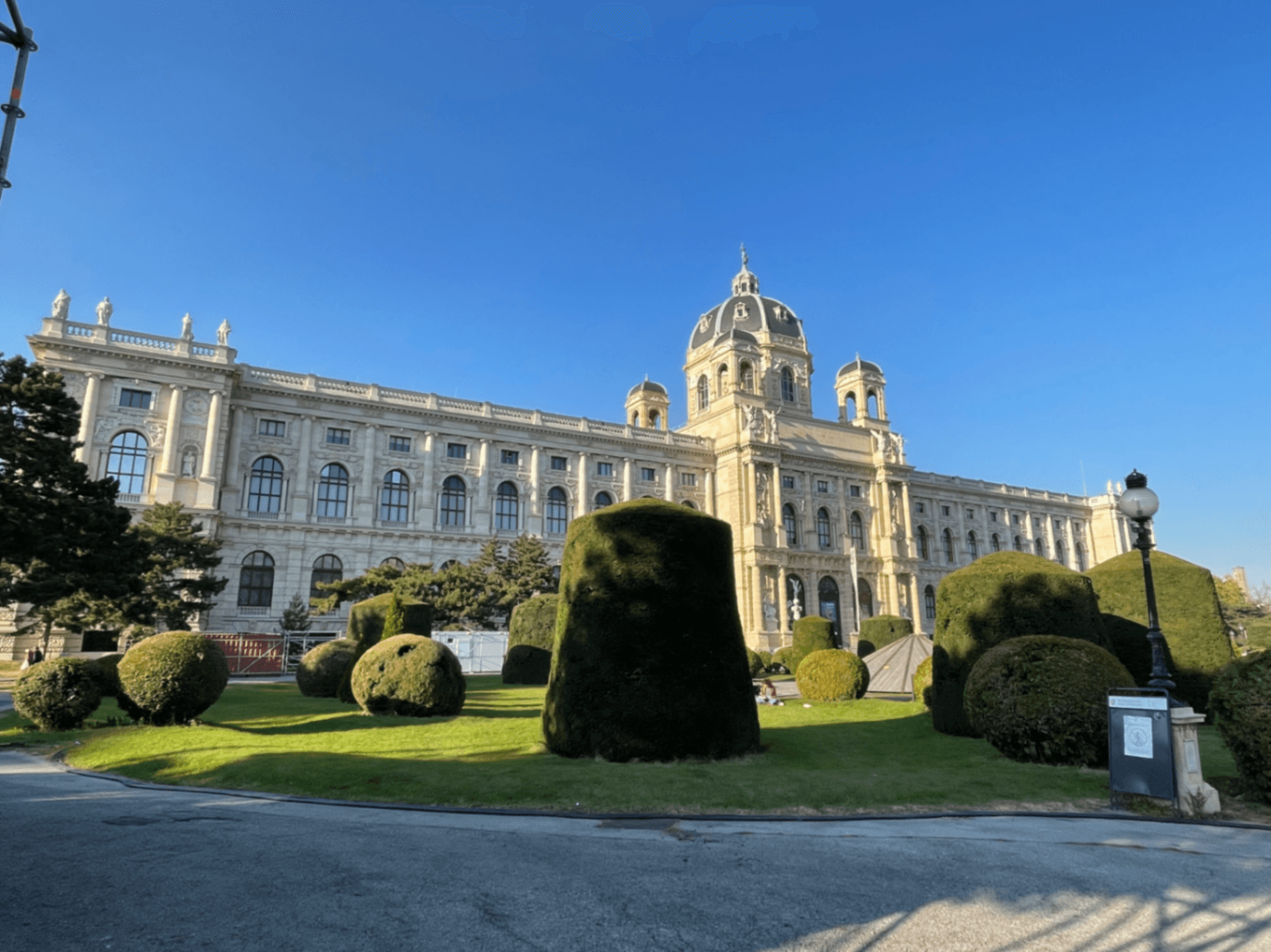
If you're coming from the Kunsthistorisches Museum or the Naturhistorisches Museum, both of which sit just across Maria-Theresien-Platz, you can walk the full route in under ten minutes. The MuseumsQuartier courtyard itself is a destination, especially on warmer days when it fills with people sitting on the curved concrete loungers that have become something of a Viennese institution.
The Layout and Experience
The Leopold occupies a building with a clear vertical logic. The permanent collection is arranged across several floors, generally moving through different periods and themes rather than strictly by chronology. You'll encounter Jugendstil decorative work and Klimt early on, then move deeper into Schiele's raw, angular figures as you go higher. The top floors tend to offer city views through the narrow windows, which is a useful orientation moment between rooms.
The galleries are well lit, mostly with natural light diffused through the building's thick walls and carefully placed skylights. The rooms aren't enormous, which keeps the experience intimate. You're rarely standing far from a major work.
Temporary exhibitions occupy their own dedicated spaces, and the Leopold tends to stage ambitious thematic shows rather than simple retrospectives. Past exhibitions have explored topics like the body in Vienna 1900, the relationship between Schiele and his contemporaries, and broader European modernist themes. Check what's on before you book, because a strong temporary show can significantly change the visit.
Main Highlights
Egon Schiele's Major Works
The Schiele rooms are the museum's core. His self-portraits, the tortured contour lines and unflinching gaze, stop most visitors in their tracks. Works like "Death and the Maiden" and "The Family" are here in person, and the scale and texture of the originals are genuinely different from any reproduction. Budget extra time in these rooms. People linger.
Gustav Klimt
The Leopold holds significant Klimt paintings including "Death and Life," one of his most discussed works from the period after he moved away from his gold-heavy decorative phase. It's a painting that rewards slow looking. The museum's Klimt holdings aren't as extensive as those at the Belvedere, but what's here is carefully chosen.
Decorative Arts and Jugendstil Objects
Furniture, ceramics, and applied arts from the Wiener Werkstätte and related designers run through sections of the permanent collection. These pieces show that Vienna's early modernist moment wasn't only about painting. Chairs, textiles, and glassware designed by figures like Koloman Moser sit alongside the fine art in a way that makes the period feel like a total visual culture rather than a series of individual genius moments.
Best Time to Visit
Weekday mornings, particularly Tuesday excluded since the museum is closed, tend to be the quietest. Weekend afternoons can get crowded, especially during school holidays and the tourist peak from May through September. The MuseumsQuartier as a whole draws large numbers in summer, but the Leopold's ticketed entry naturally limits density inside.
Winter visits have their own appeal. The courtyard is less chaotic, the city's Christmas market energy is nearby on Mariahilfer Strasse, and the galleries feel calmer. Schiele's work, much of which deals with cold, isolation, and mortality, sits differently in a grey Viennese November than it does in July.
Photography Tips
Photography policies in the permanent collection allow non-flash photography for personal use in most areas, but confirm at the entrance or with staff, as policies for temporary exhibitions sometimes differ. The building's exterior, particularly the white limestone facade against the courtyard's cobblestones, photographs well in overcast light. The narrow windows on the upper floors create interesting interior light conditions worth capturing if you're documenting your visit architecturally.
Combining with Nearby Attractions
The MuseumsQuartier contains the MUMOK (Museum of Modern Art Ludwig Foundation Vienna) directly adjacent, and the Kunsthalle Wien is also within the complex. You could spend a full day without leaving the courtyard. The Kunsthistorisches Museum, holding one of the great Old Masters collections in the world, is less than ten minutes away on foot and makes a natural contrast to the Leopold's modernist focus.
The Naschmarkt, Vienna's famous open-air market, is about a fifteen-minute walk south down Mariahilfer Strasse and makes a logical lunch stop if you're spending a full morning at the museum. The 7th district (Neubau) surrounding the MuseumsQuartier is full of independent cafés, bookshops, and design stores worth exploring in the afternoon.
Practical Tips
- Buy tickets online in advance, especially on weekends or during major temporary exhibitions, to avoid queuing at the box office
- The museum is closed on Tuesdays, which catches many visitors off guard
- Audio guides add real depth to the Schiele rooms in particular; worth renting even if you usually skip them
- The museum shop stocks high-quality art books and prints; Schiele reproductions here tend to be better produced than what you find in generic tourist shops
- If you're visiting multiple MuseumsQuartier institutions in one day, check whether a combined ticket is available at the time of your visit
- Bag storage is available; large backpacks are generally not permitted in the galleries
- The café on the ground floor is a reasonable place to sit down mid-visit without leaving the building
FAQ
How long should I plan to spend at the Leopold Museum?
Most visitors who engage seriously with the permanent collection spend two to three hours. If there's a strong temporary exhibition running as well, add another hour. You can do a highlights-only visit in under ninety minutes if you focus on the Schiele and Klimt rooms.
Is the Leopold Museum suitable for children?
Older children with an interest in art will find it manageable. Schiele's work includes nude figures and unsettling imagery, so it's worth considering the age and sensibility of younger visitors. The museum occasionally runs family programs; check the current schedule on their website.
How does the Leopold compare to the Belvedere for Austrian art?
The Belvedere's Upper Belvedere holds Klimt's "The Kiss" and a broader survey of Austrian art across centuries. The Leopold is more focused, going deeper into the modernist period and offering an unmatched Schiele experience. If you have time for one, the Leopold is the stronger choice for early 20th-century Austrian work specifically.
Is there a difference between the permanent collection and temporary exhibitions in terms of ticketing?
Standard admission typically covers both the permanent collection and current temporary exhibitions, but this can vary. Confirm at the time of booking, particularly for large-scale special exhibitions that may carry separate entry requirements.
Opening hours
Reviews
Sign in and mark this place visited to leave a review.
No reviews yet.
Free Trip Planner
Plan your Austria trip with our free planner
Build a day-by-day itinerary with AI suggestions, hand-picked places, and friends. Free forever — no credit card.