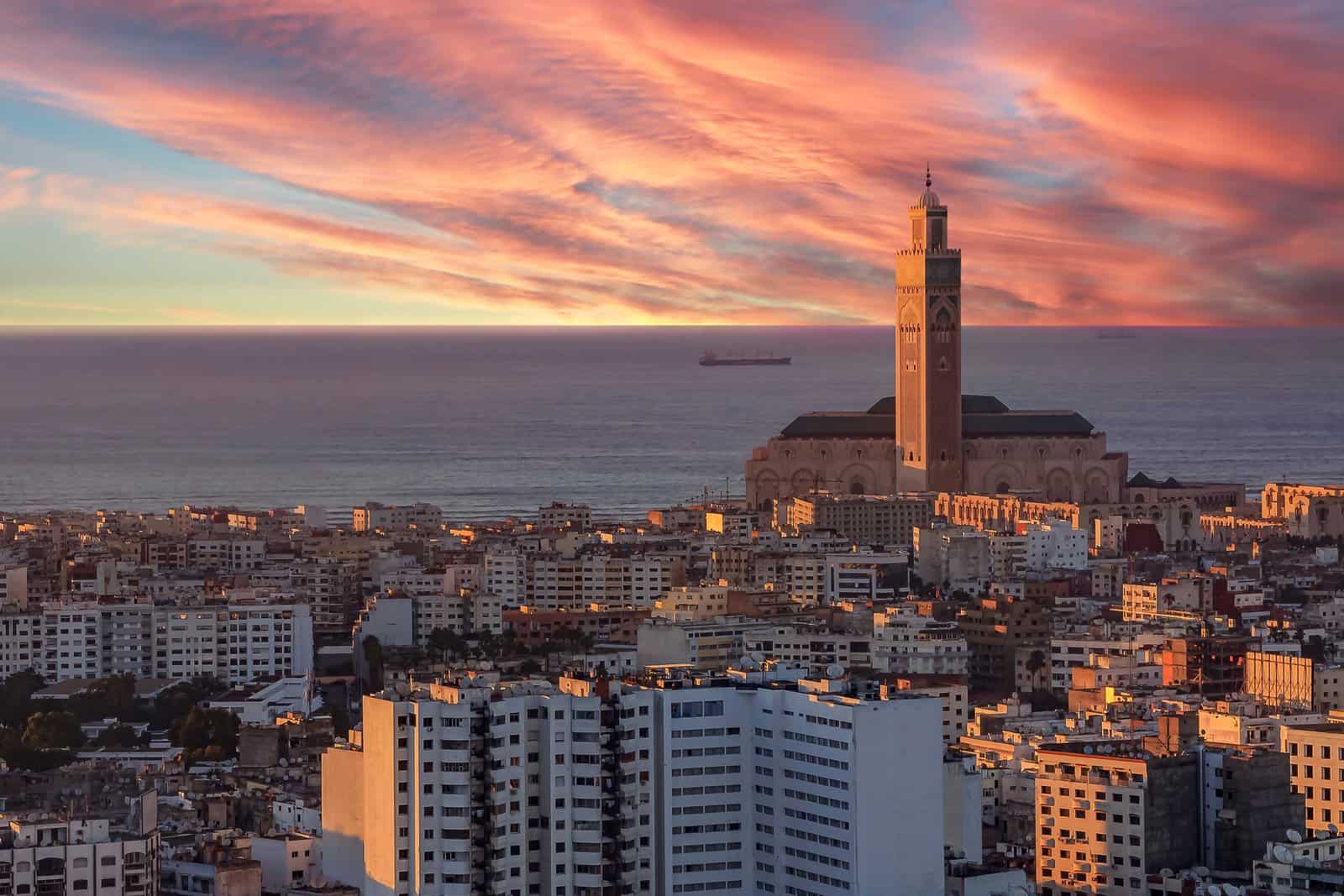
Librairie des Colonnes
54 Bd Pasteur, Tanger, MoroccoLibrairie des Colonnes sits on Boulevard Pasteur in Tangier, the wide colonial-era avenue that cuts through the city's Ville Nouvelle. It opened in 1949 and has stayed in continuous operation since, which in a city that reinvents itself as often as Tangier does is close to remarkable. This is not a museum of a bookshop. It still sells books, still hosts readings, and still functions as the closest thing Tangier has to a literary address.
If you know anything about Tangier's mid-century reputation as a magnet for writers and exiles, this is one of the few physical places where that reputation holds up to a visit. Much of that history elsewhere in the city survives only as a plaque on a building or a line in a guidebook. Here it is a working shop, with people in it, buying and talking about books today.
Why Librairie des Colonnes matters
Tangier between the 1920s and 1956 operated as an International Zone, administered jointly by several foreign powers rather than falling under French or Spanish protectorate rule outright. That odd legal status, light taxation, and genuine indifference to what outsiders got up to made the city a landing spot for writers, smugglers, diplomats, and people quietly leaving somewhere else behind. Paul Bowles settled here and wrote The Sheltering Sky while living in Tangier for decades. Jean Genet spent long stretches in the city. Mohamed Choukri, the Moroccan novelist whose For Bread Alone draws directly on his own street childhood in Tangier and Tétouan, was part of the same orbit, moving between the city's French-speaking literary circles and the Moroccan world most of those circles never fully entered.
Librairie des Colonnes was where a lot of that crossed paths. It was close enough to the cafés on and around Boulevard Pasteur, and central enough in the Ville Nouvelle, that it functioned as a natural stop for anyone moving in those circles. Writers passing through the city used it, writers living in the city used it, and it kept doing that long after the International Zone itself disappeared in 1956. That continuity is the real draw. You are not visiting a recreation of a literary scene. You are visiting the shop the scene actually used.
Quick facts
- Located on Boulevard Pasteur, the main avenue of Tangier's Ville Nouvelle
- Opened in 1949
- Stock spans French, Arabic, Spanish, and English
- Associated historically with Paul Bowles, Jean Genet, and Mohamed Choukri, among other writers connected to Tangier
- Runs a small, ongoing programme of events and readings
- Still operates as a commercial bookshop rather than a heritage site
Getting there
Boulevard Pasteur is one of the easiest streets in Tangier to find your way to, since most taxi drivers and anyone giving directions in the Ville Nouvelle will use it as a reference point. If you are staying near the Medina, it is a walkable fifteen to twenty minutes uphill from the Petit Socco, following Rue de la Liberté up toward Place de France. If you are coming from the port or the train station, a short taxi ride will drop you right on the boulevard. The shop sits among the mix of cafés, banks, and shopfronts that line this stretch, so it is worth walking the street itself rather than beelining straight there.
The layout and experience
Inside, it reads as a proper neighborhood bookshop rather than a landmark dressed up for visitors. Shelves are organized by language and genre, with a noticeable depth in Moroccan and North African literature, French-language fiction, and titles on Tangier's own history. English-language stock tends to be smaller but worth checking, especially for Bowles and other writers tied to the city. The pace inside is unhurried. Staff are generally happy to talk if you show genuine interest in the city's literary past, but this is not a guided experience, and nobody will walk you through a script. You browse, you ask if you want to, and you leave with whatever you found rather than a curated tour.
A visit here does not take long. Most people spend somewhere between fifteen minutes and half an hour, longer if you get into conversation or if there happens to be an event on. It rewards curiosity more than time spent. Coming with a specific question, a writer's name, or an interest in a particular period of the city's history tends to get you further than wandering in cold.
History and background
The shop opened in 1949, seven years before Morocco's independence and the end of Tangier's status as an International Zone. That timing matters. It opened into the last stretch of the period that made the city famous abroad, when the mix of foreign administrations, relaxed laws, and cheap living drew in a particular kind of expatriate writer and artist. Bowles had already arrived in the 1930s and would stay for most of the rest of his life. Genet moved through North Africa repeatedly over the following decades. Choukri, younger and Moroccan rather than a visiting foreigner, represents the other half of that literary Tangier, the one less often remembered abroad but arguably more rooted in the actual city.
What makes Librairie des Colonnes different from a plaque or a renamed café is that it has kept doing the thing it was built for. It has sold books continuously through independence, through the decades when much of the foreign literary colony left, and into the present, where it still runs readings and still stocks work by Moroccan writers alongside the French and English names foreign visitors tend to look for first.
Combining with nearby attractions
Boulevard Pasteur puts you within easy reach of several other Ville Nouvelle landmarks. Place de France, with its historic cafés, is a short walk, and the Terrasse des Paresseux just beyond it gives you a wide view over the port and the strait toward Spain. Café de Paris, long associated with the same mid-century crowd of writers and foreign residents, sits nearby and makes a natural pairing with a bookshop visit if you want to sit somewhere and go through whatever you just bought. Heading downhill, Rue de la Liberté connects you back toward the Petit Socco and the Medina, so the shop works well as a stop either on the way up from the old town or on the way back down from it.
Practical tips
- Bring a general sense of what you are looking for. Staff respond well to specific questions about writers or periods rather than vague browsing requests.
- If you read French, the selection opens up considerably. English stock is present but thinner.
- Check for events while you are in Tangier. The shop's programme is small but occasionally includes readings or talks worth timing a visit around.
- Treat it as a short stop rather than a destination that needs a half day. Fifteen to thirty minutes is typical.
- Pair it with a coffee at one of the Boulevard Pasteur or Place de France cafés to extend the literary theme of the visit.
FAQ
Is Librairie des Colonnes a museum?
No. It is a functioning bookshop. There is no exhibition space or ticketed visit, just a shop you can walk into and browse.
What languages does the shop stock?
French, Arabic, Spanish, and English, with French and Arabic making up the bulk of the selection.
Which writers are associated with it?
Paul Bowles, Jean Genet, and Mohamed Choukri are the names most often connected to the shop and to Tangier's literary scene more broadly.
How long should I plan to spend there?
Most visits run fifteen to thirty minutes, though a conversation with staff or an event can extend that.
Is it worth visiting if I don't read French or Arabic?
Yes, for the history and the English-language stock on Bowles and Tangier alone, even if the bulk of the shelves won't be accessible to you.
Reviews
Sign in and mark this place visited to leave a review.
No reviews yet.
Free Trip Planner
Plan your Morocco trip with our free planner
Build a day-by-day itinerary with AI suggestions, hand-picked places, and friends. Free forever — no credit card.