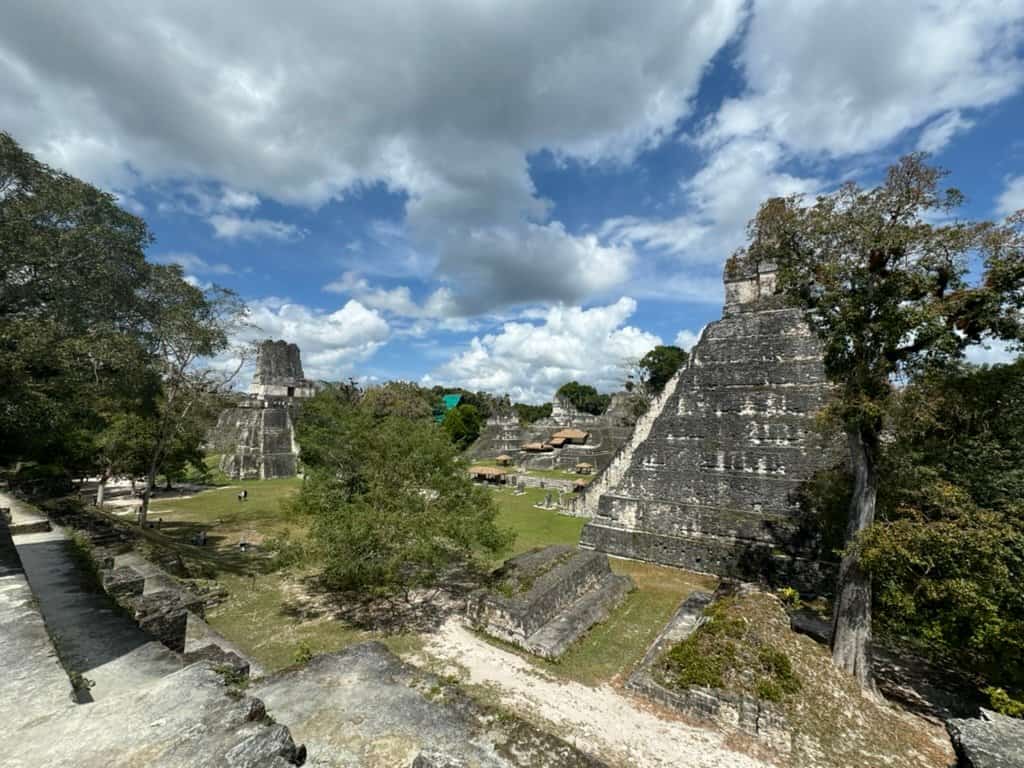
Lost World – Tikal
Tikal National Park Guatemala Posted by bazartravelsAdmin
Overview
Tikal National Park in Guatemala is one of the largest urban centers of the ancient Maya civilization, with roots reaching back to around 600 BCE. The site sprawls across 575 square kilometers of rainforest in the Peten region, though only a fraction of its temples and palaces have been excavated and made accessible to visitors. When you arrive at Tikal, you're stepping into a landscape where massive stone pyramids emerge from dense jungle canopy, and the boundary between archaeology and wilderness blurs completely. The park protects not just temples but the tropical forest itself, home to jaguars, pumas, ocelots, and hundreds of bird species.
Why this place matters
Tikal represents the pinnacle of Classic Maya achievement, flourishing from roughly 200 CE to 900 CE during the height of the civilization's architectural and artistic power. The city was mysteriously abandoned around the 10th century, and the jungle reclaimed it for over a thousand years until systematic exploration began in the 1800s. What makes Tikal distinct is the sheer scale of its construction and the density of its monuments within the rainforest. Unlike sites closer to modern cities, Tikal's remoteness has preserved both its archaeological integrity and its ecological context.
Quick facts
- Founded approximately 600 BCE, peak occupation 200 to 900 CE
- Located in Peten, northern Guatemala, near the Mexican border
- Park covers 575 square kilometers of protected rainforest
- Designated a UNESCO World Heritage Site in 1979
- Temple IV rises approximately 65 meters (213 feet), among the tallest pre-Columbian structures in the Americas
- Requires a guide for some areas; independent exploration of main complexes is permitted
Getting there
Tikal is accessible by two main routes, each with different trade-offs. If you're flying, you'll likely land in Flores, a town about 65 kilometers from the park. From Flores, you can hire a private driver, take a shuttle service, or join a tour group for the roughly 90-minute drive through the jungle. The road is paved but can be rough depending on recent rain.
Alternatively, you can travel overland from Belize or Mexico. If crossing from Belize, the town of San Ignacio is a common jumping-off point, though the route takes several hours. Coming from Mexico, the entry point is typically through Chetumal.
Most visitors opt to stay in Flores the night before, giving yourself time to arrange transport and rest. Hotels in Flores range from budget to upscale, and the town itself sits on an island in a lagoon with its own colonial charm.
The layout and experience
The park's main visitor facilities cluster around the entrance, where you'll pay your entry fee and hire a guide if you plan to explore beyond the central complexes. The site is divided into several major zones, each with its own character.
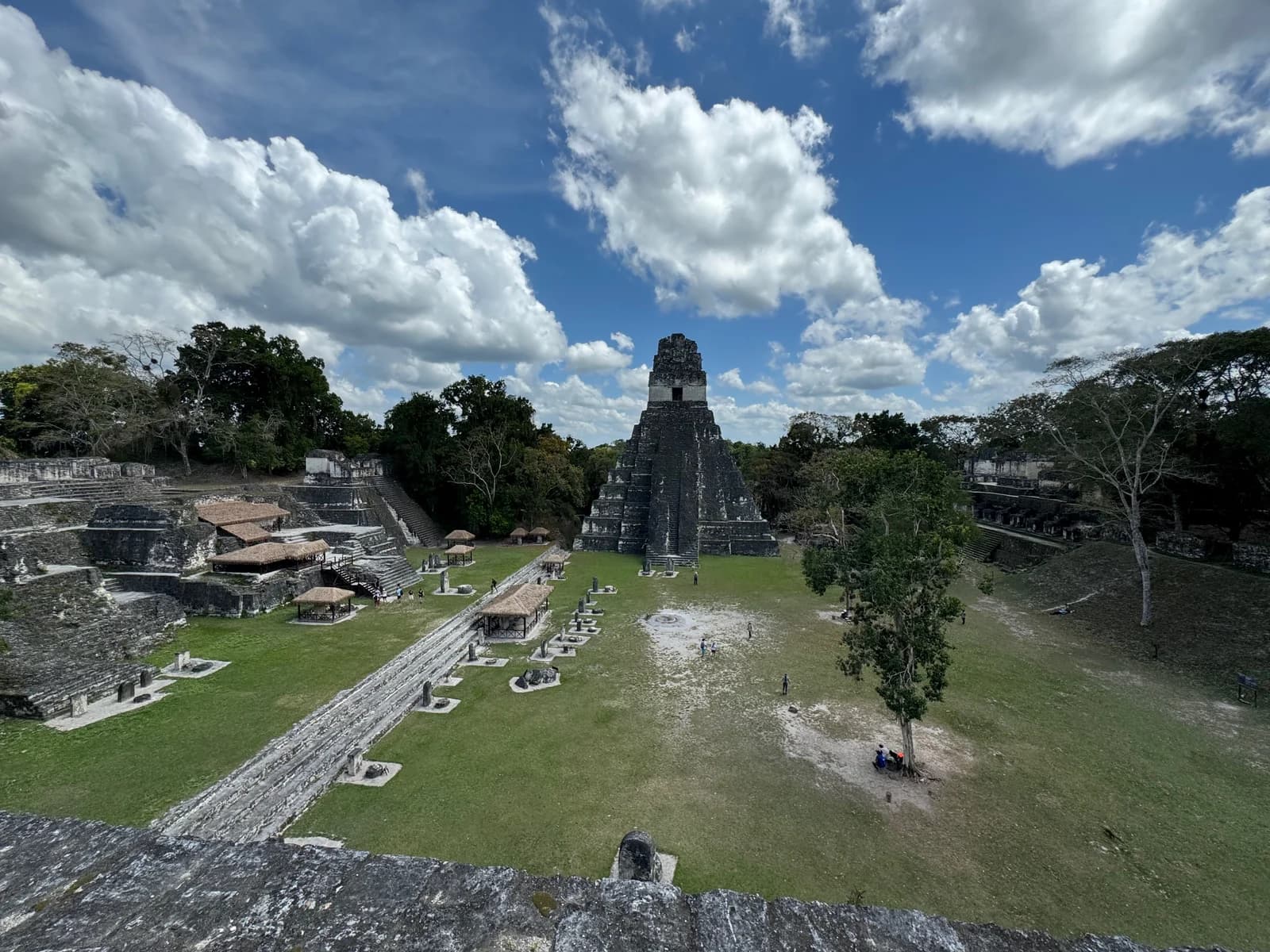
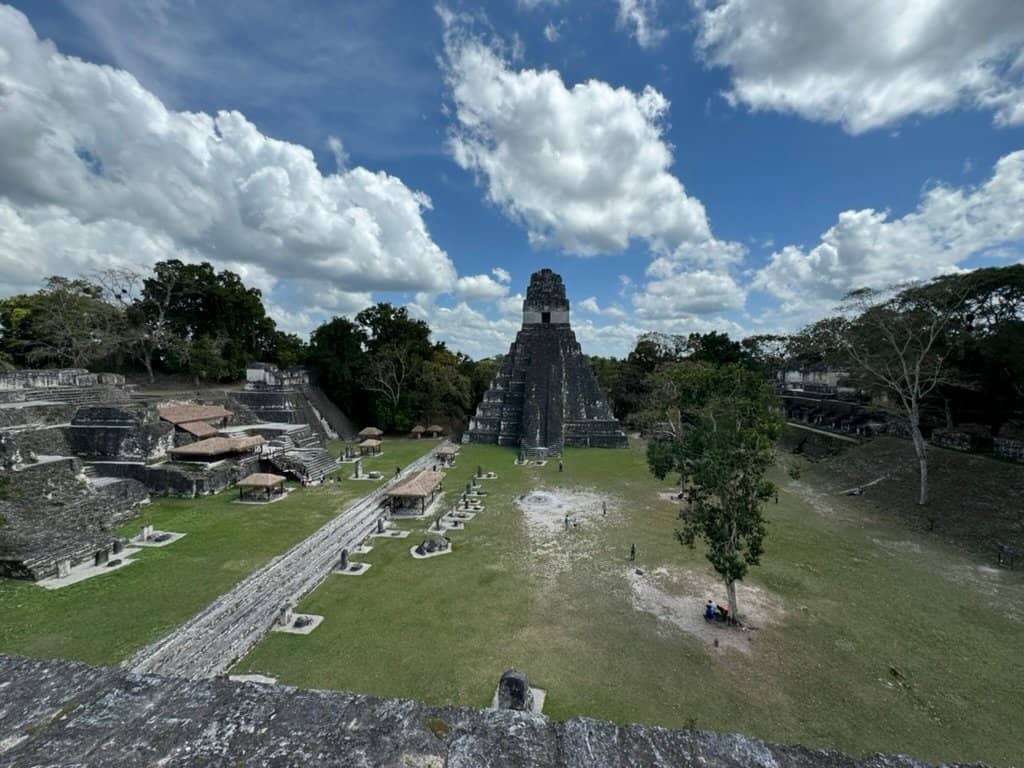
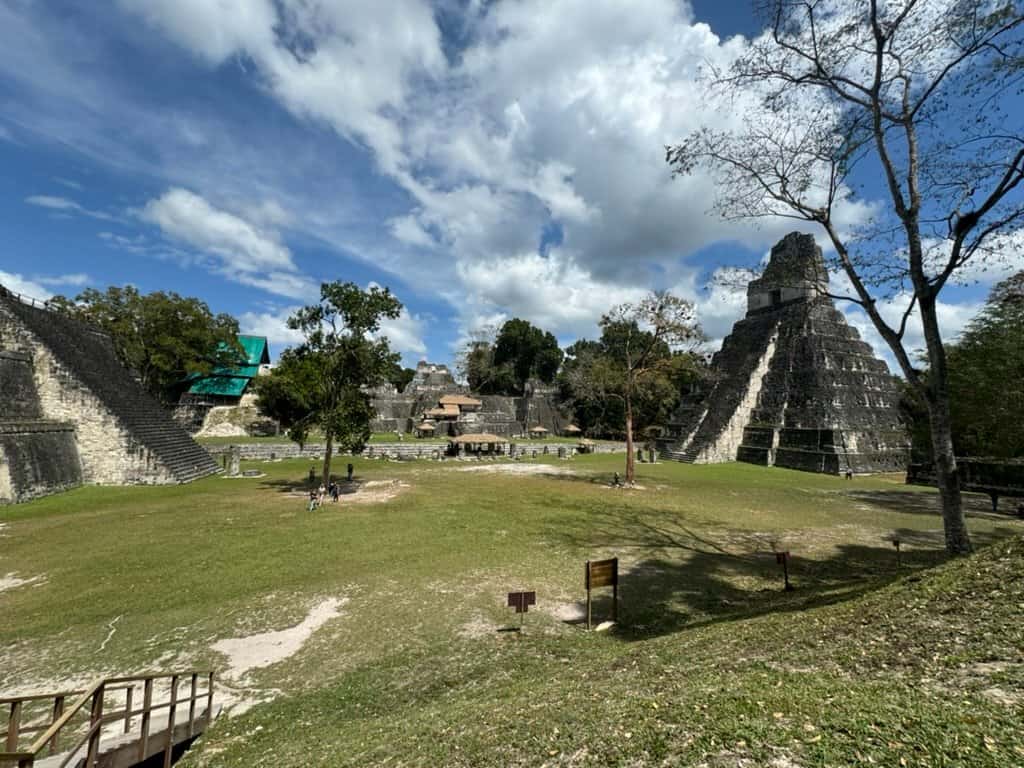
The Great Plaza is the heart of the site, a massive ceremonial space ringed by pyramids and palaces. Temple IV dominates the skyline to the west. To the south lies the Complex of the Palaces, a dense arrangement of residential and administrative structures. Temple II and the Great Plaza form the core of what most first-time visitors explore on a half-day visit.
Walking between complexes means hiking through jungle trails marked and maintained by park staff. The paths are well-defined but uneven, with exposed roots and occasional muddy sections, especially during the rainy season. Canopy cover keeps temperatures moderate, though humidity remains high year-round.
If you venture to the more remote temples, the experience becomes progressively quieter and more immersive. Few tourists reach the outermost structures, so you may find yourself alone with the sound of howler monkeys and the creak of the forest.
Main highlights
Temple IV is the tallest structure in the park and one of the tallest pre-Columbian buildings ever constructed in the Americas. The climb is steep and involves scrambling up rubble and reconstructed stone, but the view from the top is extraordinary. You emerge above the canopy and can see other major temples poking through the sea of green.
The Great Plaza was the ceremonial and political center of the city. Its size conveys the scale of Maya urban planning, and the stelae and altars scattered across it are carved with hieroglyphic inscriptions and royal portraits. These monuments were originally painted in bright pigments, though only traces remain visible today.
Temple II, slightly shorter than Temple IV, is more accessible and still offers a commanding view. Its pyramid form is clearer than some other structures, making it easy to understand the architectural intent.
The Complex of the Palaces reveals the residential side of Tikal. Low-slung structures arranged around courtyards suggest how nobility lived. Doorways, carved lintels, and interior chambers are visible in ways that make daily life feel tangible.
The wildlife at Tikal can rival the monuments. Howler monkeys announce themselves with a sound like a distant roaring engine. Spider monkeys swing overhead in the canopy. Coatis forage near the paths. Jaguars and pumas are present but rarely seen by visitors.
History and background
Tikal's earliest occupation dates to around 600 BCE during the Middle Preclassic period, when small agricultural communities began settling the area. The city grew gradually, but its most vigorous expansion occurred during the Classic period, particularly between 200 and 750 CE. This was when the great pyramids were raised, elaborate palaces built, and the city's population swelled to perhaps 100,000 people.
The city was ruled by a succession of dynasties, and inscriptions on stelae record the names and deeds of kings. Some of the most famous rulers include Jasaw Chan K'awiil I, who reigned in the 8th century and commissioned Temple IV. By the 9th century, Tikal had begun to decline, along with other major Maya cities in the lowlands. The reasons for this collapse remain debated among archaeologists, with theories ranging from drought to political fragmentation to resource depletion.
The city was abandoned by around 950 CE and left untouched until Spanish conquistadors and later explorers rediscovered it in the 19th century. The first detailed archaeological work began in the 1950s and continues today.
Tickets and entry
Entry to Tikal National Park requires a ticket purchased at the visitor center near the entrance. The park operates daily, typically from early morning until late afternoon. Guided tours are optional for the main complexes but required if you want to explore the outer zones or if you're interested in specialized tours focused on archaeology, wildlife, or photography.
Private guides can be hired at the entrance and tend to have varying expertise. If possible, arrange a guide in advance through your hotel or a tour operator, as this gives you more choice and often yields better value. Guides who speak English, Spanish, or other languages are available, though availability varies by day.
Best time to visit
The dry season from November through April offers the most comfortable hiking conditions. Trails are passable, the air is clearer for views from temple tops, and mosquito activity is lower. December and January tend to be the busiest months, with more tour groups and higher accommodation prices in Flores.
The rainy season from May through October brings afternoon downpours that can make trails slippery and muddy. However, fewer tourists visit during these months, and the forest is greener and more alive. If you don't mind wet conditions and solitude, this can be an excellent time for wildlife viewing and photography.
Humidity is consistently high throughout the year, so plan for sweat and bring quick-dry clothing.
Photography tips
Early morning light filtering through the canopy creates dramatic shadows across temple stones. Start your visit at dawn if you can, when the forest is also most active with wildlife calls and bird activity. The low angle of sun at sunrise and sunset highlights architectural details and carving.
Wide-angle lenses work well for capturing pyramids in context with the surrounding jungle. Telephoto lenses help isolate carved details on stelae and temple facades. Bring a tripod if you want long exposures in the dappled forest light, though the weight penalty on jungle trails is real.
Cloudy days are actually favorable for even, shadow-free lighting on carved stone surfaces. Don't wait for blue sky to photograph the temples.
Facilities and preparation
The visitor center has a small museum, restrooms, and a snack stand. Water is available, but you should bring extra bottles or a hydration system. There are no restaurants or lodging within the park itself, so plan to stay in Flores and day-trip or stay at one of the small lodges near the park entrance.
Insect repellent is essential, particularly during and after the rainy season. Sun protection is important despite the canopy cover. Wear sturdy hiking shoes with good grip, as roots and wet stone are slippery. Long pants and sleeves protect against insects and thorny vegetation.
The park is accessible year-round, but muddy sections and occasional flooding can limit access to remote areas during heavy rain.
How it compares to similar places
Chichen Itza, another major Maya site in Mexico, is larger in terms of annual visitors and closer to modern cities, making it more convenient. However, Tikal retains more of its jungle setting and feels less developed as a tourist attraction. Copan in Honduras offers excellent carved stelae and a more intimate scale. Palenque in Mexico is similarly set in rainforest but is smaller than Tikal and has more infrastructure nearby.
What distinguishes Tikal is the combination of massive architecture, genuine wilderness context, and relative isolation. The site hasn't been over-manicured or heavily reconstructed in ways that make it feel like a theme park.
Combining with nearby attractions
Flores, the gateway town, is worth a full day or half-day on its own. The town center has colonial architecture, museums, and restaurants. A boat tour on the lagoon is a common activity. From Flores, you can visit other sites like Uaxactun, a smaller Maya ruin about 25 kilometers north, or Yaxha, another large site about 60 kilometers south.
If you're crossing between countries, the proximity to the Mexican border means you can combine Tikal with sites in Quintana Roo, Mexico, such as Calakmul.
Sample visit plan
A typical day at Tikal starts early. Arrange transport from Flores the evening before or very early in the morning. Arrive at the park entrance by 7 AM to beat the heat and crowds. Spend the first 3 to 4 hours exploring the Great Plaza, Temple II, and the Complex of the Palaces with a guide or on your own. These form the core experience and are manageable in half a day.
By midday, take a break for lunch and water at the visitor center. In the afternoon, if energy and time permit, hike to Temple IV. This adds another 2 to 3 hours depending on pace and how long you spend at the top. Return to the entrance by late afternoon and arrange transport back to Flores for the evening.
A second day allows you to explore more distant complexes and have a less rushed pace. If you have three days, you can combine Tikal with Uaxactun or another nearby site.
Practical tips
- Hire a guide for better context and to access restricted areas. Private guides are more flexible than group tours.
- Bring at least 3 liters of water per person and electrolyte supplements. The combination of heat, humidity, and physical exertion drains fluids quickly.
- Wear a wide-brimmed hat and reapply sunscreen frequently, especially on exposed stone surfaces that reflect light.
- Start very early to avoid afternoon heat and rain, and to have the best light for photography.
- Don't attempt Temple IV in poor light or after heavy rain. The stone becomes dangerously slippery.
- Stay on marked trails. The jungle is dense, and it's easy to get disoriented off the main paths.
- If visiting during rainy season, check park conditions with Flores tour operators before traveling.
- Arrange transport the evening before rather than hoping to find a ride on the day of your visit.
FAQ
How long does it take to see the main temples? Most visitors spend 4 to 6 hours to see the highlights including the Great Plaza, Temple II, and Temple IV. A more thorough exploration covering outer complexes takes a full day or longer.
Do I need a guide? Guides are optional for the main central complexes, which are well-marked. However, a guide adds significant context and is necessary if you want to explore the outer zones or understand the inscriptions and history in detail.
Is Tikal safe? The park itself is well-patrolled and safe for visitors. The route from Flores is secure if you use established transport services. Standard travel precautions apply in Flores itself.
What's the physical difficulty level? The main temples involve climbing steep stone steps and scrambling over rubble. Temple IV is the most challenging. The hikes between complexes are moderate in difficulty but long. Physical fitness matters more than technical climbing skill.
Can I see jaguars at Tikal? Jaguars are present but rarely seen by visitors. Howler monkeys, spider monkeys, coatis, and birds are far more likely to be encountered during your visit.
Opening hours
Reviews
Sign in and mark this place visited to leave a review.
No reviews yet.
Free Trip Planner
Plan your Guatemala trip with our free planner
Build a day-by-day itinerary with AI suggestions, hand-picked places, and friends. Free forever — no credit card.