
 Posted by Brandon B.Admin
L.O.V.E Sculpture in Milan
The L.O.V.E sculpture stands in Piazza degli Affari, the financial heart of Milan. Created by Colombian artist Fernando Botero in 2012, this 12-meter-tall public artwork has become one of the city's most photographed monuments. The blocky letters spell out "LOVE" in red, arranged so that the "O" frames the historic Palazzo Mezzanotte building behind it. You can visit the sculpture freely at any time, making it one of Milan's most accessible cultural experiences.
Why this place matters
Botero's sculpture arrived in Milan during a period of economic uncertainty. The financial crisis had shaken confidence in markets and institutions, and Piazza degli Affari, home to the Italian stock exchange, felt an appropriate stage for a work about something deeper than commerce. The sculpture's placement directly in front of Palazzo Mezzanotte created an intentional tension: a declaration of human feeling set against the machinery of capital.
The work has transcended its original moment. Today, visitors approach it not as a political statement but as a symbol of Milan itself. Couples photograph themselves in front of it. Tourists treat it as a required stop on their itinerary. It has absorbed the role of a modern monument, the kind that draws crowds not because of age or rarity but because of its visual power and the way it invites interaction.
Quick facts
- Height: 12 meters (39 feet)
- Artist: Fernando Botero
- Year installed: 2012
- Location: Piazza degli Affari, Milan's financial district
- Access: Free, open 24/7
- Nearest public transport: Cordusio metro station (red line)
Getting there
Piazza degli Affari sits in the heart of Milan's financial quarter, a short walk from the Duomo. If you're using the metro, the Cordusio station on the red line puts you about five minutes from the sculpture on foot. The area is also reachable from Lanza station on the yellow line, adding another ten minutes to your walk.
By tram, lines 1, 4, and 12 serve nearby stops. Most visitors arriving from central Milan find it easiest to walk from the Duomo district. Head northwest toward Via Dante, then cut into the quieter streets of the financial quarter. Street signs are clear, and the sculpture is visible from a distance when you're in the right area.
Parking in this neighborhood is limited and metered. If you're driving, a municipal garage near Piazza Cordusio offers paid parking, though most visitors find public transport more convenient than navigating downtown Milan by car.
The layout and experience
The sculpture occupies the center of Piazza degli Affari, which is not a large open square but rather a modest plaza ringed by office buildings and financial institutions. The "O" in L.O.V.E frames a perfect view of Palazzo Mezzanotte's neoclassical facade. This framing is deliberate and becomes apparent once you position yourself correctly.
You can walk completely around the sculpture. Each angle reveals something different. From the front, the letters read clearly. From the sides, the perspective shifts. The plaza itself is paved, with a few benches tucked against the perimeter. On weekdays, the space fills with office workers at lunch. Weekends and early mornings feel quieter.
The sculpture is made of steel painted a deep red. Up close, you notice the thickness of the metal and the precision of the welds. The letters are solid, not hollow. They convey a sense of permanence despite their contemporary style, which is part of their appeal. The work manages to feel both monumental and approachable.
Main highlights
The obvious highlight is the sculpture itself. Its simplicity is deceptive. The form is instantly recognizable, yet Botero's style gives the letters a weight and presence that generic signage lacks. The color, a specific shade of red rather than bright scarlet, has weathered well over more than a decade.
The framing of Palazzo Mezzanotte through the "O" is worth pausing for. The building dates to 1901 and houses the Italian stock exchange. The contrast between the historic palazzo and Botero's modern work creates visual and conceptual interest. You're looking at Milan's past and present occupying the same frame.
Photographically, the sculpture offers several compositions. A straight-on shot captures the letters clearly. A lower angle makes them loom larger. A shot from behind the sculpture, looking back toward the palazzo, reverses the typical perspective. Different times of day change the light and shadows across the red metal.
History and background
Fernando Botero is known for his figurative paintings and sculptures, often featuring voluminous, exaggerated forms. L.O.V.E represents a departure from his typical subject matter. Rather than depicting people or animals, he reduced language itself to its essential visual form. The word "love" appears on Botero's terms: bold, monumental, impossible to ignore.
The sculpture was commissioned as a temporary installation. It was meant to stay for a limited time, but its popularity with the public and the city's embrace of it led to a decision to make it permanent. That decision reflects something about how public art works in practice. Popular sentiment can override initial plans.
Piazza degli Affari itself has a longer history. The palazzo that Botero's sculpture frames is one of Milan's important Beaux-Arts buildings. The square developed as the city's financial center grew. By adding a work that speaks to emotion and human connection, the sculpture shifts the plaza's character. It softens what might otherwise feel like pure commerce and institutional power.
Best time to visit
The sculpture is accessible around the clock, so you can visit whenever suits your schedule. Early morning, before the financial district fills with workers, offers a quieter experience and better light for photography. The red sculpture glows differently depending on the sun's angle.
Weekday midday brings crowds of office workers but also authentic energy. The plaza becomes a social space, not just a tourist attraction. Weekends tend to be busier with tourists but emptier of locals. Late afternoon light casts long shadows across the plaza, which some photographers prefer.
Season matters less here than it might at other outdoor locations. Winter light in Milan tends to be muted and gray, while summer light is brighter and harsher. Spring and fall offer a middle ground. Rain doesn't close the sculpture or make it inaccessible, though wet pavement can make photography more challenging.
Photography tips
Bring a phone camera or any camera capable of capturing wide angles. The sculpture is large enough that you'll need to step back to frame all four letters. A standard 50mm lens on a full-frame camera, or equivalent on a phone, works well for straight-on shots.
Position yourself to use the "O" as a frame within your frame. This requires moving to a specific spot in the plaza, but it's worth the effort. The palazzo visible through the "O" creates depth and tells the story of the sculpture's placement. Experiment with different positions around the plaza to find the light and composition you prefer.
The red of the sculpture is saturated and bright. In bright sunlight, it can blow out in photographs. A slight underexposure helps retain detail in the metal. If you're shooting with a smartphone, tap to expose for the sculpture itself rather than the sky.
Facilities and preparation
The plaza has basic amenities. A few benches are available if you want to sit and observe the sculpture for a while. Cafes and restaurants operate on the surrounding streets, so you can grab coffee or lunch nearby without leaving the neighborhood.
There are no facilities directly at the sculpture itself. Bathrooms are available in nearby cafes and restaurants, though they're generally reserved for customers. The neighborhood is well-served by shops and services, so you won't lack for anything you might need.
The plaza is paved and flat, making it accessible for people with mobility concerns. No special preparation is required for a visit. The sculpture can be viewed from the public plaza without entering any building or paying any fee.
Combining with nearby attractions
The Duomo is a 10-minute walk south from L.O.V.E. Most visitors to Milan spend time in and around the cathedral, and adding the sculpture to that itinerary is straightforward. You can walk from the Duomo through the historic center toward Piazza degli Affari without backtracking.
The Sforza Castle and its surrounding Parco Sempione lie to the northwest, another 15 to 20 minutes on foot. If you're exploring Milan's major attractions, you can string together the Duomo, L.O.V.E, and the castle into a coherent walking route.
The Pinacoteca di Brera, one of Milan's art museums, is northeast of the sculpture, roughly 15 minutes away. The theater La Scala is south of the Duomo. If you're spending a day in central Milan, the sculpture fits naturally into a larger itinerary without requiring special planning.
Sample visit plan
You can see the L.O.V.E sculpture in 15 to 30 minutes. Walk around it, find a good spot for a photograph, and observe the palazzo framed through the "O". If you're visiting early morning or late afternoon, you might linger longer to enjoy the light and the relative quiet of the plaza.
A longer visit might include sitting on one of the plaza benches for 20 minutes, watching how the light changes and how different visitors interact with the sculpture. Some people touch it. Others pose for selfies. Some simply stand and look. The sculpture's simplicity means its meaning shifts depending on what you bring to it.
Practical tips
- Visit early morning or late afternoon for better light and fewer crowds
- Position yourself to frame the palazzo through the "O" for a compelling photograph
- The plaza is paved but can be slippery when wet
- Nearby cafes on Via Cordusio offer coffee and light meals
- The neighborhood is safe and well-patrolled, though it's busier during business hours
- Public restrooms are available in nearby restaurants and cafes
FAQ
Is there an entrance fee to see the sculpture? No. The sculpture is in a public plaza and free to visit at any time.
Can I touch the sculpture? The sculpture is publicly accessible, but check for any barriers or signage when you visit. Most of the time, people can get close to it.
What's the best angle for photos? Experiment with positions around the plaza. The most iconic shot frames the palazzo through the "O". For dramatic angles, shoot from a lower perspective looking upward.
How long should I plan to spend here? Most people spend 15 to 30 minutes. You can see it quickly or linger longer depending on your pace and interest in photography.
Is the plaza safe at night? The area is a busy financial district with good lighting and security. It's generally safe, though like any urban area, it's wise to be aware of your surroundings.
Reviews
Sign in and mark this place visited to leave a review.
No reviews yet.
Free Trip Planner
Plan your Italy trip with our free planner
Build a day-by-day itinerary with AI suggestions, hand-picked places, and friends. Free forever — no credit card.
Things to see near L.O.V.E Sculpture
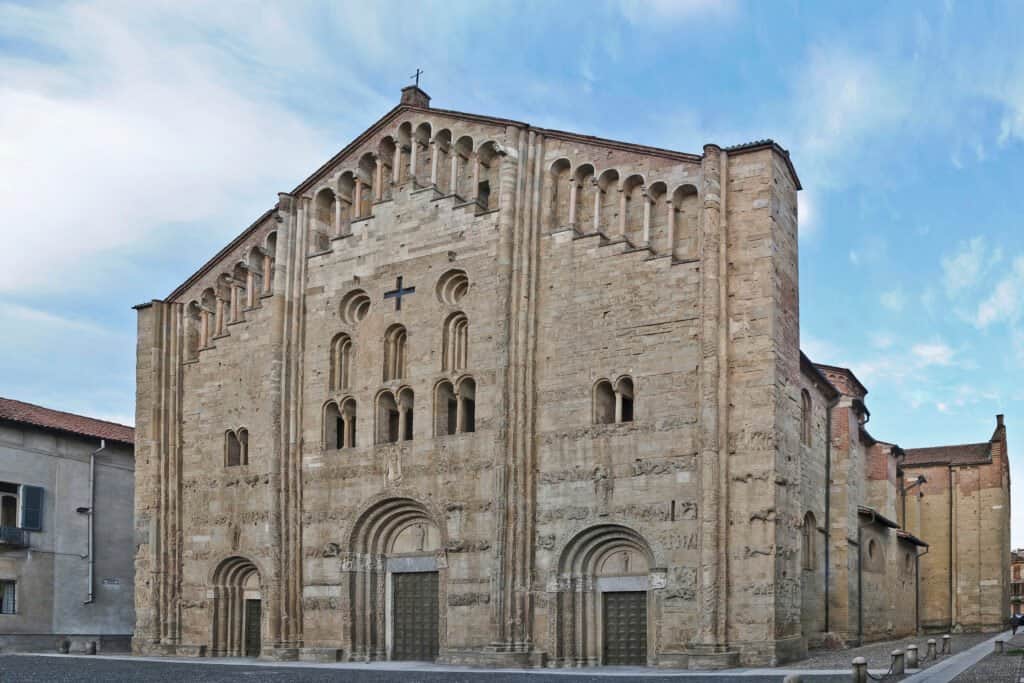
San Michele Maggiore Church
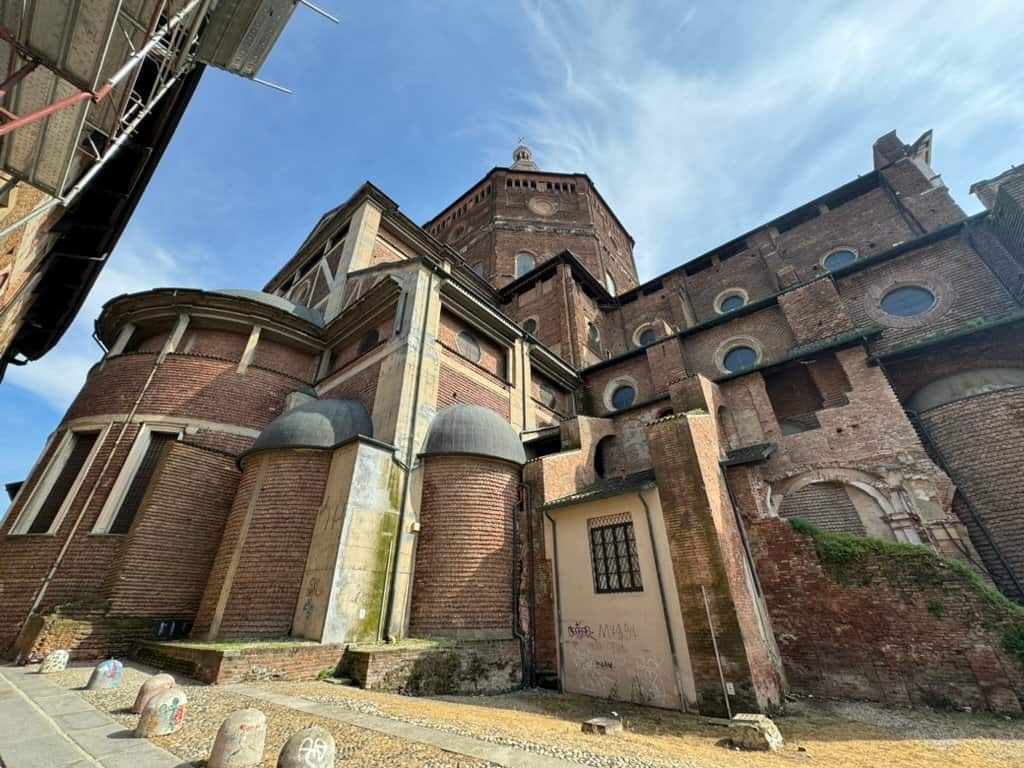
Cathedral of Pavia
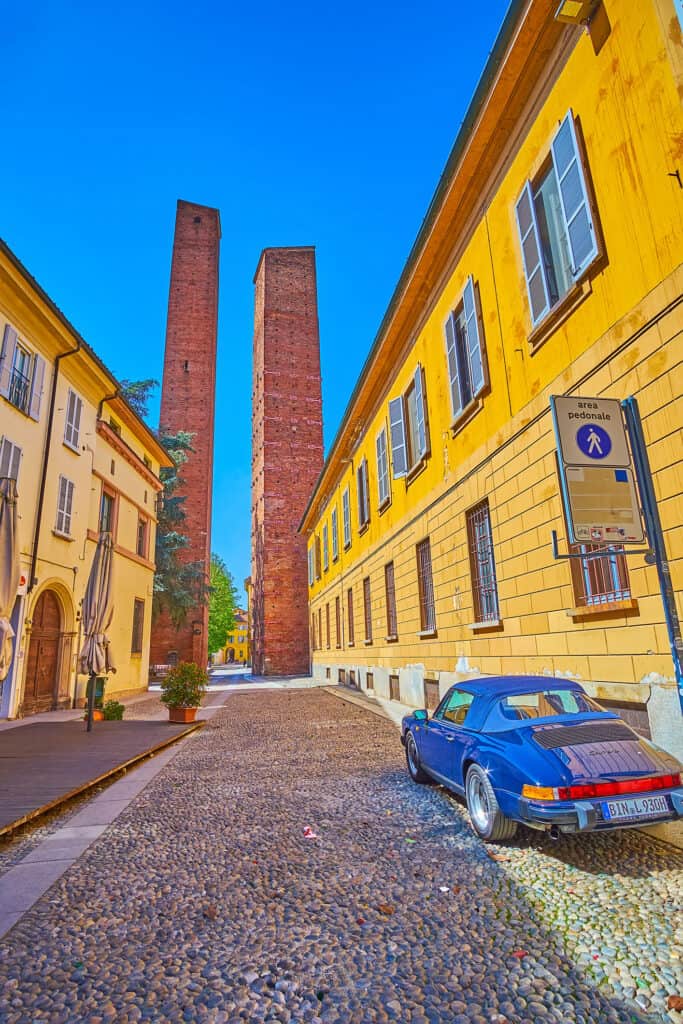
Towers of Pavia (Torri di Pavia)
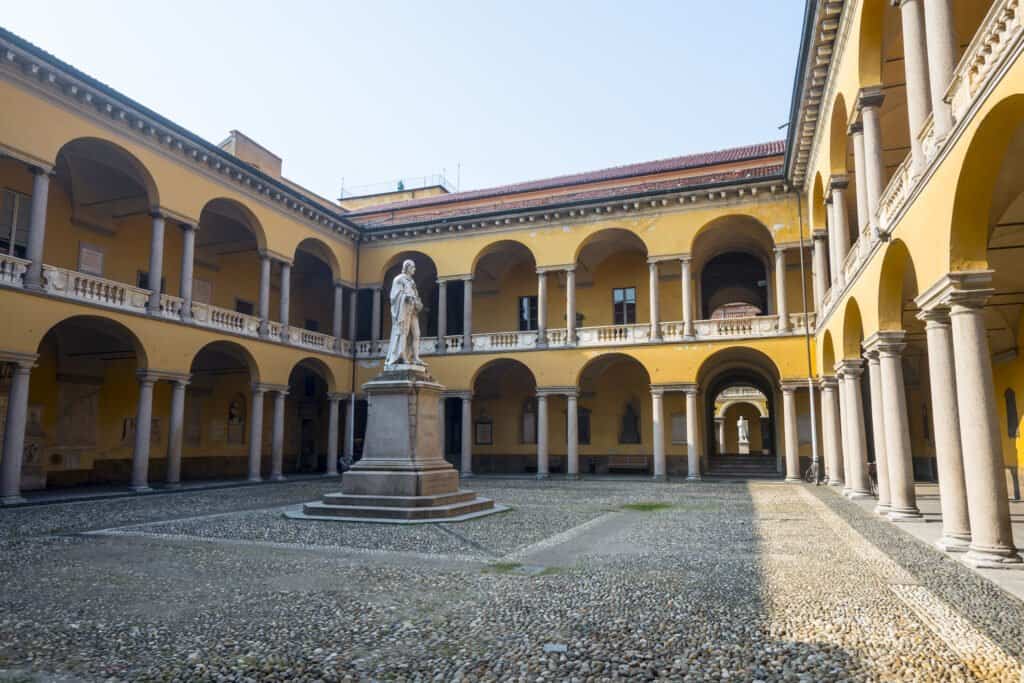
The University of Pavia
Places to eat or drink near L.O.V.E Sculpture

Pasticceria Vigoni

Pizza e Mozzarella
![[LA] Gelateria della Musica](https://lh3.googleusercontent.com/grass-cs/AABkmLezQ1aahZ3Sj4IKvguuB34dH27jVTId85hNXzYEv9WG7GfBYHmI1cwHUPQVisLeNLAKCNmd1glh0QlkPrqj2oRaVJ7D4jkdmWOq7BbYLzAtEceYr8t1MxXkfmk96U5ezHE2vYUBkvyeVynx=s4800-w1600-h1600)
[LA] Gelateria della Musica

Officina Milano
More places in Milan

miscusi Milano Centrale

Brera District
Reminisce The Good Ol’ Days At La Scala
