Macedonia Square
Centar, Skopje Republic of North Macedonia Posted by Brandon B.Admin
Macedonia Square Overview
Macedonia Square sits at the heart of Skopje's city center, a sprawling public plaza that commands attention through sheer scale and visual intensity. The square anchors the capital of North Macedonia and functions as both a gathering point for locals and an unavoidable landmark for visitors navigating the old and new city. What you encounter here is not subtle: soaring monuments, water features, and architectural statements dominate the landscape, making this one of the Balkans' most visually distinctive public spaces.
The square emerged from a major urban renewal project that began in the early 2000s and transformed the central plaza into what exists today. Whether you find it impressive, overwhelming, or somewhere in between depends largely on your taste in public monuments and contemporary urban design. What's undeniable is its role as Skopje's geographic and cultural anchor.
Why This Place Matters
Macedonia Square represents a deliberate statement about national identity and modernization. The monuments and statues here are not incidental decorations but rather carefully chosen symbols intended to tell a story about the country's history and aspirations. The square's transformation reshaped how locals and visitors experience central Skopje, consolidating major landmarks into one walkable area.
For travelers, the square functions as a practical hub. You'll pass through it repeatedly if you're exploring the city center, and it serves as a reference point for navigation. Understanding what stands here and why helps you read the visual language of contemporary Skopje.
Quick Facts
- Located in Centar district, the main downtown area of Skopje
- Dominated by the equestrian statue of Alexander the Great, installed in 2011
- The square covers a substantial area and is pedestrian-friendly
- Completely free to visit and accessible 24 hours
- Surrounded by government buildings, shops, and cafes
- Major public gathering space for celebrations and events
Getting There
Macedonia Square sits in the heart of downtown Skopje, making it simple to reach from almost anywhere in the city center on foot. If you're staying in Centar, the walk from most hotels takes 10 to 15 minutes. The square borders Philip II Street and is adjacent to the Old Bazaar to the north, with government buildings flanking other sides.
Public buses run throughout central Skopje, but given the square's central location, most travelers find walking more efficient than waiting for transit. If you arrive by car, paid parking is available in lots surrounding the square, though street parking fills quickly during busy hours.
The Layout and Experience
Macedonia Square is not a single unified space but rather an expansive plaza with distinct zones. The equestrian statue of Alexander the Great commands the central area, positioned to face south. Water features surround the base, creating a visual focal point that draws your eye immediately upon arrival.
Walking the perimeter takes roughly 15 minutes at a leisurely pace. The ground is paved throughout, making navigation straightforward. On most days you'll find locals crossing the square as a shortcut, people sitting on benches, and vendors or performers depending on the season and time of day. The square functions less as a destination where you linger for hours and more as a place you move through while taking in the visual spectacle.
Multiple cafes and restaurants border the square, offering places to sit and observe the space from the outside. If you want to be in the middle of the action, benches throughout the plaza provide seating with views of the monuments.
Main Highlights
The equestrian statue of Alexander the Great dominates the square's visual landscape. Installed in 2011, it stands roughly 20 meters high on a substantial base, making it visible from multiple blocks away. The statue depicts the ancient Macedonian king on horseback, arm raised, facing south toward the direction of his historical military campaigns. The sculptural detail is considerable, and the scale alone makes it impossible to ignore.
Water features surrounding the base add movement and reflection to the monument, changing the visual experience depending on the angle and lighting. Photographers typically spend time circling the statue to capture it from different perspectives.
The surrounding buildings frame the square with architectural intent. Government structures on multiple sides create a formal, official atmosphere. The National Museum of North Macedonia sits near the square, housed in a building that's architecturally distinct from its surroundings. Shops and cafes along the edges provide everyday activity that contrasts with the monumentality of the central sculptures.
History and Background
The square's transformation occurred as part of a broader urban renewal initiative beginning in the early 2000s. This project aimed to modernize Skopje's center and create a cohesive civic space where previously there had been a more fragmented layout. The equestrian statue of Alexander the Great, completed in 2011, became the centerpiece of this redesigned plaza.
The choice to honor Alexander the Great as the dominant monument reflects the complex relationship between North Macedonia and its historical legacy. The statue sparked diplomatic tensions with neighboring Greece, which has its own claims to Macedonian history and territory. These tensions eventually led to the country changing its constitutional name in 2019 to the Republic of North Macedonia, a compromise in longstanding disputes with Greece.
Despite the political weight these monuments carry, most visitors experience the square simply as an impressive urban plaza rather than as a flashpoint in regional politics. The visual impact tends to dominate the experience for tourists passing through.
Best Time to Visit
Macedonia Square is accessible and interesting year-round. Summer months bring the most foot traffic and the liveliest atmosphere, with locals and visitors moving through the space throughout the day. Spring and fall offer pleasant weather for lingering, with temperatures that make sitting outdoors comfortable without being oppressive.
Winter visits are quieter, with fewer people crossing the square. Cold temperatures mean shorter visits for most travelers, though the monuments remain visually striking regardless of season. Early morning hours tend to be the most peaceful time to experience the square before crowds build during midday.
The square hosts public events and celebrations periodically throughout the year. These gatherings transform the space into an active meeting ground, though they also create crowding if you're hoping for a contemplative visit.
Photography Tips
The scale of the equestrian statue demands that you move around it to find your preferred angle. Shooting from the southern side frames the statue against government buildings, while northern perspectives incorporate more of the surrounding plaza. Water features create reflections that work well in morning or late afternoon light when the sun is lower.
Wide-angle lenses help capture the statue's full height and its relationship to the surrounding square. If you want detail shots of sculptural elements, bring a longer focal length. The surrounding architecture responds well to compositional framing that includes both the monuments and the everyday activity of people moving through the space.
Lighting changes significantly throughout the day, altering how the stone and water features appear. Overcast conditions flatten the contrast, while direct sun creates dramatic shadows around the statue's base. Plan to return at different times if you're serious about capturing the variety of light conditions.
Facilities and Preparation
Macedonia Square itself has limited facilities. Restrooms are not located directly on the plaza, but nearby cafes and shops provide access if you're a customer. Water fountains exist in some areas of the square, particularly near landscaping features.
The square offers no shade in most areas, so bring a hat and sunscreen if you're visiting during sunny months. Comfortable walking shoes help since the paved surface, while smooth, covers a substantial distance if you're exploring the entire perimeter. Weather in winter can be cold and occasionally wet, so dress accordingly.
The square is fully accessible to pedestrians of all mobility levels. The paved surface is even and navigable by wheelchair or stroller. Benches throughout provide rest stops if you need to sit and orient yourself.
Combining With Nearby Attractions
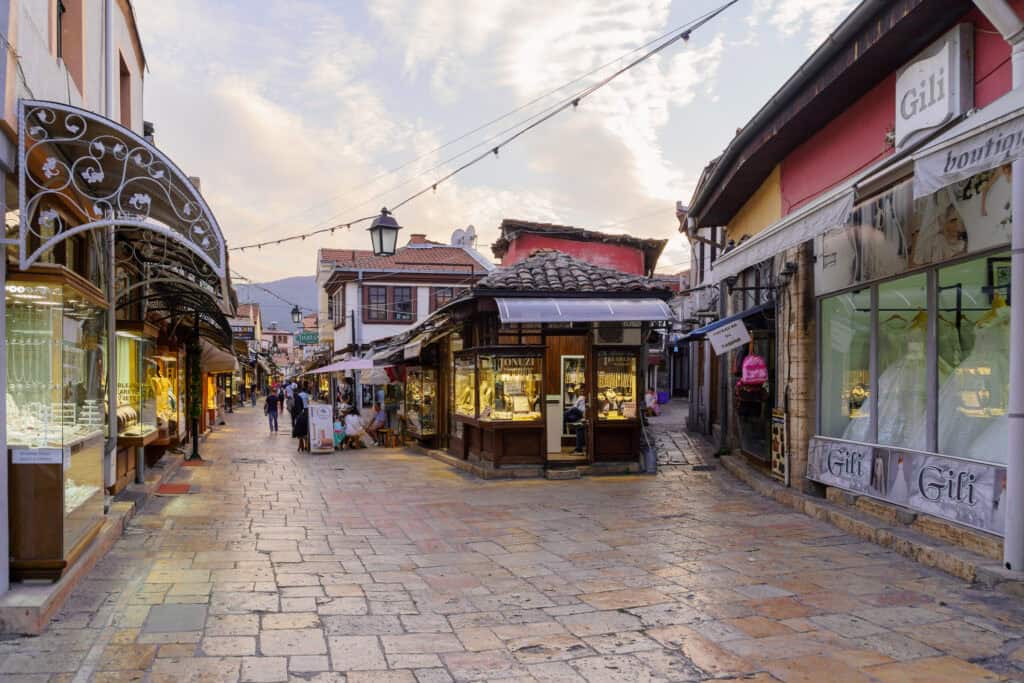
The Old Bazaar lies immediately north of Macedonia Square, a sprawling network of narrow streets filled with shops, cafes, and restaurants. A walk from the modern plaza into the historic bazaar provides stark visual and temporal contrast. The transition takes just a few minutes and offers a complete change of atmosphere.
The National Museum of North Macedonia is adjacent to the square, making it an easy addition to your visit. Stone Bridge, an Ottoman-era crossing that's one of Skopje's most photographed landmarks, lies a short walk from the square. Walking south along Philip II Street brings you toward the Vardar River and additional neighborhoods worth exploring.
If you're interested in religious architecture, several Orthodox churches are located within a 10 to 15 minute walk, including the Church of St. Clement of Ohrid. The Museum of Contemporary Art occupies another nearby building. These sites allow you to structure a full morning or afternoon of walking and exploration centered on the square as your starting point.
Sample Visit Plan
Arrive at Macedonia Square early morning, around 8 or 9 AM, when foot traffic is lightest and light conditions favor photography. Spend 20 to 30 minutes walking the perimeter and taking in the monuments from different angles. Sit on a bench for 10 minutes and observe the space and how people move through it.
Walk north into the Old Bazaar, spending an hour exploring the narrow streets, stopping for coffee or tea at a cafe, and browsing shops if that interests you. Return to the square area and lunch at one of the surrounding restaurants, choosing a spot with outdoor seating so you maintain views of the monuments.
Spend the early afternoon visiting the National Museum or another nearby attraction, or simply walk the surrounding neighborhood to get a fuller sense of central Skopje. Return to the square in late afternoon when the light changes, and take another walk around the monuments before heading elsewhere in the city.
Practical Tips
- The square functions as a navigation hub, so orient yourself here before exploring surrounding neighborhoods
- Bring water, especially in summer, as the plaza offers little shade and can feel exposed
- Visit multiple times if possible, as the light and atmosphere change significantly between morning and evening
- Local cafes surrounding the square offer better value than tourist-focused restaurants in other parts of the city center
- The square is busiest midday and on weekends, so plan accordingly if you prefer quieter visits
- Walking shoes are essential since you'll cover substantial ground exploring the plaza and surrounding streets
FAQ
Is there an admission fee to visit Macedonia Square? No, the square is completely free and open 24 hours. You can visit anytime without restriction.
How long does a typical visit take? Most visitors spend 20 to 45 minutes on the square itself, including time to walk around the monuments and sit briefly. If you combine it with nearby attractions like the Old Bazaar or National Museum, plan for several hours of exploration.
Is Macedonia Square safe for visitors? The square is well-traveled and generally safe during daylight hours. Like any public plaza in a major city, use standard precautions with valuables and avoid isolated areas after dark.
Can I eat or drink on the square? You can purchase food and drinks from surrounding cafes and restaurants and consume them on the plaza itself. Bringing your own food and beverages is also acceptable.
What should I wear? Comfortable walking shoes are essential. Dress for the season and bring a hat and sunscreen for summer visits. Winter visits require warm layers, as the open plaza offers no shelter from cold winds.
Reviews
Sign in and mark this place visited to leave a review.
No reviews yet.
Free Trip Planner
Plan your Republic of North Macedonia trip with our free planner
Build a day-by-day itinerary with AI suggestions, hand-picked places, and friends. Free forever — no credit card.