Marino Ballena National Park
Puntarenas Province, Uvita, Costa RicaOverview
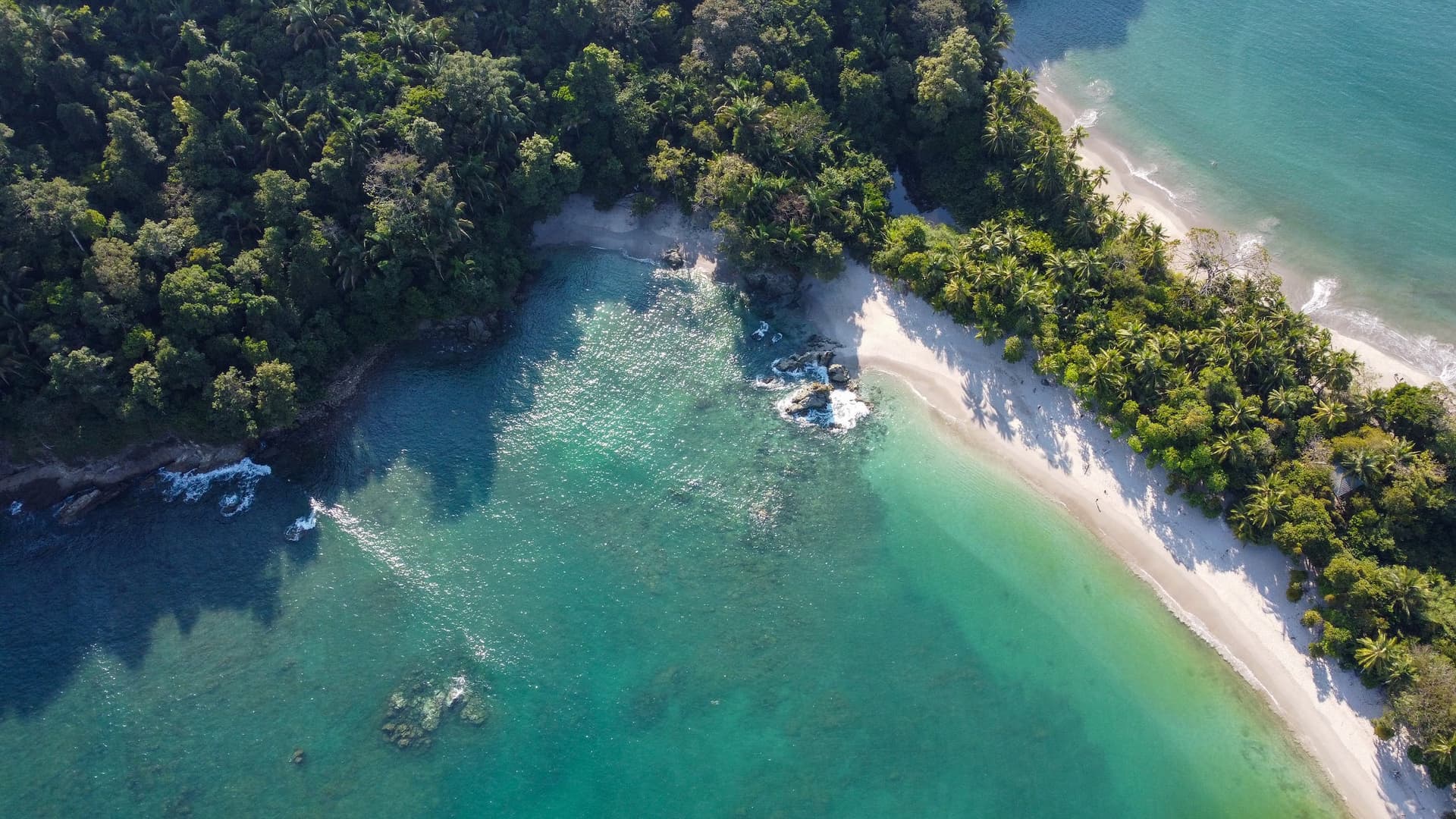
Marino Ballena National Park sits along a stretch of the southern Pacific coast near Uvita, in Puntarenas province, roughly three and a half to four hours south of San José by car. Its best-known feature is a sandbar that extends from Uvita beach at low tide and splits into two curved arms, forming a shape that from above looks almost exactly like a whale's tail. The resemblance is strong enough that it feels staged, even though it's entirely a product of currents and sediment. The park takes its name from the humpback whales that pass through these waters, and it protects a band of coastline, reef, and open ocean that supports both the tombolo and the marine life around it.
This is a small park by Costa Rican standards, but it does a lot in a compact space. You can walk the sand formation on foot, snorkel over nearby reef patches, or head out by boat to look for whales depending on the month. It suits a half-day stop as easily as a full day, and it pairs naturally with a longer stay in the Uvita or Dominical area.
Why this place matters
The whale's tail sandbar, known locally as Punta Uvita, is a tombolo, a natural causeway of sand that connects what was once an island to the mainland. Geologically these formations aren't rare, but few of them happen to trace a shape this recognizable, and fewer still sit inside a marine park that hosts actual whales. The park was established in 1990, making it one of Costa Rica's older marine protected areas, and it was created specifically to safeguard the coral and rocky reefs offshore along with the humpback population that uses this stretch of coast as a breeding and nursing ground.
What makes the whale migration here unusual is that two distinct populations show up in different halves of the year. Humpbacks from the Northern Hemisphere, generally traveling down from areas off North America, pass through roughly December to April. A separate population from the Southern Hemisphere, migrating up from Antarctic waters, arrives roughly July to November. Few places in the world see two different humpback populations using the same bay in the same year, which gives Marino Ballena something closer to two whale seasons than one.
Quick facts
- Location: Puntarenas Province, near the town of Uvita, Costa Rica
- Established: 1990
- Signature feature: Punta Uvita, a tombolo sandbar shaped like a whale's fluke
- Whale seasons: roughly December to April (Northern Hemisphere humpbacks) and July to November (Southern Hemisphere humpbacks)
- Boat departures: mainly from Uvita and Bahía Ballena
- Distance from San José: approximately 170 km, about 3.5 to 4 hours by car
Getting there
Most visitors drive from San José via the Costanera Sur highway, which hugs the Pacific coast and passes through Jacó and Dominical before reaching Uvita. The drive takes the better part of a morning if you leave early, and the road is paved the whole way, though it narrows and winds in places south of Dominical. Shuttle services and public buses also run this route from San José and from Quepos or Manuel Antonio if you're coming from the north. If you're staying anywhere between Dominical and Ojochal, the park is close enough to visit on short notice once conditions look right.
Once in Uvita, the main public entrance to the beach and sandbar is well marked from the coastal highway. Parking is available nearby, informally in some spots and through small fee-based lots in others.
The layout and experience
The park itself is narrow, running along the coastline rather than inland, and it's really a string of beaches and marine zones rather than a single contained site. Playa Uvita connects directly to the tombolo. Further along the coast within the park's boundaries are Playa Ballena, Playa Piñuela, and Playa Colonia, each quieter than Uvita and each with its own small parking and access point.
Walking out onto the sandbar is the main draw, and it only works at low tide. As the water recedes, the sand connecting the former island to the beach becomes exposed, and you can walk a few hundred meters out to where the two arms curve away from each other. From ground level it doesn't look like much more than a sandbar with rocky outcrops at the far end. The whale-tail shape only reads clearly from altitude, which is why most of the photographs you've seen of it were taken by drone.
The catch is timing. The window to walk out and back is tighter than it looks, because the tide doesn't just expose the sand gradually and then retreat gradually, it can cut off the return path with water deep enough to be a problem for people who aren't paying attention. Checking a tide table before you go isn't optional advice here, it's the difference between a pleasant walk and getting stranded on a rock outcrop waiting for the tide to drop again.
Main highlights
The tombolo is the headline, but the park has a few other things worth building time around.
- Whale watching boat trips, typically two to three hours, departing from Uvita or Bahía Ballena during the two migration windows
- Snorkeling around the rocky points near Punta Uvita and off Playa Ballena, where visibility and marine life depend heavily on season and swell
- Dolphin sightings, which happen somewhat independently of whale season since resident pods are present through much of the year
- The quieter southern beaches of the park, Ballena, Piñuela, and Colonia, which see a fraction of the foot traffic that Uvita does
Best time to visit
For whales, aim for the overlap periods within December to April or July to November, understanding that sighting odds shift through each window rather than staying constant. Many operators and longtime residents consider the stretch from roughly August through October, inside the southern migration, to be a particularly reliable stretch, though this isn't a guarantee any single boat trip will have a sighting.
For the sandbar itself, timing is about tides rather than season, and low tide happens on its own schedule every day of the year. Dry season, roughly December through April, gives you better odds of clear skies if you're hoping to see or photograph the tail shape without haze. Green season, the rest of the year, brings more rain but also fewer crowds on the beach and lusher surrounding hills.
Facilities and preparation
Facilities directly on the beach are modest. Expect basic restrooms and a handful of small food stalls or sodas near the main Uvita entrance rather than anything resembling a visitor center. Bring your own water, reef-safe sunscreen, and sturdy sandals, since the exposed sandbar can have sharp rock sections near its far end. There's minimal shade once you're out on the sand, so an early or late walk is more comfortable than a midday one.
If you're planning a whale watching trip, book through an established local operator in Uvita or Bahía Ballena rather than an informal arrangement on the beach, and ask about group size and how closely boats are required to approach whales, since responsible operators keep their distance.
Combining with nearby attractions
Uvita has grown into a small but genuine travel hub over the past decade, with enough guesthouses, cafes, and a weekly farmers market to support a multi-day stay. Nauyaca Waterfalls, a popular half-day trip, sits inland near Dominical, about 20 to 30 minutes north. The Costa Ballena region stretching south toward Ojochal has additional beaches and a noticeably international dining scene for a town this size, a legacy of the expat community that settled here. If you have a rental car, it's easy to treat Marino Ballena as one stop on a loop that also takes in Dominical's surf beaches and the rainforest trails further inland.
Sample visit plan
A simple half-day version: check the tide table the night before, arrive at the Uvita entrance an hour or two ahead of low tide, walk the sandbar out and back, then dry off at one of the sodas near the entrance. A fuller day adds a morning boat trip for whale watching or snorkeling before the tide walk, with lunch in Uvita town in between.
Practical tips
- Check an official tide table before you go, not a general estimate, since the safe walking window can be under an hour on either side of low tide
- Pack water and sun protection, since shade on the sandbar is essentially nonexistent
- Book whale watching trips a day or two ahead in peak months, especially August through October
- Bring cash for small parking fees and food stalls near the beach entrances
- Wear shoes that can handle both sand and rock, not just flip-flops
FAQ
Can you always walk out to see the whale's tail shape?
No. It's only exposed at low tide, and the window to walk out and return safely is limited, so check tide times rather than just showing up.
Do you need a boat to see whales, or can you spot them from shore?
Both are possible. Whales are sometimes visible from the beach or the sandbar during peak season, but boat trips get you much closer and improve your odds significantly.
Which season has better whale sightings?
Both windows, roughly December to April and July to November, can produce sightings, since they involve two different humpback populations. Neither is guaranteed on any given day.
Is the park good for snorkeling even outside whale season?
Yes, the reef areas near Punta Uvita and Playa Ballena are accessible year-round, though visibility tends to be better in drier months with calmer seas.
Marino Ballena National Park rewards a bit of planning more than most beach stops in Costa Rica. Get the tide right and you walk out onto a sandbar that happens to be shaped like the animal the whole park is named for, with a real chance of seeing the actual whales offshore depending on when you come.
Reviews
Sign in and mark this place visited to leave a review.
No reviews yet.
Free Trip Planner
Plan your Costa Rica trip with our free planner
Build a day-by-day itinerary with AI suggestions, hand-picked places, and friends. Free forever — no credit card.