Memphis Rock 'n' Soul Museum
Open now
Memphis Rock 'n' Soul Museum
Just South of Beale at FedExForum, 191 Beale St, Memphis, TN 38103, USAWalk into Memphis Rock 'n' Soul Museum and the first thing that hits you is the weight of the place. Glass cases hold original instruments, handwritten lyrics, and photographs that document how Memphis became one of the most consequential music cities in America. The energy in the rooms feels less like a museum and more like a conversation between eras, where Sun Studio's raw 1950s recordings sit alongside Stax's soul revolution of the 1960s and 70s. You're standing in a space that takes seriously what other cities treat as nostalgia.
Why this place matters
Memphis didn't just produce music. It produced the sound that changed popular music forever. The museum exists to make that history tangible. Elvis, Johnny Cash, Aretha Franklin, Al Green, Isaac Hayes: these weren't isolated talents who happened to record here. They were part of a specific ecosystem where Black and white musicians worked in proximity, where gospel informed soul, where technical innovation and raw emotion collided. The museum traces those connections across five decades and multiple genres.
The Stax Records story alone justifies the visit. Founded in 1957 by Jim Stewart and Estelle Axton, Stax became a counterforce to the segregation surrounding it. The museum doesn't minimize the racial tensions of the era; it contextualizes them. You see how musicians navigated those pressures, how integrated sessions happened before integration was legal, how the music industry in Memphis operated differently than it did in Nashville or New York.
Quick facts
- Located at 191 Beale Street, just south of FedExForum
- Five floors of exhibits, galleries, and interactive stations
- General admission covers permanent collections and most special exhibits
- Timed entry tickets available; walk-ups accepted depending on crowd
- Audio guides included with admission
- Plan for 2 to 3 hours minimum to see the main floors
- Wheelchair accessible with elevators on all levels
Getting there
The museum sits on Beale Street itself, making it one of the easiest attractions to reach if you're already downtown. If you're driving, paid parking is available in the FedExForum garage and surrounding lots within a two-block radius. Street parking along Beale is limited and tends to turn over quickly.
Public transit from other parts of Memphis is less convenient. The downtown trolley system runs along Main Street, which is one block east of Beale. From the trolley stop, it's a short walk west to the museum. If you're staying in midtown or near Graceland, a ride-share or taxi is the most practical option.
The layout and experience
The museum spreads across five floors in a vertical layout, with the main permanent collection occupying the first, second, and third floors. The ground floor functions as arrival and ticketing. Most visitors spend their time on floors two and three, where the Stax Records history and the broader soul and R&B narratives are deepest.
Audio guides come with admission and are genuinely useful. Rather than reading wall text, you can listen to short commentary and, more importantly, hear recordings of the artists and songs being discussed. Standing in front of an instrument or photograph while hearing the actual music makes the connection immediate in a way reading alone doesn't.
The museum uses a combination of artifacts, video interviews, photographs, and listening stations. You'll encounter reconstructed recording booths, original album art, stage costumes, and handwritten notes. The pacing tends to be self-directed; there's no prescribed route, though the chronological flow makes sense if you start lower and work your way up.
The top floor hosts rotating special exhibits and temporary collections. These change seasonally, so what you see depends on when you visit. Check the museum's website before your trip to know what special programming is running.
Main highlights
The Stax Records section is the centerpiece. This gallery walks through the label's founding, its early roster of soul singers, and its role in the civil rights era. You'll see memorabilia from Otis Redding, Sam and Dave, Carla Thomas, and others who defined the Stax sound. There's a particular focus on the label's integrated workforce and how that shaped the music.
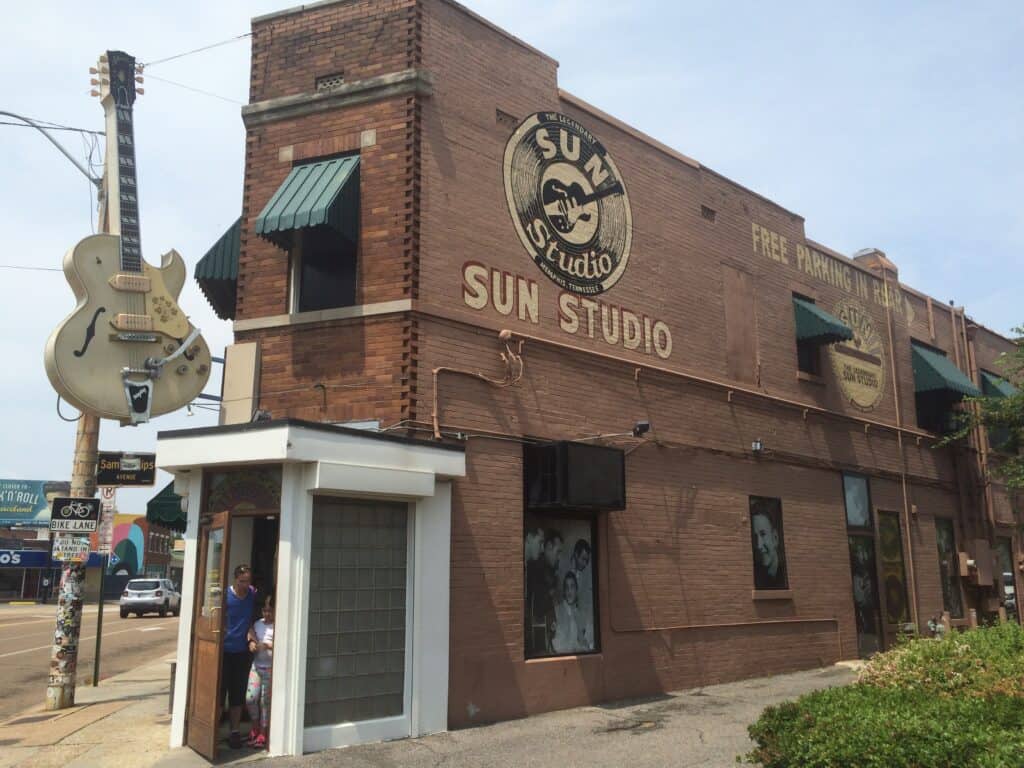
The Sun Studio connection appears throughout, though the actual Sun Studio building is a separate attraction a few blocks away on Union Avenue. The museum provides context for how Sun's earlier recording sessions with Elvis, Johnny Cash, and Jerry Lee Lewis set the technical and artistic groundwork for what came later.
The blues and gospel roots section establishes the musical traditions that fed into rock and soul. You'll see how gospel vocal techniques, blues harmonic structures, and country instrumentation all converged in Memphis recording studios. Listening stations let you hear the progression across genres.
Video interviews with surviving musicians and producers run throughout the museum. These aren't promotional clips; they're substantive conversations where musicians discuss their process, their influences, and what it meant to record in Memphis. Depending on your interests, you might spend extra time at particular video stations.
History and background
Memphis became a recording hub in the 1950s partly by accident and partly by design. The Mississippi River delta's blues tradition was already centuries old. Radio stations like WDIA and WHBQ provided platforms for local musicians. Recording technology became affordable enough that independent labels like Sun Records could operate. The city's geography and demographics created a unique mixing ground.
Sun Records, founded by Sam Phillips in 1953, was where the first major recordings happened. Phillips famously said he was looking for a white man who could sing with a Black man's soul. That search led to Elvis Presley, but Sun's catalog was far broader, including Carl Perkins, Jerry Lee Lewis, Roy Orbison, and Johnny Cash. The label's approach to recording emphasized rawness and authenticity over polish.
Stax Records emerged later, in 1957, as a more explicitly soul-focused operation. Under the leadership of Jim Stewart and later his sister Estelle Axton, Stax became something different: a label where Black artists had real power, where session musicians were treated as collaborative partners rather than hired hands, and where the music directly engaged with the social upheaval of the 1960s. The label survived segregation and thrived into the 1970s before commercial pressures and ownership changes shifted its direction.
The museum's narrative doesn't skip over the racial dimensions of this history. Memphis was deeply segregated. Black musicians performed for segregated audiences, recorded in integrated sessions that couldn't be publicly acknowledged, and faced severe professional limitations despite their talent. The museum acknowledges this context without letting it dominate; instead, it shows how musicians navigated and sometimes transcended these constraints through their work.
Tickets and entry
General admission includes access to the permanent collections, audio guide, and most temporary exhibits. Different ticket tiers exist for students, seniors, and military personnel, with corresponding discounts. Family packages are sometimes available depending on the season.
Timed entry is the standard approach during peak times, particularly in summer and around holidays. You can book online in advance or purchase walk-up tickets at the box office if availability allows. Booking ahead is recommended, especially if you're visiting on a weekend or during a busy travel period.
The audio guide is included and essential. It's not an optional add-on; the museum is designed with the assumption you'll use it. Guides are available in multiple languages beyond English.
Best time to visit
Summer is peak season for Memphis tourism, which means the museum is busiest from June through August. If you prefer a less crowded experience, aim for fall or spring. Weekday mornings tend to be quieter than weekend afternoons regardless of season.
Winter draws fewer tourists overall, though it's still worth checking the local events calendar. Memphis hosts music-focused festivals and conferences throughout the year that can affect both crowd levels and the quality of special exhibits running at the museum.
The best time also depends on what special exhibits are on display. If there's a particular artist or era you want to explore in depth, check what the rotating exhibitions are featuring before booking your trip.
Photography tips
Photography policies vary by section. Some areas allow photography without flash; others prohibit it entirely. The museum provides clear signage indicating which zones are open to cameras. Respect these boundaries; they exist partly to preserve artifacts and partly to prevent the distraction of constant photography.
The best visual compositions come from the display cases with instruments and original artifacts. The lighting is typically museum-standard, which is professional but not always ideal for handheld photography. Bring a phone or camera capable of handling moderate indoor lighting without excessive noise.
Video interviews with musicians are recorded on monitors and screens. Photographing these can produce useful documentation, though the screen glare often makes the results less useful than just watching and listening.
Facilities and preparation
The building houses restrooms on each floor, a gift shop on the ground level, and a small cafe with basic refreshments. The cafe serves coffee, soft drinks, and simple snacks rather than full meals. If you're planning to spend three hours or more, eating lunch before arrival or after departure makes sense unless you're satisfied with light options.
The museum is fully climate controlled and wheelchair accessible. If you have mobility concerns, the elevator access and accessible restrooms are clearly marked. Staff can assist with questions about accessibility features.
Bring comfortable shoes. The exhibits encourage walking and standing, and you'll likely cover significant distance across the five floors even if you don't visit every section.
How it compares to similar places
Memphis has multiple music attractions: Sun Studio, Graceland, the Blues Museum in the Beale Street area, and various music venues offering live performances nightly. The Rock 'n' Soul Museum differs by focusing specifically on the recording industry and the artists who shaped soul, R&B, and rock music in the post-war era. It's more scholarly and contextual than Graceland, which is artist-focused. It's more industry-focused than the Blues Museum, which traces the blues tradition backward in time.
If you're interested in the recording process and music history as a social and commercial story, this museum is your best stop. If you want the Elvis experience specifically, Graceland is the destination. If you want to understand blues origins, the Blues Museum goes deeper into that heritage.
Combining with nearby attractions
The museum's location on Beale Street makes it easy to combine with other activities. Beale Street itself is a walking district with live music venues, restaurants, and bars. You could easily spend an afternoon at the museum and an evening exploring Beale Street on foot.
Sun Studio is about a mile away on Union Avenue, accessible by a short ride or a 15 to 20 minute walk. Visiting both on the same day is feasible if you're willing to walk or arrange transportation between them.
The National Civil Rights Museum is several blocks east, another attraction that provides historical context for understanding Memphis's role in American culture during the 1960s. The three attractions form a loose arc of cultural history that spans music, race, and politics in mid-20th-century America.
Sample visit plan
Arrive in the mid-morning, after the earliest rush but before peak afternoon traffic. Spend 30 minutes at ground level getting oriented and picking up your audio guide. Move to the second floor and spend 45 minutes to an hour exploring the Stax Records and early soul sections. Take a brief break at the cafe or a nearby Beale Street spot if needed.
Return to the third floor for another 45 minutes to an hour exploring the broader soul and R&B context, the Sun Studio connections, and the blues and gospel roots. If you're interested in a particular artist or era, spend extra time at those listening stations. Check the special exhibit on the upper floor if it matches your interests; plan 30 to 45 minutes if you do.
By early afternoon, you'll have covered the main content. If you want to continue exploring downtown, walk Beale Street, grab lunch, and visit Sun Studio or another nearby attraction. If you're satisfied with the museum alone, you can head back to your hotel or move on to another part of Memphis.
Practical tips
- Book timed entry online before you visit, especially during summer and weekends
- Arrive 15 minutes early to allow time for parking and getting to the entrance
- Use the audio guide; it significantly enhances the experience and provides context you won't get from wall text alone
- Wear comfortable shoes; you'll walk across multiple floors and spend significant time standing
- Check the website before your visit to see what special exhibits are running
- The gift shop stocks music-related books and recordings; browse before leaving if you want to go deeper into any artist or era
- Plan for 2 to 3 hours minimum; rushing through diminishes the experience
- If you're visiting during summer, start early to beat afternoon crowds
FAQ
How long does a typical visit take? Most visitors spend 2 to 3 hours on the main floors. If you want to see special exhibits and spend time at listening stations, plan 3 to 4 hours. You can see the highlights in 90 minutes if you move quickly and skip the audio guide, but you'll miss much of the context that makes the museum worthwhile.
Is there a connection between the Rock 'n' Soul Museum and Sun Studio? Both explore Memphis's recording history, but they're separate organizations in different buildings. The museum covers the broader story of soul, R&B, and rock music across multiple labels and decades. Sun Studio is the actual building where early recordings happened and operates as a guided tour attraction. Visiting both provides complementary perspectives.
Can I take photographs inside? Photography policies vary by section. Most permanent collection areas allow photography without flash. Temporary exhibits and certain sensitive sections prohibit it. Clear signage indicates which areas are open to cameras. Always respect the posted policies.
Is the museum accessible for people with mobility challenges? Yes. The building has elevator access to all floors, accessible restrooms, and accessible parking nearby. Staff can provide assistance with accessibility questions or accommodations.
What if I'm not deeply familiar with soul or R&B music? The audio guide and exhibit design work well for newcomers. The museum provides enough context and background that you don't need prior knowledge to understand and enjoy the story. The listening stations let you hear the music directly, which often matters more than familiarity with the artists' names.
Opening hours
Reviews
Sign in and mark this place visited to leave a review.
No reviews yet.
Free Trip Planner
Plan your Memphis trip with our free planner
Build a day-by-day itinerary with AI suggestions, hand-picked places, and friends. Free forever — no credit card.