
Museo Nacional de Antropologia
Closed now
Museo Nacional de Antropologia
Av. Paseo de la Reforma s/n, Bosque de Chapultepec I Secc, Miguel Hidalgo, Mexico City 11560 Mexico Posted by Brandon B.Admin
Overview
The Museo Nacional de Antropologia sits in the first section of Chapultepec Forest, one of Mexico City's most recognizable cultural institutions. The building itself, completed in 1964, is an architectural statement with its iconic central courtyard and a massive stone water wall. Inside, you'll find the world's most comprehensive collection of pre-Hispanic artifacts, spanning from the earliest human settlements in Mexico to the Spanish conquest. If you've heard of the Aztec Sun Stone or the Maya jade masks, this is where they live.
The museum occupies a sprawling complex designed by architect Pedro Ramírez Vázquez. Its 23 galleries contain over 650,000 pieces, though only a fraction are on permanent display. The scale of the place can feel overwhelming, which is why many visitors return multiple times to focus on specific civilizations or periods rather than trying to see everything in one afternoon.
Why this place matters
Anthropology museums worldwide were built on the model established here. The Museo Nacional de Antropologia shaped how museums present indigenous history and material culture. Its curatorial approach, which emphasizes context and regional development rather than simply displaying objects, influenced institutions across the Americas and beyond.
For anyone visiting Mexico City, this museum provides essential context for understanding the country's civilizations, not as museum pieces but as living cultural inheritance. The Aztec galleries alone justify the visit. The Sun Stone, a 3.6 meter carved basalt disk that served as a ritual and astronomical calendar, anchors the entire collection. But the museum goes far deeper, presenting the Olmec, Maya, Toltec, and dozens of smaller societies with equal rigor.
Quick facts
- Opened in 1964 in Chapultepec Forest
- Contains 23 permanent exhibition galleries across two floors
- Over 650,000 objects in the collection
- The Aztec Sun Stone is the single most famous artifact on display
- Plan 3 to 5 hours for a meaningful visit, or 8 hours if you want to cover most galleries
- General admission tickets available, with discounts for students, seniors, and Mexican nationals
- Photography is permitted in most galleries but not with flash or tripods
Getting there
The museum is located on Avenida Paseo de la Reforma at the edge of Chapultepec Forest. If you're using the metro, the Auditorio station on Line 7 is the closest, roughly a 10-minute walk from the museum entrance. Alternatively, the Chapultepec station on Lines 1 and 7 is about a 15-minute walk through the park.
Coming by car is straightforward if you have access to one. Paseo de la Reforma is the city's main avenue, and the museum has its own parking area. Taxis and ride-sharing apps work well for reaching the location. The area is walkable once you arrive, but the park itself is large, so wear comfortable shoes.
The layout and experience
You enter through a modern lobby that opens into the museum's most dramatic space: a massive courtyard with a floating roof supported by a single column and framed by a water feature that cascades down a stone wall. The effect is intentional and architectural. This central court serves as both a visual anchor and a transition space between the ground floor and upper galleries.
The ground floor contains the pre-Hispanic galleries, organized by region and culture. You'll move through Mesoamerican societies in a roughly chronological and geographic sequence. The Aztec galleries occupy the largest space on this floor and draw the most crowds. The upper floor holds ethnographic exhibits focused on contemporary indigenous cultures across Mexico, showing how these civilizations continue today.
The museum is not small. Most visitors feel a mix of awe and fatigue by hour three. The lighting is subdued, which helps preserve artifacts but can feel somber. The display cases are well-organized, with explanatory text in Spanish and English. Audio guides are available and recommended if you want deeper context without hiring a private guide.
Main highlights
The Aztec Sun Stone dominates the main gallery on the ground floor. This basalt disk, weighing over 24 tons, was discovered in 1790 beneath Mexico City's Zócalo. It's not a calendar in the modern sense, but rather a representation of Aztec cosmology and time cycles. Standing in front of it, you can read the concentric rings and central face, though a guide or audio explanation helps you understand what you're seeing.
The Mayan galleries showcase jade masks, intricately carved stelae, and pottery that reveals how sophisticated Maya writing and astronomy were. The tomb of Pakal from Palenque, with its ornate sarcophagus lid, is another centerpiece. If you're interested in decipherment and linguistics, the Maya section rewards slow looking.
The Olmec section presents the earliest complex civilization in Mesoamerica, with characteristic basalt heads and jade figurines. The Toltec galleries bridge the Aztec past with earlier traditions. The Oaxacan cultures (Zapotec and Mixtec) have their own dedicated spaces, as do the cultures of the Gulf Coast and Northern Mexico.
On the upper floor, the ethnographic galleries present textiles, masks, ritual objects, and photographs of contemporary indigenous communities. These galleries show continuity between pre-Hispanic practices and modern traditions, which many visitors find more moving than the artifact displays alone.
History and background
The museum was built in the early 1960s during a period of national cultural expansion in Mexico. President Adolfo López Mateos commissioned it as a statement of national identity and intellectual achievement. The building's design reflected modernist principles while its contents asserted Mexico's pre-Hispanic heritage as central to the nation's story.
The collection itself has roots in the 19th century, when Mexican archaeologists and intellectuals began systematically documenting indigenous cultures. Acquisitions accelerated through the 20th century through excavations, donations, and purchases. The museum's curatorial philosophy evolved from simple display to contextual interpretation, which is why the exhibits today explain not just what objects are but what they meant to the people who made them.
Tickets and entry
General admission is available at the entrance. Discounted rates apply for students with valid ID, seniors, and Mexican nationals. Children under a certain age enter free, though policies can change. Tickets are purchased at the main entrance, and entry is straightforward.
Guided tours in Spanish, English, and other languages can be arranged in advance or booked on-site. These tours typically last 2 to 3 hours and focus on specific themes or galleries. Audio guides are a good middle ground if you want flexibility without a fixed schedule.
Best time to visit
Weekday mornings tend to be quieter than weekends and late afternoons. If you arrive when the museum opens, you'll have better access to the most popular galleries like the Aztec section. Weekends draw school groups and families, especially in the morning.
The museum is open year-round. Mexico City's climate is mild, so weather rarely affects your visit. During summer holidays and major Mexican holidays, crowds increase. If you prefer a more contemplative experience, visit on a Tuesday or Wednesday morning.
Photography tips
Photography is permitted in most galleries without flash. Tripods and professional equipment require special permission. The central courtyard offers excellent architectural shots, especially in the afternoon when light comes through the water feature. The Aztec gallery is well-lit enough for handheld photography without flash.
Expect crowds around the Sun Stone, so patience pays off if you want an unobstructed shot. The upper ethnographic galleries often feel less crowded and offer interesting details in textiles and masks that photograph well in the museum's ambient light.
Facilities and preparation
The museum has restrooms on both floors, a café serving light meals and coffee, and a well-stocked bookstore. Water fountains are available. The building is climate-controlled, which is helpful on hot days. Benches are scattered throughout, so you can sit and absorb what you've seen.
Wear comfortable walking shoes. The galleries involve a lot of standing and moving between rooms. A light jacket is useful since the interior can feel cool. If you plan to spend more than 3 hours, pack water or plan to buy it at the café.
Backpacks are permitted but expect security screening. Large bags may require checking. It's worth moving light if you can.
How it compares to similar places
If you've visited the Louvre or the British Museum, this museum operates on a similar scale but with a different mission. Rather than presenting world cultures in a comparative framework, the Museo Nacional de Antropologia is focused entirely on Mexico's indigenous past and present. This depth is its strength. You're not sampling Mesoamerican artifacts alongside Egyptian mummies and Greek sculpture. You're diving deep.
Compared to other Mexican archaeology museums like the Museo de Antropologia in Xalapa or site museums like those at Chichén Itzá, this museum has the broadest collection and the most comprehensive presentation. Xalapa's museum is often considered by specialists to have superior pieces from Veracruz, but the Mexico City museum's scope is unmatched.
Combining with nearby attractions
Chapultepec Forest itself is worth exploring beyond the museum. The Castillo de Chapultepec (Chapultepec Castle) is nearby and offers city views and more Mexican history. If you're staying in the area, the Museo de Arte Moderno and other cultural institutions are within walking distance in the forest.
Paseo de la Reforma connects to neighborhoods like Polanco and the historic center. If you're planning a full day in this part of the city, you can combine the anthropology museum with a visit to the castle, a walk through the forest, and dinner in Polanco, which has many restaurants within a 15-minute taxi ride.
Sample visit plan
If you have 3 hours, focus on the ground floor. Start with the Aztec galleries and the Sun Stone, then move through the Maya section. Skip or skim the smaller regional galleries. This gives you the highlights without exhaustion.
If you have 5 hours, add the Toltec and Olmec sections, and spend time in the Oaxacan galleries. You'll have a solid understanding of Mesoamerican civilization's arc.
If you have a full day, tackle both floors. Start on the ground floor with pre-Hispanic cultures, break for lunch at the café, then move to the upper floor for ethnographic exhibits. This approach lets you see continuity between ancient and contemporary indigenous cultures.
Practical tips
- Rent an audio guide at the entrance. The explanations significantly deepen your understanding.
- Go early on a weekday if crowds bother you. The museum opens at 10 AM most days.
- The Aztec gallery gets crowded by mid-afternoon. See it first if possible.
- The museum's café is small and can have long waits during peak hours. Eat before or after, or arrive early.
- Many signs and placards are in Spanish first, English second. Having a translation app handy is helpful.
- The upper floor ethnographic galleries are less crowded and often overlooked. Don't skip them.
- If you're interested in a specific culture, ask at the information desk. Staff can direct you efficiently.
- Check the museum's website for special exhibitions and temporary shows before you visit.
FAQ
How long should I spend here? Most visitors spend 3 to 4 hours seeing the highlights. A complete visit takes 7 to 8 hours. It's better to spend 3 hours focused than 6 hours rushed.
Is the museum accessible for people with limited mobility? The main galleries are accessible, though the layout involves some stairs between levels. Elevators are available. Contact the museum directly if you have specific accessibility needs.
Can I bring children? Yes. The ethnographic galleries on the upper floor often appeal to children more than the artifact cases. The central courtyard is a good space for kids to move around. The museum can feel overwhelming for very young children, so consider their attention span.
Are there guided tours in English? Yes. Tours can be booked at the entrance or arranged in advance. Ask about availability when you arrive.
What's the best thing to see if I only have an hour? The Aztec Sun Stone and the main Aztec gallery. This gives you the single most iconic artifact and a sense of one civilization's sophistication. It's not ideal, but it's honest about what you can accomplish in 60 minutes.
Opening hours
Reviews
Sign in and mark this place visited to leave a review.
No reviews yet.
Free Trip Planner
Plan your Mexico trip with our free planner
Build a day-by-day itinerary with AI suggestions, hand-picked places, and friends. Free forever — no credit card.
Things to see near Museo Nacional de Antropologia
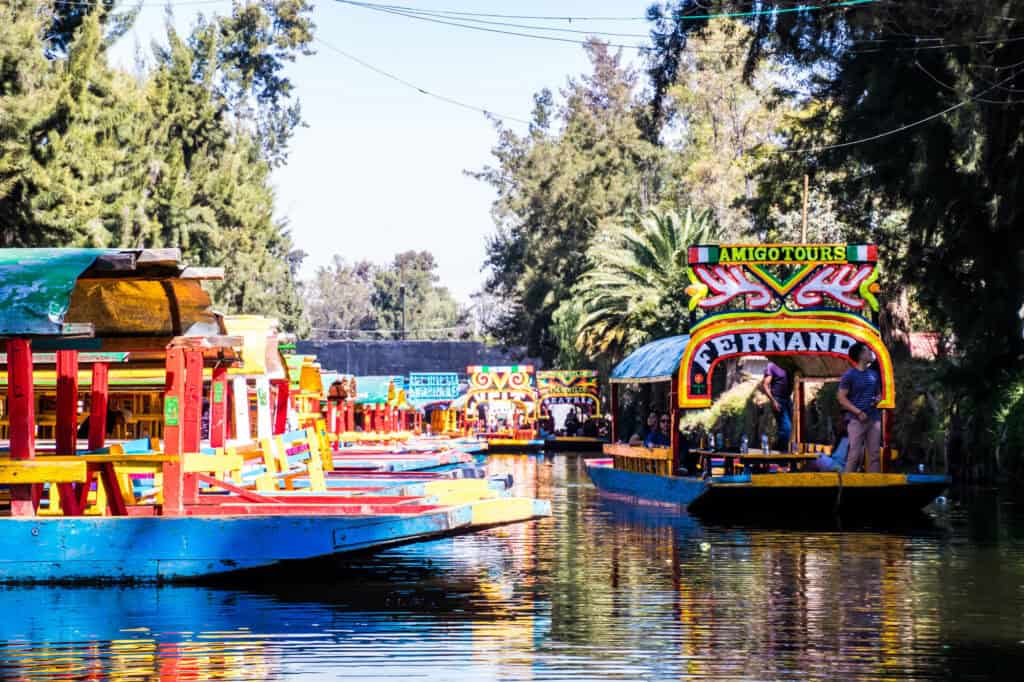
Xochimilco
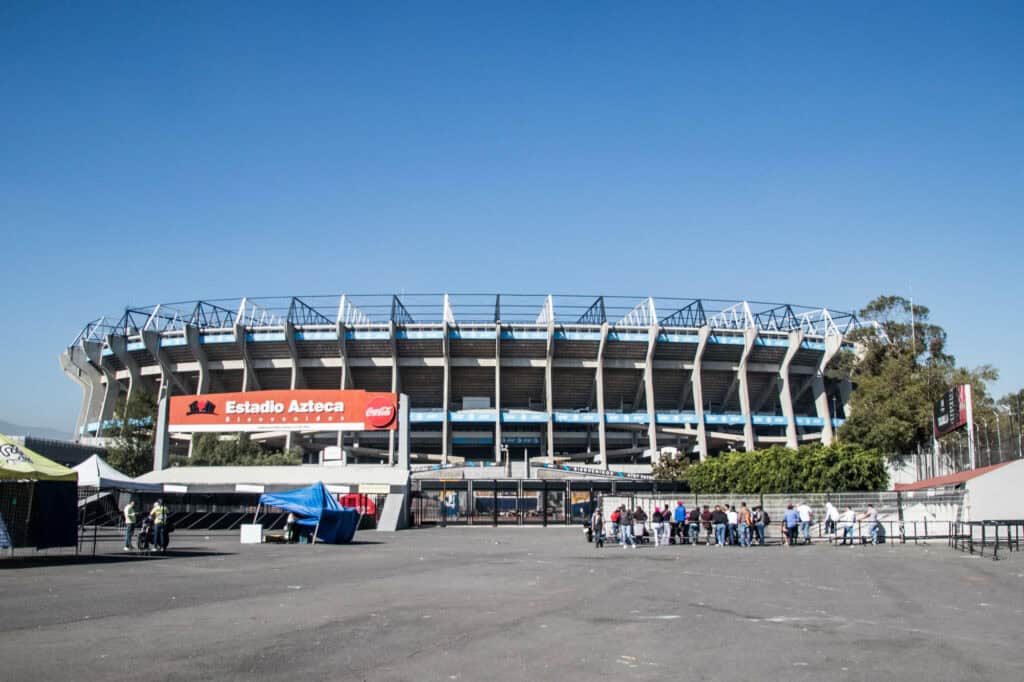
Aztec Stadium

Frida Kahlo Museum

National Film Archives of México
Places to eat or drink near Museo Nacional de Antropologia

Sud 777

Fonda Margarita

El Huequito


