
National Palace – Mexico City
Open now
National Palace – Mexico City
P.za De La Constitucion S/N, Centro Historico De La Cdad. De Mexico, Mexico City 06066 Mexico Posted by Brandon B.Admin
Overview
The National Palace stands on the eastern side of the Zócalo, Mexico City's vast central plaza, occupying the same footprint where Aztec emperor Montezuma II once held court. Built in stages beginning in 1563, the palace has served as the seat of Mexican government for centuries and remains one of the Western Hemisphere's most significant political buildings. Its monumental Baroque and Neoclassical facade stretches 200 meters along the plaza's edge, making it impossible to miss from anywhere in the Centro Histórico.
What sets the National Palace apart from other government buildings worldwide is its interior decoration. Diego Rivera's massive murals cover the walls of the main staircase and upper galleries, depicting Mexican history from the Aztec period through the early 20th century. These murals are public artworks, accessible to visitors at no cost, which means you can stand before some of the most important Mexican art of the 1900s without a museum ticket.
Why this place matters
The National Palace functions as both a living government center and a historical monument. The president's office occupies the building, and ceremonial functions happen here regularly. Yet the palace opens its doors to the public, creating an unusual situation where citizens and tourists can walk through corridors of power and encounter world-class art in the process.
Diego Rivera began his mural work here in 1929, continuing until 1935. His vision transformed the palace's interior into a visual narrative of Mexican identity, blending indigenous heritage, Spanish conquest, and the struggle toward independence and revolution. These murals influenced how Mexicans understand their own history and remain central to the country's cultural conversation about identity and continuity.
Quick facts
- Free admission for all visitors, including tourists
- Located on the Zócalo in Centro Histórico, directly east of the plaza
- Construction began in 1563 on the site of Montezuma II's former palace
- Diego Rivera's murals cover approximately 1,200 square meters
- Open to the public most days, though hours vary with official functions
- No ticket required, but security screening is standard
Getting there
The National Palace fronts the Zócalo directly, so finding it is straightforward. If you're using Mexico City's metro system, the Zócalo station on Line 2 delivers you to the plaza itself. From the station exit, walk toward the largest building facing the plaza's eastern edge. The walk from the metro to the palace entrance takes about three minutes.
If you're arriving from other neighborhoods like Coyoacán or Polanco, a taxi or ride-sharing app will cost moderate amounts depending on traffic. The plaza is accessible from multiple streets, but the main public entrance to the palace is typically from the plaza side. During peak tourist hours, the entrance on the plaza level moves faster than side entrances.
The layout and experience
Security screening happens at the entrance. You'll pass through metal detectors and bag checks similar to airport procedures. Allow extra time during midday hours when tour groups cluster at the doors. Once through, you enter the main courtyard, a columned space that immediately conveys the building's grandeur and official purpose.
The main staircase is where Rivera's most famous work dominates. The central wall features a massive mural titled "Mexico Through the Centuries," which synthesizes indigenous Aztec civilization, Spanish colonization, and the modern Mexican state into a single narrative arc. The scale is overwhelming. Standing at the base of the staircase and looking up, you understand why people describe the experience as moving.
Upper galleries contain additional murals depicting specific historical moments. The palace layout guides you naturally through these spaces, though signage is minimal. You're essentially encouraged to wander and discover. Some rooms are roped off when official business requires them, so you may not see every gallery on every visit. The building retains its function as a working government center, which occasionally limits access to certain wings.
Main highlights
The central staircase mural is the undisputed centerpiece. It measures roughly 12 meters tall and dominates the visual experience of the interior. Rivera's technique here blends Baroque architectural details with his distinctive style, creating a work that feels both integrated into the building and visually commanding.
The upper galleries contain murals depicting the Conquest, the Inquisition, the Independence movement, and the Revolution. Each section tells a story through imagery that rewards close looking. Details like weapons, clothing, and facial expressions carry meaning. You'll notice indigenous figures rendered with dignity and specificity, a deliberate choice by Rivera during an era when indigenous Mexicans were often marginalized in official narratives.
The courtyards themselves deserve attention. The architectural proportions reflect Renaissance influence, with columns and arches that frame views into the interior spaces. If you arrive early or on a quieter day, the courtyards offer moments of stillness in an otherwise crowded historic district.
History and background
The National Palace occupies one of Mexico City's most symbolically charged locations. Before Spanish conquest, this land held Montezuma II's palace complex, the ceremonial and administrative heart of the Aztec empire. After conquest, the Spanish demolished the indigenous structures and built a palace for their colonial governors beginning in 1563. That original palace burned in 1659, and the current structure was rebuilt and expanded over the following centuries.
The building achieved its present form through multiple phases of construction and renovation. The Baroque facade visible from the Zócalo dates to the 17th and 18th centuries. Neoclassical modifications occurred in the 19th century. The interior decoration by Rivera transformed the space into a monument to Mexican history and identity during the post-Revolutionary period when Mexico was actively reimagining its national narrative.
Diego Rivera's decision to situate indigenous civilization at the center of Mexican identity through these murals was politically significant. During the 1920s and 1930s, indigenous peoples faced systemic exclusion. Rivera's murals positioned indigenous Mexico as the foundation of national identity, visually asserting that modern Mexico emerged from and belonged to indigenous peoples, not merely to colonial or European frameworks.
Tickets and entry
There is no admission fee. The National Palace is free to visit for all visitors. You do not need to book in advance or reserve a time slot, though you will pass through security screening at the entrance. This process is standard but can add 10 to 15 minutes to your entry during busy periods.
Guided tours are available in Spanish. These tours are typically offered on a walk-up basis and are led by official palace guides. If you speak Spanish and want contextual information about the murals and building history, asking at the main entrance about tour availability is worthwhile. English-language guides are less common, so speaking Spanish increases your chances of accessing a guided experience.
Best time to visit
Weekday mornings, particularly Tuesday through Thursday between 10 a.m. and noon, tend to have fewer visitors than weekends. Monday mornings can be busy with local school groups. Afternoons generally quieter than mornings across the week. If you visit during siesta hours (roughly 2 p.m. to 4 p.m.), you may find fewer people inside, though the building's interior temperature remains consistent regardless of time of day.
Avoid the Zócalo and palace during major Mexican holidays like Independence Day (September 16), when crowds gather in the plaza and building access may be restricted for official ceremonies. Similarly, if a presidential address or major state function is scheduled, certain areas will be closed to the public.
Weather in Mexico City is mild year-round at the city's high altitude, though rain is more common from May through October. The interior of the palace is protected, so weather doesn't significantly affect your visit. However, the Zócalo itself offers no shade, so if you plan to spend time in the plaza before or after your palace visit, mornings are preferable during hot months.
Photography tips
The murals photograph well in natural light. The main staircase receives light from windows above, creating good conditions for handheld photography without flash. Flash photography is typically prohibited inside the palace to protect the murals, so bring a camera or phone capable of handling moderate indoor light or plan to adjust your settings.
The courtyards offer architectural photography opportunities. The symmetry of columns and arches frames nicely from multiple angles. Early morning light casts dramatic shadows across courtyard floors, which can enhance architectural photography.
Wide shots of the facade are best taken from the Zócalo itself, particularly from the western edge of the plaza where you can capture the building's entire eastern face. The plaza provides distance that allows you to fit the entire facade in frame.
Facilities and preparation
The palace has restrooms available to visitors, typically located on lower levels. Water fountains are present but not abundant, so bringing a water bottle is practical. There is no café or food service inside the palace itself, though the Zócalo and surrounding Centro Histórico have numerous restaurants and cafés within walking distance.
Wear comfortable walking shoes. The interior involves multiple staircases, and you'll be standing and walking for at least 45 minutes to an hour if you move at a leisurely pace. The palace is not air-conditioned in all areas, so dress in layers if you visit during hot months.
The security screening at entry is thorough, so avoid carrying large bags if possible. Small backpacks are fine, but larger luggage may be restricted. Leave items at a nearby hotel or hostel if you're traveling with substantial baggage.
Combining with nearby attractions
The National Palace is the eastern anchor of the Zócalo, and the plaza itself is surrounded by important sites. The Mexico City Metropolitan Cathedral occupies the northern edge, a massive structure that took 250 years to complete. The Supreme Court building faces the palace from the south. The Zócalo's western side opens onto streets leading to the Templo Mayor archaeological site, where you can see physical remains of the Aztec city that once occupied this location.
The Centro Histórico around the Zócalo contains colonial-era buildings, small museums, and street-level vendors. Spending a full morning or afternoon in this district allows you to visit the palace, explore the cathedral, and walk through surrounding neighborhoods without rushing.
If you're interested in more Diego Rivera murals, the Palacio de Bellas Artes is approximately 1 kilometer west of the Zócalo and houses his "Dream of a Sunday Afternoon in Alameda Park" mural along with other important works. The two sites can be combined into a single day focused on Rivera and Mexican history.
Sample visit plan
Arrive at the Zócalo around 10 a.m. on a weekday. Walk directly to the National Palace entrance on the plaza's eastern side. Allow 15 minutes for security screening. Once inside, spend 20 to 30 minutes on the main staircase and surrounding galleries, moving at your own pace and absorbing the murals. Exit through the same entrance.
From there, walk north across the Zócalo to the Cathedral, which takes 10 minutes. Spend 30 to 45 minutes inside. Return to the Zócalo's western side and walk toward the Templo Mayor (about 15 minutes on foot), which contains pre-Hispanic artifacts and the foundation stones of the Aztec city. By early afternoon, you'll have completed a comprehensive visit to the Centro Histórico's major sites.
Practical tips
- Arrive early if you want shorter security lines and quieter viewing of the murals
- Bring a camera that handles low light, as interior photography requires good sensor sensitivity
- Wear comfortable shoes; you'll be standing and walking on stone floors for extended periods
- Spanish-language guided tours are more readily available than English ones
- The building closes for official state functions without notice, so call ahead if making a special trip
- Water fountains are sparse inside, so bring water or plan to buy beverages in the surrounding area
- Weekday mornings are significantly less crowded than weekend afternoons
FAQ
Do I need a ticket to enter the National Palace? No. Admission is completely free for all visitors. You only need to pass through security screening at the entrance.
Can I take photos inside? Yes, photography is permitted in most areas. Flash is prohibited to protect the murals. Check with staff if you're unsure about specific areas.
How long does a typical visit take? Most visitors spend 45 minutes to 1.5 hours inside. This allows time to view the main murals and explore the galleries without rushing.
Is the National Palace wheelchair accessible? The main entrance has ramps and the ground floor is accessible, though some upper galleries require stair access. Contact the palace directly before your visit if mobility is a concern.
What language are the guides in? Guides are primarily Spanish-speaking. English-language tours are rare but sometimes available. It's worth asking at the entrance when you arrive.
Opening hours
Reviews
Sign in and mark this place visited to leave a review.
No reviews yet.
Free Trip Planner
Plan your Mexico trip with our free planner
Build a day-by-day itinerary with AI suggestions, hand-picked places, and friends. Free forever — no credit card.
Things to see near National Palace – Mexico City
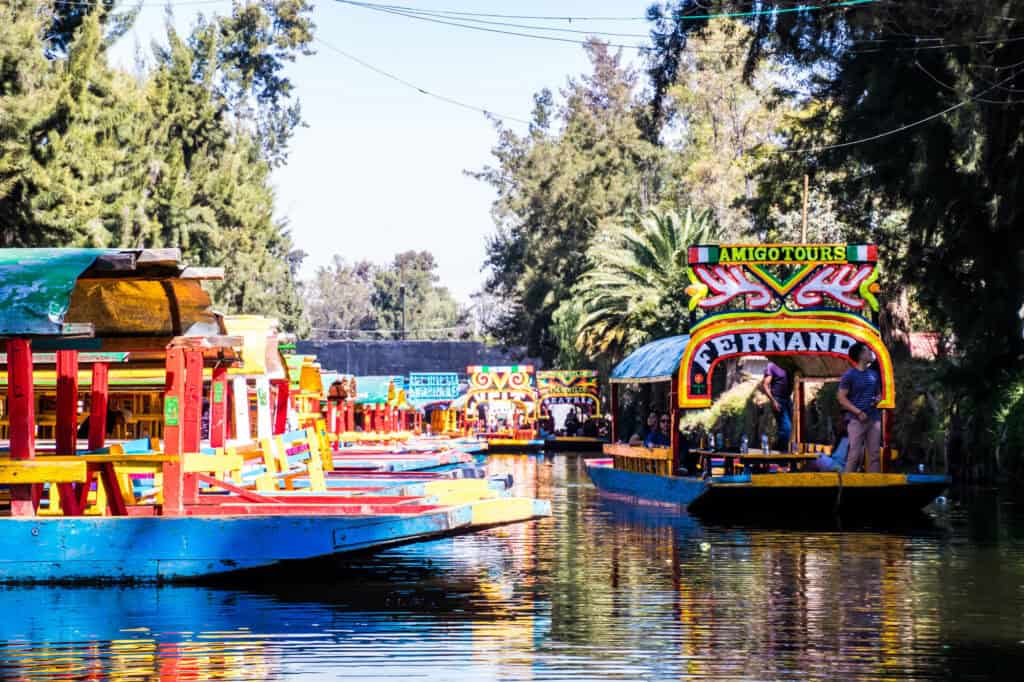
Xochimilco
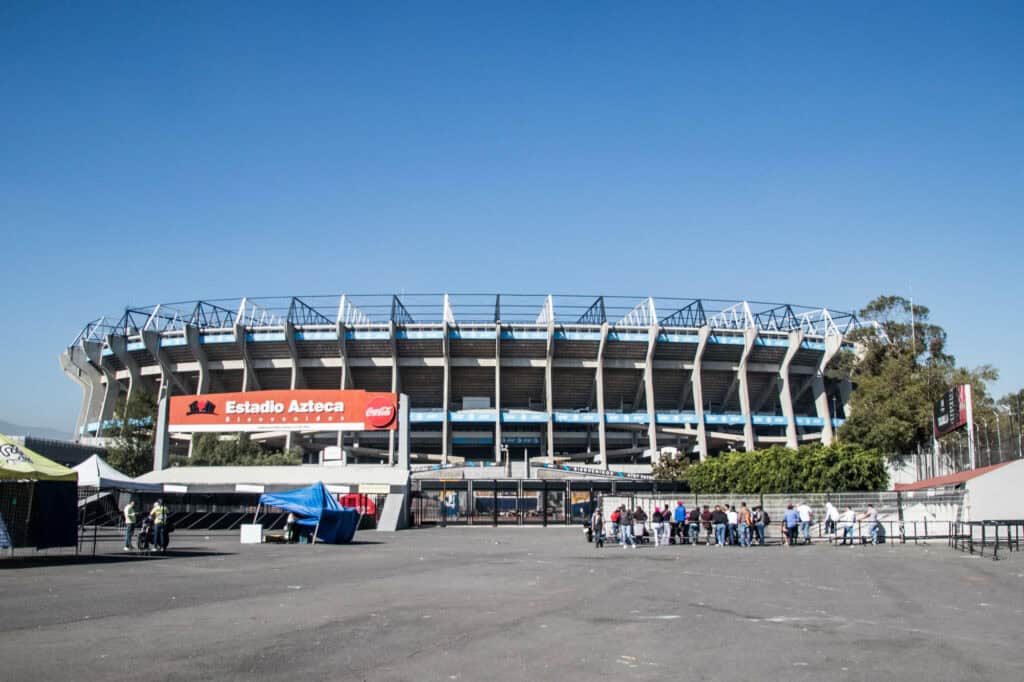
Aztec Stadium

Frida Kahlo Museum

National Film Archives of México
Places to eat or drink near National Palace – Mexico City

Sud 777

Fonda Margarita

El Huequito


