
Palacio Legislativo
Closed now
Palacio Legislativo
Palacio Legislativo, 4R57+G35, Av. de las Leyes, 11800 Montevideo, Departamento de Montevideo, Uruguay Posted by Uruguay Unpacked
Overview of the Palacio Legislativo
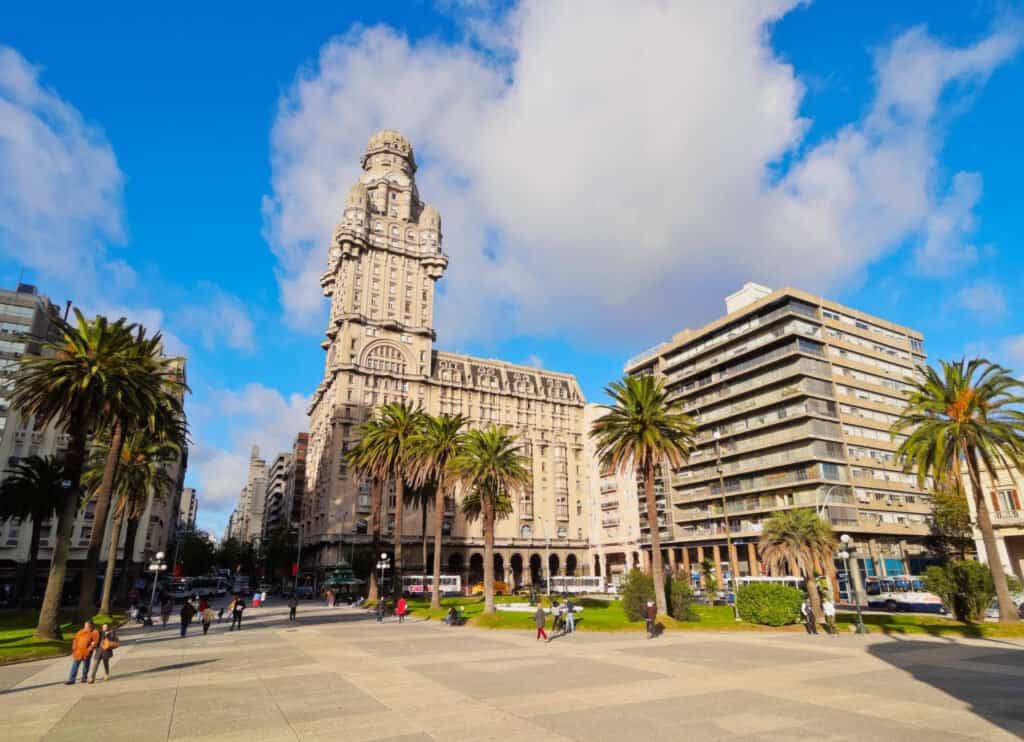
Located in Montevideo, Uruguay, the Palacio Legislativo is a remarkable neoclassical structure serving as the seat of the General Assembly. It stands as a testament to Uruguayan democracy and history, celebrated for its exquisite marble interiors and architectural magnificence.
Historical Background
The origins of the Palacio Legislativo trace back to 1902 when an international architectural competition was held to replace the inadequate Montevideo Cabildo. Italian architect Vittorio Meano emerged victorious, although he passed away before learning of his win. Construction commenced in 1904 under President José Batlle y Ordóñez, with Italian architects Vittorio Meano and Gaetano Moretti spearheading the design, emphasizing the use of Uruguayan marble and intricate sculptures by José Belloni. The palace was inaugurated on August 25, 1925, aligning with the centenary of Uruguay’s Declaration of Independence, with decorative work completed by 1964.
Getting There
Visitors can reach the Palacio Legislativo in the Aguada neighborhood of Montevideo. It is accessible via various public transportation options within the city, including buses, and is centrally located for convenient taxi or rideshare access from most parts of Montevideo.
Highlights Inside the Palacio Legislativo
Key attractions within the Palacio Legislativo include the Hall of the Lost Steps, inspired by Renaissance cathedrals and noted for its expansive skylight that separates the Senate and House of Representatives chambers. This hall also hosts exhibitions and concerts. Visitors can view original documents such as the 1825 Declaration of Independence and the 1830 Constitution, preserved under glass. The intricate sculptures and reliefs inside, including those symbolizing elements of the Uruguay coat of arms (Liberty, Abundance, Strength, Justice), are significant highlights. The Senate chamber features exquisite parquetry and mahogany seating from Paraguay.
Visitor Information
Ticket details may vary, but generally, guided tours are available, sometimes free or for a nominal fee. It is advisable to check in advance with Montevideo’s tourism offices or the Palacio Legislativo’s official website for current ticketing policies and guided tour schedules.
Visiting Tips
- Arrive early to fully appreciate the architecture and detailed artworks.
- Guided tours offer valuable insights and access to areas otherwise closed to the public.
- Photography may be restricted in certain chambers; confirm permissions with staff.
- Visit during weekdays if possible to observe legislative sessions or hear debates.
- Respect the building’s function as an active government site; adhere to all security guidelines and maintain silence during visits.
- Look for historical plaques and artwork that enhance the understanding of Uruguay’s legislative history.
Conclusion
The Palacio Legislativo remains a captivating architectural and cultural landmark, essential for anyone interested in Uruguay’s political history and neoclassical design.
Opening hours
Reviews
Sign in and mark this place visited to leave a review.
No reviews yet.
Free Trip Planner
Plan your Montevideo trip with our free planner
Build a day-by-day itinerary with AI suggestions, hand-picked places, and friends. Free forever — no credit card.
Things to see near Palacio Legislativo

Punta Carretas Lighthouse

Parque Rodó

De los Pocitos Beach

Escollera Sarandí
More places in Montevideo

Plaza Independencia
Ciudad Vieja Montevideo

Museo de la Memoria
