Patagonia (Argentina)
El Chaltén, San Martin, Lago Argentino, Santa Cruz Z9301, Argentina Posted by Brandon B.Admin
What Patagonia Actually Looks Like on the Ground
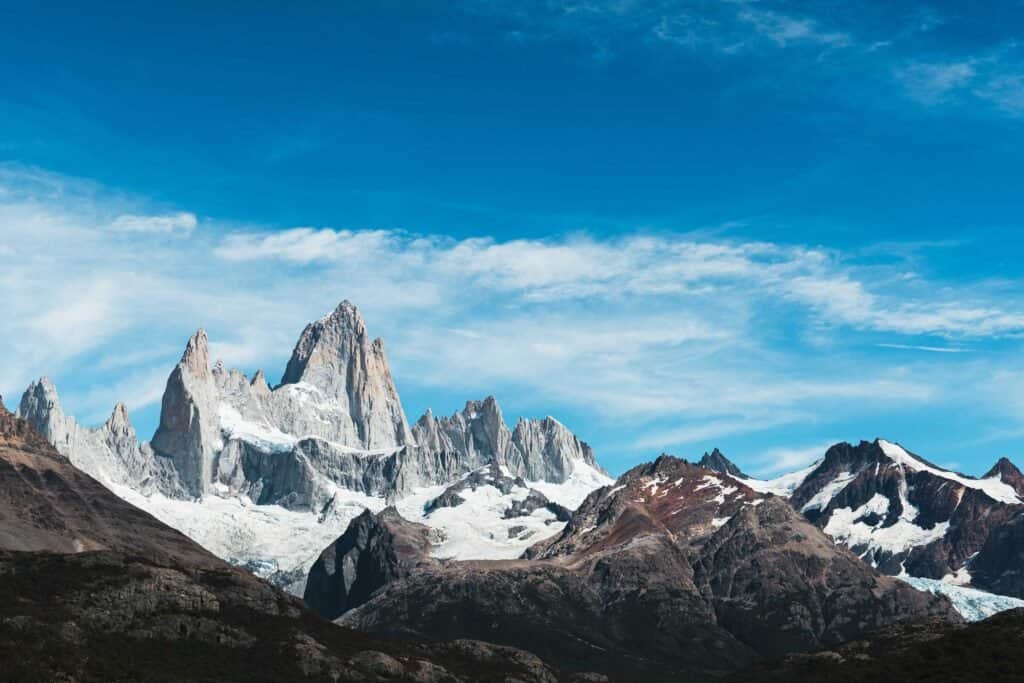
Patagonia in Argentina is not a single destination. It is a region the size of a small country, stretching from the Atlantic coast of Chubut province all the way to the southern tip of the continent, taking in steppe, glacier, lake, and jagged granite tower along the way. Most travellers anchor themselves in one of two places: the trekking village of El Chaltén or the lakeside town of El Calafate, which serves as the gateway to Los Glaciares National Park. Both sit in Santa Cruz province, the second-largest province in Argentina, and both reward visitors who plan ahead and respect the weather.
The landscape here is genuinely extreme. Winds can shift from calm to gale-force inside an hour. Mornings that look clear at 7am often cloud over by noon. That unpredictability is part of what makes Argentine Patagonia so compelling for hikers, climbers, photographers, and anyone who wants to feel genuinely far from everything.
Why Argentine Patagonia Matters
Los Glaciares National Park, established in 1937 and declared a UNESCO World Heritage Site in 1981, protects some of the largest non-polar ice fields on earth. The Southern Patagonian Ice Field alone covers roughly 13,000 square kilometers. The park is home to the Perito Moreno Glacier, one of the few glaciers in the world that is not currently retreating, and to Cerro Torre and Fitz Roy, two of the most technically demanding peaks in the Southern Hemisphere.
El Chaltén, founded as recently as 1985, was built specifically to assert Argentine sovereignty over the area after a territorial dispute with Chile. Today it functions almost entirely as a base for trekkers, with a permanent population of a few hundred people that swells dramatically each summer. There are no entrance fees for the trails around El Chaltén, which is unusual for a UNESCO-protected zone and makes the area accessible to budget travellers in a way that few comparable wilderness destinations are.
Quick Facts
- Los Glaciares National Park was established in 1937 and covers approximately 4,459 square kilometers of protected land.
- El Chaltén sits at around 400 meters above sea level and is roughly 220 kilometers north of El Calafate by road.
- The drive between El Calafate and El Chaltén takes approximately three hours on Ruta Nacional 40.
- Trekking trails around El Chaltén are free to access; Perito Moreno Glacier requires a paid national park entry ticket.
- The main trekking season runs from late October through early April, when daylight extends well past 9pm.
- The official currency is the Argentine peso, though US dollars are widely accepted at a favorable informal exchange rate in most tourist-facing businesses.
- Fitz Roy stands at 3,405 meters; Cerro Torre reaches 3,128 meters.
Getting There
Most international visitors fly into Buenos Aires and then take a domestic flight to El Calafate's Comandante Armando Tola International Airport. The flight from Buenos Aires takes roughly three hours. Several Argentine carriers operate this route, and the airport is small enough that you can be in a taxi within 20 minutes of landing.
From El Calafate, buses run daily to El Chaltén during the high season, leaving in the morning and arriving in time for an afternoon walk. If you want to reach Perito Moreno Glacier, it sits about 80 kilometers west of El Calafate and is most easily accessed by organized tour or rental car, since public transport to the glacier itself is limited.
Renting a car in El Calafate gives you the most flexibility, particularly if you want to stop along Lago Argentino or explore the Ruta 40 corridor at your own pace. Road conditions are generally good on the main routes but can deteriorate quickly on unpaved sections after rain.
The Layout and Experience
El Chaltén is small enough to walk end to end in about 15 minutes. Most of the town sits along Avenida San Martín and the parallel streets just off it. You'll find gear shops, small restaurants, hostels, and a national park visitor center near the northern entrance to town, where rangers give free orientation talks each morning during the season. Attending one of these talks before you set out is genuinely useful, not just a formality.
The two most popular day hikes are the Laguna de los Tres trail and the Laguna Torre trail. Laguna de los Tres ends at a high viewpoint directly in front of Fitz Roy, about 10 kilometers from the trailhead. The final ascent is steep and can be icy early in the season. Laguna Torre offers views of Cerro Torre and the Glacier Torre, and the trail is more forgiving underfoot. Both trails begin within walking distance of the town center.
El Calafate has a different energy. It is a proper tourist town with restaurants, casinos, chocolate shops, and a main drag (Avenida del Libertador) lined with agencies selling glacier excursions. It functions as a logistical hub rather than a destination in itself, but the location on the southern shore of Lago Argentino is genuinely beautiful, and the flamingo colony at Laguna Nimez, a short walk from the center, tends to surprise people.
Perito Moreno Glacier
The glacier deserves its own section because nothing really prepares you for it. Perito Moreno is roughly 30 kilometers long and its face stands about 60 meters above the waterline at its highest point. A network of elevated walkways and viewing platforms brings you to within a few hundred meters of the ice face, and if you wait long enough, you will almost certainly see chunks calve off into the water with a crack that sounds like a rifle shot.
Beyond the walkways, operators offer ice trekking experiences that take you directly onto the glacier surface. These range from short introductory walks to full-day expeditions with crampons and ice axes. Booking in advance during January and February is strongly recommended since slots fill quickly.
Entry to the glacier sector of the park requires a ticket purchased at the gate or, increasingly, online in advance. The ticket tier is mid-range by Argentine standards but modest compared to comparable glacier experiences in Iceland or New Zealand.
Best Time to Visit
November and March tend to offer the best balance of reasonable weather and smaller crowds. December and January are peak season, with longer daylight and warmer temperatures but significantly more people on the trails and higher accommodation prices. February can bring strong winds, particularly around El Chaltén, which is already one of the windiest inhabited places in Argentina.
Winter (June through August) is not impossible but requires serious preparation. Many businesses in El Chaltén close entirely, trails can be snow-covered, and daylight drops to around seven hours. Some climbers specifically prefer the winter approach for certain technical routes, but casual trekkers should stick to the shoulder seasons.
Fitz Roy is famously reluctant to show itself. Many hikers spend three or four days in El Chaltén and catch only a partial view through cloud. Build in extra days if seeing the peak clearly matters to you.
Photography Tips
Sunrise at Laguna de los Tres can produce extraordinary alpenglow on Fitz Roy, turning the granite pink and orange before the clouds typically close in. To catch this, you need to either camp near the laguna or start the hike in darkness, around 4am in midsummer, to reach the viewpoint before dawn. A headlamp and warm layers are essential.
At Perito Moreno, the afternoon light hits the ice face from the west and creates a deep blue within the crevasses. The upper walkways tend to give more dramatic angles than the lower ones. Bring a longer lens if you want to isolate calving events, and be patient. The glacier operates on its own schedule.
Combining with Nearby Attractions
Torres del Paine National Park in Chilean Patagonia sits roughly five hours from El Calafate by road and bus, crossing the border at Cerro Castillo. Many travellers combine both parks in a single trip of ten days to two weeks. The border crossing is straightforward, though you should carry your passport and be aware that fresh food is typically not permitted across the border.
If you have extra time in El Calafate, the Glaciarium museum on the edge of town offers a well-organized introduction to glaciology and Patagonian natural history. It is worth a couple of hours, especially if the weather outside is uncooperative.
Practical Tips
- Book accommodation in El Chaltén and El Calafate at least two months ahead for December and January travel.
- Bring layers you can add and remove quickly. Wind chill at the viewpoints can be brutal even when the temperature seems mild.
- Trekking poles are not required but make a real difference on the steep final section to Laguna de los Tres.
- Carry cash in pesos. Many smaller places in El Chaltén do not accept cards reliably, and ATM queues can be long.
- Water from streams on the main trails is generally safe to drink, but confirm with the park rangers before your hike.
- Campfires are prohibited throughout the national park. Use a camping stove and carry it in and out.
- Download offline maps before you leave town. Cell coverage disappears quickly once you are on the trail.
- The national park visitor center in El Chaltén opens early and the ranger talks are free. Go before your first hike.
FAQ
Do I need a guide to trek around El Chaltén?
No. The main trails are well-marked and free to access without a guide. Guided options exist for multi-day routes and technical approaches to the peaks, but day hikers manage independently without any difficulty.
How fit do I need to be for the Laguna de los Tres trail?
Moderately fit. The trail is about 20 kilometers return with around 800 meters of elevation gain, and the final stretch is genuinely steep. Most reasonably active people complete it in a full day. Allow more time if you plan to stop and photograph.
Is Argentine Patagonia expensive?
It depends on how you travel. El Chaltén has hostel dormitories and free trails, making it very achievable on a budget. El Calafate skews more expensive, particularly for accommodation and glacier tours. The informal exchange rate for foreign currency can significantly reduce costs for visitors paying in US dollars or euros.
Can I visit Perito Moreno without a tour?
Yes, if you have a rental car or can arrange a transfer independently. The walkways are self-guided once you enter the park. That said, most visitors from El Calafate join day tours because the logistics are simpler and the transport is included.
Is Patagonia suitable for children?
The glacier walkways at Perito Moreno are accessible and well-suited for families with children. The longer trekking routes around El Chaltén are better for older children and teenagers who are comfortable with full-day hikes in variable weather.
Reviews
Sign in and mark this place visited to leave a review.
No reviews yet.
Free Trip Planner
Plan your Argentina trip with our free planner
Build a day-by-day itinerary with AI suggestions, hand-picked places, and friends. Free forever — no credit card.