Posted by Brandon B.Admin
What Is Perlan and Why Reykjavik Built It on a Hill
Perlan sits on top of Öskjuhlíð hill, about a ten-minute drive from central Reykjavik, and it is one of the most recognizable buildings in Iceland. The structure is essentially a glass dome resting on six enormous hot water storage tanks, each holding millions of liters of geothermal water that once supplied the city's heating network. That combination of industrial utility and architectural spectacle is very Icelandic, and it tells you something about the country before you even walk through the door.
The name translates to "The Pearl" in English, and on a clear day the dome catches the light in a way that earns it. From the observation deck you get a panoramic sweep of Reykjavik's rooftops, the Snæfellsjökull glacier on the western horizon, and the North Atlantic stretching south. On the same visit, you can walk through a real ice cave, watch a planetarium show about the Northern Lights, and learn how Iceland's volcanic landscape actually works. It is a lot to pack into one building.
Quick Facts
- Location: Varmahlíð 1, Öskjuhlíð hill, Reykjavik 105
- About 10 minutes by car or taxi from the city center
- The dome was completed in 1991
- Six geothermal storage tanks form the base of the building
- The observation deck circles the full 360 degrees around the dome
- Wonders of Iceland is the main permanent exhibition inside
- A planetarium on site runs Northern Lights and aurora shows
- Open year-round
Getting There
Öskjuhlíð hill is wooded by Reykjavik standards, and the roads that wind up to Perlan are easy enough to follow by car or taxi. If you are staying near Laugavegur or the old harbor area, a rideshare or taxi will get you there in under 15 minutes most days. There is parking available at the base of the hill.
Walking is genuinely possible if you enjoy a bit of a climb. The hill has forested paths that locals use for jogging, and the walk up from the Nauthólsvík geothermal beach area below takes roughly 20 minutes at a relaxed pace. It is a pleasant approach in summer. In winter, ice on the paths can make the walk less appealing, so check conditions before committing.
There is no direct city bus that terminates at Perlan, so independent transport or a guided tour is usually the practical option for most visitors.
The Layout and Experience
The six tanks that form the ground level are no longer used for active water storage in the way they once were. The space inside them has been converted into the Wonders of Iceland exhibition, which is where most of your time will go. The exhibition is organized into themed zones covering glaciers, volcanoes, earthquakes, geothermal energy, and the aurora borealis. It is genuinely well-designed rather than the kind of dusty natural history display you might expect.
The ice cave is the most talked-about element. It runs through one of the tanks and uses real ice, kept frozen artificially, to recreate the experience of moving through a glacier tunnel. The temperature drops sharply when you enter, so keep a jacket with you even if the day outside is mild. The cave is about 100 meters long and the ice formations along the walls are detailed enough to be convincing.
The planetarium sits in its own circular theater and runs short immersive films, the most popular being a simulation of the Northern Lights. If you are visiting Iceland outside the aurora season or simply have not had luck with the real thing, this is a reasonable substitute and gives useful context about what causes the phenomenon.
Above the exhibition levels, the glass dome houses a restaurant and the observation deck. The deck is open to the sky and wraps around the outside of the dome. On a clear day it is one of the better elevated viewpoints in the city, and it is free to access if you have a ticket to the main exhibition. The restaurant inside the dome operates at an upscale price tier, as you would expect from the setting.
History and Background
The tanks on Öskjuhlíð hill were originally built in the mid-twentieth century as part of Reykjavik's geothermal district heating system. Iceland sits directly on the Mid-Atlantic Ridge, which means geothermal energy is not an exotic resource here but a basic infrastructure tool. The tanks stored hot water pumped from underground sources before it was distributed to homes and buildings across the city.
The glass dome was added and the structure opened to the public in 1991. The architect was Ingimar Sveinsson, and the design was intended to turn a utilitarian industrial structure into a public landmark. It worked. Perlan quickly became one of the most photographed buildings in Iceland and a standard stop on any Reykjavik visit. The Wonders of Iceland exhibition was added later as the building evolved from a viewing platform and restaurant into a more comprehensive attraction.
Tickets and Entry
The observation deck on the fourth floor is free to access, which makes it worth a quick stop even if you decide not to buy a full ticket. You can take the elevator up, walk the deck, and leave without spending anything beyond getting there.
The Wonders of Iceland exhibition requires a paid ticket. Pricing tiers depend on whether you add the planetarium show and a few other optional elements. Buying online in advance tends to be slightly cheaper than buying at the door, and during peak summer months it helps to avoid the queue. The ice cave is included in the general exhibition ticket rather than being a separate add-on, which is worth knowing when you compare the price against other Reykjavik attractions.
Children under a certain age enter free or at a reduced rate, and the exhibition is genuinely engaging for older kids, particularly the ice cave and the interactive volcano sections.
Best Time to Visit
Perlan is open year-round and the indoor exhibition does not depend on weather, which makes it a solid option on a grey or rainy Reykjavik day. That said, the observation deck is only worth your time if visibility cooperates. Summer, roughly June through August, gives you the best odds of a clear panorama, and the long daylight hours mean the view stays good well into the evening.
Winter visits have their own logic. The hill is beautiful under snow, the city lights from the deck are striking after dark, and there is something fitting about standing above Reykjavik in January when you have just spent an hour learning about glaciers. Crowds are noticeably thinner in the off-season, which makes the ice cave and exhibition feel less rushed.
Mornings tend to be quieter than afternoons regardless of season. If you arrive when the building opens, you will often have the ice cave largely to yourself for the first hour.
Photography Tips
The exterior of Perlan photographs best from the wooded paths below the dome, where you can frame the glass structure against the sky without other tourists in the shot. Early morning light hits the dome from the east and produces a warm reflection that disappears by mid-morning.
Inside the ice cave, photography is allowed and the blue light filtering through the ice is dramatic without any additional effort. A phone camera handles it reasonably well. The planetarium show does not permit photography during the film.
From the observation deck, the view toward Mount Esja across the bay tends to be the strongest compositional shot, but the harbor with Harpa concert hall visible below is also worth framing. Bring a wide-angle lens if you shoot with interchangeable lenses, as the panorama rewards it.
Combining with Nearby Attractions
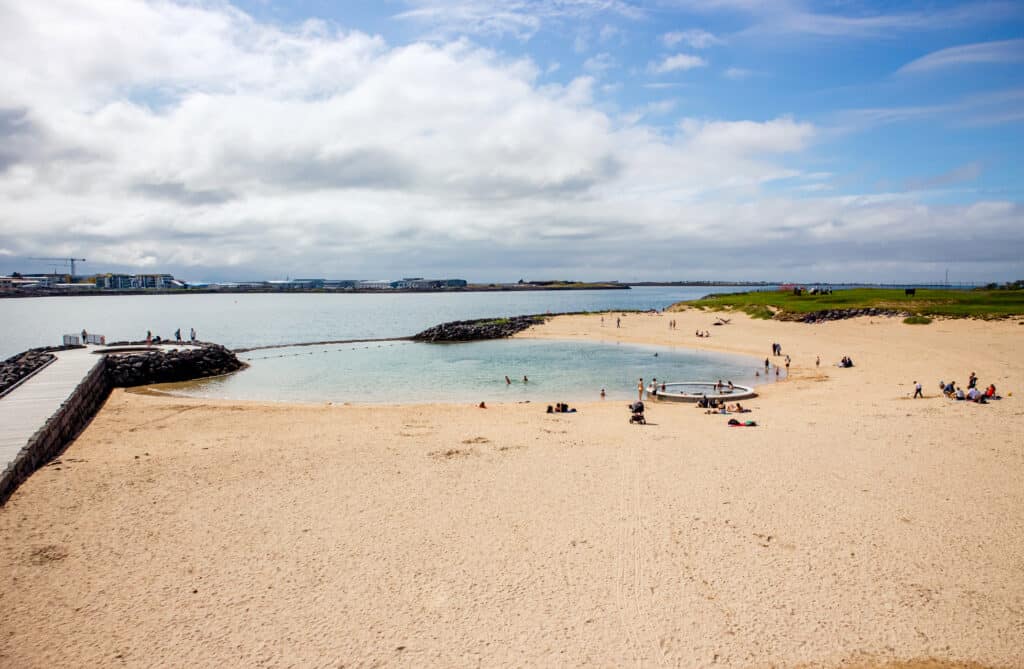
Nauthólsvík geothermal beach is directly below Öskjuhlíð hill and takes about 20 minutes to reach on foot via the hillside paths. In summer the small sandy cove has warm geothermal water pumped into the sea, which sounds improbable for Iceland but is entirely real. Pairing a morning at Perlan with an afternoon at Nauthólsvík makes for a full and varied day without needing to cross the city.
The University of Iceland campus is a short drive away, and the nearby Reykjavik Botanical Garden in Laugardalur is worth a detour in summer when the plantings are at their best. If you are working your way through Reykjavik's main cultural sites, the National Museum of Iceland is about 15 minutes by car and covers the human history that Perlan's exhibition leaves aside.
Practical Tips
- Bring a layer for the ice cave even in summer, temperatures drop significantly inside
- Book tickets online to skip the door queue, especially in July and August
- The observation deck is free, so you can visit just for the view without buying an exhibition ticket
- Allow at least two hours for the full exhibition plus the planetarium show
- The restaurant inside the dome is upscale, but the café on the lower levels offers lighter and more affordable options
- Parking is available on site but fills up during peak afternoon hours in summer
- The building is fully accessible by elevator, so mobility is not a barrier to any part of the experience
FAQ
Do I need to book Perlan tickets in advance?
You do not strictly need to, but during summer peak season the queues at the door can be long. Booking online a day or two ahead is usually enough to avoid waiting.
Is Perlan worth visiting if I have already seen real glaciers?
Honestly, yes. The ice cave is interesting in its own right, but the broader exhibition covers volcanic activity, earthquakes, and geothermal energy in ways that add useful context to the landscape you have already been moving through.
Can I visit just the observation deck without paying?
Yes. The fourth-floor observation deck is accessible free of charge. Take the elevator up, walk the perimeter, and you are under no obligation to enter the paid exhibition.
How long does a full visit take?
Most visitors spend between two and three hours covering the exhibition, ice cave, and a planetarium show. If you add lunch at the restaurant, plan for closer to four hours.
Is Perlan suitable for young children?
The ice cave and the interactive sections of the exhibition tend to hold children's attention well. The cold inside the cave is worth preparing for, but the visit itself is manageable for most ages.
Reviews
Sign in and mark this place visited to leave a review.
No reviews yet.
Free Trip Planner
Plan your Iceland trip with our free planner
Build a day-by-day itinerary with AI suggestions, hand-picked places, and friends. Free forever — no credit card.