
 Posted by Brandon B.Admin
What Makes Piazza Navona Worth Your Time
Piazza Navona sits in the historic center of Rome, roughly a ten-minute walk from the Pantheon, and it remains one of the most theatrical public spaces in the city. The piazza is long and oval-shaped, tracing the footprint of a 1st-century AD Roman stadium built under Emperor Domitian. That ancient outline is still perfectly legible today, which is part of what makes standing here feel genuinely strange and wonderful. You are, in a very literal sense, walking the track.
Unlike the Colosseum or the Roman Forum, Piazza Navona asks nothing of you. There is no ticket, no timed entry, no audio guide to rent. You simply arrive.
Quick Facts
- Location: Piazza Navona, 00186 Rome, in the Parione neighborhood
- Entry: Free, open to the public at all hours
- Size: The piazza stretches approximately 240 meters in length
- Three fountains, including Bernini's Fountain of the Four Rivers at the center
- Nearest major landmarks: Pantheon (10 minutes on foot), Campo de' Fiori (5 minutes), Sant'Agnese in Agone church on the western side
- Best approached from Via della Pace to the north or Corso del Rinascimento to the east
History and Background
The stadium beneath your feet was built around 86 AD and could hold roughly 30,000 spectators for athletic competitions. Over the centuries, the structure was gradually built over, and by the 15th century the piazza had become a public market. Pope Innocent X transformed the space dramatically in the mid-1600s, commissioning both the church of Sant'Agnese in Agone and the centerpiece Fountain of the Four Rivers from Gian Lorenzo Bernini. The result was a baroque stage set that has barely changed since.
The rivalry between Bernini and Francesco Borromini, who worked on Sant'Agnese, is one of the great architectural feuds of the 17th century. Whether the stories of their mutual contempt are entirely true depends on which historian you ask, but the tension is baked into the piazza's visual drama regardless.
For centuries, the piazza was flooded each August during a tradition called the Lago di Piazza Navona, where wealthy Romans would ride carriages through the shallow water. The practice ended in the 19th century, but it explains why the piazza sits slightly below the surrounding street level on its short ends.
The Layout and Experience
Three fountains anchor the piazza along its length. At the southern end, the Fontana del Moro features a central figure wrestling a dolphin, redesigned by Bernini in 1653. At the north end, the Fontana del Nettuno shows Neptune in combat with a sea creature, though this sculptural group was added much later in the 19th century. The centerpiece is the Fountain of the Four Rivers, completed in 1651, where four colossal figures representing the Nile, the Ganges, the Danube, and the Rio de la Plata surround an Egyptian obelisk.
The obelisk itself is Roman-made, not Egyptian, created during the reign of Domitian to imitate the originals. It sits on a hollow travertine rock base, which gives the whole composition a slightly surreal, floating quality up close.
Around the perimeter, café and restaurant terraces face inward. Street artists set up along the edges, particularly in the afternoon. The piazza is busy most of the day, but the proportions are generous enough that it rarely feels crushing, except perhaps on summer Saturday evenings or during the Christmas market season in December.
Main Highlights
Fontana dei Quattro Fiumi
Bernini's Fountain of the Four Rivers is the obvious anchor. Spend time walking all the way around it rather than just glancing from one vantage point. Each of the four river gods has a distinct personality and posture, and the relationship between the figures, the rock, and the obelisk above changes dramatically as you circle. The Nile figure covers his eyes, traditionally said to be in horror at Borromini's church façade opposite, though art historians generally consider this a charming myth rather than fact.
Sant'Agnese in Agone
The church on the western side of the piazza, designed primarily by Borromini starting in 1652, is worth stepping inside. The interior is compact but intensely decorated, and the crypt below holds relics associated with the early Christian martyr Agnes. Entry is typically free, though hours vary and the church closes during services.
Palazzo Pamphilj
The large building immediately adjacent to Sant'Agnese was the family palace of the Pamphilj family, patrons of Innocent X. It now serves as the Brazilian Embassy and is not generally open to the public, but the façade contributes to the enclosed, stage-like quality of the western side.
Best Time to Visit
Early morning, between 7am and 9am, is when Piazza Navona is closest to quiet. The cafés are just opening, the light falls at a low angle across the fountains, and the pigeons briefly outnumber the tourists. If you want photographs without crowds, this is your window.
Midday in summer can feel relentless. The piazza has almost no shade, the stone reflects heat, and the surrounding restaurants push their tourist menus hard. That said, the energy is undeniably alive, and if you find a table at one of the older cafés and nurse an espresso, the chaos becomes part of the spectacle.
December brings a traditional Christmas market that fills much of the piazza with stalls selling toys, sweets, and nativity figures. It tends to run through most of the month and draws enormous crowds on weekends, but the atmosphere is genuinely festive rather than purely commercial, and it connects to a tradition that goes back centuries.
Photography Tips
The Four Rivers fountain photographs best from the north end of the piazza, where you get the full composition with the obelisk rising above and Sant'Agnese framing the background. Shoot in the golden hour before 9am or after 6pm to avoid the flat midday light.
Getting low helps. Crouching to water level near the fountain basin brings the river gods to eye level and makes the obelisk feel properly monumental. Most people shoot standing straight up and wonder why their photos look flat.
At night, the fountains are lit from below, which creates a completely different mood. The surrounding café terraces glow warm, the obelisk disappears into the dark sky, and the stone figures take on a theatrical intensity that Bernini, who understood spectacle as well as anyone in history, would have appreciated.
Combining With Nearby Attractions
Piazza Navona sits at the center of a dense cluster of Rome's most walkable sights. The Pantheon is a straightforward ten-minute walk east along Via del Salvatore and then Via della Rotonda. Campo de' Fiori is about five minutes south through a warren of narrow streets, and the contrast between the two squares, one aristocratic baroque, one rougher and more working-class in character, is instructive.
If you walk north along Corso del Rinascimento and then cut toward the river, you reach the Piazza del Popolo axis in about twenty minutes. The church of Santa Maria della Pace, with its Bramante cloister, is tucked just a few minutes northwest of the piazza and tends to be overlooked entirely, which makes it a good counterpoint to the crowds.
Practical Tips
- Coffee and food at the tables directly facing the fountains will cost considerably more than at bars a street or two away. If budget matters, drink your espresso standing at the bar inside rather than seated outside.
- The piazza has no public restrooms of its own. Nearby cafés and the church may have facilities if you are a customer.
- Pickpocketing is common in heavily touristed areas of Rome. The piazza is no exception. Keep bags in front of you and avoid the distraction techniques used by small groups near the fountains.
- If you arrive by taxi, the easiest drop-off is on Corso del Rinascimento to the east. The piazza itself is pedestrianized.
- Street artists and portrait painters are persistent but not aggressive. A polite "no grazie" is enough.
- The Christmas market typically charges no entry fee but expect to pay market prices for food and crafts.
FAQ
Is there an entry fee for Piazza Navona?
No. The piazza is a public space and free to enter at any time of day or night. Some of the buildings around it, including Sant'Agnese in Agone, may be free but have limited opening hours.
How long should I plan to spend here?
Most visitors find that an hour is enough to walk the full length, examine all three fountains closely, and step inside the church. If you sit at a café or watch the street artists for a while, two hours passes easily.
Is Piazza Navona accessible for visitors with mobility needs?
The piazza surface is largely flat cobblestone, which can be uneven in places. There are no steps to enter the main space, and the fountains are reachable on foot without significant barriers, though the surrounding streets can be narrow and uneven.
When is the Christmas market held?
The market traditionally runs through most of December, typically opening in early December and running until just after the Epiphany on January 6th, which is called the Festa della Befana in Italy and is a major holiday in its own right.
Reviews
Sign in and mark this place visited to leave a review.
No reviews yet.
Free Trip Planner
Plan your Italy trip with our free planner
Build a day-by-day itinerary with AI suggestions, hand-picked places, and friends. Free forever — no credit card.
Things to see near Piazza Navona


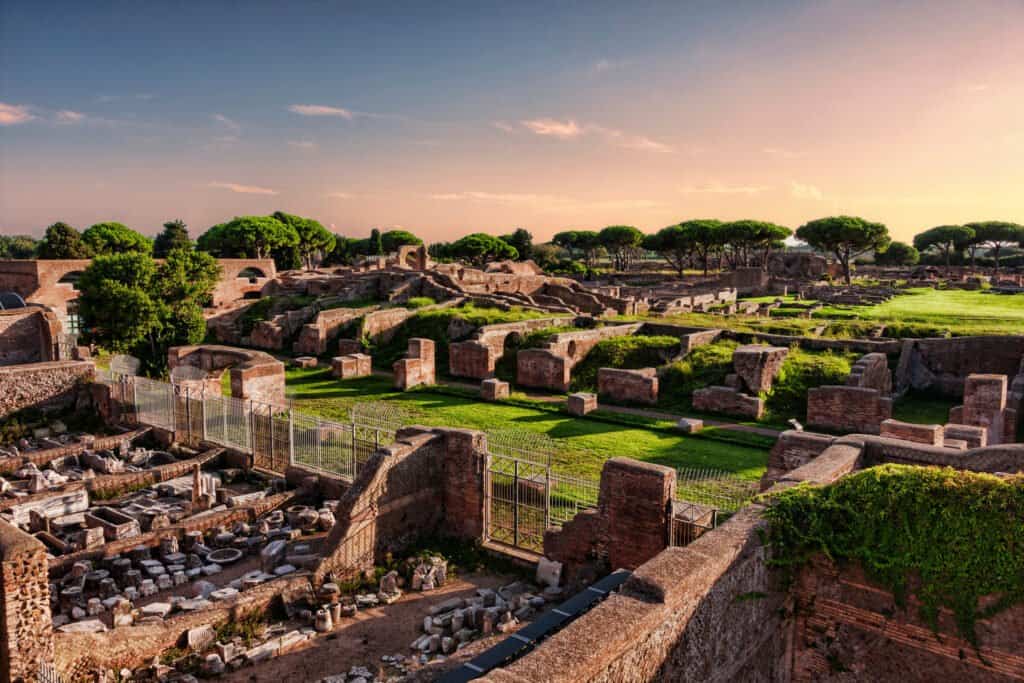

Places to eat or drink near Piazza Navona
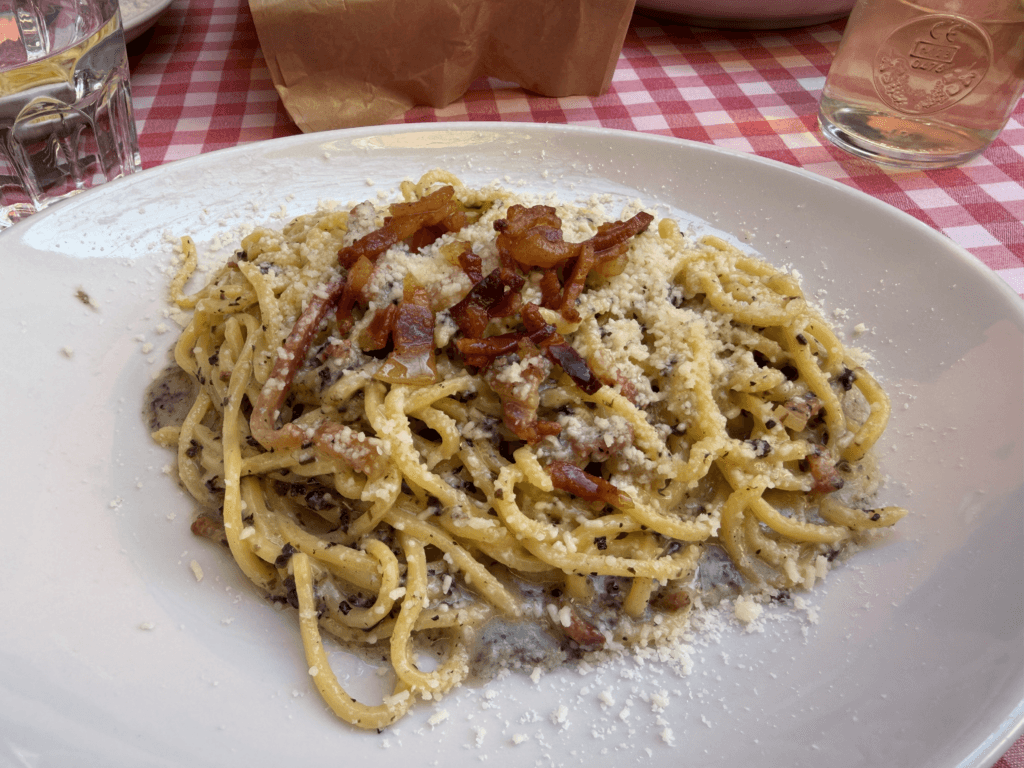
Arianna al Borghetto

La Pietra Scheggiata – Osteria/Pizzeria

Pasticceria Barberini

Trattoria Da Enzo
More places in Rome

Magia a Campo de' Fiori

Museo Storico della Liberazione

The Colosseum
