Place Outa el Hammam & Kasbah
Avenue Hassan II, Chefchaouen 91000 Morocco Posted by Brandon B.Admin
The Soul of Chefchaouen: Place Outa el Hammam and the Kasbah
If there is one place in Chefchaouen that earns its reputation, it is Place Outa el Hammam. The main square of the medina, it sits at the intersection of daily life and tourist curiosity, somehow managing to serve both without losing itself to either. Locals play cards under the shade of trees while visitors nurse mint tea at the surrounding café terraces, and the great red-walled Kasbah anchors the northwest corner like it has been holding the square together for centuries, because it has.
This is where you orient yourself when you first arrive, and where you end up returning even when you had no intention of doing so.
Why This Place Matters
Chefchaouen sits in the Rif Mountains roughly three hours from Tangier by road, and Place Outa el Hammam is its undisputed center. The medina is famously painted in shades of blue and white, a visual identity that draws photographers from around the world, but the square itself is actually ochre and terracotta, walled in warm earth tones that make the surrounding blue alleys feel even more dramatic by contrast.
The Kasbah was built in the 15th century, when the city was founded by Moulay Ali Ben Moussa Ben Rached El Alami. It served as a military fortress, a prison, and eventually a seat of governance. Today it houses a small ethnographic museum and a garden courtyard that most visitors find unexpectedly peaceful. The square outside has been the social and commercial heart of the city ever since.
Quick Facts
- Location: Avenue Hassan II, medina of Chefchaouen, northern Morocco
- The Kasbah dates to the late 15th century, around 1471
- The museum inside the Kasbah covers local Andalusian and Berber heritage
- Entry to the Kasbah museum requires a modest paid ticket at the door
- The square itself is open and free to access at any hour
- Cafés line the southern and eastern sides, most open from morning until late evening
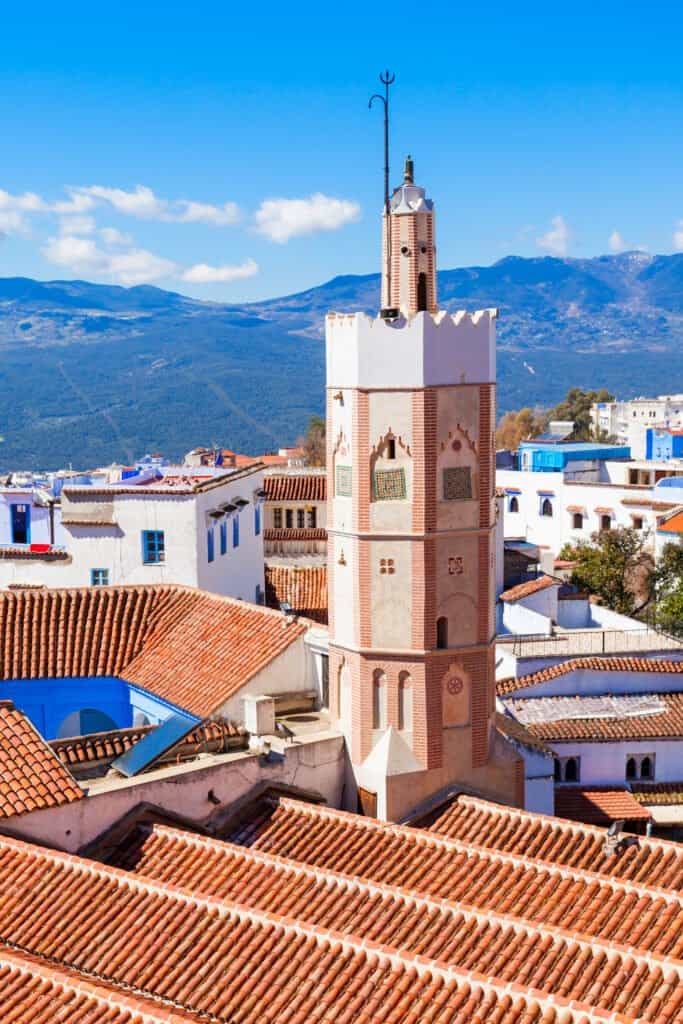
- The Great Mosque stands adjacent to the square, identifiable by its distinctive octagonal minaret
Getting There
The medina of Chefchaouen is compact. If you arrive by bus, the station sits outside the old city walls, and the walk to Place Outa el Hammam takes about 10 to 15 minutes on foot through the lower medina. Taxis can drop you near Bab el Ain, the main medina gate on Avenue Hassan II, and from there the square is a straight five-minute walk uphill through the main market lane.
The square is not accessible by car. Once you pass through Bab el Ain, you are on foot. The lane leading up is narrow, lined with stalls selling spices, leather goods, and the kind of woven baskets that never quite fit in your luggage.
The Layout and Experience
Place Outa el Hammam is larger than you expect from photos. The café terraces fill the eastern half, with plastic chairs and low tables set out under trees. On the western side, the Kasbah wall rises in dark red pisé, broken only by the arched entrance gate. The Great Mosque occupies the southern edge, its tower visible from most of the square.
Mornings are quieter. Vendors set up their stalls, a few elderly men gather near the fountain, and the light comes in low and warm before the day heats up. By midday the square fills considerably, especially in summer and during long weekends. Late afternoon tends to be the most atmospheric, when the shadows grow long and the café tables fill with a mix of travelers and locals who have nowhere else they need to be.
The Kasbah entrance is on the square's north side. Inside, you pass through a horseshoe arch into a garden courtyard planted with orange trees and roses, which in spring carries a scent that is genuinely difficult to walk away from. The museum rooms are arranged around the courtyard on two levels, and the climb to the tower gives you the best elevated view of the medina rooftops and the mountains behind.
Main Highlights
The Kasbah Tower View
The view from the top of the Kasbah tower is one of the better reasons to pay the entry fee. You look out over a sea of blue-washed rooftops and terraces, with the Rif Mountains forming the backdrop. It is not a long climb but the stairs are uneven, so watch your footing. Most people spend about 45 minutes to an hour inside the full complex.
The Kasbah Garden
The interior courtyard garden is a genuine surprise. It is shaded, quiet, and feels entirely removed from the bustle of the square just outside the wall. A small fountain sits at the center, and the planted borders are well maintained. If you have been walking the medina for hours, this is a good place to pause before heading back out.
The Ethnographic Museum
The museum rooms display traditional dress, musical instruments, and household objects connected to the Andalusian refugees who settled Chefchaouen after the fall of Granada in 1492. The collection is modest in size but the context it gives the city is valuable. It helps explain why Chefchaouen feels architecturally distinct from other Moroccan medinas.
The Square Itself
Spend time just sitting in the square. Order a pot of mint tea at one of the café terraces and watch the whole thing operate around you. The cafés along the eastern edge are mid-range in price by Moroccan standards, and while none of them will win awards for food, the tagines are dependable and the location is the point.
History and Background
Chefchaouen was founded in 1471 as a base for resisting Portuguese expansion in northern Morocco. The city took in waves of Muslim and Jewish refugees expelled from Andalusia in the late 15th and early 16th centuries, and that population shaped everything from the architecture to the local dialect to the tile patterns still visible in the Kasbah's interior.
For much of its early history, the city was closed to non-Muslims. The Spanish explorer Charles Foucauld managed to visit in disguise in 1883. It was not until the Spanish protectorate period in the early 20th century that the city opened more broadly, and even then it remained relatively isolated. That long period of closure is part of why so much of the original character survived.
Tickets and Entry
The square and the lanes around it are free to walk through at any time. The Kasbah museum charges a small admission fee, collected at the entrance gate. Tickets are general admission, and no advance booking is required or available. The museum tends to be open most days during daylight hours, though hours can vary depending on the season and local holidays, so it is worth checking locally if you have a specific visit in mind.
Best Time to Visit
Early morning, before 9am, gives you the square almost entirely to yourself. The light at that hour is also considerably better for photography than the flat midday sun. Spring, roughly March through May, is widely considered the best season for Chefchaouen overall. The temperatures are comfortable, the light is clear, and the Kasbah garden is at its best.
July and August bring the largest crowds and the most heat. The square does not lose its appeal entirely, but the café terraces fill quickly and the lanes leading in from Bab el Ain can feel congested. If you are visiting in summer, the early morning rule applies even more firmly.
Photography Tips
The square itself is mostly ochre and red, which surprises people expecting the blue palette. For the blue walls, head into the lanes immediately behind the Kasbah, particularly the alleys climbing toward the upper medina. The light in those narrow passages is best in the two hours after sunrise and the hour before sunset.
From the Kasbah tower, a wide lens helps capture the full sweep of the rooftops and the mountains. The tower opening faces roughly north, so morning light tends to hit the mountains more directly. Bring a lens cloth if you are visiting in spring, as the conditions can be dusty.
Combining with Nearby Attractions
The square is a natural starting point for the rest of the medina. The blue alleys of the upper medina are a short walk uphill from the Kasbah. The Spanish Mosque, which sits on a hill above the city, is about a 20-minute walk from the square and offers a panoramic view of the entire medina against the mountains, best seen at sunset. The Ras el Maa waterfall and laundry area is another 10 to 15 minutes on foot through the upper medina and is worth the walk for the contrast it provides.
Practical Tips
- Arrive at the Kasbah when it opens to avoid queues, which form quickly on busy days
- The café terraces on the square are convenient but not the best value in the medina; side-street spots tend to charge less
- Dress modestly, particularly if you plan to enter the mosque area or the Kasbah
- The cobblestones around the square and in the lanes approaching it are uneven; comfortable shoes matter more than you think
- Bargaining is expected at market stalls surrounding the square; starting prices are typically well above what sellers will accept
- The square can feel overwhelming on peak afternoons; the Kasbah garden is a useful quiet retreat when it does
FAQ
Is the Kasbah worth paying to enter?
Yes, particularly for the tower view and the garden courtyard. The museum is small, but the combination of the garden, the architecture, and the rooftop perspective makes the entry fee reasonable for most visitors.
Can you enter the Great Mosque on the square?
The Great Mosque is generally not open to non-Muslim visitors. You can view and photograph the exterior, including the distinctive octagonal minaret, from the square.
How long should you plan to spend at Place Outa el Hammam?
An hour or two covers a thorough visit to the Kasbah plus time sitting in the square. If you factor in a meal or extended café time, half a day passes easily. Most people return to the square multiple times during a stay in Chefchaouen regardless of how long they planned to linger.
Is it safe to visit at night?
Place Outa el Hammam is generally active and well-lit in the evenings. The café terraces stay open late, and the square tends to feel lively rather than empty after dark. Standard urban awareness applies, but it is not considered an area of particular concern.
Opening hours
Reviews
Sign in and mark this place visited to leave a review.
No reviews yet.
Free Trip Planner
Plan your Chefchaouen trip with our free planner
Build a day-by-day itinerary with AI suggestions, hand-picked places, and friends. Free forever — no credit card.