
 Posted by Brandon B.Admin
The Roman Forum (Foro Romano): The Real Heart of Ancient Rome
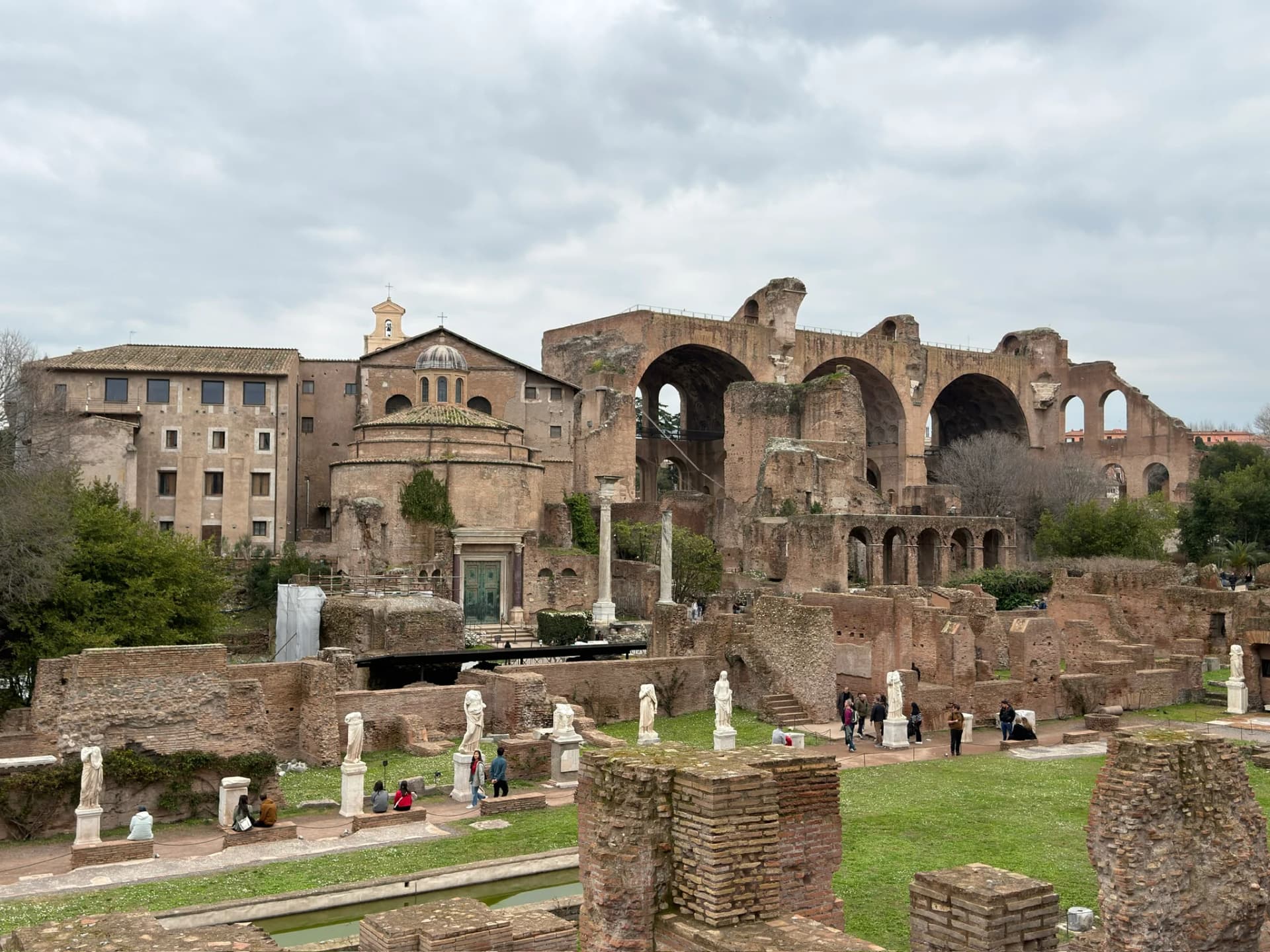
If you only visit one ancient site in Rome besides the Colosseum, make it the Roman Forum. This isn’t just a bunch of broken columns. This was the center of power in ancient Rome. Laws were argued here. Emperors showed off here. Crowds gathered here. Temples, courts, and government buildings all sat in this valley, packed together like the original downtown.
The best part is that the Forum is not a museum where you stare at artifacts behind glass. It’s an open-air site where you walk through real streets, climb real paths, and stand in the same spaces where history was made. It’s one of those places that hits you with a quiet “wow” once you slow down and look around.
Quick Orientation: Where the Roman Forum Is
The Roman Forum sits between two famous landmarks:
- The Colosseum on one end
- Palatine Hill on the other
These three places are linked as one archaeological complex, and in most cases you visit them on a single combined ticket. That’s why the Forum is perfect as part of a bigger ancient-Rome day. You can do the big, dramatic Colosseum first, then stroll into the Forum, and finish with views from Palatine Hill.
Tickets and Entry Info (Prices Included)
Most visitors buy a combined ticket that includes:
- The Colosseum
- The Roman Forum
- Palatine Hill
Here are the standard ticket prices you will most commonly see:
- €18 adult full ticket (Colosseum + Roman Forum + Palatine Hill)
- €2 reduced ticket for EU citizens aged 18–25
- Free for visitors under 18 (with required ID)
Ticket validity: Many standard tickets are valid for 24 hours from first use, which makes it easier to split your visit across the day. This depends on the ticket type, so confirm details at the time of purchase.
Tip: Book online in advance whenever possible. Tickets can sell out, and lines can get rough in peak season.
Opening Hours (Seasonal Schedule)
The Roman Forum is generally open daily, except for:
- January 1
- December 25
Opening time is commonly 8:30 am, with closing times that change by season. Typical seasonal closing times include:
- Last Sunday of March to Aug 31: closes around 7:15 pm
- September: closes around 7:00 pm
- October: closes around 6:30 pm
- Nov to Feb: closes around 4:30 pm
Last entry is usually about one hour before closing. Always double-check the exact times for your travel date, since hours can shift slightly during the year.
How Much Time You Need
This is where people mess up. They treat the Forum like a quick stop, then they leave confused. The Forum is big, and it rewards slow exploration. Here’s a realistic time guide:
- Fast visit: 1.5 to 2 hours
- Good visit: 3 hours
- Deep visit: 4+ hours (especially if you add Palatine Hill)
Walking is slower than you expect because the ground is uneven and there are lots of small climbs. Wear shoes that you actually trust.
What the Roman Forum Was
The Roman Forum was the main public space of ancient Rome for centuries. It was the stage for:
- Political speeches and debates
- Religious festivals and ceremonies
- Trials, legal decisions, and public announcements
- Triumphal marches and victory celebrations
- Business deals and social life
It evolved over time. Different leaders built temples, arches, and meeting halls here to show power, honor gods, or leave their name in stone. What you see today is a layered mix of eras. Republic, Empire, late Empire, and later reuse all overlap in one place.
Best Way to Visit: Route and Flow
The Forum has more than one entrance, and people move through it in different ways. A simple, low-stress plan is:
- Start at the Colosseum (if you have a timed entry)
- Walk into the Roman Forum after
- Finish on Palatine Hill for views and extra ruins
This flow works because you go from the most structured part of the day (the Colosseum time slot) into the more open and flexible part (Forum and Palatine). You also end with some of the best views in the area.
Tips for Visitors:
- Best Time to Visit: Early morning or late afternoon to avoid the crowds and the heat during summer months.
- Guided Tours: Consider taking a guided tour to gain insights into the history and significance of the ruins. You can book on Get Your Guide and support our site.
- Wear Comfortable Shoes: The terrain can be uneven, so wear sturdy, comfortable footwear.
- Stay Hydrated: Bring a water bottle, especially during the hot summer months.
- Photography: Don’t forget your camera! The Forum offers incredible photo opportunities.
- Combined Tickets: Take advantage of the combined ticket with the Colosseum and Palatine Hill to make the most of your visit.
- Accessibility: The site is partially accessible to wheelchairs, but some areas may be challenging to navigate.
Top Sights in the Roman Forum (What to Look For)
The Forum can feel like “a lot of ruins at once,” so it helps to know the big landmarks. These are the places that usually give people the strongest sense of what the Forum was.
Via Sacra

The Via Sacra was the main street through the Forum. Processions moved along this route during major religious events and victory celebrations. Today, it’s one of the easiest ways to orient yourself. Walk it slowly and imagine the crowds, the banners, the noise, and the drama.
Temple of Saturn
The Temple of Saturn is one of the most recognizable ruins in the Forum because its columns still stand tall. This temple also connects to the Roman state treasury in antiquity. It’s a great photo spot, but it’s also a reminder that Rome’s religion and money were never far apart.
Arch of Titus
The Arch of Titus is a victory arch from the first century AD. It’s famous for its carved reliefs and its role as a model for later arches around the world. If you like history details, this is one to linger on. It tells a story in stone.
Curia Julia (The Senate House)
The Curia Julia was the Roman Senate building. This is where political debates happened and where major decisions were made. Compared to many ruins in the Forum, the Curia is surprisingly intact in shape, which helps you understand how big and formal these spaces were.
House of the Vestal Virgins
The Vestal Virgins were priestesses who served Vesta, the goddess of the hearth. Their residence sat near the Temple of Vesta and was a major religious and social institution. Walking through this area gives you a peek into how religion, ritual, and power mixed together in daily Roman life.
Temple of Antoninus and Faustina
This temple is a classic example of how buildings in Rome get reused. It was dedicated to an emperor and his wife, and later it was converted into a church, which helped preserve parts of the structure. It’s one of those places where you can literally see layers of time stacked on each other.
Basilica of Maxentius and Constantine
This is one of the largest structures in the Forum area. It was a huge public building, used for administrative and legal functions. Even in ruins, its scale is intense. Stand here for a moment and you’ll feel how massive imperial Rome could be.
Palatine Hill: The Best Add-On
Palatine Hill is not just a bonus. It’s one of the most important parts of the ancient city. It’s also where you get the best views down into the Forum. If you have the energy, do it. The climb is not brutal, but it’s real, especially in summer heat.
What you get on Palatine:
- Ancient palace ruins and foundations
- Garden paths and shady corners
- Panoramic overlooks of the Forum and Rome
- A quieter vibe compared to the street-level crowds
Photography Tips (Best Light and Best Spots)
Want great photos without fighting the whole world?
- Go early: softer light and fewer people
- Late afternoon: warmer light on stone and columns
- Palatine overlooks: best wide shots of the Forum
- Via Sacra angles: great depth and perspective shots
Even if you are not a big photo person, you’ll still end up taking a lot of pictures. It’s that kind of place.
Comfort and Safety Tips (So You Enjoy It)
- Shoes: Wear comfortable walking shoes with grip. Ancient stones are uneven.
- Water: Bring a bottle. Heat can sneak up on you.
- Sun: Sunglasses and sunscreen help a lot. Shade is limited.
- Time: Don’t rush. The Forum is best when you slow down and look closely.
- Maps: Use a map or audio guide if you want the story behind what you see.
Should You Get a Guided Tour?
You can absolutely do the Forum on your own. But a good guide makes a huge difference, because it turns “random ruins” into real stories.
Here are your options:
- Self-guided: Best for travelers who like wandering and exploring at their own pace.
- Audio guide or app: A good middle option if you want context without a group schedule.
- Guided tour: Best if you want the full story, clear structure, and the highlights in the right order.
When to Visit (Season by Season)
Spring (March to May)
This is prime time. Comfortable temperatures, great light, and everything feels alive. Still busy, though.
Summer (June to August)
It gets hot. Like, “why did I wear black” hot. Go early, bring water, and take breaks. If you visit in summer, morning is your best friend.
Fall (September to October)
Another perfect season. Warm days, cooler evenings, and strong photo light. A great time to do a long Forum + Palatine visit.
Winter (November to February)
Cooler, calmer, and less crowded. Days are shorter, but the vibe is excellent if you want a quieter visit.
Nearby Places to Pair With the Forum
The Forum sits in one of Rome’s most historic zones, so you can pair it easily with nearby stops:
- The Colosseum: the obvious combo and part of most ticket packages
- Capitoline Hill viewpoints: great overlooks of the ancient area
- Monti neighborhood: a chill spot for lunch, coffee, and small shops
- Piazza Venezia area: busy, but central for moving around the city
Simple “Do This, Not That” Advice
- Do: arrive early and give yourself time
- Do: bring water and sun protection
- Do: use a guide or audio tour if you want the history to click
- Don’t: assume you can “just pop in” for 30 minutes
- Don’t: wear slick shoes or anything with no grip
- Don’t: skip Palatine if you have the energy
Final Thoughts
The Roman Forum is one of those places that feels bigger than a normal sightseeing stop. It’s not just “old.” It’s foundational. You’re walking through the space where Rome ran its empire, shaped laws, and built rituals that influenced the world for centuries.
Book ahead, show up early, and take it slow. Let the place speak. By the end, you’ll understand why this valley of ruins is still one of the most powerful sites in Europe. And yeah, you’re probably going to leave a little dusty, a little tired, and very happy you did it.
Opening Hours:
- Open daily from 8:30 AM to one hour before sunset
- Closed on January 1st, May 1st, and December 25th
Note: Information such as ticket prices and opening hours might change, so it’s always a good idea to check the official website or contact the venue directly for the most up-to-date details.
Opening hours
Reviews
Sign in and mark this place visited to leave a review.
- Brandon B.Jul 2026


Free Trip Planner
Plan your Italy trip with our free planner
Build a day-by-day itinerary with AI suggestions, hand-picked places, and friends. Free forever — no credit card.
Things to see near Roman Forum



Places to eat or drink near Roman Forum
Arianna al Borghetto

La Pietra Scheggiata – Osteria/Pizzeria

Pasticceria Barberini

Trattoria Da Enzo
More places in Rome

Magia a Campo de' Fiori

Museo Storico della Liberazione

The Colosseum
