
Rome on the map
80 places from this guide. Tap a pin to open the listing.
Overview
This Rome travel guide is built for anyone trying to make sense of a city that layers three thousand years on top of itself, often on the same block. Rome rewards people who slow down. You can stand in the Roman Forum, walk up Palatine Hill where emperors actually lived, and twenty minutes later be eating a cornetto in a café that's been open since the 1950s. The Colosseum gets the postcard, and it deserves the hype, but the city's real pull is how ordinary daily life keeps happening around ruins that would be roped-off museum pieces anywhere else.
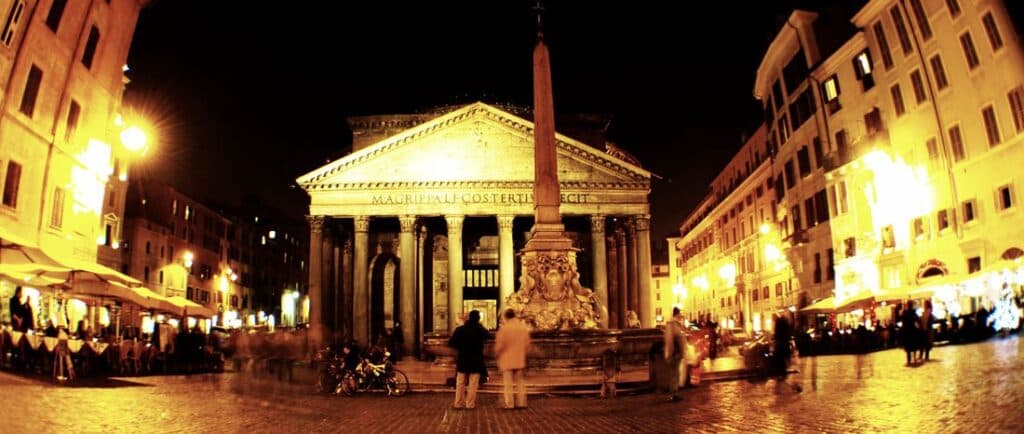
Centro Storico, the historic center, is where most first-time visitors spend their days, weaving between the Pantheon, Piazza Navona, and the Trevi Fountain without ever needing a map app. Rome isn't a tidy city and it isn't trying to be. Expect narrow streets that suddenly open onto a square with a 2,000-year-old obelisk in it, and expect to get mildly lost at least once. That's part of how it's meant to work.
When to Visit
April and May are the sweet spot. Temperatures sit in the mild range, the light is good for photos, and the city still has energy without the full crush of peak summer crowds. Flowers are out, café tables spill onto the sidewalks, and it's easy to walk for hours without overheating.
Summer is a different story. July and August bring heat that can push past 35°C in the afternoon, and the stone streets of the center hold it. Locals deal with this by doing what they've always done: duck indoors during the hottest hours, eat later, and come back out after sunset. Plan your Colosseum or Forum visit for early morning or the last couple of hours before closing if you're there in July.
September and October are underrated. The heat breaks, the tourist numbers thin out a bit compared to summer, and the major sites feel less chaotic. Ferragosto, August 15th, is a genuine local holiday, and a surprising number of family-run restaurants and shops close for a week or two around it, so don't plan a trip around specific small eateries if you're visiting in that window. Easter week and the run-up to Natale di Roma, the city's founding anniversary on April 21st, both bring their own crowds and processions worth catching if your dates line up.
Where to stay
Centro Storico puts you within walking distance of nearly everything, at a price. This is where you pay for location, not space, and rooms tend to be small. The Tridente area, near the Spanish Steps, runs similarly upscale with better shopping.
For better value, look at the area around Stazione Termini, Rome's main train station, or Testaccio, a quieter residential neighborhood south of the center that happens to have some of the best food in the city, including Testaccio Market, a covered food hall worth a visit on its own merits. Monti, just north of the Colosseum, has become a favorite base for travelers who want vintage shops, wine bars, and a slower pace while still being a short walk from the ancient core.
Trastevere, across the river, is where a lot of Rome's evening life happens, with narrow lanes, ivy-covered buildings, and restaurants that fill up past 9pm. It's less convenient for the Colosseum side of things but excellent if you want to walk home from dinner. If the Vatican is your priority, there are hotels clustered around it, though that area empties out at night and isn't the liveliest base for an evening stroll.
How to reach the destination
Most international flights land at Fiumicino, officially Leonardo da Vinci Airport, about 30 km southwest of the city. A direct train, the Leonardo Express, runs to Termini roughly every half hour and takes about 30 minutes. A taxi to the center runs a fixed rate and is worth it if you're arriving late or traveling with a group. Budget carriers often use Ciampino instead, a smaller airport closer to the city but with fewer rail connections, so you'll likely take a bus or taxi from there.
Rome is also the hub of Italy's rail network. Termini station connects to nearly every major Italian city, and it's also where the Rome Metro meets the regional and high-speed lines. If you're combining Rome with Florence, Naples, or Venice, the train is usually faster and less stressful than flying once you factor in airport time.
Getting around the destination
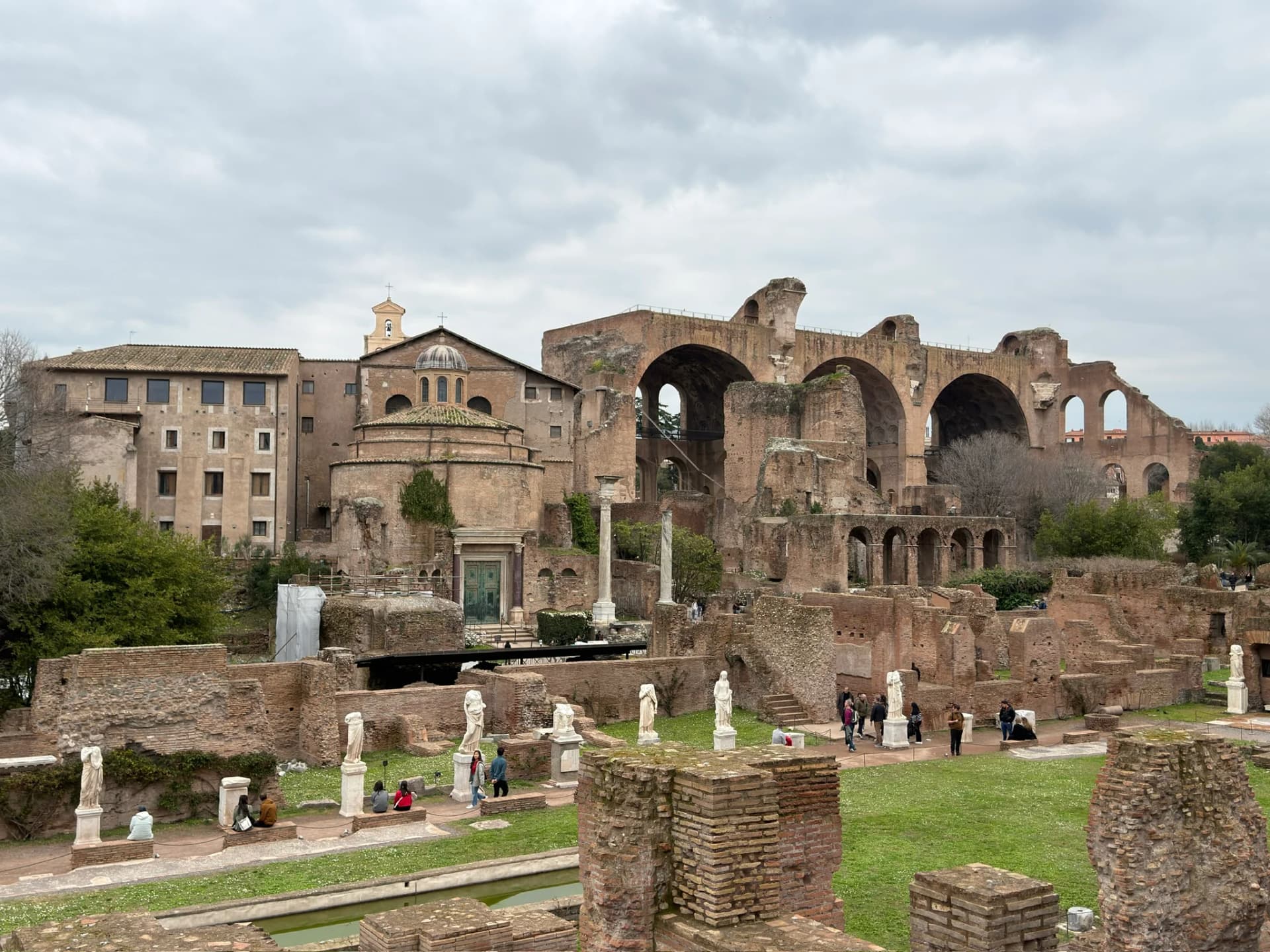
Walking is genuinely the best way to see Rome's center. The distance between the Pantheon, Piazza Navona, and the Trevi Fountain is short enough that a taxi barely saves time. The Colosseum, Roman Forum, and Palatine Hill share one archaeological area and are best tackled together on foot, ideally with the Colosseo metro stop as your entry point.
The metro has two main lines, A and B, which cross at Termini. It's fast but doesn't reach every corner of the historic center, partly because tunneling in Rome keeps running into more ruins. Trastevere isn't on the metro at all. Tram 8 and a handful of bus routes cover it instead. Buses are useful but can be slow in traffic, and route maps aren't always posted clearly at stops, so a transit app helps. For day trips out to Ostia Antica, the ancient port city, a regional train from Piramide station gets you there in well under an hour.
Taxis are metered and official ones are white, so skip unmarked cars offering rides near tourist spots. Ride-hailing apps operate but with more limited supply than in some other European capitals.
Top destination travel tips
- Get up early and walk before the crowds arrive. A coffee standing at the bar and a walk through Campo De' Fiori or around Largo di Torre Argentina at 7am shows you a completely different, quieter city.
- Watch your belongings at crowded sites, on buses, and even around the airport. Pickpocketing is the main crime risk in Rome, not violent crime, but it's common enough to take seriously.
- Dress modestly for churches. Shoulders and knees covered is the standard rule, and it's enforced at major basilicas like Santa Maria Maggiore and San Giovanni in Laterano.
- Ignore unofficial guides who approach you at the Colosseum or Forum offering to skip the line. Book tickets directly or through a verified operator in advance instead.
- Use an ATM for cash, not street money changers, to make sure you get the official exchange rate.
- Carry a refillable water bottle. Rome's public drinking fountains, called nasoni, run constantly with clean, cold water and are all over the city.
- Book ahead for Galleria Borghese inside Villa Borghese park. Entry is timed and capacity-limited, and it regularly sells out days in advance.
- Wear shoes you can walk cobblestones in for hours. Rome's sampietrini paving stones are rough on sandals and thin soles alike.
Typical costs in the destination
Rome's prices run the full range depending on how you travel. Accommodation near the center without any frills tends to sit in the higher bracket, while a genuine luxury stay can run well past that. Budget-conscious travelers have real options: guesthouses and B&Bs a short walk or metro ride from the center, convents and monasteries that rent rooms, and hostels aimed at backpackers.
Food is where Rome can be kind to a budget. A coffee and cornetto standing at a bar counter costs a few euros. A simple lunch of pizza al taglio or a plate of pasta runs modestly, while a sit-down dinner at a mid-range trattoria costs more but still won't shock you compared to other European capitals. Beer from a grocery store is cheap, while the same beer at a bar costs several times more. Gelato is a small, reliable pleasure almost anywhere you stop.
Public transport is the best value in the city. A single ticket covers 100 minutes and works across metro, bus, and tram. A day pass gives unlimited rides, and multi-day tourist passes exist for longer stays, making them worth it if you're moving around a lot rather than sticking to the walkable center.
Must try food and drinks
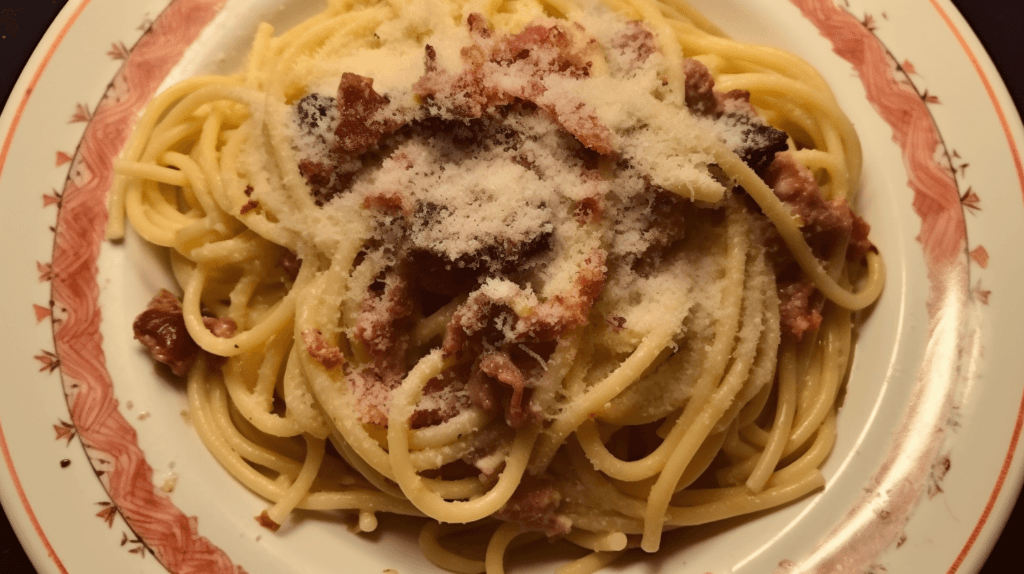
- Carbonara: eggs, guanciale, pecorino romano, and black pepper, no cream. Tonnarello | Paglia near Trastevere and the Jewish Ghetto area is a reliable, often-queued spot for a classic version.
- Cacio e pepe: just three ingredients, pecorino, pepper, and pasta water, but notoriously hard to get right. Osteria da Fortunata is a solid place to try it done well.
- Supplì: fried rice balls with a molten mozzarella center, Rome's answer to the arancino, sold at just about every pizza-by-the-slice counter.
- Carciofo alla giudia: a whole artichoke flattened and deep-fried, a Roman-Jewish specialty tied to the Jewish Ghetto neighborhood near Largo di Torre Argentina.
- Pizza al taglio: rectangular, thin-crust pizza sold by weight, good for a fast lunch between sights.
- Maritozzo: a soft bun split and stuffed with whipped cream, traditionally a breakfast pastry.
- Street food at Testaccio Market: the covered stalls here mix Roman classics with quicker bites, and it's a good contrast to the tourist-menu restaurants near the Colosseum.
- Gelato: look for pale, natural colors and metal covered tubs rather than bright mountains of product piled high, a decent sign it's made in-house.
FAQ
How many days do you need in Rome?
Three days is a sensible minimum for a first visit to Rome. That gives you time for the ancient sites, the Vatican, and the historic center without rushing. Add a day or two if you want to explore areas like Testaccio or take a day trip to Ostia Antica, or just move at a slower pace.
Is Rome safe for tourists?
Yes, Rome is generally safe for tourists, and the main risk is petty theft rather than violent crime. Pickpockets work crowded attractions and even the airport area, so keep bags, wallets, and documents close. Also be wary of unofficial guides and street money changers, and use an ATM instead.
Is Rome a walkable city?
Yes, Rome's historic center is very walkable, and wandering on foot is one of the best ways to see it. Many major sights sit within a reasonable walk of each other. For farther spots like the Vatican or EUR, use the metro or buses, and wear comfortable shoes for cobblestones and summer heat.
Do you need a car in Rome?
No, you do not need a car in Rome, and driving in the center is more hassle than help thanks to restricted traffic zones and limited parking. Public transport and walking cover most sights, and trains link Termini to most Italian cities. Rent a car only for countryside trips, and check local traffic-restriction rules before driving into the center.
Is Rome expensive to visit?
Rome can be as expensive or as affordable as you make it. Museums and sit-down restaurants near major sites add up fast, but street food, public transit, and neighborhood trattorias outside the main tourist strips keep costs reasonable. Booking major attractions like Galleria Borghese or the Colosseum in advance also avoids costly last-minute guided tour markups.
Is English widely spoken in Rome?
English is widely understood in hotels, restaurants, and around major tourist sites, though less so once you move into residential neighborhoods or deal with older shopkeepers. Learning a few basic Italian phrases goes a long way and is generally appreciated.
What's the best area to see Roman ruins?
The core cluster is the Colosseum, Roman Forum, and Palatine Hill, which sit together and can be covered in a half to full day. From there, the Baths of Caracalla and the Musei Capitolini on Capitoline Hill round out the ancient picture, and both are an easy add-on if you have extra time in the itinerary of your Rome travel guide planning.
Top Places to Visit in Rome
View all See & Do
Centro Storico
 See & Do
 See & Do
Trevi Fountain
 See & DoBudget · $
 See & Do
Roman Forum
 See & Do
Palatine Hill
 See & Do
Villa Borghese
 See & Do
Top Places to Eat in Rome
View all Eat & DrinkModerate · $$
Tonnarello | Paglia
 Eat & DrinkBudget · $
Santi Cosma e Damiano
 Eat & DrinkUltra Luxury · $$$$$
 Eat & DrinkModerate · $$
Osteria Der Belli Piras
 Eat & Drink
 Eat & DrinkModerate · $$
 Eat & DrinkModerate · $$
La Pietra Scheggiata – Osteria/Pizzeria
 Eat & Drink