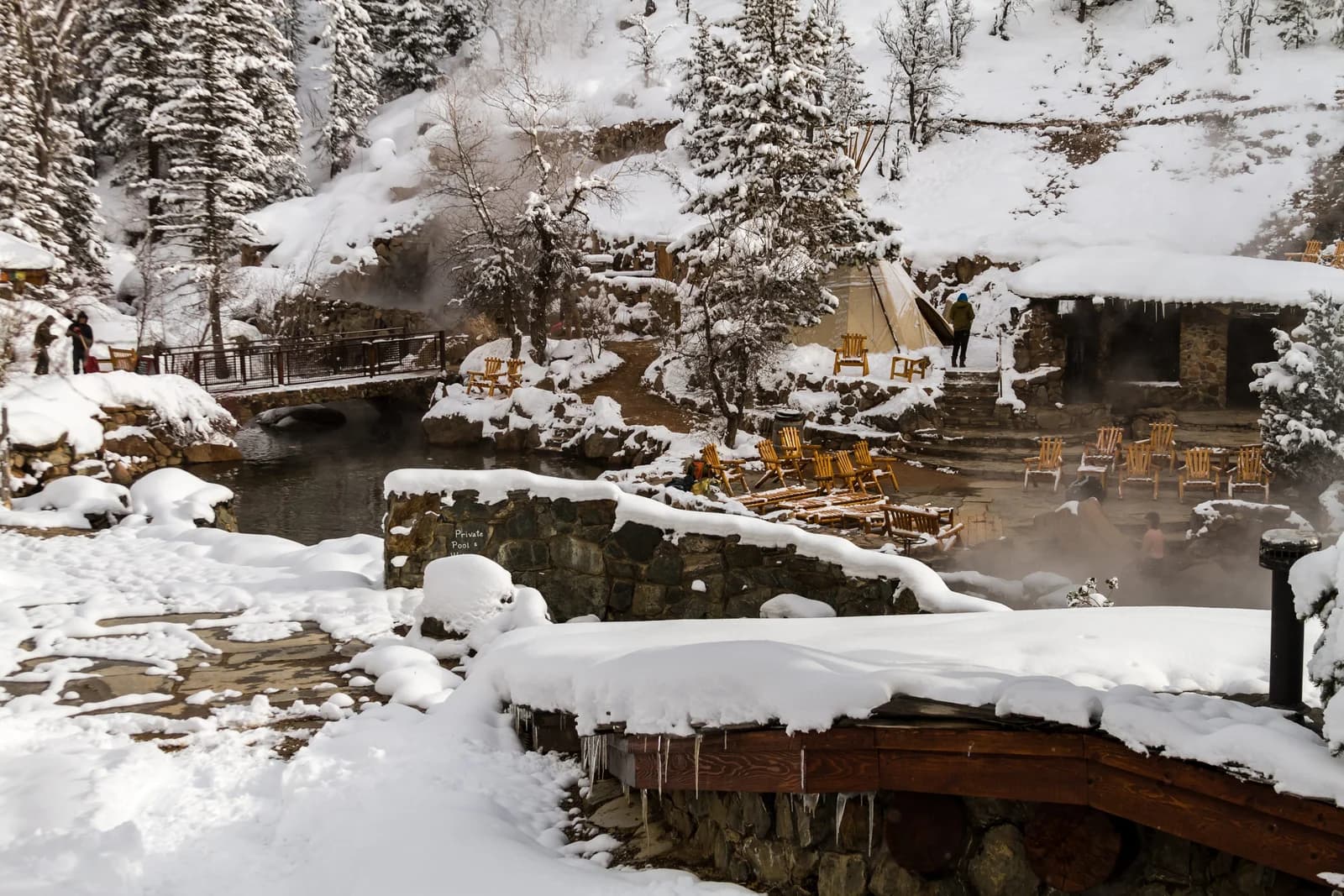
Sand Dunes Hot Springs
1991 Co Rd 63, Hooper, CO 81136, USAOverview
Sand Dunes Hot Springs sits on a flat stretch of the San Luis Valley in Hooper, Colorado, with the pale wall of Great Sand Dunes National Park visible on the horizon to the east. It's a geothermal pool complex, not a spa in the polished sense, built around a well that taps mineral-rich water from underground and channels it into a series of pools. The draw here is simple: soak in hot water while looking at the tallest dunes in North America, then drive half an hour and climb them.
This is not a resort town. Hooper is a scattering of ranches and a gas station along Highway 17, and the hot springs are one of the few reasons anyone stops. That isolation is part of the appeal. You're not soaking next to a parking garage or a strip mall. You're soaking on open valley floor, with Blanca Peak and the Sangre de Cristo range doing most of the scenery work.
Why Sand Dunes Hot Springs matters
The San Luis Valley has a long history of geothermal activity, and this stretch of Colorado has several hot springs operations drawing from the same underground aquifer system, including nearby Valley View and Joyful Journey. Sand Dunes Hot Springs distinguishes itself by leaning into the pairing with the national park next door.
The whole visit logic is built around contrast: dry heat and sand in the morning, mineral water and stillness in the afternoon. Few places in Colorado let you do both activities in the same day without a long drive in between, which is probably the single most useful thing to know before you plan a trip here.
Quick facts
- Location: 1991 Co Rd 63, Hooper, Colorado, in the San Luis Valley
- Water source: a geothermal well feeding multiple pools
- Pool areas: a family pool and a separate adults-only area called the Greenhouse, which has a swim-up bar
- On-site camping is available for overnight stays
- Great Sand Dunes National Park is roughly a 30-minute drive east
Getting there
The address, 1991 Co Rd 63, sits off the main grid of county roads that crisscross the valley floor outside Hooper. Most visitors arrive by car, coming either from Alamosa to the south, about 20 to 25 minutes away, or down from Salida and points north through the valley. There's no public transit to speak of in this part of Colorado, so a car is effectively required.
The drive itself is part of the experience. Expect wide open sage flats, distant mountain walls on both sides, and very little traffic once you're off Highway 17. Cell signal can get patchy on the county roads, so it helps to download directions before you leave Alamosa or wherever you're staying.
The layout and experience
The complex is organized around two main soaking areas. The family pool is the louder, more casual option, suited to kids and groups, with the kind of splashing-and-floating energy you'd expect from a public pool that happens to be naturally heated. The Greenhouse is the adults-only section, quieter, with a swim-up bar that lets you order a drink without getting out of the water.
The split matters if you're trying to plan a day around either relaxation or supervising children, since the two experiences are genuinely different in tone. If you're traveling with a toddler and hoping for a quiet soak, you'll want to plan around the family pool's busier stretches rather than assume the whole complex runs at one speed.
Because the water comes from a geothermal well rather than a chlorinated municipal supply, expect a slight mineral smell and a different feel to the water than a standard hotel pool. This is typical of hot springs across the valley and is part of what people come for, not a flaw to work around.
Camping on site means you can treat this as a base rather than a day stop. That's a meaningful option in a region where lodging is thin and the nearest towns, Alamosa and Mosca, are small. Falling asleep within sight of the dunes, after a soak, is a specific kind of experience this location makes easy in a way that a day-trip itinerary from Denver simply can't replicate.
History and background
The San Luis Valley sits atop an aquifer system warmed by geothermal activity tied to the broader volcanic and fault geology of the Rio Grande Rift, which runs down through central Colorado and New Mexico. Wells drilled into this aquifer bring up water at temperatures well above ambient, and several commercial hot springs operations in the valley, including this one, rely on exactly that kind of well rather than a visible natural spring.
It's worth knowing this going in. The "hot springs" label here, as at most Colorado hot springs resorts, refers to the geothermal source and developed pools rather than a wild, undeveloped spring you'd find on a hiking trail. If you're picturing a steaming pool tucked into a rock outcrop in the backcountry, recalibrate: this is a constructed pool complex fed by a drilled well, and that's the norm for the region rather than an exception.
Great Sand Dunes itself has a longer documented history. The dune field was protected as a national monument in 1932 and redesignated a national park and preserve in 2004, recognizing not just the dunes but the surrounding wetlands, grasslands, and alpine terrain of the Sangre de Cristo range above it. The dunes form where sand picked up across the valley floor gets trapped against the mountains by prevailing winds, a process that's been building the formation for thousands of years, and the tallest dunes in the field rise more than 700 feet above the valley floor.
None of that history belongs to the hot springs directly, but it's the reason most people are in this corner of Colorado in the first place, and it shapes how the hot springs gets used, mostly as a second stop rather than a sole destination.
Tickets and entry
Entry is general admission, paid at the gate or through advance booking depending on the day, with separate access considerations for the adults-only Greenhouse area. Camping is booked separately from day-use pool access.
Specific pricing changes often enough that it's not worth quoting here, but expect a straightforward day-use fee structure typical of regional hot springs, with the Greenhouse sometimes priced or restricted differently given its adults-only status and bar service. If a quiet soak is the priority, it's worth asking at the gate how the two areas are ticketed on the day you visit, since policies at small, independently run hot springs tend to shift with the season and with staffing.
Best time to visit
Hot springs in this region work on a different calendar than most Colorado attractions. Winter is a legitimate, often preferred, time to visit, since soaking in hot mineral water while snow sits on the ground and the dunes turn pale gold at sunset is a specific pleasure the shoulder seasons don't match.
Summer days in the San Luis Valley can get hot, which makes the dunes punishing by midday, since sand surface temperatures there can reach well over 100°F. That same heat makes an afternoon soak feel more like recovery than indulgence after a morning hike. If you're combining both stops, early morning at the dunes followed by early afternoon at the pools is the sequence most people land on, rather than trying to do the dunes after the water has already loosened you up.
Combining with nearby attractions
Great Sand Dunes National Park is the obvious pairing, roughly half an hour east, and the main reason this particular hot springs gets visited over others in the valley. Beyond the dunes themselves, the park includes Medano Creek, which runs seasonally at the base of the dune field, usually with the heaviest flow in late May and June, and a scattering of backcountry trails up into the Sangre de Cristo foothills for those with more time.
If you're touring the valley's geothermal cluster rather than treating this as a one-off stop, Valley View Hot Springs and Joyful Journey Hot Springs both draw from the same regional aquifer system and sit within a reasonably short drive, giving you a sense of how differently each operator has developed a similar underground resource.
Practical tips
- Bring a car. There's no transit option into Hooper, and cell coverage on the county roads can be unreliable.
- If you're pairing the dunes and the pools in one day, go to the dunes early, before the sand gets scorching, and save the soak for the afternoon.
- Pack water shoes or sandals for the dunes regardless of season, since sand surface temperatures climb fast once the sun is up.
- If you want quiet water, ask at the gate how the Greenhouse is ticketed that day rather than assuming it works the same as the family pool.
- Consider camping on site if you want to soak at both ends of the day, since sunrise and sunset light on the dunes from the pool deck is a reasonable payoff for staying over.
FAQ
Is this a natural hot spring you'd find on a trail?
No. The water comes from a drilled geothermal well feeding developed pools, which is standard for commercial hot springs across the San Luis Valley rather than something unique to this site.
How far is it from Great Sand Dunes National Park?
About a 30-minute drive, which is the main reason most visitors build a trip around this particular hot springs rather than one of the other valley options.
Can kids visit?
Yes, the family pool is set up for that, while the Greenhouse area is reserved for adults and includes a swim-up bar.
Can you stay overnight?
Yes, on-site camping is available and booked separately from day-use pool access.
Is there a nearby town for food or supplies?
Alamosa, about 20 to 25 minutes south, is the nearest town of any size, with Mosca closer but much smaller.
Reviews
Sign in and mark this place visited to leave a review.
No reviews yet.
Free Trip Planner
Plan your Hooper trip with our free planner
Build a day-by-day itinerary with AI suggestions, hand-picked places, and friends. Free forever — no credit card.