Sounion National Park
Lavreotiki, GreeceSounion National Park Overview
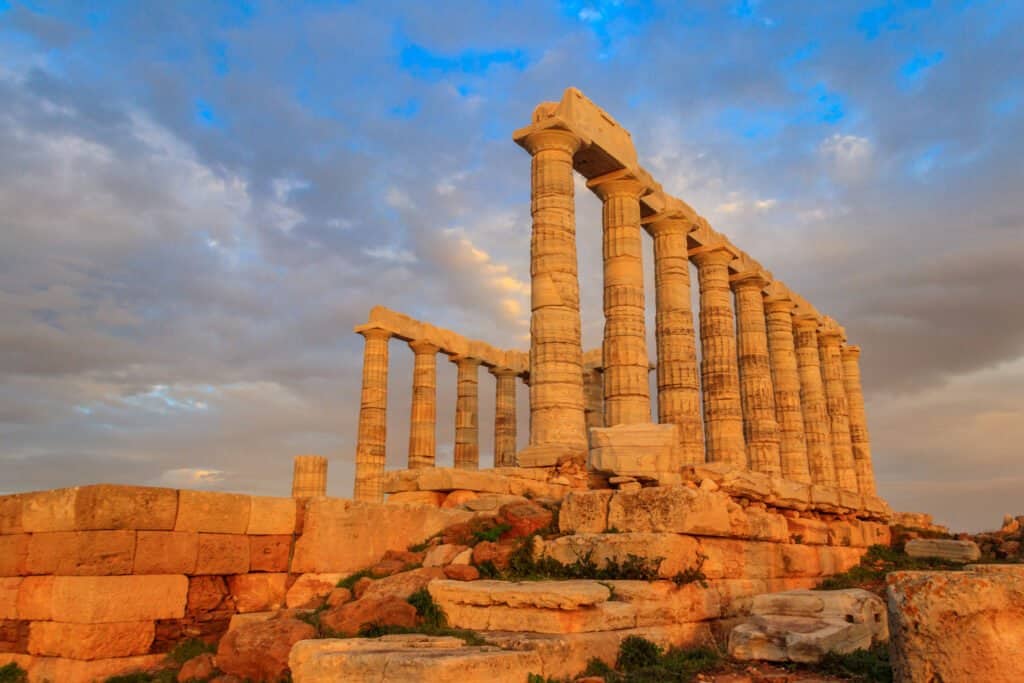
Sounion National Park stretches across the southern tip of Attica, about 70 kilometers south of Athens, where rocky cliffs plunge into the Aegean Sea. The park's defining feature is the Temple of Poseidon, a fifth-century BCE sanctuary perched on a headland that has guided sailors for over two millennia. Beyond the temple, the protected landscape encompasses coastal paths, pine forests, and dramatic seascapes that make this one of Greece's most visited natural sites.
The park protects both the archaeological monument and the surrounding ecosystem. You'll encounter Mediterranean scrub, wildflowers in spring, and nesting seabirds along the cliffs. The site draws day-trippers from Athens, families, photographers, and history enthusiasts. Most arrive for the temple and the sunset views, but spending a few hours walking the coastal trails reveals why this headland held such spiritual power in antiquity.
Why This Place Matters
The Temple of Poseidon is one of Greece's best-preserved classical structures. Built around 440 BCE, it occupies a position of extraordinary geographic and symbolic importance. Ancient sailors used the temple's marble columns as a navigation landmark. The site itself became sacred because of its dramatic setting: the meeting point of land and sea, where Poseidon's domain was most visible.
The park also protects a coastline that would otherwise face development pressure. The cliffs, coves, and offshore rock formations support Mediterranean habitat that is increasingly rare around Athens. For visitors, Sounion offers a rare combination: world-class archaeology, accessible coastal walking, and genuine natural beauty all within an hour of the city.
Quick Facts
- Located 70 kilometers south of central Athens
- Temple of Poseidon built around 440 BCE
- Park encompasses approximately 690 hectares of protected land
- Best visited between October and May to avoid peak summer heat
- Main temple complex is fully fenced and requires paid entry
- Coastal trails are free and accessible from multiple points
Getting There
From Athens, you can reach Sounion by car in about 90 minutes depending on traffic. Take the coastal route south through Glyfada and Vouliagmeni, following signs toward Sounion or Lavreotiki. The final stretch winds through small villages before arriving at the main car park near the temple entrance.
Public transport options exist but are less convenient. KTEL buses depart from Athens for Sounion, though schedules vary seasonally and journey times extend to two hours or more. If you're traveling without a car, a guided tour from Athens often proves simpler, bundling transport with entry and sometimes including nearby sites like the mines of Laurion.
Parking at the main temple site fills quickly during peak season and on weekends. Arrive before 10am if possible, or consider parking in the village below and walking up the final approach on foot. Several smaller pullouts exist along the coastal road if the main lot is full.
The Layout and Experience
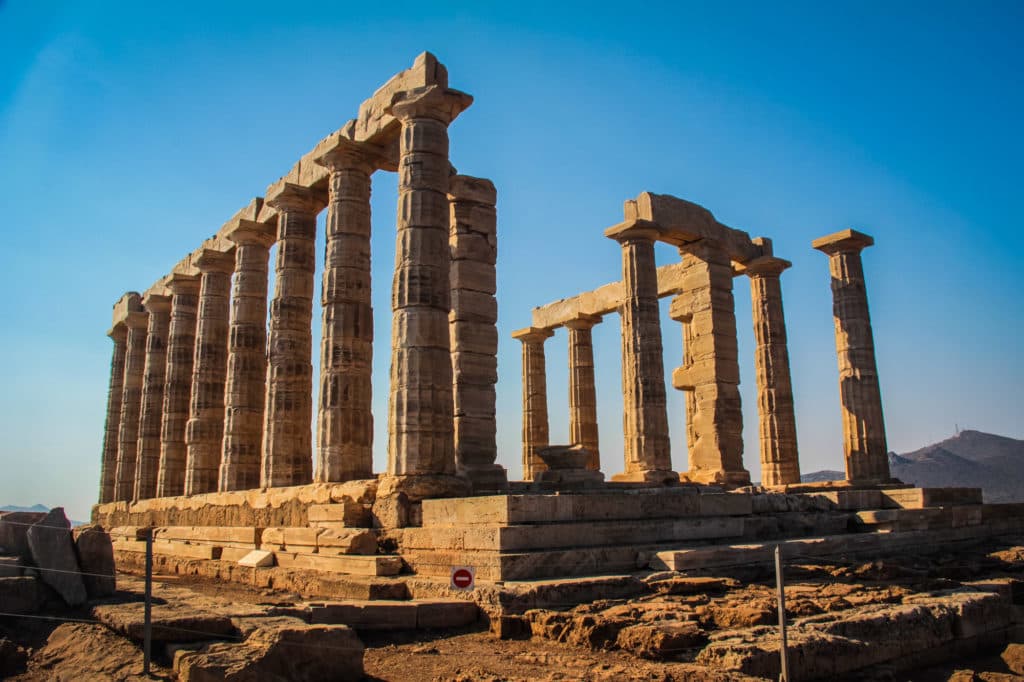
The park's main draw is the temple precinct itself, which sits atop a rocky peninsula accessible via a paved path and modern entrance building. You'll pass through ticketing and then walk upward onto the headland. The temple stands on the highest point, its 16 surviving columns visible from kilometers away.
Beyond the formal temple complex, trails branch off along the clifftops in both directions. To the east, paths descend toward smaller coves and rocky outcrops. To the west, you can walk along the ridge toward a lighthouse and beach area. These coastal routes are unmaintained but well-trodden, with occasional markers. The terrain is rocky and exposed, so sturdy shoes and sun protection matter.
The experience shifts dramatically by season and time of day. Midday in July brings crowds and intense heat. Early morning or late afternoon visits mean fewer people, better light, and more comfortable temperatures. The site is genuinely quiet on weekday mornings in November through February, when you might have the temple grounds mostly to yourself.
Main Highlights
The Temple of Poseidon is obviously the centerpiece. Sixteen of its original 34 columns remain standing, arranged in a peripteral design typical of classical Greek temples. The marble is local, quarried from nearby, and shows weathering patterns that tell centuries of exposure. You can walk around the temple's perimeter and examine the stone closely. Carved names and graffiti from the 18th and 19th centuries cover some surfaces, a reminder that the site has been a pilgrimage destination for travelers long before modern tourism.
The views from the temple's platform extend across the Aegean in three directions. On clear days, the islands of Kea and Makronissos are visible. The clifftop setting means you're standing roughly 60 meters above the sea, with nothing between you and the horizon. This is the real draw beyond archaeology: the sense of standing at the edge of the ancient world.
The eastern cliffs drop steeply to small beaches and rocky coves. If you descend the coastal paths, you'll reach areas where swimmers and snorkelers access the clearer water below the crowds. The western side includes a small lighthouse and a broader beach area, less dramatic but more accessible for swimming.
History and Background
Sounion was a sacred site long before the classical temple was built. Worship of Poseidon likely occurred here in the Mycenaean period, but the formal sanctuary developed during the fifth century BCE. The Temple of Poseidon was constructed around 440 BCE, roughly contemporary with the Parthenon in Athens. It was designed to be visible from the sea, a statement of Athenian power and religious conviction aimed at travelers and traders passing through Aegean waters.
The site continued in use through the Hellenistic and Roman periods. Byzantine and Frankish occupation left minimal marks, but Ottoman rule and later piracy affected the area. By the 18th century, Sounion was known to European travelers as a remarkable ruin. Lord Byron visited in 1810 and carved his name into one of the temple columns, an act that would horrify conservationists today but was typical of the era's grand tourism.
The temple was partially damaged by cannon fire during Greek independence conflicts in the 1820s. Restoration efforts began in the early 20th century and continue today. The surrounding landscape was formally protected as a national park to prevent development and preserve the archaeological context.
Tickets and Entry
Entry to the Temple of Poseidon complex requires a paid ticket. The fee structure includes a general admission tier and often discounts for students and EU seniors. Children below a certain age may enter free. The entrance building includes a small museum with artifacts from excavations and information panels explaining the site's history.
Tickets are valid for a single day. The site closes at sunset or dusk, with entry typically stopping an hour or so before closing time. If you plan to photograph the sunset, arrive well before the final entry time to ensure you're not rushed out.
The coastal trails outside the formal temple complex require no ticket. You can walk along the cliffs and access smaller beaches without paying, though the experience is less curated and less protected from the elements.
Best Time to Visit
The temple is open year-round, but the experience varies dramatically by season. May through September brings reliable sunshine and warm water for swimming, but also crowds and intense midday heat. October and April offer ideal conditions: warm enough for comfortable walking, cool enough that the climb doesn't exhaust you, and significantly fewer visitors than peak summer.
Winter months (November to February) are quiet and rain is possible, but clear days feel special. The Aegean light is crisp and the cliffs dramatic. Spring (March to May) brings wildflowers on the headland and migrating birds. Avoid August if you prefer solitude.
Sunset visits are popular, especially in spring and summer when the sun sets over the water. Plan to arrive at least two hours before sunset to explore the temple and trails without rushing. The light changes rapidly in the final 30 minutes before dusk, rewarding photographers who stay late.
Photography Tips
The temple's columns frame well when shot from the southeast, with the sea as background. Arrive early or late in the day to avoid harsh overhead shadows. The marble glows warm in golden hour light, roughly the final two hours before sunset.
For seascapes, position yourself at the cliff edge looking down toward the coves and offshore rocks. Wide-angle lenses capture the sweep of coastline. Longer focal lengths compress the distance between the temple and distant islands.
The interior of the temple, looking through columns toward the sea, creates strong compositional lines. Experiment with shooting through arches to frame the Aegean beyond. Cloudy days reduce glare and can produce moody skies, but clear days offer the classic postcard view.
Bring a polarizing filter if you have one. The sea reflects strongly and the glare off white marble is intense. A neutral density filter helps if you want to smooth the water in longer exposures.
Facilities and Preparation
The entrance building includes restrooms and a small cafe with drinks and snacks. Options are limited, so bring water and food if you plan to spend more than a couple of hours. The site offers no shade except near the temple's columns, and there are no benches for extended rest.
The terrain is rocky and uneven. Wear sturdy shoes, not sandals. The clifftop paths can be slippery after rain or in very windy conditions. There are no railings on many sections, so exercise caution if you have children or mobility concerns.
Sun exposure is intense. Bring sunscreen, a hat, and sunglasses. In summer, arrive very early or very late to minimize time in peak heat. The headland offers no escape from wind, which can be strong even on calm days elsewhere. A light jacket helps if you plan to stay into evening.
There is no medical facility at the site. The nearest hospital is in Lavreotiki, roughly 20 minutes away by car. Inform someone of your plans if you're hiking the less-marked coastal trails.
How It Compares to Similar Places
Sounion differs from other Greek temple sites because of its coastal setting and accessibility. Delphi offers more extensive ruins and a dramatic mountain location but requires longer travel from Athens and more time to explore properly. The Acropolis in Athens is more famous and complex but lacks Sounion's sense of isolation and natural beauty.
Among coastal sites, Sounion stands apart for the combination of archaeology and landscape. The Temple of Athena at Aegina is nearby but smaller and less dramatically positioned. Sounion works as a half-day or full-day trip from Athens, making it more practical for visitors with limited time than larger archaeological zones.
Combining with Nearby Attractions
The Laurion mines, worked since antiquity and crucial to Athens' wealth, lie about 30 kilometers north. Some visitors combine a visit to the mining museum or archaeological site at Laurion with a Sounion trip in a single day, though this requires early starts and careful timing.
The coastal towns of Glyfada and Vouliagmeni along the route north offer beaches and restaurants if you want to break the journey. These are more developed resort areas, quite different from Sounion's wild headland character.
The island of Kea is visible from Sounion and accessible by ferry from nearby ports. Some travelers combine a Sounion day trip with an overnight on Kea or other nearby Cycladic islands, though this requires separate planning.
Sample Visit Plan
A three-hour visit covers the temple complex and a brief coastal walk. Arrive early, pay entry, and spend 45 minutes exploring the temple and its immediate surroundings. Walk one of the coastal trails for 30 to 45 minutes, then return to the temple for a final look before heading back to Athens.
A full-day visit (six to eight hours) allows time to explore both the eastern and western cliff paths, visit the small beaches, and have lunch at the cafe or a nearby taverna in the village. You can photograph the temple in morning light, rest during midday heat in a shaded spot, and return for sunset shooting if the weather cooperates.
A sunset-focused visit means arriving two to three hours before sunset, exploring the temple and immediate area, then positioning yourself for photography as light changes. Bring a light jacket and plan to leave after dusk or have lights on your path back to the car.
Practical Tips
- Arrive before 10am on weekends and in summer to secure parking and avoid crowds
- Bring at least one liter of water per person, especially in warm months
- Wear sturdy shoes, sunscreen, and a hat; the site offers minimal shade
- If photographing sunset, position yourself by early evening to claim a good spot
- The coastal paths are unmaintained; stay on visible trails and avoid cliff edges in poor visibility
- The site is fully exposed to wind; expect it to be breezier than surrounding areas
- If you're renting a car, fuel up in Athens; petrol stations are limited south of the city
- Mobile phone reception is generally good, but offline maps are wise for navigating back roads
FAQ
How long does it take to visit Sounion? Most visitors spend two to three hours at the temple and immediate surroundings. If you want to walk the coastal trails or spend time photographing, plan four to six hours.
Can you swim at Sounion? Yes. The small beaches and coves below the cliffs are accessible via coastal trails. Water is coldest in winter and warmest in August and September. There are no lifeguards or facilities at these beaches.
Is Sounion crowded? Peak times are midday during summer and weekends year-round. Arrive before 10am or after 4pm to encounter fewer people. Winter weekdays are genuinely quiet.
Can you visit Sounion without a car? Yes, via KTEL buses from Athens or organized tours. Public transport is less frequent than driving, so plan accordingly.
What's the best time to photograph the temple? Golden hour (first two hours after sunrise or final two hours before sunset) produces the warmest light on the marble. Clear days offer classic views; stormy skies create drama. Early morning light is often clearest.
Reviews
Sign in and mark this place visited to leave a review.
No reviews yet.
Free Trip Planner
Plan your Greece trip with our free planner
Build a day-by-day itinerary with AI suggestions, hand-picked places, and friends. Free forever — no credit card.