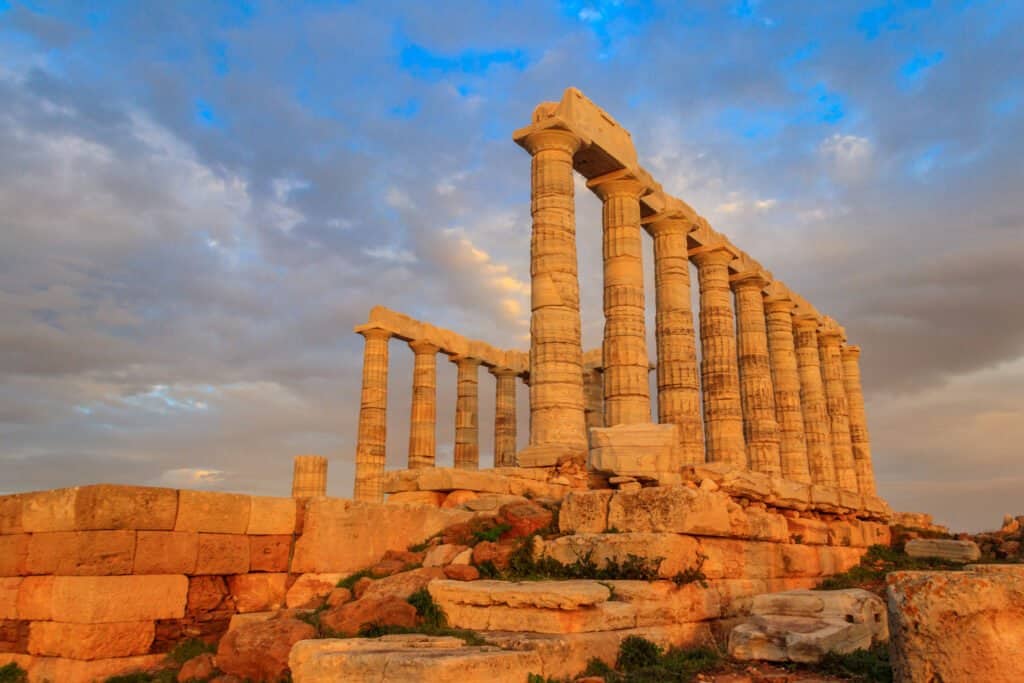
Take A Day Trip To Cape Sounion
195 00, Lavrio, Attica, Greece Posted by Brandon B.Admin
Cape Sounion: Athens' Most Dramatic Coastal Escape
Cape Sounion sits at the southern tip of the Attica peninsula, roughly 70 kilometers from central Athens, where the land drops sharply into the Aegean Sea. It is one of the most visited day trips from the Greek capital, and for good reason. The clifftop sanctuary of Poseidon, perched some 60 meters above the water, has been drawing travelers, poets, and sailors since antiquity. If you only have one afternoon to leave Athens behind, this is where most seasoned visitors would point you.
The drive alone is worth planning around. The coastal road hugs the shoreline past rocky coves, small fishing harbors, and the occasional beach taverna. By the time the temple columns come into view above the headland, you already feel far removed from the noise of the city.
Why Cape Sounion Matters
This is not simply a scenic overlook with a few old stones. The Temple of Poseidon at Sounion was built around 444 BCE, roughly the same period as the Parthenon, and it served as a landmark for sailors navigating into and out of the Saronic Gulf. Ancient Athenians made offerings here before setting out to sea. The sanctuary was, in a very real sense, both a religious site and a navigational one.
Sixteen of the original columns still stand. Their white marble has weathered to a warm, almost honeyed tone in late afternoon light, and the contrast against the dark blue water below is the kind of image that stays with you. Lord Byron reportedly carved his name into one of the columns during his visit in the early 19th century, a piece of graffiti that is now part of the site's layered history rather than a mark against it.
Quick Facts
- Location: Southern tip of the Attica peninsula, about 70 km from central Athens
- Main site: Temple of Poseidon, built approximately 444 BCE
- Standing columns: 16 of the original Doric columns remain
- Height of the promontory: approximately 60 meters above sea level
- Managed by: Greek Ministry of Culture
- Entry: Ticketed site with a general admission fee; reduced rates for EU students and certain groups
- Facilities: Café and gift shop on site, parking available
Getting There
Most visitors take one of two routes. The coastal road via Vouliagmeni and Varkiza is the more scenic option, winding south along the Attic Riviera with sea views for much of the journey. The inland route through Markopoulo and Lavrio is faster but gives up the landscape. If you are driving, allow around 90 minutes from central Athens, more during summer weekends when traffic backs up along the coast.
KTEL buses run regularly from the Pedion tou Areos terminal in Athens directly to Cape Sounion. The journey takes roughly two hours depending on stops, and the coastal route bus passes through several beach towns if you want to break the trip. Bus travel is budget-friendly and the schedule is reasonably reliable outside of peak summer.
Organized day tours depart daily from Athens, typically including hotel pickup and a guide. These tend to be mid-range in cost and are a practical choice if you prefer not to navigate transport independently. Some tours combine the cape with a stop at the Lavrio Archaeological Museum or a swim at one of the nearby beaches.
The Layout and Experience
You approach the archaeological site from a small car park and ticket booth near the headland. The path leads uphill through low scrub before opening onto the promontory. The Temple of Poseidon occupies the highest point, and the first full view of it, framed against open sea on three sides, tends to stop people mid-step.
The site also contains the remains of a smaller temple, believed to have been dedicated to Athena, located slightly northeast of the main sanctuary. It receives far less attention than the Poseidon temple but is worth a few minutes. There are stone walls, propylon remnants, and terracing that hint at how substantial the whole complex once was.
The perimeter path around the headland gives you views in every direction. On a clear day you can see the islands of Kea and Kithnos to the southwest. The path is uneven in places, and the edges are unfenced in sections, so watch your footing, especially if you are visiting with children.
Best Time to Visit
Sunset is the reason most people time their visit the way they do. The temple faces west, and in the hour before the sun drops, the columns glow in a way that photographs simply cannot fully capture. If you are driving from Athens, leaving around 3 or 4 pm gives you time to explore the site properly before the light turns golden. In summer this means arriving well before the crowds that gather specifically for sunset.
Spring and early autumn are the most comfortable seasons for the visit. July and August bring intense heat on the exposed promontory, and the site has almost no shade. Midday visits in summer are genuinely punishing. Bring water regardless of when you go.
Winter visits are quieter and the site takes on a different character entirely. The sea turns a deeper grey-green, the light is softer, and you may have whole sections of the path to yourself. The site does close earlier in winter months, so check the seasonal hours before you go.
Photography Tips
The western-facing colonnade catches the best light in the final 90 minutes before sunset. Position yourself slightly below the temple level to shoot upward against the sky and sea rather than shooting across flat ground. The clifftop edges to the south and southwest give you a wider angle that includes both the columns and the water far below.
Early morning visits, while less popular, offer soft light and no crowds. The eastern side of the promontory catches the first light, which is worth knowing if you plan to arrive at opening time.
Photography inside the fenced temple area follows standard Greek archaeological site rules. You are free to photograph for personal use. Tripods and commercial shoots typically require prior permission from the Ministry of Culture.
Combining With Nearby Attractions
The town of Lavrio sits about 10 kilometers north of the cape and has a small but genuinely interesting archaeological museum focused on the ancient silver mines that funded much of Athens' classical-era naval power. It is often skipped by day-trippers and is usually uncrowded.
Several beaches line the coastal road between Athens and Sounion. Legrena, just north of the cape, is quieter than the beaches closer to Athens and popular with locals. If you are driving, stopping for a swim on the way back in the late afternoon fits naturally into the schedule.
The town of Vouliagmeni, about halfway along the coastal route, has a thermal lake and several upscale beach clubs if you want to extend the day into something more resort-like before or after the cape.
Practical Tips
- Wear sturdy shoes. The path around the promontory involves uneven stone and loose gravel.
- Bring more water than you think you need, especially in summer. The on-site café can run low during peak hours.
- The site is exposed to wind year-round. A light layer is useful even on warm days.
- Arrive at least an hour before sunset if you are timing your visit for the light. The final 30 minutes before closing can be crowded.
- Check the official Greek Ministry of Culture website for current opening hours and ticket prices before you travel, as these vary by season.
- If taking the KTEL bus, confirm the return schedule before you go. Late buses in summer fill quickly.
- There is limited shade at the site. A hat matters more here than at most Athens attractions.
FAQ
How long should I budget for the visit itself?
Most people spend between 90 minutes and two hours at the site. Add travel time from Athens on top of that. A half-day excursion is realistic; a full day gives you room for a beach stop or Lavrio.
Is Cape Sounion suitable for children?
Generally yes, though the unfenced cliff edges require attention. The walk to the temple is manageable for most ages. The heat in summer is the bigger practical concern for young children.
Can I swim near the cape?
There is a small beach below the promontory accessible from the road. It tends to be rocky rather than sandy, but the water is clear. Legrena beach nearby is a better option for a proper swim.
Do I need to book tickets in advance?
Advance booking is not always required, but during peak summer weekends the site can get busy. Checking the official site for any timed-entry requirements before your visit is worth the few minutes it takes.
Is the site accessible for visitors with mobility limitations?
The path to the main temple involves an uphill walk on uneven ground. The site is not fully wheelchair accessible, and the cliff path is difficult for anyone with limited mobility. The ticket area and lower sections of the approach are more manageable.
Reviews
Sign in and mark this place visited to leave a review.
No reviews yet.
Free Trip Planner
Plan your Athens trip with our free planner
Build a day-by-day itinerary with AI suggestions, hand-picked places, and friends. Free forever — no credit card.