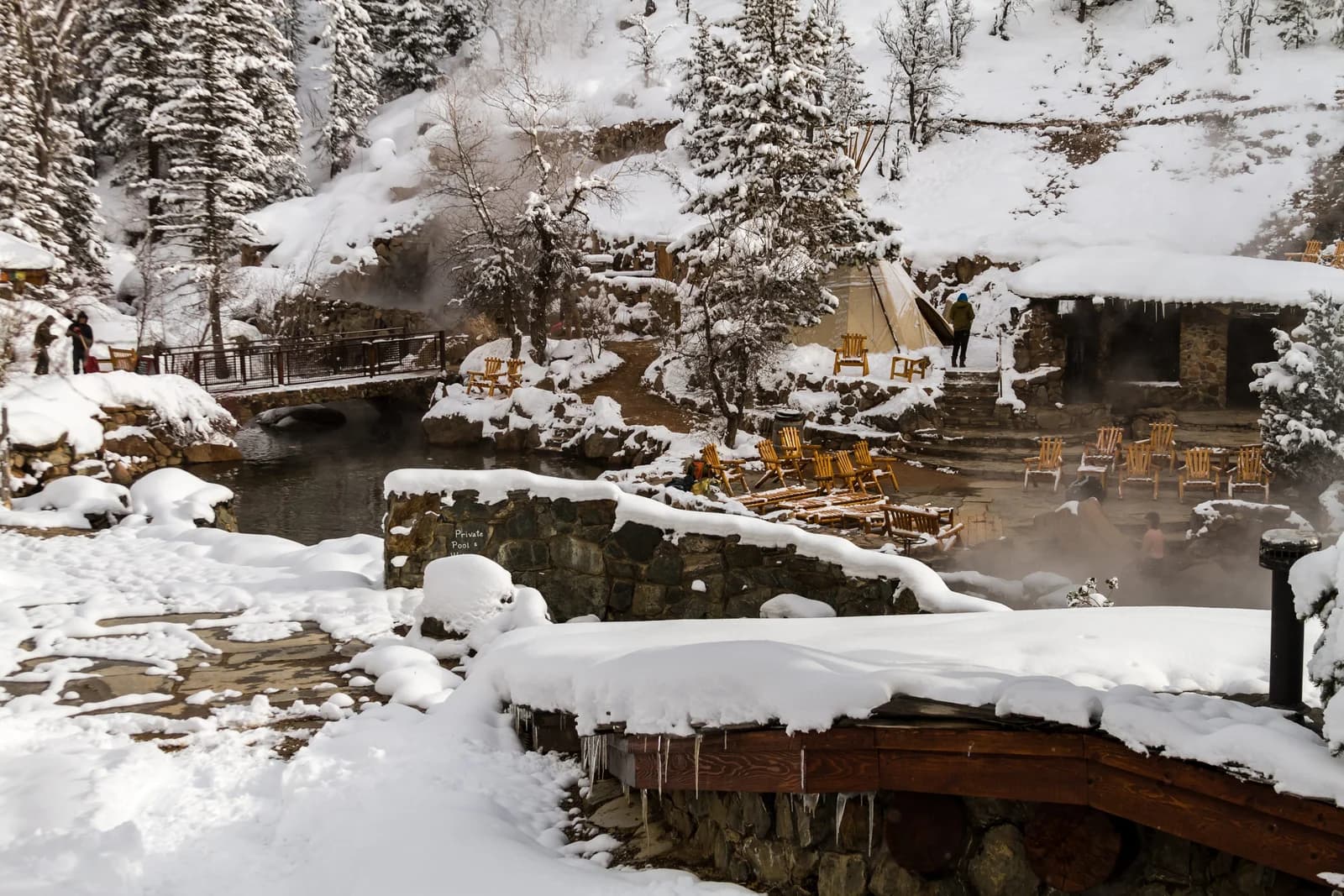
South Canyon Hot Springs
Glenwood Springs, CO 81601, USASouth Canyon Hot Springs sits on a hillside west of Glenwood Springs, Colorado, reached by a dirt road that climbs away from the Colorado River valley. There is no sign marking the entrance, no ticket booth, and no staff. What you find when you get there are a handful of small pools, shaped and maintained over the years by the people who use them, fed by mineral water that seeps out of the hillside at various temperatures. It is about as far from the manicured resort pools downtown as a hot spring in this valley gets.
Glenwood Springs has built its tourism identity around hot water for more than a century, with the large developed pool downtown and the newer Iron Mountain Hot Springs drawing most of the visitor traffic. South Canyon Hot Springs is the other kind of spring entirely. It belongs to a looser, older tradition of soaking in whatever natural pool you can find and leaving it the way you found it, more or less.
Why South Canyon Hot Springs matters
Most visitors to Glenwood Springs never hear about South Canyon Hot Springs, and that is partly the point. It functions as a local spot, passed along by word of mouth rather than marketed to tourists. For people who live in the area, it offers something the commercial pools can't: a free, unsupervised soak with no crowds and no schedule.
For travelers willing to do a little homework and accept some uncertainty, it offers a different kind of experience than paying admission downtown, one closer to how hot springs were used in this region before anyone built a fence around them. There's no front desk to ask questions at, which means the whole visit rests on what you already know or figure out on the way up.
Quick facts
- Location: hillside west of downtown Glenwood Springs, Colorado, accessed via a rough dirt road
- Cost: free, no admission or booking system
- Facilities: none. No changing rooms, no restrooms, no trash service, no lifeguard or attendant
- Access: unpaved road, not recommended for low-clearance vehicles, especially after rain or snowmelt
- Pools: undeveloped, informally shaped and maintained by visitors, sizes and water levels vary
- Reputation: known mainly to locals rather than promoted as a visitor attraction
Getting there
South Canyon lies west of Glenwood Springs along the Colorado River corridor, off the frontage roads that parallel Interstate 70. The approach is a dirt track that climbs from the valley floor up to the hillside where the pools sit. It is short by trail standards, more of a scramble than a hike, but the surface is uneven and can be slick when wet.
The road itself is the main obstacle. After rain or during spring runoff it turns to mud and ruts that a sedan or low-clearance crossover won't clear. A truck, SUV, or anything with real ground clearance is the safer bet. If you're renting a car in Glenwood Springs specifically to see this spot, factor that into what you book. There's no official parking lot, just a pullout area where people leave their vehicles before walking the final stretch up to the pools.
The layout and experience
Expect a few separate pools rather than one large soaking area, each with a different size and temperature depending on how close it sits to the source and how recently someone has rebuilt its rock-and-sediment walls. Because nobody manages the site formally, conditions change. A pool that was deep and warm one month might be shallow and lukewarm the next, reshaped by runoff, by other bathers, or simply by time.
Don't go in expecting consistency. Go in expecting whatever is there that day. There is no cell service guarantee, no lighting, and nobody checking on you. Bring your own water, your own towel, and a plan for getting back down the hill before dark. Trash left behind is trash someone else has to deal with, usually nobody, which is part of why the informal upkeep at South Canyon can be inconsistent from one visit to the next.
History and background
The Glenwood Springs area sits above a geothermal system that has produced mineral hot springs for a very long time, long before the town's famous downtown pool was developed in the late 1800s. The Ute people used the hot springs in this valley prior to European settlement, and the valley's water has drawn bathers, health seekers, and developers ever since.
South Canyon never saw that kind of development. No resort company ever built lodging or a bathhouse up on that hillside, so the pools stayed in their natural, unregulated state while the springs downtown grew into a commercial attraction with lap lanes and a soaking pool stretching more than two city blocks.
The broader South Canyon area west of town carries another layer of history that has nothing to do with the water. Storm King Mountain, nearby, was the site of a wildfire in July 1994 that killed fourteen firefighters, one of the deadliest wildland fire incidents in modern American history. A memorial trail in the area honors them, and it winds through the terrain where the fire moved so fast it overtook the crew. If you're already spending an afternoon in this part of the valley, it's worth knowing that history is layered here in a way that has nothing to do with soaking. The hot springs and the fire site are geographically close but tell very different stories about the same stretch of hillside.
Best time to visit
Spring runoff is the hardest stretch to plan around. Snowmelt from the surrounding peaks can swell nearby drainages and turn the access road into something closer to a creek bed, and pool temperatures can shift as more cold water works its way into the system. Late summer and early fall tend to bring the most predictable conditions, with a drier road and steadier pool temperatures.
Winter is possible but adds real risk. Ice on the dirt road and on the rocks around the pools makes the short climb up the hillside more hazardous than it looks, and there's nobody around to help if you slip. Early morning or just before dusk tends to be quieter if you're hoping to avoid other soakers, though quiet is relative at a spot that depends entirely on informal traffic to stay usable.
Facilities and preparation
There is nothing here in the way of infrastructure. No restrooms, no changing area, no trash cans, no attendant checking water quality or pool depth. Treat this like backcountry travel rather than a pool visit. Pack out everything you bring in, including anything you find left behind by someone else.
A headlamp or flashlight is worth carrying even if you plan to leave before sunset, since the walk down an unlit dirt track in fading light is harder than it sounds. Water shoes help on the uneven, often slick rock around the pools. Cell coverage in this stretch of the canyon is unreliable, so tell someone where you're headed before you go.
How it compares to similar places
Downtown, the Glenwood Hot Springs Pool offers a large developed soaking pool and a separate therapy pool, with lifeguards, locker rooms, and a schedule you can look up in advance. Iron Mountain Hot Springs, also near downtown, takes a different approach with a series of smaller, individually designed soaking pools along the river, still staffed and ticketed.
South Canyon shares almost nothing with either of those beyond the mineral water itself. There's no staff, no maintenance schedule, no guaranteed pool depth or temperature, and no cost. It's closer in spirit to the undeveloped hot springs found in backcountry pockets of Colorado and the broader Rocky Mountain West, places kept alive mostly by the people who use them and say little about them publicly.
Combining with nearby attractions
Because South Canyon sits just west of downtown Glenwood Springs, it's easy to pair with a day that also includes the town's more developed attractions, Glenwood Caverns Adventure Park on the bluff above downtown, or a walk along the Colorado River. If the history of the 1994 Storm King Mountain fire interests you, the memorial trail nearby makes sense as a quieter stop on the same outing, though it's a separate hike from the springs themselves and worth treating as its own stop rather than an add-on.
Practical tips
- Drive a vehicle with real ground clearance, especially outside of the dry summer months
- Pack out all trash, including anything left by previous visitors
- Bring your own water, towel, and footwear suited to wet rock
- Don't count on cell service once you're off the frontage road
- Plan your visit around daylight, since there's no lighting on the road or at the pools
- Check pool conditions are reasonable before committing, since depth and temperature vary visit to visit
FAQ
Is South Canyon Hot Springs free?
Yes. There's no admission fee, no booking system, and no staff collecting payment.
Do I need a 4x4 to get there?
A 4x4 isn't strictly required, but a vehicle with good ground clearance is strongly recommended, particularly after rain or during spring snowmelt when the dirt road gets rutted and muddy.
Are there changing rooms or restrooms on site?
No. There are no facilities of any kind at South Canyon Hot Springs. Arrive prepared to use your car or the outdoors for changing, and plan to use a restroom before you leave town.
How does it compare to the hot springs pool downtown?
It's a completely different experience. The downtown pool is a large, staffed, ticketed facility. South Canyon Hot Springs is a set of small, undeveloped pools with no staff, no fee, and no guaranteed conditions.
Is it safe to visit alone?
There's no supervision at South Canyon Hot Springs, so anyone soaking there is on their own if something goes wrong. Telling someone your plans and avoiding the site after dark or in icy conditions reduces the risk considerably.
Reviews
Sign in and mark this place visited to leave a review.
No reviews yet.
Free Trip Planner
Plan your Glenwood Springs trip with our free planner
Build a day-by-day itinerary with AI suggestions, hand-picked places, and friends. Free forever — no credit card.