St. George Dinosaur Discovery Site at Johnson Farm
Open now
St. George Dinosaur Discovery Site at Johnson Farm
St. George Dinosaur Discovery Site at Johnson Farm, 2180 E Riverside Dr, St. George, UT 84790, USA Posted by MbmendezTraveler
Overview
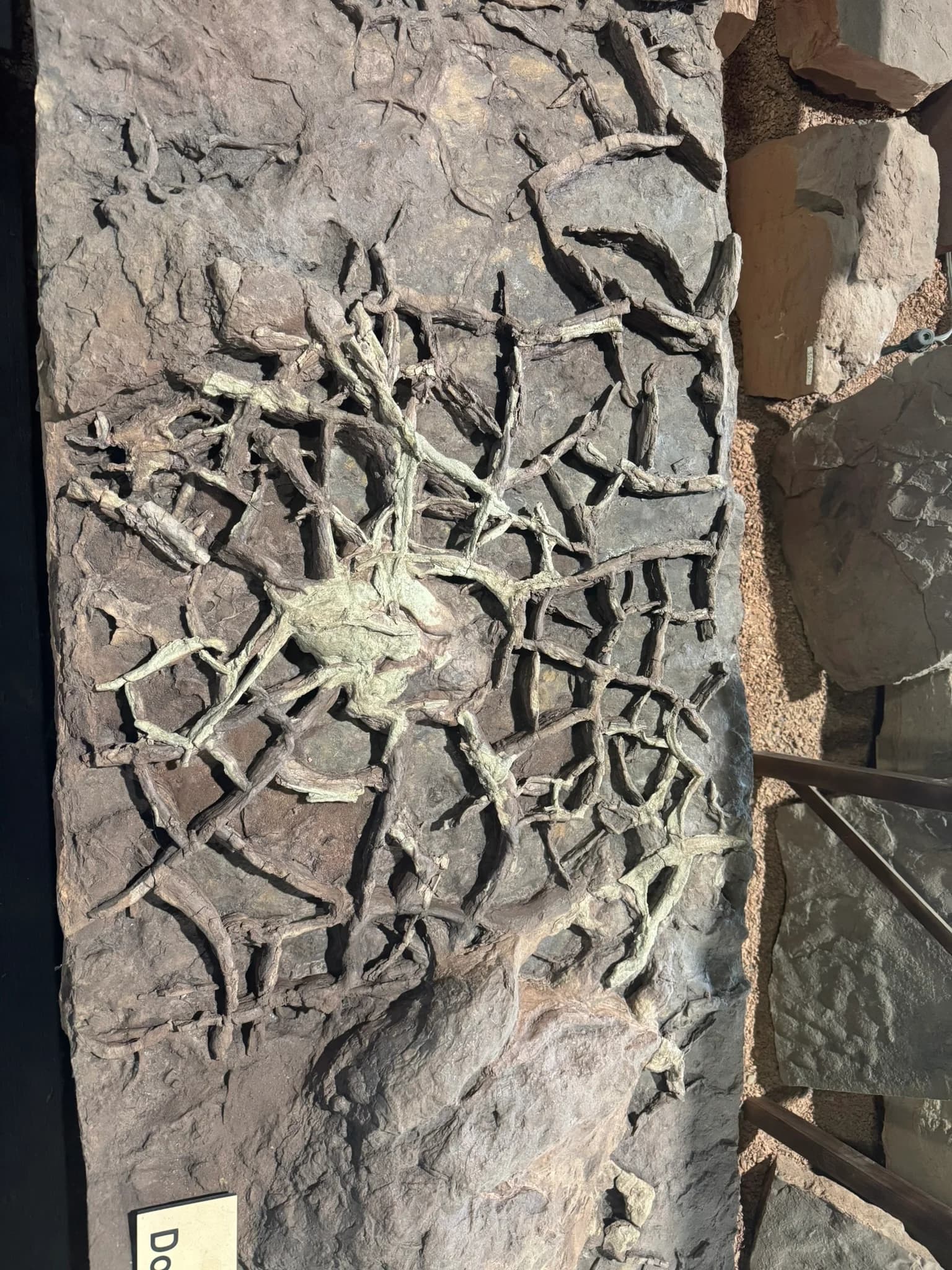
The St. George Dinosaur Discovery Site at Johnson Farm sits on the eastern edge of St. George, Utah, where a working farm doubles as an active paleontological dig site. What started as a chance discovery of dinosaur tracks in 2000 has grown into a museum and research facility where you can watch paleontologists unearth fossils from rocks that are roughly 200 million years old. This is not a reconstructed or simulated experience. You're looking at real dinosaur footprints and bones exposed in the red sandstone, many of them still being excavated by the team on-site.
The site occupies about 100 acres on Johnson Farm, a working property that has been farmed for generations. The blend of active agriculture and paleontological work gives the location an unusual character. You can see dinosaur tracks preserved in stone walls, walk through the museum, and if timing allows, observe researchers at work in the field.
Why this place matters
Early Jurassic Utah was a floodplain environment, not a desert. The tracks and bones here document a time when dinosaurs roamed what is now the American Southwest. The site has yielded tracks from theropods, sauropods, ornithischians, and early crocodilians. Some prints are so clear you can count the individual toe pads.
For paleontologists, the site's value lies partly in its context. The tracks weren't buried and fossilized in isolation. They're embedded in a stratum alongside ripple marks, mud cracks, and other evidence of the ancient environment. This allows researchers to reconstruct not just what dinosaurs looked like, but how they moved and what world they inhabited.
Quick facts
- Located at 2180 E Riverside Drive, St. George
- Dinosaur tracks date to approximately 200 million years ago
- Site discovered in 2000 during farm work
- Museum and outdoor exhibits are open year-round
- Inexpensive admission, with discounts for groups and children
- About 100 acres of land with both museum and active dig areas
Getting there
St. George sits in the southwestern corner of Utah, roughly 120 miles northeast of Las Vegas and about 300 miles south of Salt Lake City. If you're driving from Las Vegas, take Interstate 15 north toward Utah and follow signs to St. George. Once in town, head east on Riverside Drive. The site is clearly marked with signage, and parking is available on-site.
Public transit is limited in this region, so a car is the practical option. The nearest commercial airport is St. George Regional Airport, about 10 miles west of the site.
The layout and experience
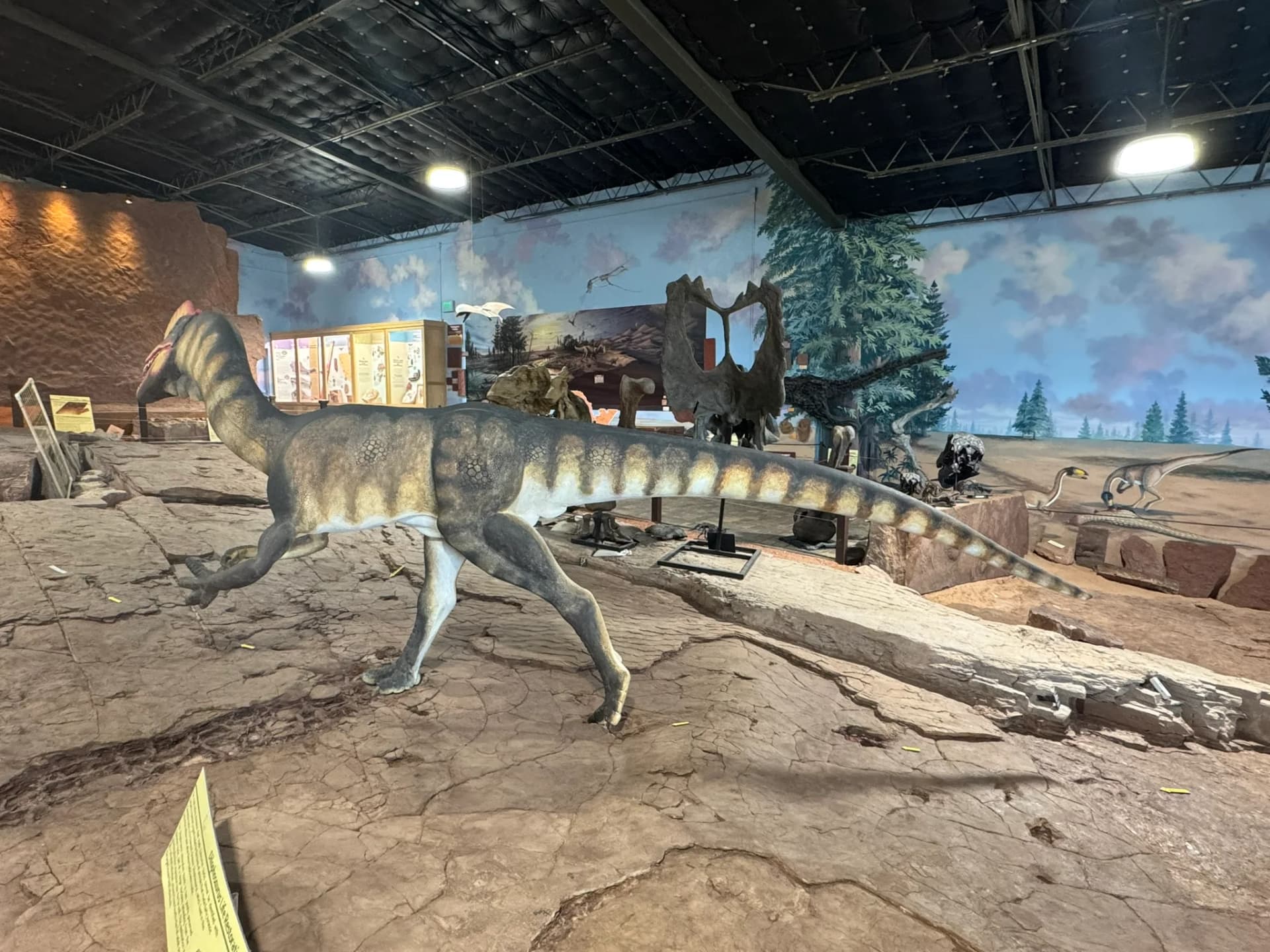
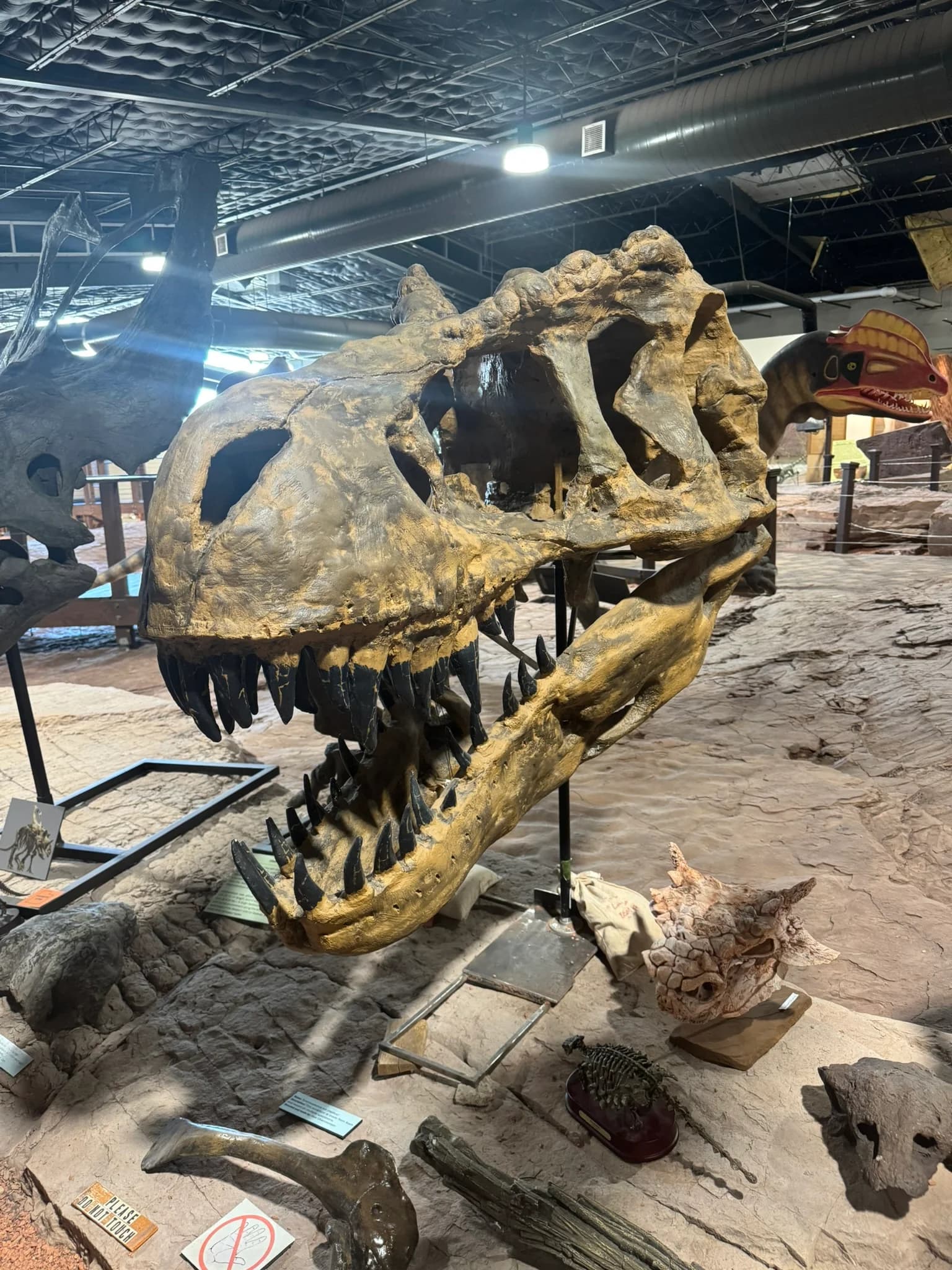
When you arrive, you'll enter a museum building that houses exhibits explaining the geology, paleontology, and history of the site. The exhibits include fossil casts, bone samples, and interpretive panels. A short film provides context about the Early Jurassic period and the discovery process.
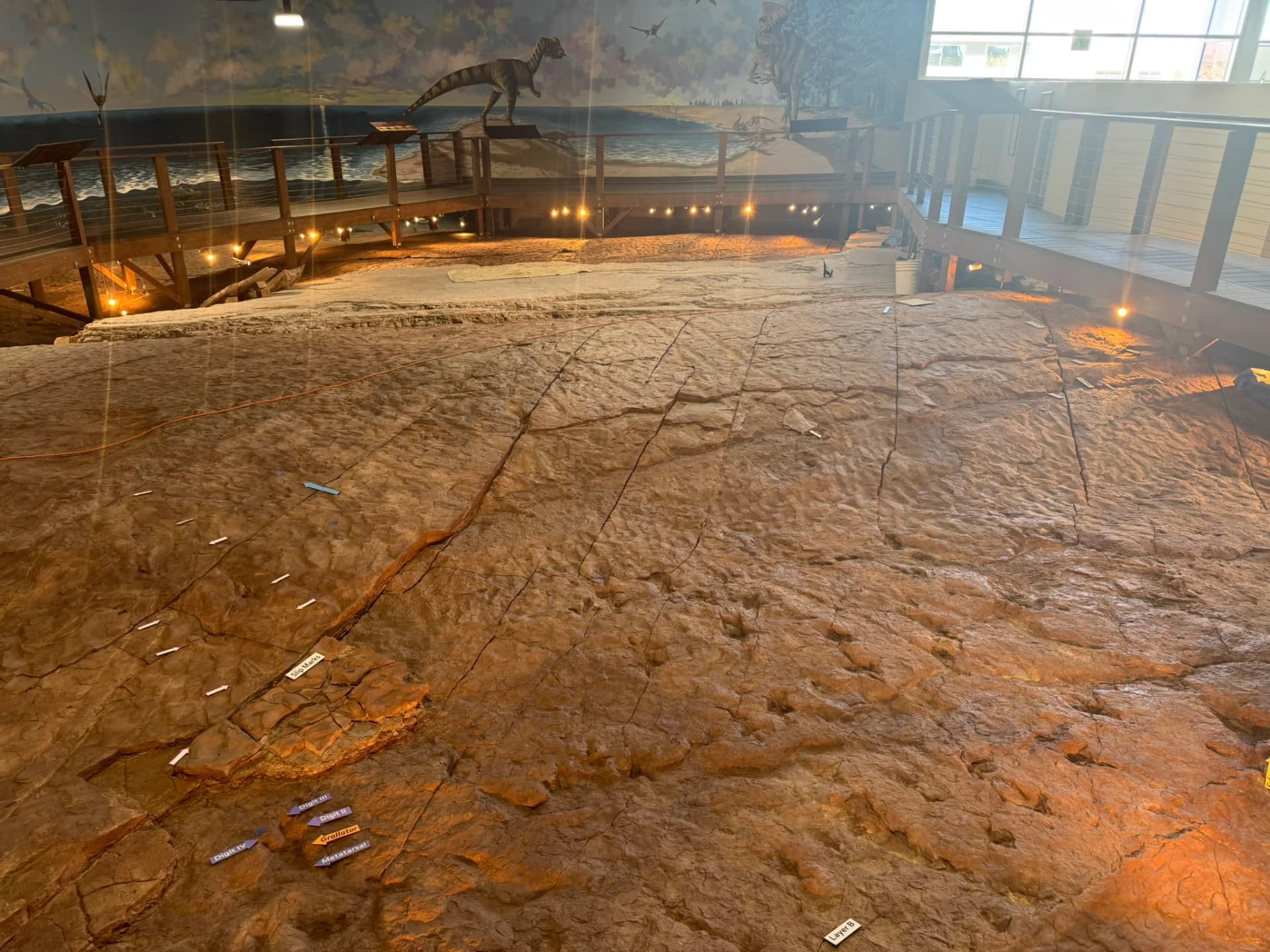
From the museum, you can access the outdoor dig area. Here, exposed sections of the red sandstone reveal actual dinosaur tracks. Some are protected under shelters. Others are left open to the elements, showing the texture and detail of the original impressions. The trails are generally easy to walk, though the terrain is uneven in places. Wear sturdy shoes.
Depending on the season and research schedule, you may see paleontologists working in the field. They're often happy to explain what they're doing if you ask respectfully. The pace here is slow and deliberate, not the high-energy tourist experience of many museums.
Main highlights
The most striking feature is the sheer density of tracks. In some areas, overlapping footprints show multiple dinosaurs walking across the same mudflat, one after another or even simultaneously. The clarity of individual toe impressions is remarkable. You're seeing the actual depression left by a dinosaur's foot in mud that turned to stone.
The museum's fossil preparation lab is viewable from an observation area. Watching technicians carefully remove matrix rock from delicate bones offers insight into the meticulous work paleontology demands.
The site also displays information about the paleontological methods used here, from mapping and photography to careful excavation. This transparency about how knowledge is gathered appeals to visitors who want to understand the science, not just see the results.
History and background
In 2000, during routine farm work on the Johnson property, workers uncovered dinosaur tracks in the sandstone. The site was subsequently studied by paleontologists, and it became clear that the location held significant scientific value. The museum and visitor facilities were developed over the following years to allow public access while protecting the resource.
The rocks here are part of the Moenave Formation, a sequence of Early Jurassic sediments laid down between 190 and 210 million years ago. This was a time when dinosaurs were still relatively early in their evolution, before the giant sauropods and massive theropods of the Late Jurassic became dominant. The tracks and bones here document that earlier, less well-known chapter.
Tickets and entry
Admission is inexpensive, making this an accessible stop for families. The site typically offers general admission tickets that grant access to both the museum and the outdoor fossil areas. Children often receive discounted rates, and group discounts are available if you're visiting with an organized tour or large party. Hours vary seasonally, so check ahead if you're planning a winter visit.
Best time to visit
St. George has a mild climate compared to much of Utah, but summer temperatures can exceed 100 degrees Fahrenheit. Spring and fall offer more comfortable conditions for walking the outdoor trails. The site is open year-round, though weather can occasionally affect access to certain areas.
If you want to observe active paleontological work, summer months tend to see the most field activity. However, this is not guaranteed, and you should check with the site ahead of time if seeing researchers at work is important to you.
Photography tips
The red sandstone of the exposed rock faces creates strong color contrast, especially in morning or late afternoon light. Bring a polarizing filter if you have one. The glare from light-colored rock can fool your camera's meter, so consider slightly underexposing to preserve detail in the highlights.
Close-up shots of individual tracks reveal texture and detail that wide-angle views miss. A macro lens or close-focus capability is useful. The overlapping tracks in some areas make compelling compositions that show the density of traffic across the ancient mudflat.
The museum exhibits benefit from flash-free photography. Check current policies on photography in the museum building and ask staff before photographing any active dig work.
Facilities and preparation
The museum building has restrooms, a small gift shop, and informational materials. Water fountains are available, though you should bring additional water if you plan to spend several hours on the outdoor trails. There is no food service on-site, so pack snacks or plan to eat in St. George before or after your visit.
The outdoor areas are mostly exposed to the sun. Bring a hat, sunscreen, and sunglasses. Comfortable walking shoes are essential. The ground can be rocky and uneven, especially near the active dig sites. Children should be supervised closely around excavation areas.
Combining with nearby attractions
St. George offers several other natural and cultural attractions within a short drive. Zion National Park is about 40 miles east, roughly an hour's drive. Red Rock State Park and other scenic areas are nearby. The city itself has a historic downtown district with shops and restaurants along Main Street.
If you're interested in geology and natural history, you could easily combine this site with a visit to Red Rock State Park or a scenic drive through the surrounding sandstone country. The area is rich in geological interest.
Sample visit plan
Start your visit in the museum building, where you can acclimate to the site's story and get oriented. Plan to spend 30 to 45 minutes here. Then head outdoors to walk the fossil areas. Depending on your pace and interest, allow one to two hours for the trails. If you're visiting in summer and the dig team is active, spend some time observing their work. In total, plan for two to three hours on-site.
If you're combining this with a Zion visit, you could do this site in the morning and drive to Zion for the afternoon, or vice versa.
Practical tips
- Call ahead or check the website for current hours, especially in winter
- Bring more water than you think you'll need, especially in warm months
- Wear closed-toe shoes with good grip for walking on uneven rock
- The outdoor areas have little shade; bring a hat and sunscreen
- Allow time in the museum first to understand the context before viewing the fossils
- Ask staff about active dig schedules if observing paleontologists at work is a priority
- The gift shop sells books and small items related to paleontology and Utah geology
FAQ
How old are the dinosaurs here? The tracks and bones are approximately 200 million years old, dating to the Early Jurassic period. These are not the giant dinosaurs of the Late Jurassic like those at other Utah sites, but rather smaller and earlier species.
Can you touch the dinosaur tracks? Some exhibits are roped off to protect them. Other areas allow closer inspection. Follow site signage and staff instructions. The goal is to preserve these fossils for future research and study.
Is this suitable for young children? Yes, though children should be supervised. The outdoor terrain is uneven, and there are active dig areas. The museum is accessible and engaging for kids interested in dinosaurs and science.
How long does a typical visit take? Most visitors spend two to three hours on-site, including museum and outdoor areas. You can do a shorter visit in 60 to 90 minutes if time is limited.
Do I need to book in advance? Group visits benefit from advance notice, but casual visitors typically do not need reservations. Check the site's current policy before visiting.
Opening hours
Reviews
Sign in and mark this place visited to leave a review.
- Brandon B.Jul 2026



Free Trip Planner
Plan your St. George trip with our free planner
Build a day-by-day itinerary with AI suggestions, hand-picked places, and friends. Free forever — no credit card.