Posted by bazartravelsAdmin
Stadthuys Overview
The Stadthuys stands in the center of Melaka's most recognizable square, a coral-red fortress that has defined the city's skyline for nearly four centuries. Built by the Dutch in the 1650s, this structure sits at the intersection of Melaka's colonial past and its present identity as a UNESCO World Heritage site. The building commands Dutch Square, also called Red Square, where tour groups and locals converge daily. Its presence shapes how visitors understand Melaka's layered history, from Portuguese conquest through Dutch occupation to British rule and Malaysian independence.
Why This Place Matters
Melaka was once the wealthiest port in Southeast Asia, and the Stadthuys is the physical embodiment of that power struggle. The Portuguese built a fortress here in 1511. The Dutch seized it in 1641 and constructed this building as their administrative headquarters. What makes it remarkable is not just age, but survival. The structure has endured earthquakes, fires, and centuries of tropical weather while retaining its original walls and much of its interior character.
Today it functions as a museum, but the building itself is the real artifact. Walking through its doorways, you step into rooms that have hosted colonial governors, witnessed trade negotiations, and absorbed the weight of imperial decisions. That continuity matters. Most colonial structures in Southeast Asia were demolished or entirely rebuilt. The Stadthuys remains mostly intact.
Quick Facts
- Built by the Dutch East India Company in 1650s
- Located in Dutch Square, the oldest city square in Malaysia
- Now operates as a museum with multiple galleries
- Approximately 5 to 10 minutes on foot from Melaka's waterfront
- Closed on Mondays (most days open 9am to 5:30pm)
- General admission tickets available at the entrance
Getting There
The Stadthuys sits in central Melaka, roughly 130 kilometers south of Kuala Lumpur. If you're arriving by bus from KL, most long-distance coaches terminate at Melaka Sentral, about 3 kilometers from the square. From there, local taxis or ride-sharing apps will deposit you at Dutch Square in 10 minutes. If you're driving, the area has paid street parking nearby, though spaces fill quickly during peak tourist hours.
Walking from Melaka's waterfront takes about 10 minutes. The pedestrian paths are clearly marked, and signage points toward the square in both English and Chinese. The building is impossible to miss once you approach the square itself. Its red walls dominate the space.
The Layout and Experience
The structure is a three-story rectangle built around an open courtyard. That courtyard, originally designed for military drills and administrative gatherings, now serves as a transition space where you catch your breath between galleries. The ground floor galleries focus on Melaka's early history, with artifacts from the Portuguese era and the Dutch occupation. Climbing the wooden staircases, you'll notice the thick walls and narrow windows designed for heat management and defense.
The upper floors house galleries on trade, maritime history, and daily life under colonial rule. Rooms are modest in size. Ceilings are lower than modern buildings, a reminder of 17th-century proportions. Natural light filters through small windows, creating intimate viewing conditions. Some galleries display ceramics, textiles, and documents. Others are more sparse, letting the architecture itself speak.
The experience is less about dramatic exhibitions and more about inhabiting a space where history accumulated. You're not just looking at objects in cases. You're standing where governors once stood, moving through corridors used by merchants and soldiers, looking out from windows that framed the same harbor view for centuries.
Main Highlights
The ground floor galleries contain artifacts from the Portuguese period (1511-1641), including weapons, coins, and ceramics that show Melaka's role as a crossroads of Asian trade. The Portuguese gallery is typically smaller than the Dutch section, reflecting the shorter occupation, but the objects are significant. You see evidence of how quickly the port became cosmopolitan.
The Dutch galleries occupy more space and detail the Company's administration, trade networks, and daily governance. Maps show shipping routes. Documents display the bureaucratic machinery of colonial commerce. Portraits of governors line walls. These galleries can feel dense with information, so most visitors move through them in 45 minutes to an hour.
The upper floors sometimes feature rotating exhibitions on specific themes like traditional crafts, maritime archaeology, or local culture. The permanent collection focuses on Melaka's position as a hub connecting China, India, the Middle East, and Europe. That role explains why the city mattered so much that three empires fought over it.
History and Background
Portuguese explorer Afonso de Albuquerque conquered Melaka in 1511, establishing the first European stronghold in Southeast Asia. The Portuguese built a fortress called A Famosa. For 130 years, Melaka was the jewel of Portuguese maritime expansion. The city's harbor handled spices, textiles, and silks. Its streets filled with traders from a dozen nations.
The Dutch arrived in the 1600s as competitors. After a siege lasting months, they took the city in 1641. Rather than dismantle the Portuguese fortress, they incorporated parts of it into their own fortifications. The Stadthuys rose as the administrative center of Dutch Melaka. The Dutch remained in control for 183 years, developing the city's infrastructure, establishing new trade routes, and deepening its role as a commercial crossroads.
The British took Melaka in 1795 during the Napoleonic Wars, held it briefly, and formally occupied it again in 1824. Under British rule, the city declined as a port because Singapore and other harbors offered better advantages. This decline, paradoxically, preserved Melaka's colonial architecture. Unlike cities that continued to grow and rebuild, Melaka stagnated economically, so its old structures remained standing. The Stadthuys was never demolished because it was never profitable enough to replace.
Malaysia gained independence in 1957. Melaka became a state within the new nation. In 2008, the historic center of Melaka was inscribed as a UNESCO World Heritage site, recognizing its significance as a testimony to cultural exchange in Southeast Asia. The Stadthuys became officially protected, and restoration work began.
Tickets and Entry
General admission tickets are purchased at the entrance. Prices are modest and vary slightly by age group. Children and seniors typically receive reduced rates. Students with valid identification often qualify for discounts. Tickets grant access to all galleries within the building. There are no additional fees for specific rooms.
Guided tours are available but typically require advance booking through tour operators in Melaka. If you prefer to explore independently, the galleries have some English-language signage, though it can be inconsistent. A printed guide in English is sometimes available at the entrance desk, and it's worth asking.
Best Time to Visit
Melaka's climate is tropical and humid year-round. Rainfall peaks during the monsoon season from October to March. The drier months of May through September tend to be busier with tourists. Visiting early morning, before 10am, means fewer crowds and more comfortable conditions inside the building.
Weekday visits are quieter than weekends. Tour groups typically arrive mid-morning and mid-afternoon, so visiting just after opening or in the late afternoon can feel more peaceful. The building stays open until 5:30pm most days, so you can visit after the main tour groups depart.
Photography Tips
The exterior walls photograph best in early morning light when the red brickwork glows. The square itself offers multiple angles. Standing from the far end of the square, you can capture the building's full facade with the colonial architecture surrounding it. The courtyard interior creates interesting shadow patterns at midday.
Inside, natural light is limited, so higher ISO settings help. Many galleries prohibit flash photography to protect artifacts. Check signage in each room. The narrow staircases and low ceilings create framing opportunities, but movement is restricted during busy hours. Early visits reward patient photographers with empty corridors and clearer sightlines.
Facilities and Preparation
The Stadthuys has a small gift shop near the entrance selling books on Melaka's history, postcards, and souvenirs. There is no cafe inside the building, though Dutch Square has nearby restaurants and cafes. Restroom facilities exist but are limited, so plan accordingly.
The building has no air conditioning in most galleries, only ceiling fans. Wear light, breathable clothing and carry water. Climbing three flights of stairs is necessary to see all galleries, and the staircases are narrow and sometimes steep. Visitors with mobility challenges should ask staff about accessibility options.
Combining With Nearby Attractions
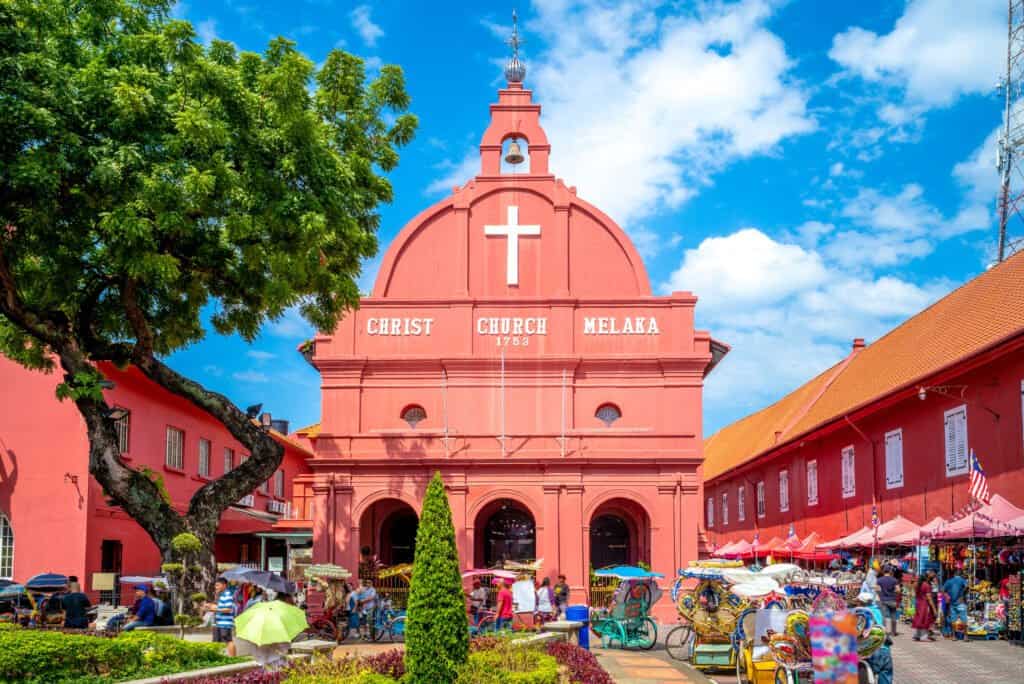
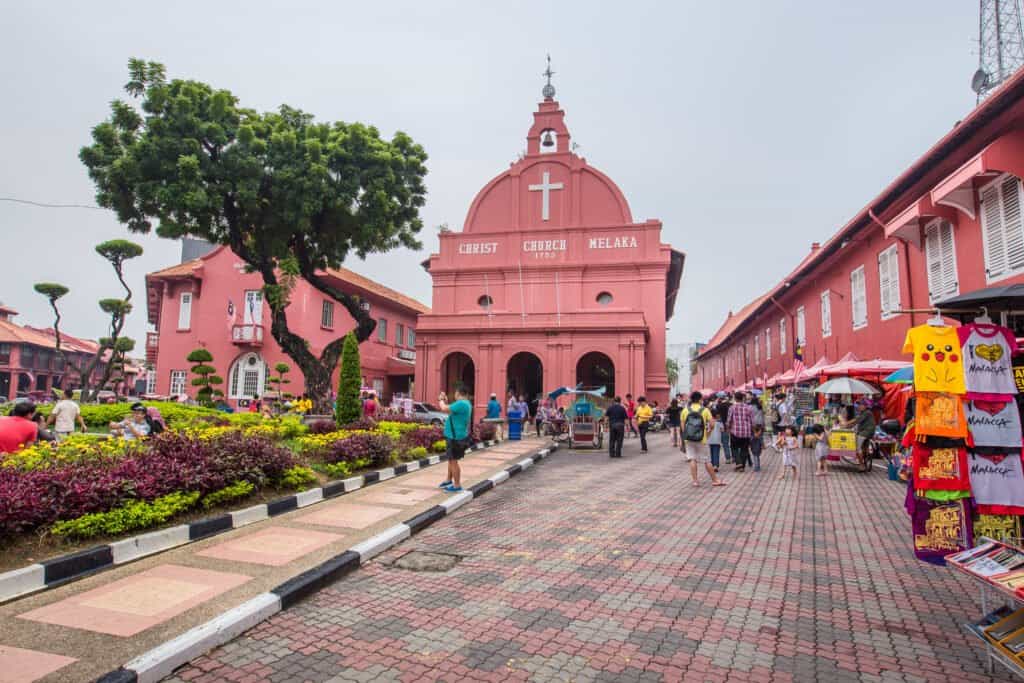
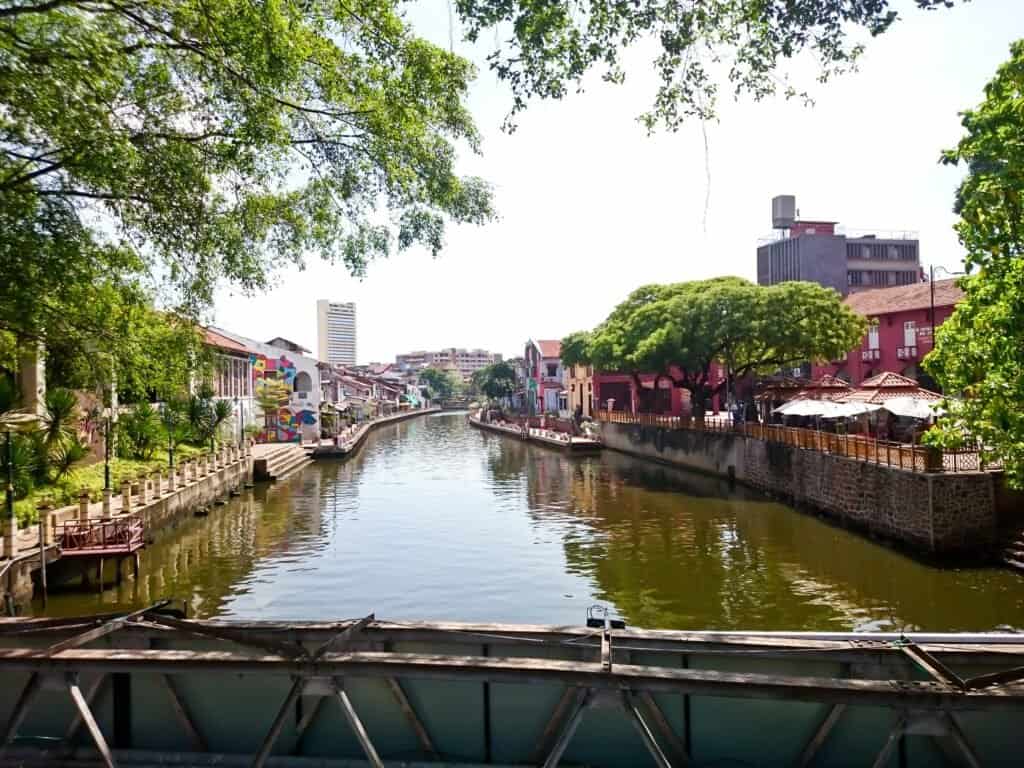
Dutch Square is a hub. Within a 5-minute walk you'll find the Christ Church, a red building matching the Stadthuys in color, originally constructed in 1753. The A Famosa gate, remnants of the Portuguese fortress, stands several minutes away. The Melaka River runs close by, with restored riverside cafes and boat tours available.
The Baba Nyonya Heritage Museum, showcasing the unique Peranakan culture of Melaka, is a 10-minute walk away. The Maritime Museum sits near the waterfront, also within 15 minutes on foot. Many visitors structure their day around Dutch Square as the central point, radiating outward to these sites.
Sample Visit Plan
Arrive at the Stadthuys by 9:30am, just after opening. This timing gives you the building largely to yourself. Spend 15 minutes on the ground floor Portuguese galleries, absorbing the earliest period. Move to the Dutch galleries on the same level and spend 45 minutes exploring maps, documents, and trade artifacts. Climb to the second floor and browse the rotating exhibitions and additional permanent collections for 30 minutes. Ascend to the third floor for a final 20-minute visit focusing on any galleries you want to revisit. Exit and spend 30 minutes in the surrounding square, photographing the building's exterior and exploring the Christ Church across the way.
This plan takes approximately 2.5 to 3 hours total and leaves you with energy to visit other nearby sites in the afternoon. If you prefer a more leisurely pace, extend your time in specific galleries or sit in the courtyard to absorb the atmosphere.
Practical Tips
- Arrive before 10am to avoid large tour groups that typically arrive mid-morning
- Bring water and wear comfortable walking shoes with good grip on the wooden staircases
- Ask at the entrance if an English-language guide is available, even if not advertised
- The building closes Mondays, so plan your Melaka itinerary accordingly
- Photography is allowed in most galleries but check signage for flash restrictions
- Plan 2 to 3 hours for a thorough visit including the exterior and surrounding square
- Nearby cafes on Dutch Square offer good spots to rest and process what you've seen
FAQ
How long does a typical visit take? Most visitors spend 1.5 to 2 hours inside the building. If you're thorough and read all signage, add another 30 minutes. The surrounding square adds another 30 minutes if you explore nearby buildings.
Can you visit just the exterior and square without buying a ticket? Yes. Dutch Square itself is public space. You can photograph the building, explore the courtyard area, and visit surrounding attractions without entering the museum. But stepping inside changes the experience significantly.
Is there information in English? Signage varies by gallery. Most labels are bilingual (English and Chinese), but some are not. An English-language guide or map at the entrance helps fill gaps. Consider downloading information beforehand if detailed context matters to you.
What's the best angle for photographs? The building's full facade photographs best from the far end of the square, particularly in early morning light. The interior courtyard offers dramatic shadow and light patterns at midday.
Do I need a guide to understand the building? No. The galleries are arranged chronologically and are relatively self-explanatory. A guide enriches the experience but isn't essential. The building's architecture itself conveys much about the colonial period without additional commentary.
Reviews
Sign in and mark this place visited to leave a review.
No reviews yet.
Free Trip Planner
Plan your Malacca trip with our free planner
Build a day-by-day itinerary with AI suggestions, hand-picked places, and friends. Free forever — no credit card.