Svartifoss Waterfall
Skaftafell, Vatnajokull National Park Iceland Posted by Brandon B.Admin
Svartifoss Waterfall: Iceland's Most Dramatic Drop
Svartifoss is one of those places that earns its reputation. Tucked inside Skaftafell, within the vast sweep of Vatnajokull National Park in southeast Iceland, the waterfall spills over a curtain of hexagonal basalt columns that look almost too geometric to be natural. The name translates to "Black Falls" in Icelandic, a nod to the dark volcanic rock that frames the cascade on three sides. If you've seen a single iconic image of an Icelandic waterfall framed by angular black columns, there's a good chance it was this one.
It doesn't roar the way Skogafoss does, and it won't drench you in spray the way Seljalandsfoss will. Svartifoss is quieter, more considered. The drama here is visual rather than physical, and that distinction matters when you're deciding how to spend a day in Iceland's south.
Why Svartifoss Matters
The basalt columns surrounding the waterfall have influenced Icelandic architecture more directly than most people realize. Hallgrimskirkja, the landmark church that dominates the Reykjavik skyline, was reportedly inspired in part by the columnar basalt formations found at sites like Svartifoss. The columns form when lava cools slowly and contracts, cracking into near-perfect hexagonal or pentagonal shapes. At Svartifoss, the columns range from roughly 10 to 20 meters in height, creating a natural amphitheater around the falls.
It's also one of the few major Icelandic waterfalls you actually have to walk to reach. That short pilgrimage keeps the crowds more manageable than the roadside giants on the Ring Road.
Quick Facts
- Location: Skaftafell area, Vatnajokull National Park, southeast Iceland
- Park entry: Free for pedestrians and cyclists. A parking fee applies if you drive in.
- Hike distance: Approximately 3 kilometers one way from the Skaftafell Visitor Centre
- Elevation gain: Roughly 150 meters on the standard trail
- Trail difficulty: Easy to moderate, suitable for most fitness levels
- Round trip time: Most hikers complete the round trip in 2 to 3 hours
- Open year-round, though trail conditions vary significantly by season
Getting There
Svartifoss sits inside Skaftafell, which became part of Vatnajokull National Park when the park was expanded in 2008. The Skaftafell Visitor Centre is located just off Route 1, the Ring Road, roughly 330 kilometers from Reykjavik if you're driving east. There's a well-signed turnoff and a large parking area near the visitor centre. From Reykjavik, the drive takes around four hours depending on stops and weather.
Public buses run along the south coast during summer months, with stops near Skaftafell. If you're traveling without a car, check current schedules with Straeto or tour operators running south coast day trips. Many guided glacier tours departing from Reykjavik also include a stop at Skaftafell, which means Svartifoss often gets bundled in as part of a longer itinerary.
Once you're at the visitor centre, the trail to the waterfall is clearly marked. You can pick up a free map at the centre, and the path is well-maintained for the most part.
The Hike and Experience
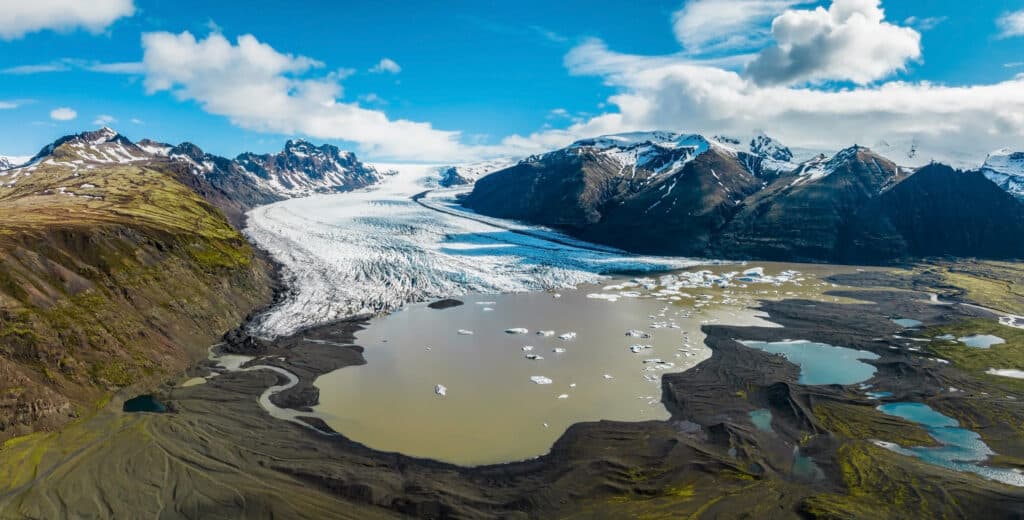
The main trail winds uphill through birch scrub and open heath before delivering you to the falls. Most days, the path is easy to follow. You'll gain altitude gradually, and the terrain opens up as you climb, offering views back across the glacial plains toward Vatnajokull. On a clear day, you can see the tongue of the Skaftafellsjokull glacier from several points along the route.
The final approach to Svartifoss brings you down a short rocky section to a viewing area directly in front of the cascade. The water drops about 20 meters into a shallow, dark pool below. Standing there, you're surrounded on three sides by the basalt columns, and the effect is genuinely striking. It feels less like a natural formation and more like something deliberately built, which is exactly why architects and photographers keep returning.
The viewing area can get crowded around midday in summer, particularly between June and August. Arriving early in the morning, say before 9am, or late in the evening tends to mean fewer people sharing the space with you.
Best Time to Visit
Summer offers the easiest conditions and the longest daylight, with the midnight sun giving you flexibility to visit at unusual hours. The landscape is green, the birch trees are leafy, and the trail is dry and straightforward.
Winter brings a completely different version of Svartifoss. The columns accumulate ice formations, the pool below sometimes freezes partially, and the surrounding landscape turns stark and monochromatic. The trade-off is that the trail can be icy and genuinely slippery. Microspikes or crampons are strongly recommended from November through March, and sometimes into April depending on conditions. Daylight is limited to a few hours, so timing your hike matters more than it does in summer.
Spring and autumn hit a useful middle ground. Fewer visitors, decent daylight, and the possibility of dramatic skies that make for better photography than the flat overcast light common in midsummer.
Photography Tips
The classic shot positions you at the viewing area looking straight at the falls with the columns framing the cascade on both sides. A wide-angle lens works well here. If you're shooting in summer, overcast days often produce better results than harsh midday sun, which can wash out the dark basalt.
For long-exposure shots of the waterfall, bring a tripod. The light in the golden hours, which in Icelandic summer can last several hours, gives the basalt a warmer tone that contrasts nicely with the white water. In winter, the ice formations on the columns add detail and texture that you simply won't find any other time of year.
A polarizing filter helps reduce glare on the wet rocks and deepens the contrast between the dark columns and the water. The pool at the base is shallow and dark, so exposing for the waterfall itself tends to give the best overall result.
Combining with Nearby Attractions
Skaftafell offers considerably more than just Svartifoss. The Skaftafellsjokull glacier is a short walk from the visitor centre and gives you a close look at one of Vatnajokull's many outlet glaciers. Guided glacier walks depart from near the visitor centre and are bookable on-site or in advance. Vatnajokull itself is the largest glacier in Europe by volume, covering roughly 8 percent of Iceland's total land area.
About an hour's drive east along the Ring Road, Jokulsarlon glacier lagoon is one of Iceland's most photographed spots, where icebergs calve off the glacier into a large tidal lake. Diamond Beach, where ice chunks wash up onto black sand, is right next to the lagoon. Both are worth the detour if you're spending a full day in the southeast.
If you're traveling from the west, Fjadrargljufur canyon and the village of Kirkjubaejarklaustur make good stops along the way. The entire southeast stretch of the Ring Road is dense with geological drama, and Svartifoss sits roughly at the center of it.
Facilities and Preparation
The Skaftafell Visitor Centre has toilets, a small cafe, and a park information desk. Staff there can give current trail conditions and weather forecasts, which is genuinely useful in shoulder seasons. The cafe is a good place to warm up after a winter hike.
Bring layers regardless of the season. Weather in southeast Iceland can shift quickly, and the wind on the exposed upper section of the trail can be biting even in July. Waterproof outer layers are worth having. The trail surface is rocky in places, so proper hiking footwear is recommended over trainers or casual shoes.
There are no facilities on the trail itself between the visitor centre and the waterfall, so carry water and a snack if you plan to extend your walk.
Practical Tips
- Arrive before 9am in summer to avoid the worst of the midday crowds at the viewpoint
- Wear hiking boots with ankle support, especially on the descent back toward the visitor centre
- In winter, microspikes or crampons are essential and can sometimes be rented near the park entrance
- The parking area at Skaftafell fills up quickly on summer weekends, so earlier arrival helps
- Download offline maps before you arrive, as mobile signal in this part of Iceland is unreliable
- If you plan to do a glacier walk the same day, book in advance, especially from June to August
- Check road conditions at road.is if you're driving in winter or early spring
FAQ
Do you need a ticket to hike to Svartifoss?
Entry to the park on foot is free. You'll pay a parking fee if you drive in, but there's no separate admission charge for the waterfall or the trail.
Is the trail suitable for children?
In summer conditions, most children who are comfortable walking a few kilometers will manage the trail fine. The path gains elevation steadily and has some rocky sections, but nothing technical. In winter, icy conditions make it significantly harder and less suitable for young kids.
How long does the full hike take?
The round trip from the visitor centre typically takes between 2 and 3 hours at a relaxed pace, with time spent at the viewpoint. Faster hikers can do it in under 2 hours.
Can you swim in the pool at the base of Svartifoss?
Technically there's no formal prohibition, but the water is glacially cold year-round and the pool is shallow. Most visitors don't, and the rocky approach makes it impractical.
Is Svartifoss accessible in winter?
Yes, and it's genuinely beautiful in winter. But the trail can be icy and the daylight window is short. Check conditions at the visitor centre before heading up, and bring traction devices for your footwear.
Reviews
Sign in and mark this place visited to leave a review.
No reviews yet.
Free Trip Planner
Plan your Iceland trip with our free planner
Build a day-by-day itinerary with AI suggestions, hand-picked places, and friends. Free forever — no credit card.