Posted by Brandon B.Admin
Ta Prohm: Where the Jungle Refuses to Let Go
Ta Prohm is one of those places that looks exactly like the photographs and still manages to surprise you. Located within the Angkor Archaeological Park just outside Siem Reap, Cambodia, this 12th-century temple has been left in a state of deliberate semi-ruin, with massive strangler figs and silk-cotton trees growing directly through the stone galleries. Roots the size of cars pry apart ancient doorways. Walls lean at angles that make you wonder what's holding them up. It's genuinely unlike anywhere else in the park.
Most visitors arrive as part of a broader Angkor circuit, but Ta Prohm tends to be the one that stays with them longest.
Why Ta Prohm Matters
Built in the late 12th century under King Jayavarman VII, Ta Prohm was originally called Rajavihara, meaning "royal monastery." It functioned as a Buddhist monastery and university, and at its peak the site reportedly supported thousands of monks, scholars, and temple staff. That scale is hard to picture now, but the sprawling outer enclosures give you a sense of how much ground it once covered.
What makes Ta Prohm culturally significant today is partly a deliberate conservation decision. When the Archaeological Survey of India began restoration work here in the early 20th century, the choice was made to leave much of the tree growth in place, preserving the atmosphere of discovery that 19th-century European explorers described. That decision has shaped how millions of people understand what "ancient ruins" can look like. The temple also gained a new wave of visitors after it appeared prominently in the 2001 film Lara Croft: Tomb Raider, though the site's draw goes far deeper than any movie.
Quick Facts
- Built: Late 12th to early 13th century, commissioned by King Jayavarman VII
- Original name: Rajavihara
- Religion: Mahayana Buddhist, later modified for Hindu worship
- Location: Angkor Archaeological Park, approximately 1.5 km east of Angkor Thom
- Entry: Covered by the standard Angkor Archaeological Park pass (1-day, 3-day, or 7-day options)
- Park opening hours: Generally 5am to 6pm daily, with some variation by site
- Managed by: APSARA National Authority (Cambodia)
Getting There
Ta Prohm sits inside the Angkor Archaeological Park, about 7 km north of central Siem Reap. Most visitors reach the park by tuk-tuk, which is the most practical option if you want flexibility to stop at multiple temples. A typical tuk-tuk driver will already know Ta Prohm well and can wait for you outside the eastern or western gopura while you explore. The ride from the Siem Reap Old Market area takes roughly 20 to 25 minutes depending on traffic.
Bicycle rental is also genuinely popular, particularly in the cooler morning hours. The park roads are mostly flat and well-maintained, and cycling between temples gives you a slower, more atmospheric experience. If you prefer to drive yourself, the road from the Angkor Thom south gate toward Ta Prohm is clearly signed. Some visitors also join organized minibus tours from town, though these tend to move on a fixed schedule that doesn't always suit a leisurely visit.
There are two main entrance points: the western gopura, which is the more commonly used approach, and the eastern gopura, which some guides recommend for a quieter entry. If you enter from the west, you walk through a long causeway flanked by stone posts before reaching the inner structures.
The Layout and Experience
Ta Prohm is built in a series of concentric rectangular enclosures, typical of Khmer temple design, but the overgrowth makes the spatial logic harder to follow than at, say, Angkor Wat. That's part of the appeal. You move through narrow stone corridors, emerge into partially collapsed courtyards, and suddenly find yourself face to face with a root system that has been growing for centuries.
The most photographed spot is a section of the outer enclosure where a massive silk-cotton tree has wrapped its roots over a collapsed gallery wall. You'll recognize it immediately. There's usually a queue of people waiting to photograph it, especially between 9am and 11am. The inner sanctuary and the Hall of Dancers, a long gallery near the eastern entrance decorated with carved apsara figures, are worth spending real time with beyond the famous tree.
Wear comfortable shoes with grip. Many of the stone floors are uneven, occasionally slippery, and some areas require ducking through low doorways or stepping over large roots. The temple covers a significant area and a thorough visit takes anywhere from 90 minutes to two and a half hours depending on how deeply you explore the outer enclosures.
Best Time to Visit
Arrive early. The park opens at 5am, and Ta Prohm in the first hour of morning light, before tour buses begin arriving, is a different experience from the midday version. The soft light also makes for better photography than the harsh overhead sun of late morning.
The dry season, roughly November through April, is generally the most comfortable time for exploring the Angkor complex. During the wet season, from May through October, the jungle turns an extraordinary shade of green and the crowds thin noticeably, but paths can get muddy and mosquitoes are more persistent. Many experienced visitors actually prefer the wet season for its atmosphere and relative quiet.
Midday in any season is the hottest and most crowded window. If your schedule allows, split your Angkor visit across two mornings rather than trying to cover everything in a single long day.
Photography Tips
The famous silk-cotton tree over the collapsed gallery is on the northern side of the third enclosure. It photographs best in the early morning when the light comes in low from the east. If you want the shot without other visitors in it, you'll need to be there before 7:30am on most days.
Look beyond the obvious spots. The corridors of the inner galleries have beautiful filtered light at almost any time of day, and the carved devata figures along the interior walls are easier to photograph in soft shade than in direct sun. Wide-angle lenses work well for capturing the scale of the tree roots against the stonework, but a standard focal length lets you isolate individual carvings without distortion.
Drones are not permitted within the Angkor Archaeological Park without special authorization from APSARA. Don't bring one expecting to use it.
Tickets and Entry
Ta Prohm is not ticketed separately. Entry is included in the standard Angkor Archaeological Park pass, which comes in 1-day, 3-day, and 7-day tiers. Tickets must be purchased at the official Angkor Enterprise ticket office near the main park entrance on the road from Siem Reap, not at the temple itself. The ticket booths open early in the morning. You'll need a passport-style photo or one will be taken on-site, as the passes include your photograph.
Children under a certain age enter free, though the specific cutoff is worth confirming at the ticket office when you visit, as policies can shift.
Combining with Nearby Attractions
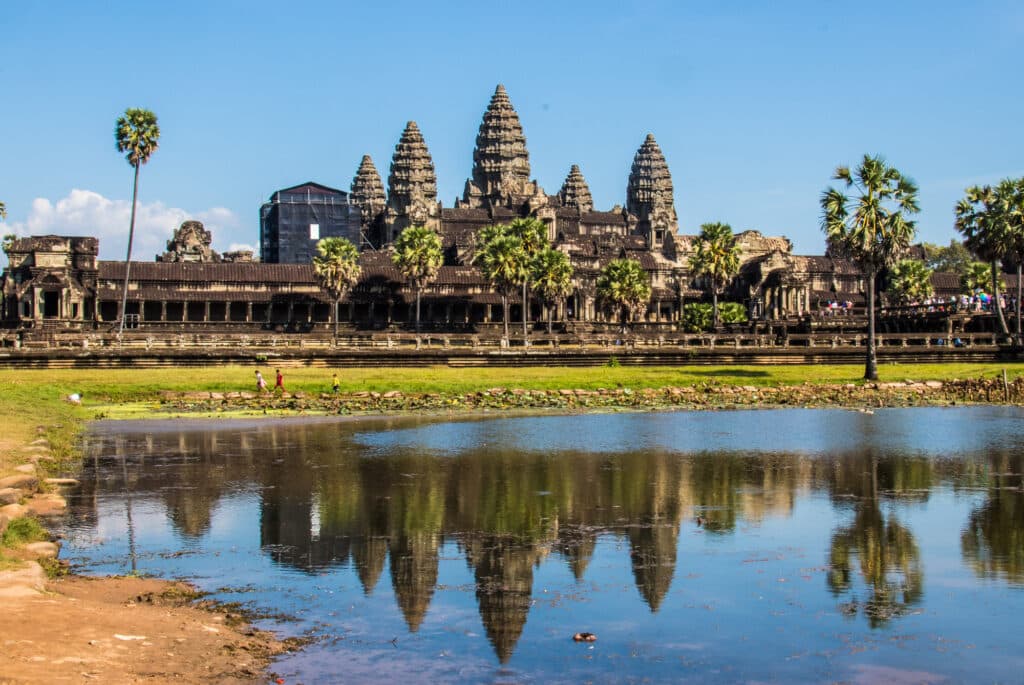
Ta Prohm is well positioned along the so-called "small circuit" of Angkor, which also includes Angkor Wat, Angkor Thom, and Banteay Kdei, a quieter, less-visited temple of similar vintage just a few minutes' walk south. The Sras Srang reservoir, a large royal bathing pool with a beautifully preserved landing terrace, is directly across the road from Banteay Kdei and makes for a good five-minute detour if you want a change of scenery from dense jungle temples.
Ta Keo, a steep pyramid temple about 1 km to the northwest, offers a very different experience from Ta Prohm's horizontal sprawl. Pairing the two in a single morning gives you a useful contrast in Khmer architectural styles.
Practical Tips
- Dress to cover your shoulders and knees. This is a religious site and a dress code is enforced at the park level.
- Bring water. There are a few vendors near the main entrance areas but not inside the temple complex itself.
- Sunscreen and a hat matter more than you think, even on overcast days.
- If you hire a local guide, they can identify specific carvings and explain the iconography that's easy to walk past without context. The APSARA-licensed guides stationed near the main entrances are generally knowledgeable.
- Some sections of Ta Prohm are closed for ongoing restoration work. These closures change periodically and aren't always announced in advance.
- The temple can feel genuinely overwhelming during peak hours. If you find yourself in a crowd, walk toward the outer enclosures, which most visitors skip entirely.
- Keep your ticket. You'll need it for re-entry if you leave and return, and park staff do check.
FAQ
Do I need a guide to visit Ta Prohm?
No, you can explore independently. But a guide adds a lot, especially for reading the bas-relief carvings and understanding the temple's original layout. Even a two-hour guided visit changes how much you actually see.
How long should I plan for Ta Prohm?
Budget at least 90 minutes if you want to get beyond the famous tree. Two hours is more comfortable. If you're genuinely interested in the outer enclosures and the carving detail, two and a half hours goes quickly.
Is Ta Prohm accessible for visitors with mobility limitations?
The terrain is genuinely difficult in places. Uneven stone, large roots, and narrow passages make much of the inner temple challenging for anyone with limited mobility. Some of the outer areas and the approach causeway are more manageable.
Can I visit Ta Prohm at sunrise?
The park opens at 5am, so technically yes. However, Ta Prohm is a jungle temple rather than a sunrise-view temple, so it lacks the open horizon that makes sunrise at Angkor Wat so dramatic. Early morning light filtering through the canopy is beautiful in its own way, but you won't see the sun rising over the towers.
Is the Lara Croft filming location still visible?
The specific doorway used in the 2001 film is still there and still recognizable, though the site has changed somewhat due to ongoing restoration. Most guides know exactly where it is and will point it out if you ask.
Reviews
Sign in and mark this place visited to leave a review.
No reviews yet.
Free Trip Planner
Plan your Cambodia trip with our free planner
Build a day-by-day itinerary with AI suggestions, hand-picked places, and friends. Free forever — no credit card.
Things to see near Ta Prohm


Places to eat or drink near Ta Prohm

Cuisine Wat Damnak Siem Reap

Khmer Grill Restaurant

WILD – Creative Bar & Eatery