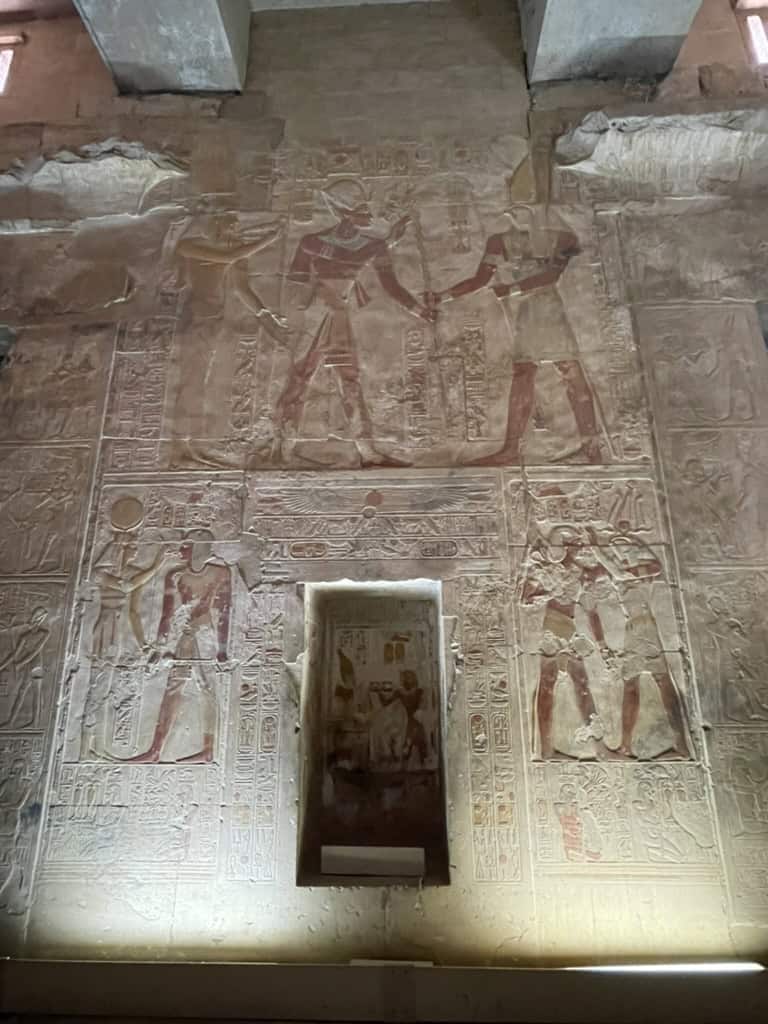
Temple of Seti I
Temple Of Seti I, Abydos Egypt Posted by Brandon B.Admin
Temple of Seti I overview
The Temple of Seti I stands in Abydos, one of the most sacred ancient sites in Egypt. While many visitors focus on Luxor and Giza, Abydos offers something different. The carvings here remain some of the sharpest and most detailed in the entire country.
This is not a massive complex like Karnak. Instead, it feels focused and precise. The relief work is deep, clean, and carefully planned. If you care about temple art and pharaonic history, this site delivers in a way few others do.
Most visitors spend 1.5 to 2.5 hours here. If you move slowly and study the carvings, you can stay longer without losing interest.
Why the Temple of Seti I matters
Seti I ruled during the 19th Dynasty in the 13th century BC. He built this temple to honor the god Osiris and to legitimize his royal lineage. Abydos already held deep religious importance. Egyptians believed it was closely tied to the afterlife and the cult of Osiris.
The temple also contains the famous Abydos King List, a carved record of pharaohs from early dynasties up through Seti I’s reign. This list remains one of the most important historical records for understanding Egypt’s royal timeline.
Quick facts
- Location: Abydos, Egypt
- Built: 13th century BC
- Dynasty: 19th Dynasty
- Primary dedication: Osiris and other major gods
- Typical visit time: 2 hours
Getting to Abydos
Abydos sits north of Luxor and west of the Nile. Most visitors reach the site by private car with a driver, often as a day trip from Luxor. Travel time runs about 2.5 to 3 hours each way.
Because the temple sits outside the main tourist corridor, visitor numbers remain lower than sites in Luxor. That makes the experience calmer and more focused.
Tickets and entry info and typical costs
Entry tickets are purchased at the site entrance.
Prices change periodically based on Egyptian tourism regulations. Students with valid ID receive discounted rates. Cash in local currency works best.
Photography rules vary. Some areas may require an additional photography ticket. Always confirm current rules at the entrance.
Understanding the layout
The temple follows a structured axial plan. You move through a series of halls that narrow and darken as you progress inward.
- First courtyard area
- Great Hypostyle Hall
- Seven chapels dedicated to different deities
- Rear chambers and Osiris-focused areas
The design guides you from public space into sacred interior rooms.
The Hypostyle Hall
The Hypostyle Hall stands out immediately. Columns support a roof that once created dramatic shadow and light contrast. Many reliefs here remain deeply carved and still show fine details.
Unlike heavily damaged temples elsewhere, much of the wall work here feels intact. You can study facial expressions, hieroglyphs, and ritual scenes clearly.
The Seven Chapels
The temple includes seven chapels aligned side by side. Each chapel honors a specific deity, including Osiris, Isis, Horus, Amun Ra, Ra Horakhty, Ptah, and Seti I himself.
This layout reflects Seti I’s effort to connect himself with major gods and reinforce divine legitimacy.
The Abydos King List
The Abydos King List sits carved into a wall in one of the interior corridors. The list shows Seti I and his son Ramses II offering before a sequence of royal names.
Many earlier pharaohs appear in order, though certain rulers were deliberately omitted for political reasons. This carving provides critical evidence for reconstructing Egypt’s dynastic history.
Relief quality and detail
The relief carving at Abydos stands among the finest in Egypt. Lines remain sharp. Figures retain depth. Scenes show ritual offerings, divine interaction, and royal authority.
The precision suggests skilled artisans and careful supervision. This was not a rushed project.
The Osirion
Behind the main temple stands the Osirion, a mysterious structure built at a lower level. Large stone blocks and water channels create a stark atmosphere.
Some scholars believe it symbolized the tomb of Osiris. The style differs from the main temple, giving it a heavier and more ancient appearance.
Best time to visit
Arrive early in the day if traveling from Luxor. Temperatures rise quickly, especially in warmer months. The interior halls remain cooler than the courtyard.
Because visitor numbers stay lower than in Luxor, even midday rarely feels crowded.
Photography tips
The temple rewards close attention to detail.
- Use side lighting to highlight carved depth
- Focus on facial features and hieroglyphs
- Photograph columns from low angles for scale
Flash remains restricted. Natural light filtering through openings often provides better contrast anyway.
Facilities and preparation
Facilities at Abydos remain basic. Bring water, sun protection, and comfortable walking shoes. Restrooms may be limited in quality.
There are few vendors compared to larger Egyptian sites. Plan food and water stops in advance.
How it compares to Luxor temples
Luxor and Karnak feel grand and expansive. Abydos feels precise and focused. The carving quality here often surpasses what you see at larger sites.
If you enjoy studying relief art closely, Abydos may leave a stronger impression than more famous temples.
Sample visit plan
Half day visit from Luxor
- Early departure from Luxor
- Explore main halls and chapels
- View the Abydos King List
- Visit the Osirion
- Return to Luxor mid afternoon
Common questions
Is Abydos worth the long drive? Yes, especially for visitors interested in temple art and royal history.
Is it crowded? No. Visitor numbers remain relatively low.
Is this one of the best preserved temples in Egypt? Yes. The relief work ranks among the finest surviving examples.
Reviews
Sign in and mark this place visited to leave a review.
No reviews yet.
Free Trip Planner
Plan your Luxor trip with our free planner
Build a day-by-day itinerary with AI suggestions, hand-picked places, and friends. Free forever — no credit card.