Tomb of Queen Nefertari
Luxor Egypt Posted by Brandon B.Admin
Inside the Tomb of Queen Nefertari, Luxor's Most Breathtaking Burial Chamber
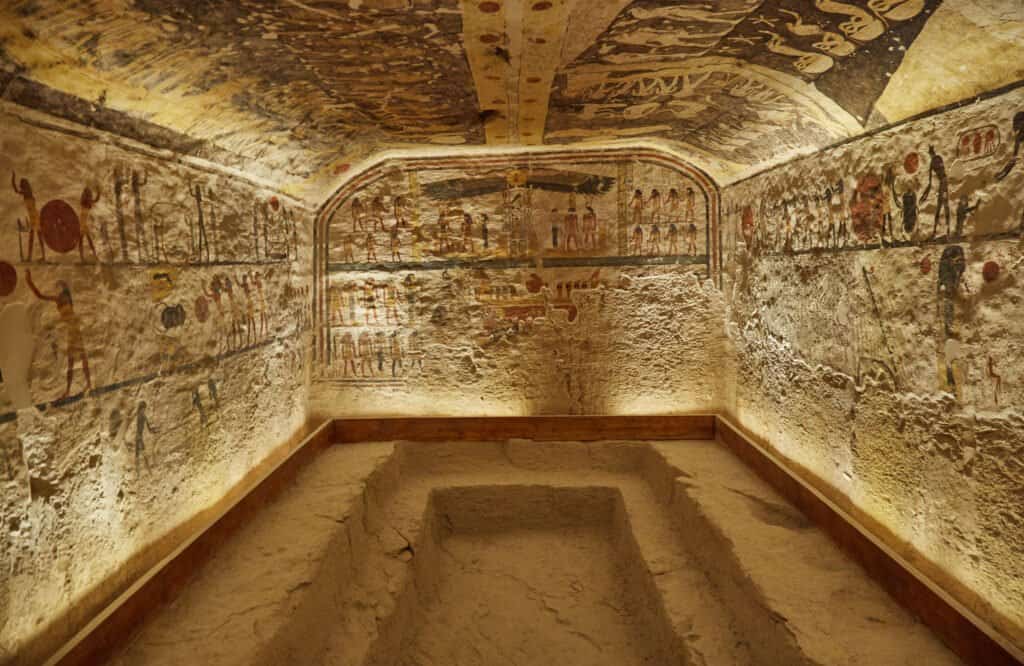
The Tomb of Queen Nefertari sits in the Valley of the Queens on Luxor's West Bank, and it is widely considered the finest decorated tomb in all of Egypt. That is not a casual claim. The paintings covering nearly every surface of this burial chamber have survived more than 3,200 years in near-miraculous condition, and standing inside feels less like visiting a ruin and more like stepping into a living manuscript of the ancient world. If you have time for only one tomb in the Theban Necropolis, this is the one to choose.
Nefertari was the Great Royal Wife of Ramesses II, who ruled during the 19th Dynasty. Her tomb, designated QV66 by archaeologists, was carved into the limestone cliffs of the Valley of the Queens sometime during the 13th century BCE. The Italian Archaeological Mission excavated and restored it between 1986 and 1992, a project that stabilized the salt damage threatening the pigments and gave the world back one of antiquity's greatest works of art.
Quick Facts
- Location: Valley of the Queens, West Bank, Luxor
- Tomb designation: QV66
- Period: 19th Dynasty, reign of Ramesses II, roughly 13th century BCE
- Visitor limit: a strict cap of 150 visitors per day to protect the paintings
- Ticket type: separate special entry ticket, purchased in addition to the standard Valley of the Queens admission
- Photography: not permitted inside the tomb
- Time needed: allow 20 to 30 minutes inside, longer if you want to absorb the detail
Getting There
The Valley of the Queens is on Luxor's West Bank, roughly 5 kilometers southwest of the Valley of the Kings. From Luxor city center you cross the Nile by ferry or bridge, then head south through the agricultural fringe toward the desert cliffs. Most visitors hire a driver or join a guided tour for the West Bank loop, which makes sense given that the sites are spread out and taxis are easy to negotiate near the ferry landing. The entrance to the Valley of the Queens is a short walk from the car park once you arrive.
Arriving early matters here more than at almost any other site on the West Bank. The daily visitor cap fills quickly, especially between October and April when Luxor is busiest.
Tickets and Entry
Entry to the Tomb of Queen Nefertari requires two separate tickets. The first is the standard Valley of the Queens admission, which covers access to the valley and several other tombs in the area. The second is a special permit specifically for QV66, sold in limited numbers at the ticket office near the valley entrance. These special tickets are priced significantly higher than standard tomb entry, reflecting both the tomb's exceptional status and the conservation effort required to keep visitor numbers low.
The 150-person daily cap is enforced seriously. On busy days, especially during peak season, tickets can sell out before mid-morning. If seeing Nefertari's tomb is the main reason you are visiting the West Bank, buy your ticket first thing, before walking anywhere else. Some organized tour operators pre-arrange access, which is worth considering if your schedule is tight.
The Layout and Experience
The tomb descends in a roughly T-shaped plan through an antechamber, a staircase corridor, a vestibule, and then the main burial chamber itself. Side rooms branch off along the way. Every wall, every ceiling, every pillar surface is painted.
The scenes follow Nefertari's journey through the afterlife, drawn from the Book of Gates and the Book of the Dead. You will see her being guided by Isis and Hathor, playing senet against an unseen opponent, and standing before Osiris in the Hall of Judgment. The hieroglyphs are not decorative filler here. They are part of the composition, integrated into images with a confidence that reads as genuinely artistic rather than purely ritual. The blue of the sky in the ceiling vaults is a specific Egyptian blue, a pigment made from copper and quartz that has held its intensity across three millennia.
The burial chamber pillars are painted with figures of Osiris on a black background. Black in ancient Egyptian symbolism represented fertility and regeneration rather than death, which reframes what you are looking at considerably. Guards stationed inside will ask you not to touch the walls. Please listen to them. The salt crystallization that caused so much damage before the 1986 restoration is still a slow, ongoing process, and human contact accelerates it.
Why This Place Matters
Most ancient Egyptian tombs are impressive. This one is categorically different. The pigments retain a vividness that photographs struggle to convey accurately. The artists who painted QV66 used a wet-plaster technique that bonded color directly into the stone surface, which partly explains the longevity. The composition of individual scenes shows an attention to proportion and spatial balance that feels deliberate and sophisticated rather than formulaic.
The tomb also tells you something specific about Nefertari's status. Ramesses II built temples honoring her alongside his own at Abu Simbel, a gesture essentially unparalleled for a royal wife in Egyptian history. QV66 extends that statement underground. The quality of the decoration here exceeds that of many pharaonic tombs, which is a measure of how seriously Ramesses treated her memory.
Best Time to Visit
The West Bank is best visited in the morning, and QV66 doubly so. Aim to be at the Valley of the Queens ticket office when it opens. The tomb is underground, so temperature inside stays relatively stable year-round, but the walk from the car park and the wait at the ticket office are exposed to the sun. Summers in Luxor are genuinely extreme, with midday temperatures regularly above 40 degrees Celsius. If you are visiting between June and August, an early start is not optional.
October through March is the most comfortable period. Crowds peak around December and January, so the ticket cap becomes more of a real constraint during those months. Shoulder months like October and late February tend to offer a reasonable balance of manageable heat and thinner crowds.
Photography Tips
Photography inside the tomb is prohibited, and this rule is enforced. Do not attempt to sneak a shot. Beyond the rules, flash photography causes cumulative photochemical damage to ancient pigments, and even ambient digital photography has been restricted at sensitive sites for this reason.
Outside the valley, the limestone cliffs at golden hour make for striking landscape shots. The painted entrance pylons and the general landscape of the West Bank, with the Nile cultivation visible in the distance and the desert escarpment rising behind, photograph well in the late afternoon when the light is warm and directional.
Combining with Nearby Attractions
The Valley of the Queens contains several other tombs worth visiting on the same ticket, including the Tomb of Khaemwaset and the Tomb of Amunherkhepshef, both sons of Ramesses II. Their decoration is less elaborate than Nefertari's but still impressive and far less visited.
The Valley of the Kings is about 15 minutes by road from the Valley of the Queens. Most West Bank itineraries combine both valleys in a single day, along with Deir el-Medina, the village where the craftsmen who built these tombs actually lived. Deir el-Medina is genuinely fascinating and often underestimated. The workers' own tombs there are small but richly decorated, and the site includes a Ptolemaic temple dedicated to Hathor that is in excellent condition.
The Mortuary Temple of Hatshepsut at Deir el-Bahari is also within a short drive and adds another layer to the West Bank experience without requiring a major detour.
Practical Tips
- Buy the QV66 special permit first, before anything else, to avoid selling out
- Bring cash for tickets; card payment is not always available at the valley offices
- Wear closed shoes and light, breathable clothing that covers shoulders and knees as a courtesy at historical sites
- Carry water; the valley has limited shade and no regular vendors once you are inside
- Hire a licensed Egyptologist guide if you want to understand the scenes rather than just admire them; the iconography is dense and rewards explanation
- Do not touch the walls, lean against the painted surfaces, or use flash of any kind inside the tomb
- If you are combining with the Valley of the Kings, pace yourself; doing both valleys plus Deir el-Medina in a single morning is feasible but tiring
FAQ
Is the Tomb of Queen Nefertari worth the extra ticket cost?
Almost universally, yes. Visitors who have seen multiple tombs across Egypt consistently describe QV66 as the most visually extraordinary. The additional cost reflects genuine conservation effort and a strictly managed visitor limit that makes the experience feel less like a crowd and more like a private viewing.
Can children visit the tomb?
There is no formal age restriction. The descent into the tomb involves stairs and some low passages, but it is manageable for most children. The main consideration is whether younger visitors will be able to appreciate the experience given the no-photography, no-touching requirements.
How long does a visit take?
The tomb itself takes 20 to 30 minutes to move through at a comfortable pace. Allow extra time for the walk from the car park, ticket purchase, and queuing at the tomb entrance. A full Valley of the Queens visit, including two or three other tombs, typically runs two to three hours.
Is the tomb accessible for visitors with mobility limitations?
The tomb involves a descending staircase and uneven stone floors. It is not wheelchair accessible. The path from the car park to the tomb entrance is also unpaved and sloped in places.
Reviews
Sign in and mark this place visited to leave a review.
No reviews yet.
Free Trip Planner
Plan your Egypt trip with our free planner
Build a day-by-day itinerary with AI suggestions, hand-picked places, and friends. Free forever — no credit card.