Posted by Brandon B.Admin
Overview
Tower Bridge is London's most recognizable landmark, a Gothic Revival bascule and suspension bridge completed in 1894 that spans the River Thames between the City of London and Southwark. The bridge's twin towers, ornate stonework, and mechanical engineering have made it one of the most photographed structures in the world. What makes Tower Bridge distinct from the older London Bridge upstream is its combination of Victorian engineering and theatrical architecture, designed to be both functional and visually commanding.
You can walk across the bridge for free at street level, but the paid experience lets you climb the towers and walk the high-level glass walkway between them, offering perspectives most visitors never experience. The bridge operates as both a working crossing and a visitor attraction, with the bascule deck still raising for river traffic roughly 800 times per year.
Why this place matters
Tower Bridge represents a pivotal moment in Victorian London. When it opened, it solved a real problem: the Pool of London needed a crossing that wouldn't obstruct tall-masted ships heading to the wharves upstream. Engineers had to invent new bascule technology to make it work. The result became a symbol of London's engineering prowess and remains central to the city's identity.
The bridge marks the boundary between the medieval City of London and the modern developments of the South Bank. Standing on it places you at a hinge point in London's geography and history.
Quick facts
- Completed in 1894, designed by engineer John Wolfe Barry and architect Horace Jones
- Twin towers rise 213 feet above the Thames
- The high-level walkway sits 142 feet above the water
- Takes 1 minute 30 seconds for the bascule deck to fully raise
- Free to cross at street level; paid entry for the tower experience
- Roughly 5 million visitors per year
- The bridge is a UNESCO World Heritage Site
Getting there
Tower Bridge is most easily reached by the London Underground. Monument station on the Circle and District lines sits about a 5-minute walk north across the bridge. If you're coming from the south side, London Bridge station on the Northern and Jubilee lines is a similar distance away on the Southwark bank.
By bus, multiple routes stop near the bridge. The Docklands Light Railway also has a stop at Bank/Monument if you're traveling from East London or Canary Wharf.
If you're arriving by car, note that Tower Bridge Road itself has restrictions during peak hours. The nearest paid car parks are the Tower of London car park (north side) and Potters Fields Park (south side), though both fill quickly during tourist season.
The layout and experience
The bridge itself spans 800 feet and connects two distinct neighborhoods. The north side lands you near the Tower of London and the historic City. The south side opens onto Tooley Street and the more contemporary South Bank, with its restaurants, galleries, and river-side paths.
Walking across at street level takes roughly 10 to 15 minutes and costs nothing. You'll pass through the exposed lower deck, where the bascule mechanism is visible beneath you. On most days you can cross without delay, though the bridge occasionally closes temporarily when the bascule raises for river traffic.
The paid tower experience begins on the north side, where you enter a dedicated visitor facility. From here you climb 42 steps to reach the high-level glass walkway, which connects the two towers and offers 360-degree views of the Thames and surrounding London. The walkway itself was added in 1982 and sits inside glass panels so you can see the river and city while walking 142 feet above the water. After crossing, you can descend into the engine room at the base of the south tower, where you see the original Victorian hydraulic machinery that powers the bascule mechanism.
The total experience, including time to linger on the walkway and in the engine room, typically takes 45 minutes to an hour. There's no fixed route, so you can move at your own pace.
Main highlights
The high-level glass walkway is the signature attraction. Standing in the middle with the Thames flowing beneath you and the City skyline to the north offers a perspective you can't get from street level. The glass is clear enough that looking down is unavoidable and, for some visitors, thrilling.
The engine room displays the original steam-powered hydraulic machinery. The machinery still works, though it's now powered by electricity. Seeing the scale of the Victorian engineering that lifts 1,200 tons of bascule deck in under two minutes gives you a sense of the ingenuity involved.
The tower interiors contain display panels about the bridge's history and construction. These aren't elaborate museum installations, but they offer enough context to understand the engineering challenges the designers faced and why the bridge was such a significant achievement.
If you time your visit right, you might see the bascule raise. The bridge raises roughly twice a day on average, though the schedule depends on river traffic. Check the website before you visit if seeing a raise is important to you.
History and background
London needed a new bridge crossing east of London Bridge. The Pool of London was a major port, and any new bridge had to allow tall ships to pass through. Traditional fixed bridges would have blocked river traffic entirely. Engineers and architects spent years proposing solutions.
John Wolfe Barry, the chief engineer, designed a bascule bridge, a type that rotates upward on a horizontal axis. Horace Jones, the City Architect, gave it a Gothic Revival exterior with twin towers and ornate stonework so it would be visually impressive rather than merely functional. The combination of engineering innovation and theatrical design became the bridge's defining feature.
Construction took eight years. The bridge opened on June 30, 1894, with a ceremony attended by the Prince of Wales. It was immediately celebrated as a marvel of modern engineering and remains one of London's most enduring symbols.
During World War II, the bridge survived bombing, though it was damaged. The high-level glass walkway wasn't added until 1982, nearly 90 years after the bridge opened. Before that, the towers were closed to the public.
Tickets and entry
Street-level crossing is free and always open. You need a ticket only if you want to enter the towers and walk the high-level walkway. Tickets are sold at the visitor center on the north side of the bridge.
Entry is priced as a single general admission ticket. Children and seniors typically receive discounts. If you're planning to visit multiple London attractions, check whether the London Pass includes Tower Bridge, as it often does and may save you money.
Timed entry slots are not required, so you can enter when you arrive. During peak summer months, there may be brief queues, but entry typically happens within 15 to 30 minutes of arrival.
Best time to visit
Summer months from June through August bring the largest crowds. If you prefer fewer people, visit in the shoulder seasons of April, May, September, or October, when the weather is still reasonable and visitor numbers drop noticeably.
Winter visits are quieter but the weather is cold and often overcast, which affects both the experience and photography. The glass walkway can be slippery if it rains or ices over, though it remains open.
Time your visit for late afternoon or early evening if possible. The light at that hour is softer, and you'll be crossing while the afternoon crowds are leaving. The walkway offers north-facing views, so morning light comes from behind you, while evening light comes from the front, illuminating the City skyline.
If you want to see the bascule raise, check the schedule beforehand. Raises typically happen around noon and in the late afternoon, though this varies by season and river traffic.
Photography tips
The bridge photographs best from the south side, particularly from Tooley Street or the riverside path near St. Thomas Street. The north side of the bridge frames the Tower of London nicely. For wide shots that include both towers, you need to be at least 300 feet away.
The high-level walkway offers interior shots looking out toward the City and downstream toward Tower Bridge station. The glass can create reflections in bright light, so an overcast day or golden hour produces clearer images looking outward.
The engine room is poorly lit, so bring a camera that handles low light well, or be ready to use a tripod or slower shutter speed. The Victorian machinery itself photographs well with side lighting.
Facilities and preparation
The visitor facility on the north side has restrooms, a small gift shop, and an information desk. There is no cafe inside the tower experience, though restaurants and cafes are abundant on both sides of the bridge.
The climb involves 42 steps to reach the high-level walkway, then additional stairs to descend into the engine room. If stairs are difficult for you, you may find the experience challenging. There is no elevator in the towers.
The glass walkway is open to the elements at the ends, so bring a jacket or rain gear if weather looks uncertain. In winter, the metal railings are cold to touch.
Combining with nearby attractions
The Tower of London stands immediately north of the bridge on the City side. Most visitors combine the two, spending 2 to 3 hours at the Tower and 45 minutes to an hour at Tower Bridge. You can cross from the Tower directly to the bridge without retracing your steps.
On the south side, the bridge connects to the riverside path that runs toward London Bridge, St. Paul's Cathedral, and the South Bank. The Design Museum, City Hall, and the historic wharves at St. Katharine Docks are all within 10 to 15 minutes' walk.
If you're interested in river views, a Thames riverboat journey from the pier near Tower Bridge travels to Westminster, Kew, or Hampton Court depending on the destination. The pier is steps from the bridge's south entrance.
Sample visit plan
Arrive mid-morning to avoid peak crowds. Cross the bridge at street level first, taking 10 to 15 minutes to get your bearings and see the view from the lower deck.
Enter the tower experience on the north side. Spend 15 to 20 minutes on the high-level walkway and another 20 to 25 minutes exploring the engine room and display panels. Exit on the south side.
Walk along the riverside path south toward London Bridge or north toward the Tower of London depending on your interests. Stop for lunch at one of the restaurants on Tooley Street or by St. Katharine Docks.
If time permits, visit the Tower of London in the afternoon, or explore the South Bank museums and galleries. Return to the bridge at dusk for evening views if it appeals to you.
Practical tips
- The bridge is open 24 hours for street-level crossing. Tower access has fixed daytime hours, typically 9am to 6pm, but check the website for exact times as they vary seasonally.
- If you have a mobility pass from the UK government, you may be eligible for discounted or free entry. Ask at the visitor center.
- The bridge raises roughly 800 times per year, or an average of twice daily. Exact times depend on river traffic and are published online.
- Avoid the bridge during rush hours if you want a quieter crossing. Peak pedestrian traffic occurs 8am to 9am and 5pm to 7pm on weekdays.
- Street-level crossing is fastest via the south side if you're heading from Tooley Street toward the City. The north side has more foot traffic from Tower tourists.
- On windy days, the high-level walkway sways slightly. This is normal and the bridge is designed for significant movement, but if you're sensitive to motion, be aware of this.
- The engine room is accessed by descending stairs after crossing the walkway. If you want to see the machinery, you must complete the full tower experience.
FAQ
Can you walk across Tower Bridge for free? Yes. Street-level crossing is always free and open 24 hours. You only pay if you want to enter the towers and use the high-level walkway.
How long does it take to walk across? Street level takes 10 to 15 minutes. The full tower experience, including the walkway and engine room, takes 45 minutes to an hour.
Will I see the bridge raise? The bascule raises roughly twice daily on average, though times vary by river traffic. Check the website before your visit to see if a raise is scheduled during your visit window.
Is Tower Bridge the same as London Bridge? No. London Bridge is a much older, simpler crossing about 300 feet upstream. Tower Bridge is the ornate Gothic structure with the two towers. Many visitors confuse the two.
Can you visit Tower Bridge with young children? Yes, but the tower experience involves climbing 42 steps and walking a high-level glass walkway 142 feet above water. Children under 5 may find this challenging. Street-level crossing is fine for any age.
Reviews
Sign in and mark this place visited to leave a review.
No reviews yet.
Free Trip Planner
Plan your England trip with our free planner
Build a day-by-day itinerary with AI suggestions, hand-picked places, and friends. Free forever — no credit card.
Related reading
Things to see near Tower Bridge

Fulham Palace

Treetop Walkway Richmond
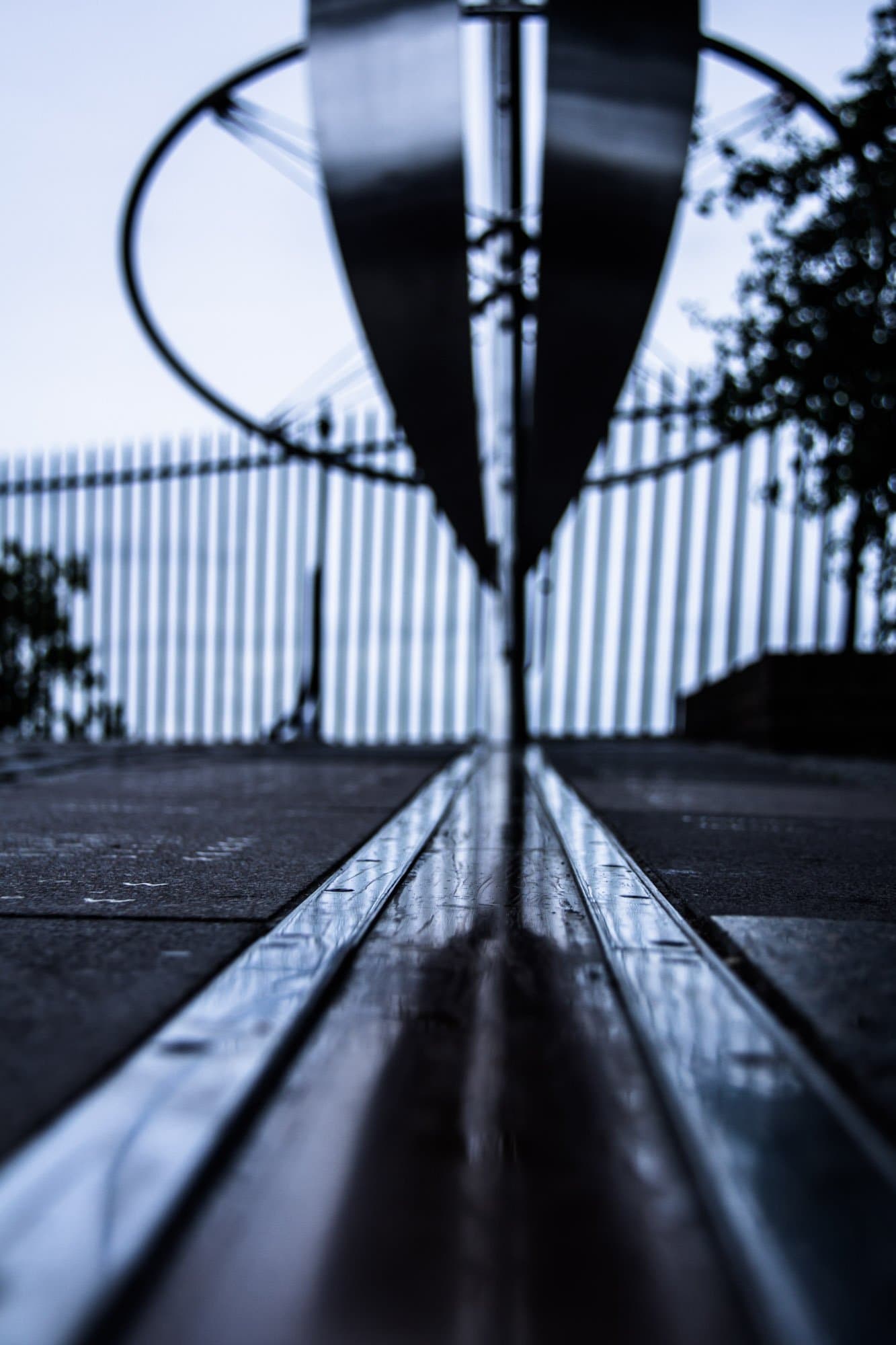
Stand On The Prime Meridian